Explore our engineered hydrodynamic automatic flood control products. Manufactured under strict ISO 9001 and ISO 14001 quality frameworks, these solutions offer field-proven performance in extreme weather conditions.
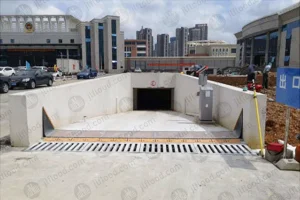
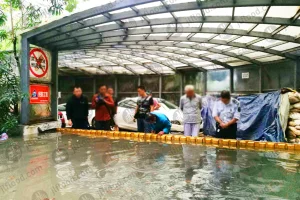
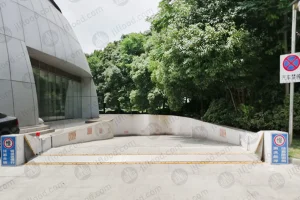
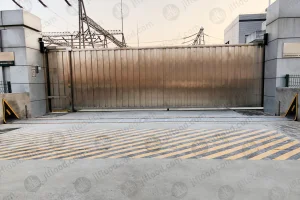
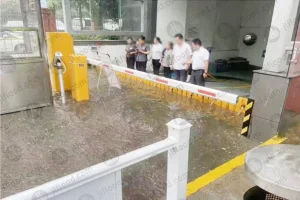
Rapid urbanisation, climate variability, and increasing frequency of severe cloudburst events (microbursts) have exposed a fundamental vulnerability in modern civil architecture: underground asset exposure. According to global catastrophe loss reports, flash flooding and urban pluvial surges account for over 40% of economic losses associated with natural hazards in commercial centers, underground mass rapid transit (MRT) networks, and industrial utility nodes.
Historically, municipal authorities and private enterprise asset owners relied upon reactive flood control mechanisms: deployable sandbags, manual drop-in aluminum stoplogs, or electrically powered vertical lift gates. However, post-disaster forensic engineering analyses reveal high failure rates in reactive systems due to three systemic vulnerabilities:
Monsoon rainstorms and typhoons frequently disrupt localized power grids. Electrically driven flood barriers, sensor array networks, and automated sump pump systems fail precisely when flood risks reach peak severity.
Manual barrier deployment requires physical personnel presence, clear communication channels, and early warnings. Off-hours pluvial surges (e.g., midnight microbursts) often inundate basements before deployment crews arrive on site.
Motorized gates and hydraulic arms require rigorous, continuous electrical maintenance. Debris intrusion or rusted motor components during standby lead to immediate mechanical failure under sudden water pressure.
Nanjing Junli Technology Co., Ltd. has spent over a decade perfecting the hydrodynamic automatic flood gate architecture. Unlike active electrical barriers, a self-closing hydrodynamic flood barrier operates on fundamental physical laws: Archimedes' Buoyancy Principle and Hydrostatic Fluid Balance.
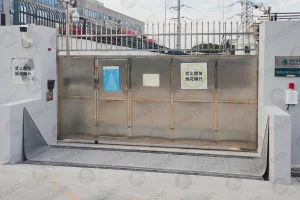
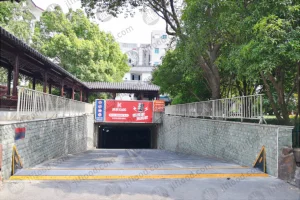
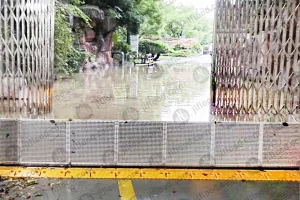
The barrier system is installed completely flush within a recessed concrete embedded frame at driveways, transit portals, or building doorways. In normal dry conditions, vehicles and pedestrians move across the durable top plate without restriction. When surface runoff water exceeds kerb thresholds, water automatically flows into the intake grates of the foundation embedment basin.
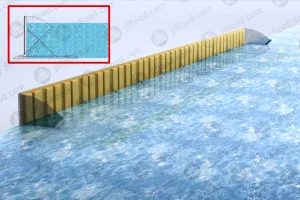
As water fills the internal retention basin, the buoyancy density of the internal hollow aircraft-grade aluminum alloy leaf panel creates immediate upward lift force ($F_b = \rho_{water} \cdot g \cdot V_{displaced}$). The panel rotates smoothly upward along a stainless-steel pivot hinge point. No motors, gears, or electrical signals are involved.
As the rising water level deepens outside the barrier, the hydrostatic pressure head acts directly against the front face of the barrier door, pressing it firmly against side frame seals and bottom rubber gaskets. The greater the flood depth, the tighter the dual-lip EPDM seal compresses, achieving an IP68-grade watertight barrier enclosure.
When international engineering procurement teams (EPCs), municipal contractors, and commercial developers evaluate global suppliers for automatic flood protection barriers, sourcing directly from a specialized factory in Nanjing, China offers distinct competitive and economic advantages.
By controlling precision aluminum extrusion processing, automated laser welding, and rubber vulcanization under one roof, Chinese OEM factories deliver 40% to 60% procurement cost reduction compared to legacy European or North American flood gate fabricators, without sacrificing material density or structural safety factors.
Every architectural opening features unique clear widths, slope angles, and pavement kerb dimensions. Junli Technology provides full parametric CAD design, structural deflection calculations, and BIM models within 48 hours for tender engineering submittals.
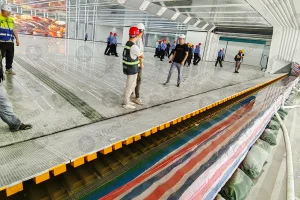
Every production batch undergoes strict quality control. In-house water testing basins allow engineers to verify self-rising trigger speed, seal tightness under max hydrostatic head, and structural deflection prior to export crating.
Hydrodynamic flood protection solutions must adapt to specific civil engineering contexts. Junli Technology's product lines are divided into specialized structural classes optimized for different physical environments:
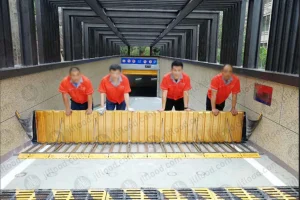
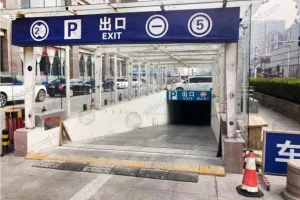
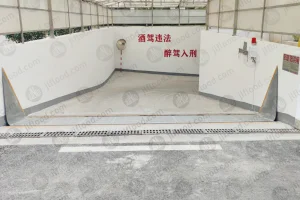
Ramp entrances to subterranean parking facilities represent the most common entry point for urban flash floods. Flush-embedded self-closing gates (such as model Hm4d-0006D) withstand high daily vehicular traffic while maintaining instantaneous flood readiness.
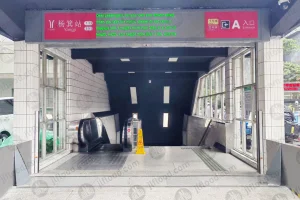
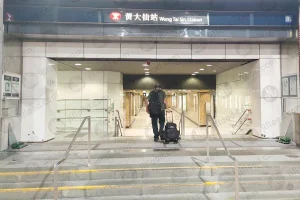
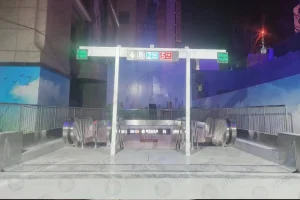
Metros require uncompromised safety and architectural harmony. Solutions tested and deployed at major transit hubs (e.g., Guangzhou Metro Yangji Station, Dalian Metro) integrate flush floor profiles with non-slip top plates and visual warning reflectors.
Electrical grid nodes, transformer yards, and telecom data centers require perimeter flood defense. Automatic barriers installed at substation gates prevent catastrophic electrical shorting and regional blackout events.
Shopping malls, hospitals, and civil defense underground corridors benefit from modular aluminum barrier assemblies that blend cleanly with architectural entrance treatments while meeting municipal flood compliance guidelines.
Reinforced heavy-duty models (such as Hm4d-0006C) incorporate heavy gauge stainless steel frame structures capable of resisting chemical spill containment and high velocity wave impacts in industrial coastal zones.
For existing structures where deep concrete excavation is impossible, surface-installed flip-up barriers (such as Hm4d-0006E) provide rapid retrofit installation directly onto existing concrete slabs.
To assist specifiers, architects, and procurement officers in evaluating solution metrics, the table below highlights key operational parameters across standard industry technologies:
| Evaluation Parameter | Junli Passive Hydrodynamic Gate | Electrically Motorized Gate | Manual Aluminum Stoplogs |
|---|---|---|---|
| Power Source | Zero Power (Fluid Hydrodynamics) | Electricity Grid / Backup Generator | None (Manual Labor) |
| Human Intervention | 0% (100% Fully Automatic) | Optional (Sensor / Button) | 100% Required (Must physical insert) |
| Trigger Speed | Immediate upon water accumulation | Dependent on sensor/motor cycle | 15 to 60+ minutes deployment |
| Power Outage Risk | Immune (Works during blackout) | High Risk (Battery failure risk) | Immune |
| Drive-Over Traffic Load | Up to 40+ Tons Heavy Truck Load | Varies (Requires surface track) | N/A (Barrier blocks lane permanently) |
| Maintenance Overhead | Low (Routine clearing of silt/debris) | High (Motor, wiring, sensors) | Medium (Storage, gasket checks) |
| Operational Lifespan | 25+ Years | 8-10 Years (Motor wear) | 10-15 Years (Gasket deterioration) |
Nanjing Junli Technology Co., Ltd. operates as a true direct-factory manufacturer. We provide complete end-to-end engineering support for international distributors, general contractors, and project developers worldwide:
Client provides clear opening width, required retaining water depth height, road slope gradient, and local pavement load specifications.
Our technical team issues structural drawings, civil embedment recess blueprints, surface drainage interface specs, and detailed cost quotes.
CNC machining of aluminum alloy profiles, high-grade EPDM sealing strip vulcanization, modular assembly, and quality verification in our test basin.
Seaworthy reinforced wooden box packaging protecting mechanical pivot hinges and sealing edges. Direct container dispatch from Nanjing / Shanghai ports.
Detailed English installation manuals, step-by-step video tutorials, and remote video technical supervision provided to local civil contractor teams.
Comprehensive multi-year warranty coverage with rapid dispatch of replacement EPDM seals, counterweights, and side frame hardware kits.
Select from our specialized line of automatic, flip-up, and modular hydrodynamic flood control gates designed for high-consequence commercial and industrial installations.