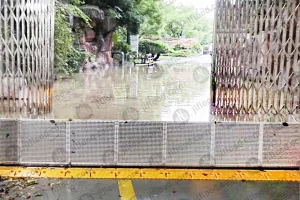
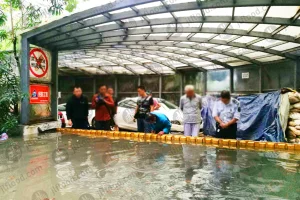
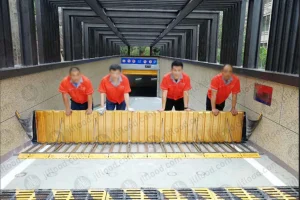
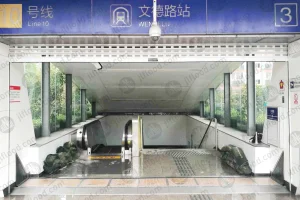
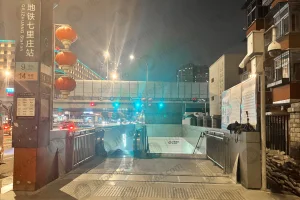
Explore our field-tested, hydrodynamic self-closing flood gates engineered for commercial basements, metro station portals, and critical power infrastructure worldwide.
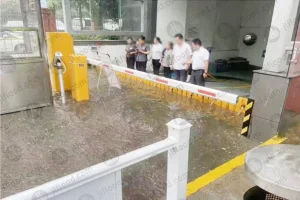
Rapid global urbanization coupled with changing climate patterns has triggered unprecedented flash flooding and urban pluvial inundation events across municipal infrastructures. Traditional flood mitigation strategies—such as manual sandbag placement, heavy demountable aluminum flood boards, or electrically driven barrier gates—exhibit critical single points of failure during severe weather events: human delay, operational error, and widespread electrical power grid outages.
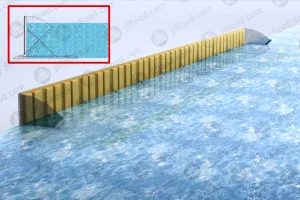
As a leading global Wholesale Self Closing Flood Door Manufacturer & Supplier, Nanjing Junli Technology Co., Ltd. engineered the hydrodynamic self-closing flood barrier system to eliminate these vulnerabilities. Operating on pure physics, hydrodynamic self-closing flood doors utilize the natural force of incoming water buoyancy and hydrostatic pressure differential to automatically deploy without human intervention, electricity, or electronic sensors.
The structural engineering landscape for flood defence is experiencing a fundamental paradigm shift. Government municipalities, commercial real estate developers, and international engineering procurement construction (EPC) conglomerates are transitioning from reactive disaster management to proactive, resilient infrastructure design.
Institutional investors and insurance underwriters now demand certified passive flood protection solutions before issuing environmental, social, and governance (ESG) risk clearance and asset coverage policies for commercial developments.
Flash floods regularly cause grid blackouts. Passive self-closing flood doors eliminate dependence on backup diesel generators or electric motors, establishing uninterrupted emergency operation during storm-induced power cuts.
Modern urban aesthetics prohibit permanent unsightly flood walls. Ground-embedded hydrodynamic barriers sit completely flush with the surrounding pavement, preserving architectural integrity until activated by floodwaters.
When specifying flood mitigation hardware for commercial tenders, project engineers and procurement officers must evaluate life-cycle maintenance, failure modes, structural load limits, and emergency responsiveness.
| Performance Metrics | Hydrodynamic Self-Closing Doors | Electrically Motorized Gates | Manual Demountable Stop Logs |
|---|---|---|---|
| Power Requirement | 0 kW (100% Passive Hydraulic Buoyancy) | High (Requires 3-Phase Power / Genset) | 0 kW (Manual Installation) |
| Human Activation Time | Instantaneous Automatic (< 0.1 sec water flow) | Manual Sensor Switch / Remote Control | 30 to 120 Minutes (Labor Intensive) |
| Failure Rate during Blackouts | 0% Failure Risk | High Risk (Motor / Control System Failure) | High Risk (Human Absence / Gridlock) |
| Vehicle Axle Load Capacity | Heavy-Duty (Up to 60 Tons Flush Surface) | Medium to Heavy-Duty | Non-trafficable structural base |
| 20-Year Operational Cost | Ultra-Low (Routine Seal Inspection) | High (Motor, Battery & PLC Maintenance) | Medium (Storage & Labor Costs) |
Nanjing Junli Technology Co., Ltd. designs engineered-to-order hydrodynamic flood control systems suited to specific civil structural interfaces:
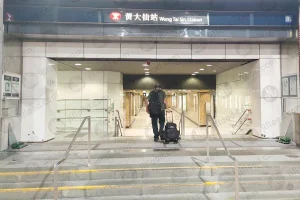
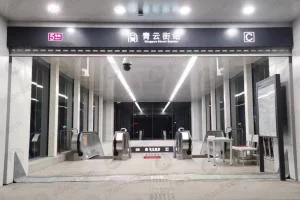
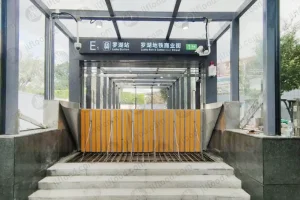
Subsurface rail networks are vulnerable to catastrophic water ingress. Ground-flush self-closing flood gates installed at subway portals and underground connection concourses immediately float up when flood runoff breaches the curb step.
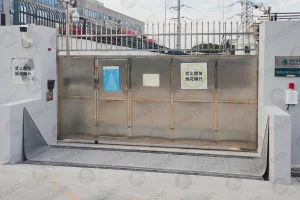
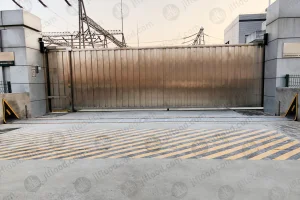
Substation transformer rooms and cable trenches demand zero water intrusion. Custom stainless-steel hydrodynamic flip-up and self-closing barriers protect electrical enclosures from sudden localized waterlogging without restricting daily worker access.
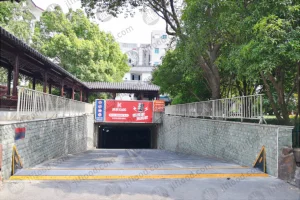
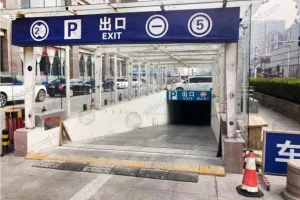
Designed to withstand heavy vehicle passage (including delivery trucks and fire engines), our heavy-duty embedded ramp doors sit unnoticeably at car park entrances, elevating automatically when surface water fills the drainage tray.
Nanjing Junli Technology invests aggressively in R&D to advance autonomous fluid dynamics, structural metallurgy, and smart city telemetry integration. Our engineering roadmap focuses on three core pillars:
Integrating energy-harvesting micro-sensors that transmit real-time barrier deployment elevation data and water level metrics directly to Smart City Central SCADA systems without external wiring.
Developing marine-grade carbon-fiber and high-density polymer matrix door leaves to reduce panel mass by 40% while enhancing structural yield strength against heavy hydrodynamic wave impact loads.
Engineering micro-encapsulated dual-EPDM composite gaskets that repair minor surface abrasions automatically, guaranteeing zero-leakage retention profiles across 25-year operational life cycles.
Deploying flood control assets across North America, Europe, the Middle East, and Asia-Pacific requires strict adherence to regional structural and civil engineering codes. Nanjing Junli Technology delivers complete international technical compliance packages:
Custom finite element analysis (FEA) dynamic deflection calculations compliant with ASCE 24-14 (Flood Resistant Design and Construction), Eurocode 3 (Design of Steel Structures), and BS EN 1991 hydrostatic load criteria.
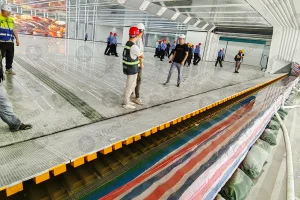
Every customized hydrodynamic self-closing door undergoes rigorous full-scale hydrostatic chamber testing in our proprietary hydraulic pool. Customers receive certified video documentation, seal leakage metrics, and structural inspection logs per order.
Comprehensive technical responses for civil consultants, architects, and procurement buyers considering self-closing flood doors.
Browse our extended product portfolio engineered for heavy-duty metro stations, substation portals, and power trench protection.