
Explore our field-proven automatic flood control barriers designed for zero-power, passive activation in municipal, metro, and substation applications.
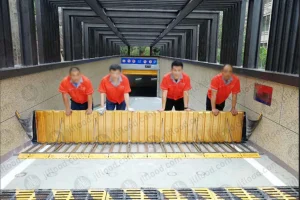
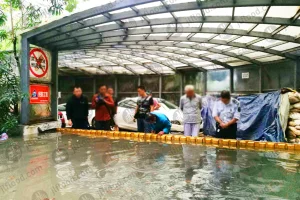
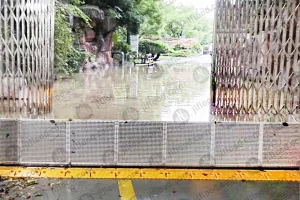
Transitioning from manual intervention to autonomous buoyancy-driven flood defense systems across urban infrastructure.
The global industrial and urban flood protection landscape is undergoing a paradigm shift. Historically, infrastructure protection relied heavily on demountable aluminum stop logs, manual sandbagging, or electromechanical flood gates. However, extreme weather events caused by global climate instability have exposed the critical vulnerabilities of these legacy systems: human error during sudden flash floods, loss of electrical power during severe storms, and mechanical component failures during grid shutdowns.
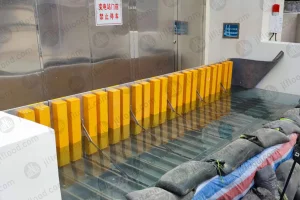
Modern municipal engineering standards increasingly mandate the installation of hydrodynamic self-closing flood gates. These continuous passive systems operate entirely on hydrostatic pressure and fluid buoyancy principles. When flash floods hit, surface runoff flows into the embedded foundation basin, naturally lifting the floating shield panel to block water ingress without requiring sensors, motorized actuators, or manual intervention.
Operates autonomously during power grid collapses. Pure hydrodynamic force lifts the gate panel as water levels rise, removing grid dependency entirely.
Eliminates routine electrical motor servicing, battery backups, and 24/7 emergency response labor cost. Reduces maintenance overhead by over 75%.
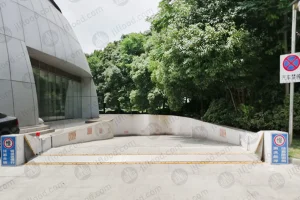
Rests completely level with ground surfaces when dry. Preserves aesthetic integrity and unhindered vehicle/pedestrian transit across entrances.
Transparent pricing evaluation based on structural specifications, load dynamics, and retaining height customisation.
When procuring wholesale self-closing flood gates directly from Chinese manufacturing facilities, pricing varies according to structural material grades (e.g., 6063-T6 vs 6005A-T6 structural aluminum alloy, 304 vs 316 stainless steel frame housings), retaining height capacity, clear span width, and vehicle wheel-load ratings (e.g., H20/HS20 loading vs 60-ton heavy logistics traffic capacity).
| Gate Series / Model | Retaining Height Range | Load Rating (Passage) | Material Specification | Est. Wholesale Price (USD/m) |
|---|---|---|---|---|
| Hm4d-0006C Standard Duty | 500mm – 900mm | 30 Tons (Standard Vehicles) | Aviation Alloy 6063-T6 + EPDM Seals | $450 – $680 / meter |
| Hm4d-0006D Heavy Duty | 600mm – 1200mm | 45 Tons (Commercial Trucks) | Reinforced 6005A-T6 + SUS304 Base | $650 – $920 / meter |
| Substation Ultra-Wide Modular | 800mm – 1500mm | 20 Tons (Utility Service Vans) | Composite Hydro-Panel + Dual Seals | $780 – $1,150 / meter |
| Metro Station Connection Channel | 1000mm – 2000mm | Pedestrian Heavy Traffic (H20) | Stainless Steel SUS316 Frame + Armor Shield | $1,100 – $1,850 / meter |
| Flip-Up Garage Entry Series | 400mm – 800mm | 15 Tons (Passenger Cars) | Extruded Aluminum Alloy + Rubber Gasket | $380 – $550 / meter |
Wholesale Sourcing Note: Volume discounts apply for EPC contractors and municipal stocking distributors. Minimum Order Quantity (MOQ) for custom sizing starts at 10 linear meters. Complete OEM branding, technical CAD/BIM drawing approval, and factory hydro-testing certificates are supplied with all export shipments.
Essential engineering compliance criteria for international buyers, structural engineers, and project developers.
Verify tri-extruded EPDM double-lip rubber sealing gaskets. Ensure leak rates do not exceed 0.05 L/hr per linear meter under full design hydrostatic head (verified per FM 2510 / standard pool test protocols).
Require Finite Element Analysis (FEA) reports guaranteeing zero structural panel deformation when subjected to dynamic vehicle passage loads (up to 600kN) and lateral wave impact pressures.
Confirm embedment frame depth and concrete trench drainage details. Verify factory supply of embedded anchor templates, rebar clearance schematics, and boundary seal joint details.
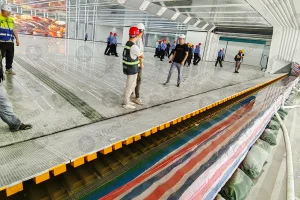
A reputable flood gate factory must maintain an in-house full-scale hydrostatic testing basin. Every custom modular batch manufactured by Nanjing Junli Technology undergoes rigorous water containment verification before export. This involves anchoring the barrier in a simulated concrete foundation channel, applying hydrostatic pressure up to 120% of the rated retaining height, and recording panel lifting speed, seal tightness, and automatic mechanical locking mechanism deployment.
Tailored self-closing barrier configurations designed for high-risk critical infrastructure sectors.
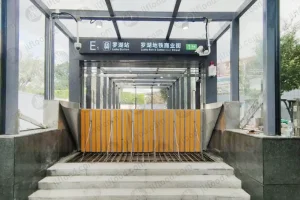
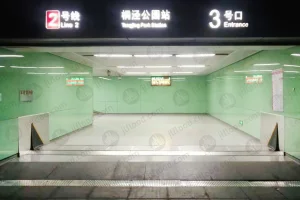
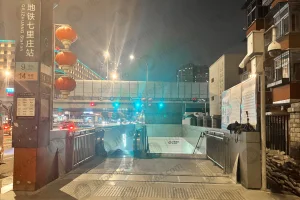
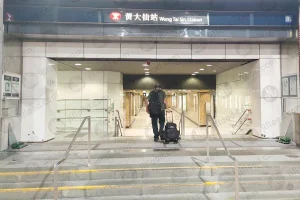
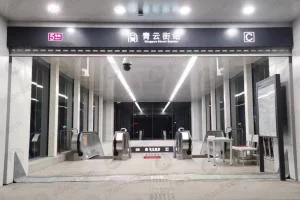
Protecting subway entrances, connection channels, and underground pedestrian walkways. Features rapid buoyancy response, zero obstruction to daily passenger flow, and high-impact structural panels designed to withstand urban flash floods.
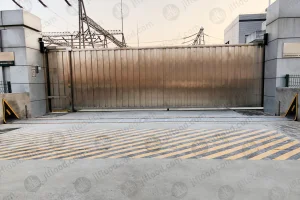
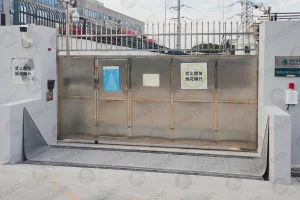
Electrical transformer rooms and cable trenches face catastrophic equipment loss during inundation. Our non-electric hydrodynamic barriers lift autonomously, preventing blackout-inducing flood damage without depending on station power.
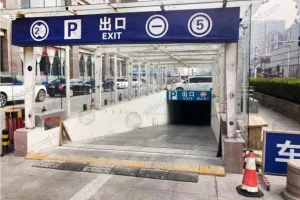
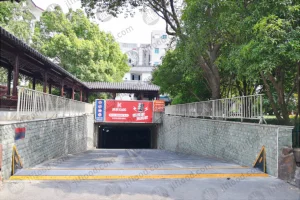
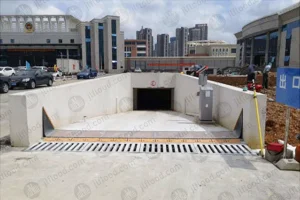
Driveway ramp entries of commercial malls, residential towers, and hospitals require heavy load bearing capacities. Installed flush with the driveway surface, allowing seamless vehicle passage until surface water activates the buoyancy mechanism.
End-to-end technical support ensuring compliance with local civil engineering codes and international building standards.
Deploying Chinese-manufactured flood control solutions overseas requires thorough engineering alignment with regional building codes, environmental regulations, and structural mandates. Junli Technology provides full localization packages for international EPC contractors and architectural consultants:
Manufactured in strict adherence to ISO 9001:2015 quality management systems, ISO 14001 environmental standards, and CE mechanical safety directives (EN 1090-1 structural aluminum/steel certification).
Complete 3D Revit models, DWG dimensional drawings, structural loading matrices, and civil works embedment guidelines supplied for seamless integration into project master designs.
Multilingual installation manuals, step-by-step video commissioning guides, civil template supply, and field engineer dispatch options for major infrastructure installations.
Next-generation innovations in smart flood protection, IoT integration, and advanced material science.
As smart cities evolve, passive flood protection is merging with digital monitoring networks to form intelligent urban flood resilience grids. The technical development roadmap for self-closing flood gates includes key innovations:
While mechanical deployment remains passive and electricity-free, optional solar-powered micro-sensors monitor gate status, water depth, and panel angle in real time—transmitting alerts to municipal SCADA control rooms via NB-IoT or LoRaWAN.
Next-gen bottom foundation basins feature self-flushing hydraulic geometries and silt-trapping grates, preventing debris accumulation and ensuring smooth panel flotation even after long periods of inactivity.
Incorporating carbon-fiber reinforced polymers (CFRP) and nano-hydrophobic surface coatings to reduce panel structural weight by 40% while enhancing corrosion resistance in saline coastal environments.
Explore additional specialized self-closing, flip-up, and embedded flood gates designed for demanding industrial environments.
Expert answers to critical procurement, installation, and engineering questions.
The system utilizes natural hydraulic buoyancy principles. The barrier panel rests flush inside a stainless steel or aluminum foundation basin embedded in the ground. When surface floodwaters approach and fill the basin, buoyancy force lifts the floating panel, which pivots on heavy-duty hinges to form a continuous water-retaining wall. Hydrostatic pressure from the retained floodwater further presses the panel against the side seals, tightening the water barrier as water levels rise.
Yes. Standard models are engineered to support 30 to 45 tons axle weight, with custom heavy-duty options (e.g., Hm4d-0006C and Hm4d-0006D series) rated for 60+ tons. This allows heavy freight trucks, fire engines, and public transport buses to pass over the flush surface safely without damaging the underlying mechanism.
For standard modular specifications, factory production lead time is typically 15 to 25 calendar days after CAD drawing confirmation. Custom architectural spans or high-volume metro projects may require 30 to 40 days. Minimum order quantity (MOQ) for factory direct pricing starts at 10 linear meters.
Because the mechanism is purely mechanical and passive, maintenance requirements are minimal. We recommend semi-annual inspections to clear dirt or leaf debris from the bottom foundation basin using a water hose, alongside annual inspection of the EPDM side rubber gaskets to ensure flexibility and seal integrity.
For cold-climate regions (e.g., Northern Europe, North America, Northern China), factory options include electric heating tracing cables embedded beneath the foundation basin. Controlled via ambient thermostat sensors, this anti-icing system prevents water from freezing inside the basin while maintaining passive hydraulic deployment capability.


