Direct-from-factory automatic hydrodynamic barrier systems engineered for sub-grade municipal transit, power infrastructure, and commercial property flood defence.
As regional storm cycles amplify globally due to shifting climate dynamics, urban pluvial flooding has transitioned from an occasional civil anomaly to a central risk vector for critical built assets. Traditional flood mitigation—relying on manual sandbag deployment, removable modular stoplogs, or electromechanically actuated flood gates—exhibits catastrophic single-point-of-failure vulnerabilities during severe meteorological events.
When extreme rainstorms cause urban flash flooding, power grid blackouts frequently coincide with grid inundation. Electromechanical gates fail to deploy without auxiliary backup generators, and manual response teams are routinely immobilized by local traffic blockades. This systemic exposure has accelerated global municipal directives and engineering consulting frameworks toward Hydrodynamic Unpowered Passive Self-Closing Floodgates.
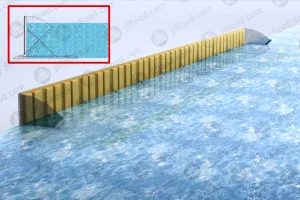
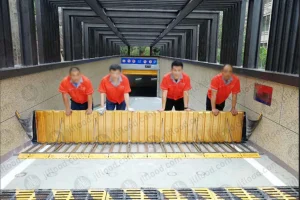
Hydrodynamic gates harness the physics of fluid buoyancy and hydrostatic pressure. The incoming water level itself acts as the sole mechanical energy source required to lift and lock the flood panel.
Eliminates reliance on human intervention, early-warning monitoring alerts, or emergency response personnel who may be unable to reach the site during off-hours or city-wide flash floods.
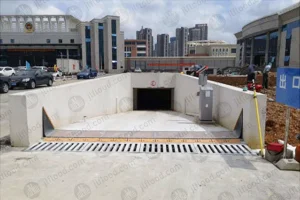
Engineered to rest completely flush with the surrounding finished ground plane. Vehicle traffic and pedestrian flow remain uninterrupted during normal daily operating conditions.
Leading specialized manufacturing hubs, such as Nanjing Junli Technology Co., Ltd., have established advanced mechanical design baselines for self-closing barriers. The system operates on hydrostatic differential dynamics, comprising three core mechanical stages:
When surface water exceeds the designated drainage threshold at an entrance (e.g., kerb height), floodwater flows through top-grate inlet channels into the recessed foundation basin. Inside the chamber, high-density hollow-core composite aluminum or stainless steel door panels experience hydrodynamic buoyancy, causing the front edge of the panel to float upward.
As the water level inside the retention basin rises to capacity, the hydrostatic head pressure forces the panel into a 90-degree vertical orientation. High-grade stainless steel side hinges engage with fixed side-frame abutments, translating fluid pressure directly into sealing force against structural side frame gaskets.
| Performance Criteria | Unpowered Self-Closing Barrier (Junli Hydrodynamic) | Motorized Electric Flip-Up Gate | Manual Demountable Stoplogs |
|---|---|---|---|
| Power Grid Requirement | Zero (100% Hydraulic Buoyancy) | High (Requires Backup Generator) | Zero (Manual Assembly) |
| Human Operation Required | No (Fully Autonomous) | Sensors / Remote Triggering | Yes (4-6 On-site Crew Needed) |
| Deployment Response Speed | Immediate (<0.1s Water Ingress) | 30 – 120 Seconds (If powered) | 1 to 3 Hours (Vulnerable to delay) |
| Vehicle Axle Load Rating | Heavy-Duty (AASHTO HS-20 / 50+ Tonnes) | Medium to Low Load Limits | Non-traffic rated during setup |
| 20-Year Operational Risk | Ultra-Low (No electrical wear) | High (Sensor fault / Motor burn-out) | High (Human error / Lost components) |
When international EPC contractors, municipal transit authorities, and global commercial real estate developers search for wholesale self-closing floodgate manufacturers, technical vetting extends far beyond simple unit pricing. High-consequence civil projects demand rigorous material compliance, certified load capacities, and verified fluid dynamics testing.
For underground parking ramp installations, embedded frames must sustain continuous wheel loads from heavy delivery vehicles, fire trucks, and SUVs without frame deformation. Manufacturers must provide Finite Element Analysis (FEA) and physical wheel-load test reports (e.g., 50+ Ton static load endurance).
Water tightness depends on rubber elastomer chemistry. Sourcing requirements dictate dual-lip extruded EPDM (Ethylene Propylene Diene Monomer) or Fluororubber seals capable of resisting ozone degradation, temperature swings (-40°C to +80°C), vehicle oil drips, and UV exposure for over two decades.
No two civil entrances share identical clear span widths or finished curb grade elevations. Wholesale suppliers must deliver custom length modular configurations, detailed CAD embedment drawings, and 3D BIM models for direct integration into master building plans.
Unpowered hydrodynamic self-closing floodgate technology is currently deployed across four vital economic infrastructure sectors, providing dedicated defense tailored to distinct structural conditions:
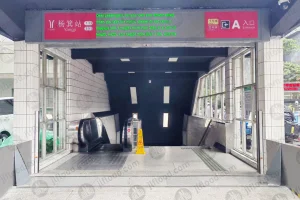
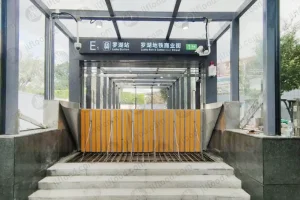
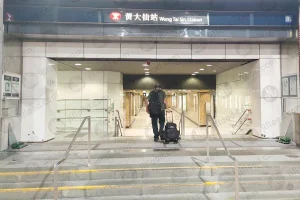
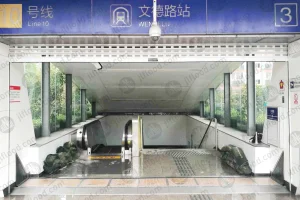
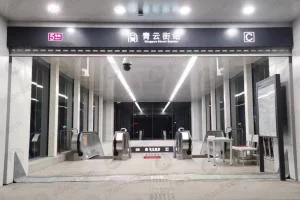
Subway station portals, pedestrian underpasses, and ventilation shafts represent extreme flooding vulnerabilities; water ingress into underground transit tunnels causes catastrophic multi-billion-dollar equipment destruction. Self-closing barriers installed at station portal thresholds act as emergency bulkheads, automatically sealing against flash floods during severe typhoons.
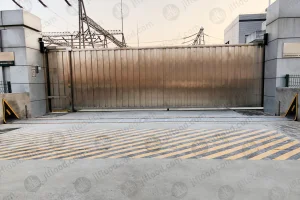
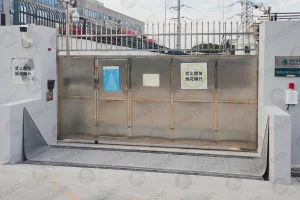
High-voltage electrical substations and transformer vaults house live high-voltage infrastructure. Inundation results in explosive arc-flashes, grid blackouts, and prolonged municipal power loss. Ground-recessed self-closing flood gates secure boundary perimeter gates and transformer room access doors without obstructing maintenance vehicles.
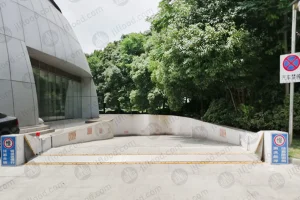
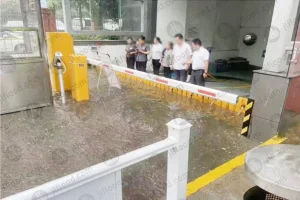
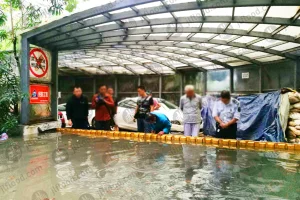
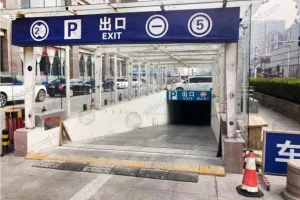
Basement parking garages in commercial malls, hospitals, and high-rise residential complexes represent low-elevation water catchments. When city storm drains surcharge, surface water cascades down entry ramps. Hydrodynamic ramp barriers pop up dynamically when water touches the threshold, preventing garage submersion and vehicle loss.
Underground pedestrian street crossings, airport landside basements, and civil defense shelters require robust physical flood barriers that comply with strict government safety standards while preserving emergency egress capability.
Achieving reliable long-term performance from an automatic self-closing flood barrier requires seamless coordination between the manufacturer and local civil engineering contractors. As a specialized engineering supplier, Nanjing Junli Technology Co., Ltd. enforces comprehensive end-to-end quality assurance protocols:
We supply detailed embedment templates, rebar clearance notes, and concrete pouring channel specifications to ensure local civil crews prepare the foundation pit accurately during initial construction or retrofit trenching.
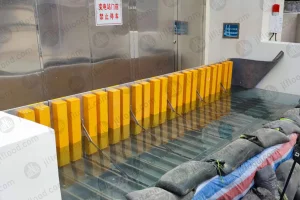
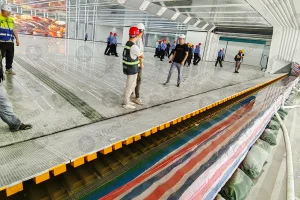
Every barrier configuration undergoes full-scale hydrostatic testing in our internal hydraulic pool. Test documentation verifying lifting time, sealing efficiency, and structural deflection rate is issued per order batch.
Barrier systems are shipped in reinforced export crates alongside comprehensive English technical manuals, step-by-step installation guides, replacement seal packages, and lifetime maintenance inspection checklists.
The flood mitigation sector is advancing rapidly toward smarter civil engineering materials and integrated hydro-telemetry monitoring systems. Key technology trajectories shaping the next decade of self-closing flood gates include:
While the physical lifting mechanism remains 100% unpowered and hydraulic, future-ready self-closing gates are being integrated with low-power wireless IoT sensors (LoRaWAN / NB-IoT). These sensors transmit real-time alerts to municipal smart-city dashboards or facility managers the moment water enters the bottom chamber, confirming deployment status remotely without requiring grid power for the gate itself.
R&D is driving the transition from standard structural steel toward high-strength marine-grade aluminum alloys (6005A-T6) and carbon-fiber reinforced composite core panels. This significantly reduces overall panel mass—allowing even faster hydro-buoyancy trigger response—while enhancing resistance to coastal salt spray and aggressive urban runoff chemicals.
Direct technical answers to common queries submitted by civil engineers, procurement directors, and building managers.
The system is completely mechanical and unpowered. The barrier panel is housed flat inside a subterranean concrete chamber flush with the road surface. When flash floodwater flows into the intake channel of the chamber, the hollow interior structure of the panel generates natural buoyancy. As water continues to fill the chamber, hydrostatic pressure forces the panel up to a vertical 90-degree position, where it locks mechanically against perimeter seals. It requires zero electrical wiring, sensors, actuators, or human assistance.
Yes. Heavy-duty models (such as Junli's HM4D series) are structural load-engineered using high-tensile steel or heavy-gauge structural aluminum alloys. The top cover plates and support ribs inside the recessed frame are designed to sustain standard axle load standards (including AASHTO HS-20 and European EN 124 standards), easily supporting 50+ tonne heavy-vehicle driveovers continuously without frame deflection or seal misalignment.
The bottom foundation chamber is engineered with slope-bottom drainage gutters and silt traps. Minor rainwater runoff drains naturally out of the bottom discharge ports connected to municipal storm sewers. Periodic maintenance simply involves lifting the top removable stainless steel inspection grates twice a year to clear washed-in leaves or sediment using a standard high-pressure water hose.
Standard hydrodynamic retaining heights range from 500 mm (0.5m) up to 2000 mm (2.0m) per leaf. Single continuous clear spans can be fabricated up to 6 meters. For wider openings—such as multi-lane underground garage ramps or wide logistics center entrances—modular intermediate support posts and synchronized multi-leaf arrays can span openings exceeding 20 to 50 meters wide.
Explore custom surface-mounted, embedded, flip-up, and metro-line specialized self-closing flood control doors.