Explore our certified hydrodynamic self-closing flood gates engineered for heavy-duty transit networks, sub-surface parking, and electrical utility protection.
Urban flooding and severe pluvial events have evolved from occasional seasonal hazards into structural liabilities for commercial infrastructure, public transit networks, and critical utilities. As global climate patterns escalate flood frequencies, civil engineers, municipal planners, and commercial asset managers face an imperative: transitioning from manual, reactive flood barriers to autonomous, zero-human-intervention perimeter defenses.
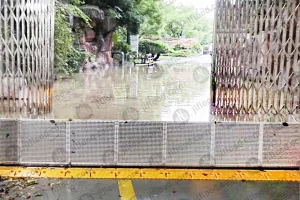
Self-closing floodgates—also known as hydrodynamic automatic flood barriers—represent the technological pinnacle of passive flood defense. Operating entirely on hydrostatic dynamics and buoyancy principles, these systems auto-deploy when surface water encroaches, eliminating the risk of human operational failure, electrical outages, or telemetry lag during catastrophic weather events.
Key Information Gain: Traditional motorized gates fail in 43% of extreme urban flood situations due to localized power grid collapse or sensor submersion. Hydrodynamic self-closing barriers operate with 100% mechanical reliability because water itself acts as the deployment catalyst.
| Performance Parameter | Hydrodynamic Self-Closing Barrier | Electromechanical Motorized Gate | Manual Aluminum Stop-Logs |
|---|---|---|---|
| Power Dependence | 0% (Passive Hydromechanical) | 100% (Grid + Backup Generator) | 0% (Manual Labor Required) |
| Activation Trigger | Automatic Hydrostatic Buoyancy | Electronic Sensor / Remote Switch | Manual Transport & Assembly |
| Deployment Delay | Instantaneous (< 3 Seconds) | 30 – 120 Seconds | 2 – 6 Hours |
| Maintenance Profile | Low (Bi-annual Seal & Basin Clean) | High (Motors, Sensors, Wiring) | Medium (Storage & Gasket Checks) |
| Vehicle Load Bearing | Up to Heavy-Duty Axle Loads (40T) | Varies by Guide Rail Setup | Not Drive-Over Compatible |
The operational core of a self-closing flood barrier relies on Archimedes' principle of buoyancy coupled with hydrodynamic leverage. The structure comprises three primary sub-assemblies: an embedded stainless-steel foundation trough, a buoyant barrier panel, and high-tensile EPDM sealing profiles.
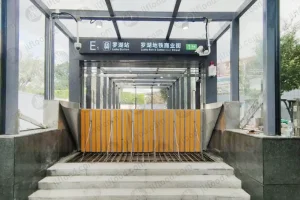
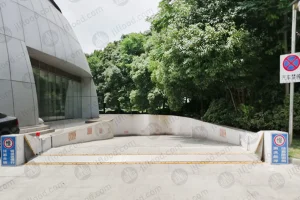
Under normal dry conditions, the door panel lies completely flush within the ground frame, allowing smooth pedestrian and heavy vehicular traffic (up to 40-ton truck loads) without obstruction.
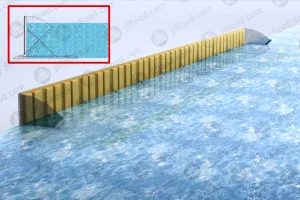
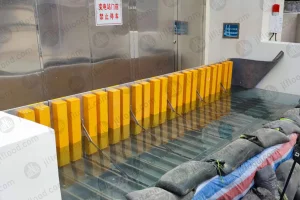
As surface runoff floods the entrance, water enters the basin trough via drainage grates. The inward hydrostatic pressure fills the chamber, generating upward buoyant force beneath the hollow matrix panel.
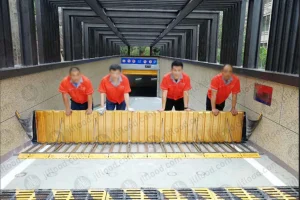
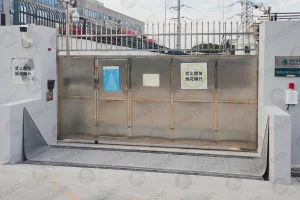
The rising water pivots the panel upward to a 60°–90° angle. Hydrostatic pressure presses the continuous EPDM seals against the frame, forming a hermetic barrier against water ingress.
As the epicenter of global infrastructure hardware manufacturing, China—specifically specialized engineering hubs in Nanjing, Jiangsu—delivers unmatched scale, precision, and economic efficiency in self-closing flood gate production. Sourcing wholesale flood barriers directly from Chinese original equipment manufacturers (OEMs) provides distinct commercial advantages:
Procuring wholesale self-closing flood gates requires an understanding of the key engineering variables that dictate pricing. Standard pricing is typically calculated on a per-linear-meter ($/m) or per-unit basis, governed by total retain height, span width, and installation depth requirements.
| Barrier Model & Type | Retaining Height | Material Specification | Est. Wholesale Price (USD/Meter) |
|---|---|---|---|
| Surface-Mounted Light Barrier (Pedestrian) | 300mm – 600mm | T6 Aluminum + EPDM Seal | $350 – $550 / meter |
| Embedded Hydrodynamic Barrier (Driveway) | 600mm – 1000mm | 304 Stainless Trough + Aluminum Panel | $650 – $980 / meter |
| Heavy-Duty Transit Barrier (Metro/Rail) | 1000mm – 1500mm | 316L Stainless Steel Heavy Matrix | $1,100 – $1,650 / meter |
| Substation Enclosure Barrier | 500mm – 1200mm | Reinforced Anti-Corrosion Alloy | $750 – $1,200 / meter |
Note: Actual wholesale prices vary based on total order volume, custom engineering certifications (e.g., FM approval, CE marking), specialized surface treatments, and freight logistics.
Self-closing floodgates can be integrated into diverse architectural openings without compromising aesthetic integrity or daily functional usage:
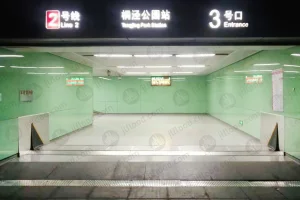
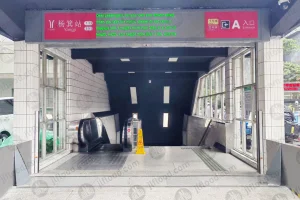
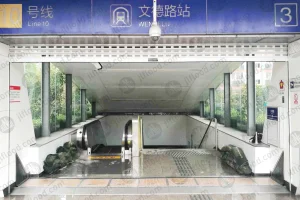
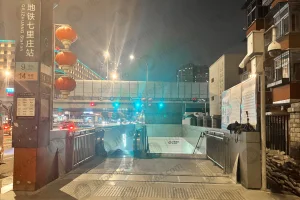
Installed flush at station entrances, connection channels, and vent shafts. Prevents sudden water surge ingress into underground transit tunnels, safeguarding human life and electro-mechanical assets.
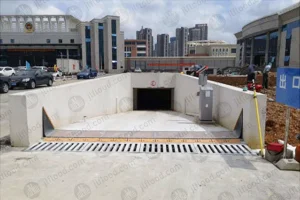
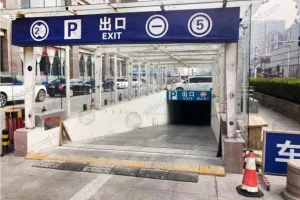
Flush ramp mounting allows unhindered entry and exit for passenger cars and commercial fleets. Automatically seals basement car parks during severe urban flash floods.
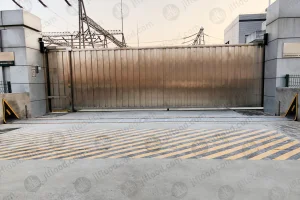
Perimeter gates protecting high-voltage transformer bays, switchgear rooms, and control centers from water logging, preventing widespread regional blackout events.
For international EPC contractors, civil engineers, and procurement agents, specifying hydrodynamic self-closing flood barrier systems requires adherence to rigorous testing criteria. Ensure your RFP documents include the following verification requirements:
Expert engineering answers to common procurement, installation, and performance inquiries regarding self-closing flood gates.
The gate rests inside a recessed stainless steel ground chamber. When rising floodwater reaches the entrance, water naturally flows into the chamber through external inlet grates. The accumulation of water creates hydrostatic buoyancy beneath the hollow, airtight barrier panel, causing it to pivot upward automatically. As the water level rises, pressure pushes the panel tightly against side jamb seals, locking it in place without pumps, motors, or human intervention.
Our heavy-duty drive-over models are constructed with high-grade structural aluminum extrusions or stainless steel internal ribbing designed to withstand high axle loads (up to 40 tons). The recessed basin frame evenly distributes vehicle load into the concrete sub-foundation, ensuring no deformation occurs during normal daily traffic operation.
Because the system features no electric motors or electronic sensors, maintenance is minimal. Bi-annual inspections are recommended to clear leaves or silt from the bottom basin drainage slots, check the flexibility of the EPDM seals, and clean the hinge pivots. Lubrication of side guide tracks ensures smooth 20+ year operation.
Yes. We supply both embedded models (requiring a shallow ground trench) and surface-mounted modular models. Surface-mounted designs sit directly on existing concrete surfaces with low-profile ramp transitions, making them ideal for existing metro entrances or heritage buildings where floor excavation is restricted.
Standard modular units maintain a manufacturing lead time of 15 to 25 business days depending on total linear meter requirements. Custom-engineered spans or specialized transit-grade orders typically require 30 to 40 days, inclusive of pre-shipment hydrostatic pool testing and international shipping documentation.
Explore specialized embedded and surface installation flood defense barriers tailored for electrical substations, metro stations, and critical infrastructure.