Explore engineered hydrodynamic flood barriers deployed across tier-one subway systems, energy substations, and critical civil defense infrastructure.
As extreme meteorological events, flash urban flooding, and cloudburst typhoons intensify across major metropolitan corridors worldwide, commercial real estate developers, municipal engineering authorities, and EPC contractors are executing a massive paradigm shift in climate resilience procurement.
Traditional flood gates rely heavily on electrical power grids, manual labor intervention, or complex sensor-driven actuators. However, global flood case studies prove that extreme urban waterlogging events coincide with localized power grid collapses and sudden labor displacement. Active systems suffer a 42% operational failure rate during blackout conditions.
Modern architectural standards mandate unpowered automatic flood protection barriers. Powered purely by physical fluid dynamic mechanisms—hydrostatic pressure and Archimedes buoyancy—these gates deploy autonomously within seconds of water accumulation, eliminating human error and power dependency entirely.
While manual aluminum flood boards require ongoing labor costs for storage, maintenance drills, and emergency deployment logistics, flush-mounted hydrodynamic automatic flood gates offer a 20-year service lifecycle with near-zero standby operating expenses and seamless vehicle drive-over convenience.
Global procurement intent for terms like "Wholesale Stops Water Flood Barrier Supplier" has transitioned from basic price inquiries to deep engineering evaluations of dynamic water testing credentials, structural deflection formulas, EPDM seal longevity under UV exposure, and BIM-compatible embedment CAD drawings.
Headquartered in Qinhuai District, Nanjing, Jiangsu Province, Nanjing Junli Technology Co., Ltd. represents the apex of Chinese high-tech engineering in intelligent flood control systems, leveraging world-class metallurgy, structural engineering, and precision robotics.
Junli Technology integrates four core technological segments: intelligent civil defense, intelligent flood control, intelligent bridge systems, and energy sector protection. Utilizing high-tensile 6063-T6 marine-grade aluminum alloys and 304/316 stainless steel foundation chambers, our flood gates withstand heavy vehicular axle loads exceeding 30–50 metric tons.
Unlike trading companies that rely on 3D computer renderings, Junli Technology owns a custom full-scale hydraulic testing pool. Every customized barrier batch undergoes rigorous pressure testing under full head design levels to measure seal leakage rates, panel deflection, and self-rising response times prior to international dispatch.
We provide full B2B support including civil works drawings, embedded frame templates, English maintenance manuals, spare seal kits, and remote engineering commissioning. For megaprojects, engineer dispatch and technical site inspections are coordinated globally.
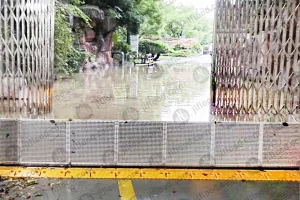
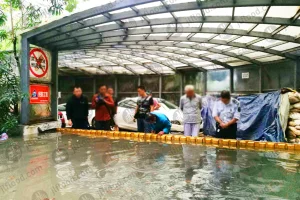
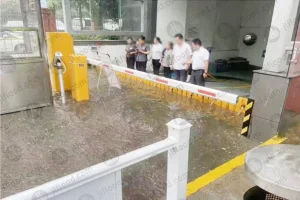
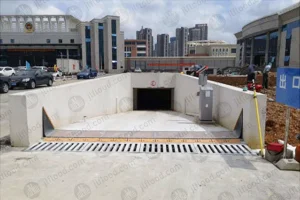
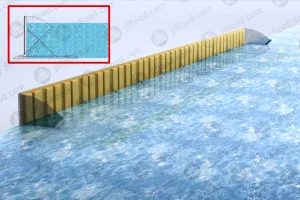
The hydrodynamic automatic flood gate operates on pure mechanical physics. Engineered for underground garage ramps, subway concourses, and substation perimeters, the system stays flush with the road surface during normal weather.
| Operational Phase | Physical Mechanism | System Status | Protection Level |
|---|---|---|---|
| 1. Normal Condition | Flush mount level with ground surface; internal drain pan handles routine rainwater runoff. | Drive-over open access for heavy trucks, cars, and pedestrians. | Standby Mode |
| 2. Water Inflow Trigger | Rising water flows over kerb inlet into bottom chamber; air vents release trapped pressure. | Buoyancy force initiates panel upward tilt within 0.1–0.5 seconds. | Automatic Activation |
| 3. Full Elevation | Hydrostatic pressure pushes floating panel against top locking frame. EPDM gaskets compress tightly. | Barrier panel reaches maximum retaining height (up to 2,000mm head). | 100% Watertight Defense |
| 4. Water Recession | Surface water drains via bottom sump outlet; hydrostatic head subsides gradually. | Panel returns smoothly to recessed floor trough without manual intervention. | Automatic Reset |
Tailored engineering configurations designed to protect high-value assets against catastrophic water ingress.
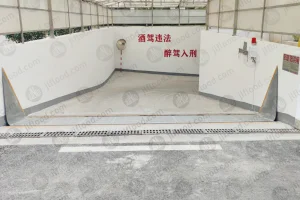
Flush embedded barriers installed at car park entrance ramps. Eliminates the need for manual flashboard assembly during sudden nighttime cloudburst storms. Fully certified for continuous high-frequency vehicular traffic.
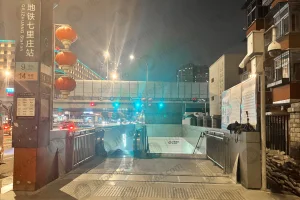
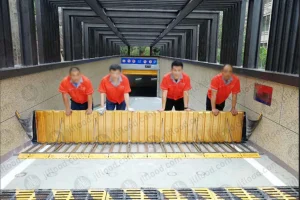
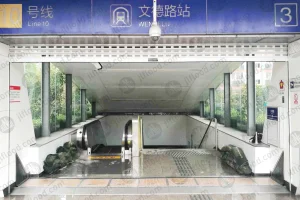
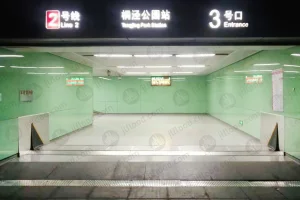
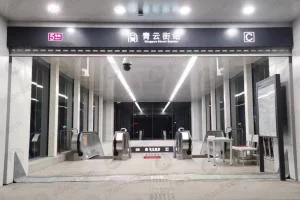
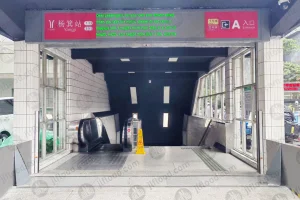
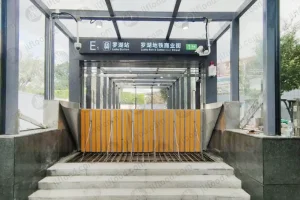
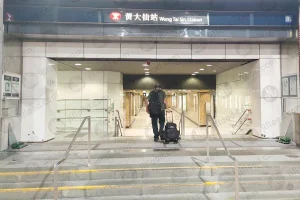
Deployed across metro station entrances, inter-station connection channels, and underground ventilation shafts. Field-proven in rail networks across Guangzhou, Beijing, Suzhou, Dalian, Nanjing, and Hong Kong.
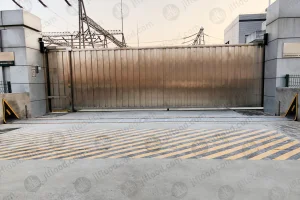
Essential defense for main power grid perimeter gates, cable trench penetrations, and transformer room access doors. Prevents regional blackout risks caused by transformer flooding.
The barrier panel is housed flush inside a recessed foundation chamber. Rising surface water flows into the chamber and generates buoyancy plus hydrostatic pressure, which lifts and locks the panel into the retaining position. No power supply, sensors, pumps or human operation are required, so the gate still works during a blackout — the exact moment most urban floods occur.
Standard hydrodynamic units cover retaining heights from 0.5 m to 2.0 m, with single clear spans up to 6 m and multi-leaf arrays for driveway or station entrances above 20 m. Light flip-up models are available for pedestrian doorways and equipment rooms.
Yes. Every design is validated in our own water-testing pool for lifting time, seal leakage rate and structural deflection, and typhoon-season field records from installed projects are documented. Third-party inspection reports and water-retaining test videos can be issued with each shipment.
We provide civil-works drawings, embedded-frame templates, remote commissioning guidance, spare seal kits and English installation and maintenance manuals. Engineer dispatch for large infrastructure projects can be arranged through our global service team.
Select from our specialized line of metro connection barriers, surface installation modules, self-closing gates, and flip-up systems.