Explore our engineered wholesale surface type flood barriers, hydro-buoyancy automatic gates, and perimeter protection units designed for metro networks, power utility gates, and subterranean commercial ramps.
Analyzing the critical shift from reactive manual flood containment to autonomous, hydrodynamic surface-mounted flood protection across urban environments worldwide.
As global extreme weather events become more frequent and unpredictable, traditional flood defense systems—such as manual sandbagging, temporary modular demountable walls, and electromechanical active gates—reveal critical failure points. Grid power outages during major storm surges frequently paralyze electric hydraulic pumps. Human operational lag, missing onsite personnel, and rapid flash-flood accumulation leave subterranean assets like subways, underground parking facilities, and high-voltage transformer substations vulnerable to catastrophic water inundation.
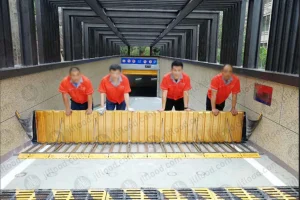
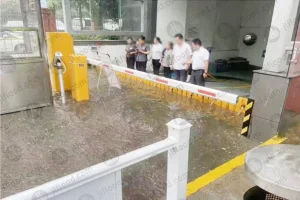
Surface Type Flood Baffles (especially surface-mounted automatic hydrodynamic barriers) have emerged as the global benchmark for modern climate resilience engineering. Unlike embedded designs that require extensive floor excavation, deep trenching, and disruption of underlying utilities, surface-type baffles feature low-profile ramping systems anchored directly onto existing reinforced concrete slabs. Operating purely on hydro-buoyancy principles, water rising into the base chamber automatically elevates the barrier door panel to retain incoming floodwaters without human intervention, electricity, or electronic sensors.
Operates autonomously via water buoyancy and hydrostatic pressure differential. Continues functioning perfectly during municipal power grid failures and severe weather blackouts.
Direct bolt-on surface mounting eliminates deep sub-grade excavation. Ideal for operating metro entrances, heritage commercial buildings, and live industrial substations.
Engineered structural leaf panels support continuous heavy vehicle traffic (up to 30-ton axle loads) without structural deformation when resting flush in the default open position.
Detailed physical mechanisms, structural alloy composition, and FEA-validated sealing architecture behind high-performance surface flood baffles.
The operational foundation of the wholesale surface type automatic flood baffle rests upon fluid mechanics: specifically Archimedes' Principle and hydrostatic thrust equilibrium. When surface water runoff exceeds kerb height and flows into the barrier's shallow retention frame, water fills the internal float chamber beneath the structural baffle panel.
Core Mathematical Principle: The buoyant force ($F_b = \rho_{water} \cdot V_{displaced} \cdot g$) acts upon the hollow internal chamber design, overcoming the resting moment of the baffle panel. As the water level rises, hydrostatic pressure ($P = \rho \cdot g \cdot h$) exerted against the wet face creates an exponentially tight dynamic seal against the dual EPDM perimeter gaskets.
When floodwaters recede, the accumulated water inside the base tray drains passively through one-way check valves and gravity-fed drainage outlets, allowing the baffle panel to lower smoothly back to its horizontal position flush with the ramp surface, permitting unrestricted traffic flow once again.
Manufacturing flood mitigation systems for 25+ year lifespan in aggressive urban environments demands rigorous structural metallurgy. Wholesale factories must adhere to international materials specifications:
| Component Assembly | Primary Material Alloy | Standard Certification | Performance & Corrosion Resistance Profile |
|---|---|---|---|
| Structural Baffle Panel | Stainless Steel SUS304 / SUS316L or Al-6063-T6 | ASTM A240 / EN 10088-2 | High tensile strength (>520 MPa), resistant to road salt, urban chemical runoff, and impact from floating debris. |
| Base Housing & Drive Tray | Hot-Dip Galvanized Q235B / SUS304 Frame | ISO 1461 / GB/T 13912 | Coating thickness ≥85 μm ensuring zero degradation under perpetual wet-dry cycles in subterranean drainage basins. |
| Dynamic Water Sealing | Triple-Lip Vulcanized EPDM / Silicone Elastomer | ASTM D2000 / ISO 3302-1 | UV-resistant, ozone-proof elastomeric recovery; operational range -40°C to +120°C; leak rate <0.05 L/hr per meter. |
| Pivot Hinges & Torsional Rods | Duplex Stainless Steel UNS S31803 (2205) | ASTM A240 / EN 10283 | Exceptional resistance to pitting corrosion and fatigue stress caused by frequent heavy vehicle drive-overs. |
Understanding factory cost drivers, volume-tiered B2B pricing, and OEM/ODM custom manufacturing specifications for civil engineering procurement.
When sourcing surface type flood baffles directly from Chinese manufacturing plants (such as Nanjing Junli Technology Co., Ltd.), pricing is governed by clear opening width (span), standard retaining height (ranging from 300mm to 1200mm+), material selection (Aluminum vs. Stainless Steel), and vehicular load rating requirements. Below is a standard wholesale reference price matrix for project procurement planning:
| Baffle Model Category | Standard Retaining Height | Load Rating Class | Wholesale Estimated Price (FOB) | Primary Industrial Application |
|---|---|---|---|---|
| Light Surface Baffle (Alloy) | 300 mm – 600 mm | Pedestrian / Light Car (3-Ton) | $280 – $420 / Linear Meter | Commercial door thresholds, subway pedestrian entrances, utility rooms. |
| Heavy-Duty Ramp Surface Baffle | 600 mm – 900 mm | Heavy Vehicle (20 to 30-Ton) | $450 – $680 / Linear Meter | Underground parking garage driveways, logistics park loading docks. |
| Hydrodynamic Substation Gate Baffle | 800 mm – 1200 mm | Industrial / Perimeter Gate | $600 – $950 / Linear Meter | Electrical power transformation substations, critical utility perimeters. |
| Modular Extra-Wide Span Array | Custom (>1200 mm) | Specialized / Heavy Machinery | Project-Based Quote | Metro connection channels, riverbank openings, civil air defense portals. |
Understanding these engineering variables enables procurement managers to optimize specifications without compromising flood protection safety margins:
Standard SUS304 stainless steel provides robust corrosion resistance for domestic urban sites. coastal regions or chemical facility perimeters require grade SUS316L or marine-grade anodized aluminum (25-micron coating depth), which adds approximately 15%–22% to material raw costs.
Single spans exceeding 4.5 meters require internal honeycomb rib stiffeners and intermediate multi-leaf mechanical couplings to prevent middle-point elastic deflection under maximum hydrostatic head pressure.
Low-sloped surface transition ramps ensure zero disturbance to low-chassis sports vehicles or heavy delivery trucks. Precision laser-cut anti-slip tread patterning adds nominal cost while dramatically enhancing operational safety.
Deployment scenarios across global market sectors, civil works integration procedures, and international code compliance frameworks.
Surface type flood baffles solve specific spatial and structural challenges across four primary urban asset categories:
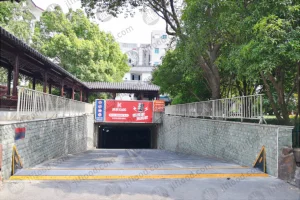
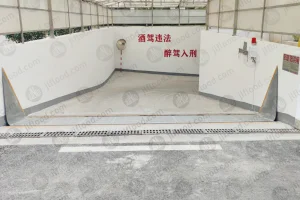
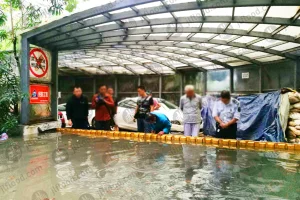
Installed at top-of-ramp or bottom-of-ramp driveways. Surface-mounted designs prevent cutting into post-tensioned slab tendons while providing 100% passive security during flash floods when parking staff are absent.
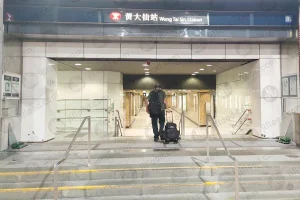
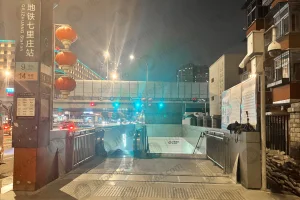
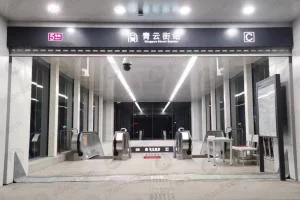
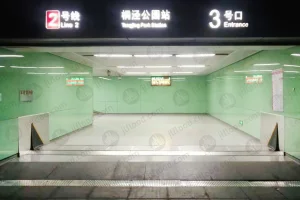
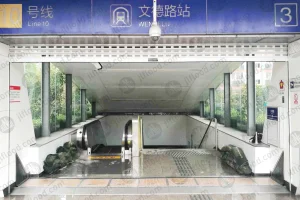
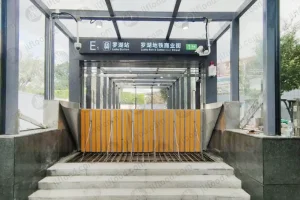
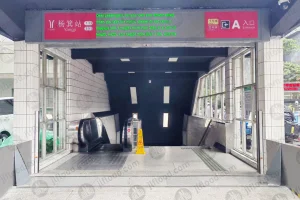
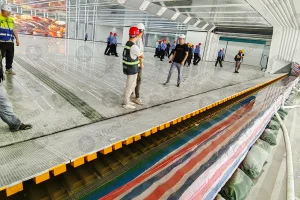
Protects station entry stairwells and underground connection channels. Validated in high-density metro operations including Guangzhou Metro, Dalian Metro, Beijing Metro, and Hong Kong MTR network connections.
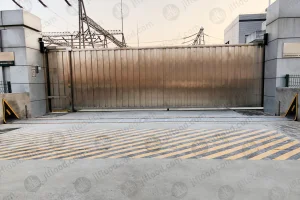
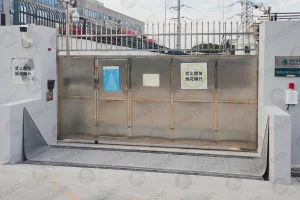
Secures transformer room doorways and perimeter access gates. Electric grid sub-stations cannot afford flood-induced short circuits; power-free surface baffles guarantee protection even during complete power loss.
To qualify for municipal tenders and international insurance premium discounts (e.g., FM Global guidelines), wholesale flood protection barriers must comply with internationally recognized test protocols:
How next-generation surface flood barriers are merging hydro-buoyant mechanical physics with IoT telemetry and ultra-lightweight composite materials.
While mechanical activation remains 100% powerless and autonomous, future surface baffles integrate micro-powered LoRaWAN / NB-IoT limit switches. When water triggers the barrier elevation, real-time wireless alerts dispatch instantly to municipal smart-city command hubs.
R&D is transitioning structural panel cores toward high-strength composite polymers. This reduces total barrier weight by 40% while doubling yield stress resistance, allowing wider single-span installations without center support posts.
Next-gen bottom tray geometries feature smooth anti-sediment vortex channels, ensuring silt, mud, and street debris carried by initial flood flows are automatically flushed out during drainage cycles, minimizing maintenance schedules.
Direct answers to common questions regarding surface flood baffle specifications, installation requirements, factory customization, and shipping logistics.
Review our specialized embedded, modular hydrodynamic, and self-closing flood barrier series available for direct factory-direct wholesale distribution.