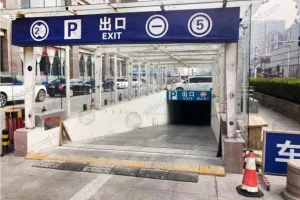
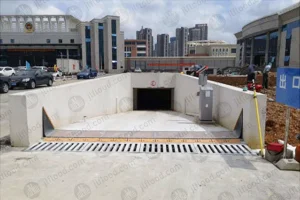
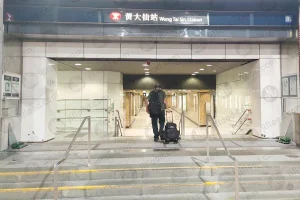
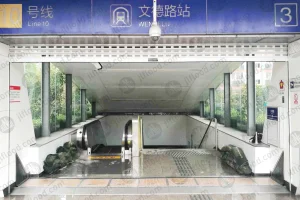
Direct factory supply of power-free, hydrodynamic self-rising flood gates designed for subways, electrical substations, and underground commercial garages.
In modern civil engineering and municipal flood risk planning, reliance on manual barrier deployment, sandbags, or electrically dependent motorized flood gates represents a catastrophic single point of failure. Urban pluvial flooding during extreme typhoon and convective storm events routinely destroys electrical distribution infrastructure before floodwaters peak, rendering automated electric flood barriers completely inert exactly when needed most.
Traditional flood control mechanisms depend heavily on human intervention or electrical power grids. During severe weather, human emergency response teams face physical blockades, while power grid outages disable automated motorized pumps and gates, leading to submerged basements and subway inundation within minutes.
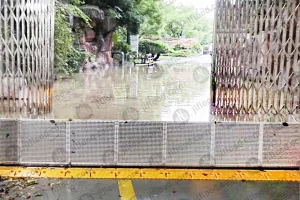
Hydrodynamic water activated barriers operate purely on environmental physics. Utilizing natural hydrostatic pressure and hydrodynamic buoyancy forces generated by incoming surface floodwater, the barrier gate automatically rises to seal entry channels without sensors, motors, or human attendance.
By removing human latency and electrical vulnerability from the flood defense equation, hydrodynamic self-rising barriers achieve a 100% operational success rate during regional blackouts, ensuring structural assets remain uncompromised throughout multi-day typhoon surges.
A comprehensive technical breakdown of how high-capacity hydrodynamic water activated barriers withstand hydrodynamic impact, lateral hydrostatic pressure, and heavy municipal vehicular traffic.
Industrial-grade flood gates built for commercial entrances and transit hubs utilize structural stainless steel (SUS304 or SUS316L) or high-tensile architectural aluminum alloy 6063-T6. The structural framework is calculated using Finite Element Analysis (FEA) to endure dynamic vehicle rollover load classes matching AASHTO HS-20 and European EN 124 D400 / F900 standards.
Preventing water migration under multi-meter pressure heads requires a sophisticated multi-stage sealing system. As the barrier door lifts under hydrodynamic buoyancy, the sealing profile dynamically tightens against side wall channels.
China's modern manufacturing infrastructure has established the world's most advanced hub for hydraulic safety engineering, offering international project developers unmatched technical capabilities, production scalability, and cost efficiency.
Nanjing and the broader Jiangsu industrial cluster integrate specialized raw material refining, precision CNC laser cutting, automated robotic welding, and specialized EPDM gasket vulcanization within an immediate regional supply chain radius. This cluster density reduces lead times from months to weeks.
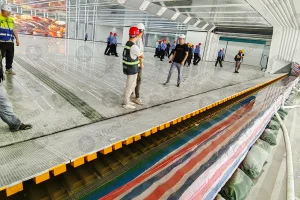
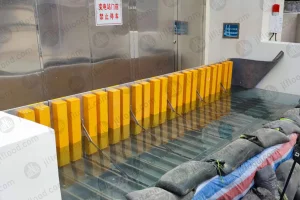
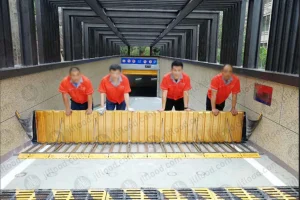
Leading Chinese factories house full-scale hydraulic testing pools capable of simulating real-world flash floods, dynamic wave action, and maximum hydrostatic head pressures up to 2.0m. Every barrier order undergoes rigorous pre-shipment water tightness testing certified by video evidence and third-party inspection agencies.
Global civil engineering designs vary significantly. Chinese manufacturers excel at custom structural adaptation—engineering tailored pit frame depth profiles, curved track radius designs for underground parking ramps, and modular multi-leaf arrays exceeding 20 meters in total clear opening width.
By leveraging high-volume component production and vertical factory integration, Chinese wholesale suppliers deliver heavy-duty hydrodynamic flood barriers at 40% to 60% lower capital cost compared to Western European or North American counterparts, without sacrificing structural safety factors.
Different civil access points demand tailored physical configurations. Hydrodynamic water activated barriers provide specialized mitigation across high-risk urban critical infrastructure nodes.
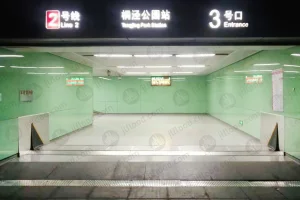
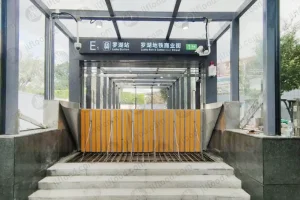
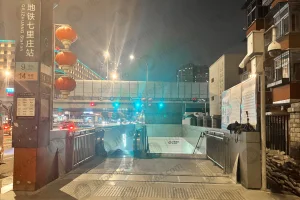
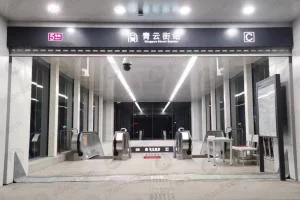
Subway system portals represent major points of vulnerability during catastrophic cloudbursts. Floodwaters pouring down stairwells can paralyze municipal mass transit networks within minutes.
Substation inundation causes widespread regional electrical blackouts, destroying multi-million dollar transformer equipment and cutting power to critical care facilities.
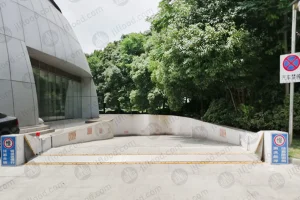
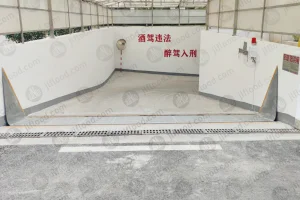
Underground garages in commercial shopping malls, hospitals, and residential complexes act as natural catchment basins for urban storm runoff.
Subterranean communication corridors and underground pedestrian thoroughfares require unstaffed automatic flood isolation.
Nanjing Junli Technology Co., Ltd. (headquartered in Qinhuai District, Nanjing) is a recognized high-tech engineering enterprise. Every barrier model is validated in our specialized hydraulic pool and proven under severe typhoon-season conditions.
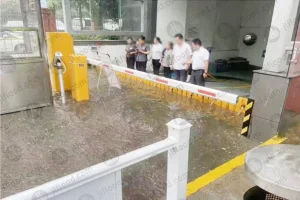
During Typhoon Bebinca in 2024, extreme rainfall inundated regional urban centers. Commercial underground car parks equipped with Junli hydrodynamic automatic flood gates successfully blocked aggressive surface runoff automatically, preventing millions in property damage without human intervention or electric power.
Custom-engineered hydrodynamic barriers installed across Guangzhou Metro, Beijing Metro, and Suzhou Metro connection channels. Designed to handle high pedestrian foot traffic daily while providing instant passive activation when surface water levels breach safety thresholds.
Perimeter protection deployed at critical electrical substations in Jiangsu, Beijing, and Anhui provinces. The installations provide continuous passive flood protection, safeguarding transformer units against sudden flash urban waterlogging events.
Watch full-scale water flow testing demonstrating the 0.1s dynamic activation, panel buoyancy elevation, and zero-leakage seal performance under measured hydrostatic head pressure.
As global urbanization increases surface impermeability and climate disruption triggers more frequent high-intensity precipitation events, flood mitigation strategies are undergoing significant evolution.
Municipal planning authorities worldwide are phasing out manual sandbags in favor of permanent passive flood protection systems. Updated building codes across Asia, Europe, and North America increasingly mandate unpowered, self-activating barriers for sub-grade entrance permits.
Future hydrodynamic barriers integrate non-electric mechanical reliability with wireless IoT sensors. Solar-powered or micro-turbine sensors transmit real-time deployment status, water depth metrics, and maintenance alerts directly to Smart City operations centers.
Next-generation water activated barrier designs focus on shallow embedment frame depths (under 200mm). This allows rapid retrofit installation into existing building slabs without disturbing sub-surface municipal utility networks or structural footings.
Navigating international flood protection procurement requires structured technical evaluation, quality assurance protocols, and smooth logistical execution.
Provide structural clear width measurements, curb elevations, expected water flow velocity, and peak flood depth requirements (e.g., 0.5m, 1.0m, or 2.0m retaining heights).
Factory engineering teams generate custom shop drawings, embedded box concrete pouring details, rebar layout clearances, and FEA load calculation reports for consultant approval.
Prior to dispatch, full-scale hydraulic pool testing is conducted. Client engineers or third-party inspectors verify lifting time, zero-leakage seals, and mechanical reset functionality.
Barriers are secured in heavy steel-framed export wooden crates with anti-corrosion moisture wrapping, delivered with complete English installation manuals and maintenance toolkits.
Essential technical answers for civil engineering consultants, procurement managers, and municipal project directors.
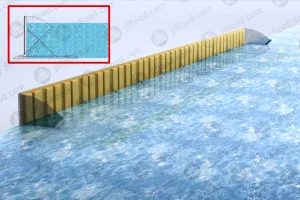
The barrier panel sits completely flush within a recessed ground pit during dry conditions. When flooding occurs, incoming surface runoff flows through intake grates into the recessed foundation chamber. As water fills the chamber, natural buoyancy lifts the dynamic panel. Hydrostatic pressure from rising external floodwaters then forces the panel into a tightly locked, vertical retaining position against marine-grade EPDM seals. The process requires zero pumps, sensors, or electrical power, ensuring 100% operational reliability during storm-induced power outages.
Standard hydrodynamic self-rising barrier modules support retaining water heights from 0.5 meters up to 2.0 meters per panel leaf. Single clear spans are manufactured up to 6 meters wide. For wider openings, such as multi-lane underground garage ramps or wide subway plaza channels exceeding 20 meters, modular multi-leaf arrays with removable or pop-up intermediate support posts are utilized to provide continuous protection.
Yes. Embedded-type surface flood gates are engineered specifically for high-load vehicular traffic. Fabricated from thick extruded structural aluminum alloy or heavy stainless steel framing, standard models support axle loads up to 30 to 60 tons (compliant with EN 124 D400 / F900 standards). Vehicles can drive over the top surface plate daily without affecting the internal hydraulic buoyancy mechanism.
For embedded models, the contractor prepares a recessed concrete trench according to factory-provided CAD structural drawings, including integrated drainage outlets connected to the site storm network. The embedment frame box is set into the trench, leveled, and cast into reinforced concrete. Surface-mounted or flip-up models require only a level, structural concrete slab for anchor bolt fixing, making them ideal for existing building retrofits.
Every customized barrier system undergoes factory hydraulic pool testing prior to packaging. The complete unit is installed inside a test pool where dynamic water inflow, elevation speeds, seal compression rates, and static pressure leakage levels are measured under full design head. Factory Acceptance Test (FAT) reports, material mill certificates, and HD video documentation are provided with every shipment.
With high-grade SUS304/SUS316 stainless steel or anodized aluminum construction, the structural lifecycle exceeds 20 to 30 years. Maintenance is simple: periodic visual inspection, clearing leaves or debris from the bottom trench, washing out sediment with a hose, and inspecting the flexible EPDM rubber seals annually. Seal replacement kits are modular and easily installed on site.
Explore our secondary catalog of embedded, surface-mounted, and heavy-duty automatic flood gates for specialized technical specifications.
Submit your entrance dimensions, clear widths, and target flood protection heights. Our hydraulic engineering team will return complete technical submittal packages within 24 hours.
Nanjing Junli Technology Co., Ltd.
No.104, Shi Men Kan, Qinhuai District, Nanjing, Jiangsu Province, China
Phone: +86 173 9795 7068
Hours: Mon – Sat, 08:30 – 18:00 (GMT+8)
Email: [email protected]
Global Service: CAD/BIM guidance & English manuals