
Top-tier automatic water-retaining flood barriers tailored for commercial, transport, and energy infrastructure installations across Great Britain.
The UK climate landscape is experiencing an unprecedented escalation in hydrological risk. According to data from the UK Climate Projections (UKCP18), winter precipitation events are projected to increase in intensity by up to 35% over the coming decades, while sea level rises along the English Channel, North Sea, and Irish Sea estuaries threaten coastal and inland municipal centers alike.
Traditional flood defense mechanisms—such as manual sandbagging, temporary demountable aluminum flood boards, and electrically actuated pump gates—fail when key vulnerabilities collide: sudden cloudbursts (pluvial flooding), power grid collapses during severe storms, and a lack of on-site maintenance personnel during unexpected surge hours.
To meet the stringent guidelines set out by the Environment Agency (EA), CIRIA C753 / C735 standards, and BS 851188-1:2019, asset owners, architectural specifiers, and civil engineering firms throughout England, Scotland, Wales, and Northern Ireland are transitioning to passive hydrodynamic flood retention barriers.
Eliminating human dependency and electrical power failure points through Archimedes' principle and hydrostatic fluid dynamics.
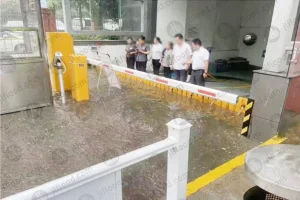
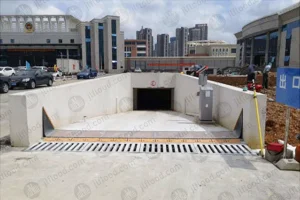
Under normal dry conditions, the flood panel rests completely flush within a ground-embedded concrete foundation trench. Pedestrians, cars, and heavy commercial HGVs (up to EN 124 D400 loading) can pass smoothly without structural impedance.
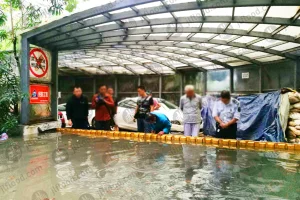
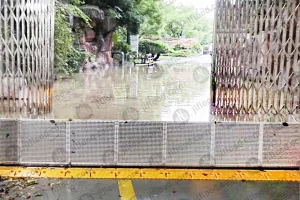
When surface floodwaters breach the kerb and flow into the recessed foundation basin, the natural buoyant force lifts the specialized hollow-chamber aluminum panel. Water acts as the sole driving force—no sensors, motors, or human switches required.
As water levels rise further, hydrostatic pressure forces the vertical panel tightly against side frame rubber seals (EPDM matrix). The greater the water height, the tighter the dynamic waterproof seal becomes, achieving virtually zero leakage.
| Parameter / Feature | Standard Commercial Specification | Heavy Infrastructure / Substation Spec |
|---|---|---|
| Retaining Heights (Standard) | 500 mm – 1200 mm | 1200 mm – 2000 mm (Modular extendable) |
| Structural Material | Marine-grade T6063 Aluminum Alloy / EPDM Seals | Stainless Steel 316L Base / Reinforced Structural Alloy |
| Drive Mechanism | 100% Hydrodynamic Buoyancy (Zero Power) | Hydrodynamic Passive + Dual Hydraulic Override Option |
| Load Capacity Class | EN 124 C250 (25 Tonne Vehicle Load) | EN 124 D400 / E600 (40–60 Tonne Heavy Freight) |
| Leakage Rate Performance | < 0.1 L/hr per meter of seal (Exceeds BS 851188) | Zero measurable leakage under static pressure test |
| UK Regulatory Compliance | BS 851188-1:2019, CIRIA C753, Environment Agency Approved | National Grid TS 2.08, London Underground Civil Standard |
From historical cities undergoing flood resilience upgrades to new commercial developments requiring BREEAM flood management compliance.
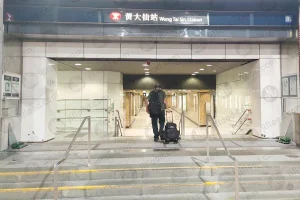
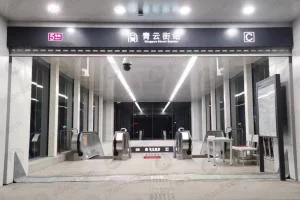
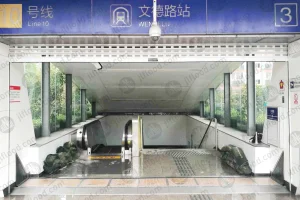
Subsurface rail networks such as the London Underground, Glasgow Subway, and Merseyrail face catastrophic risk during high-intensity rainfall events. Installing embedded hydrodynamic flood gates at station pedestrian entrances and ventilation shafts prevents devastating water ingress without disrupting daily foot traffic flow during dry weather.
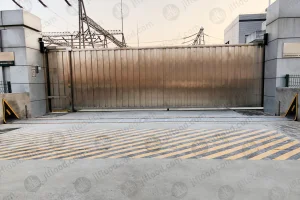
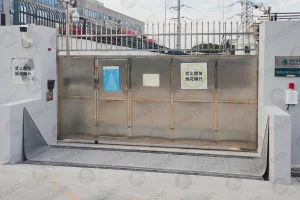
National Grid substations and regional DNO (Distribution Network Operator) sites require 24/7 uncompromised security. A single flooded transformer room can black out tens of thousands of homes. Our flood protection barriers provide automatic perimeter defenses, guaranteeing zero operational downtime during atmospheric river occurrences.
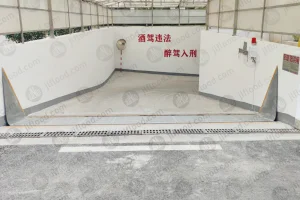
Multi-storey basements and commercial underground parking facilities in urban centers like Leeds, Manchester, and Bristol are vulnerable to flash surface runoff down vehicle access ramps. Flush-mounted ramp barriers act instantly when runoff breaches the kerb, preserving millions of pounds worth of vehicular assets and building mechanical plant rooms.
Critical healthcare infrastructure cannot afford evacuation scenarios caused by basement flooding. Installing hydrodynamic barriers at basement emergency intake bays and backup generator rooms provides guaranteed protection against severe river overflows (fluvial flooding) and localized drainage backups.
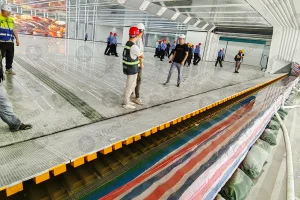
Purchasing authorities and UK engineering consultants cannot risk specifying flood barriers based on theoretical CAD models alone. Every flood gate designed in our manufacturing plant undergoes rigorous physical testing before shipment to the UK market.
Our dedicated internal testing facility features a full-scale hydrostatic testing pool capable of subjecting barriers to continuous static water pressure, wave impact turbulence, and dynamic sediment debris loading.
We support UK engineering partners through every phase of specification, civil design, and delivery to ports such as Felixstowe, Southampton, and Liverpool.
Pioneering smart materials, IoT telemetry integration, and low-carbon manufacturing processes for the UK flood defense sector.
Integrating self-powered ultrasonic water level sensors with NB-IoT remote telemetry modules. While the physical barrier remains 100% mechanically passive and unpowered, real-time trigger alerts are transmitted automatically to UK facility management apps upon water contact.
Transitioning standard aluminum extrusions to 85%+ recycled structural alloys manufactured via renewable hydro-energy, assisting UK contractors in achieving net-zero Embodied Carbon targets under BREEAM ratings.
Developing next-generation fluoropolymer and nano-enhanced EPDM seals that possess micro-crack self-healing properties, preventing degradation from oil spills, salt water, and chemical road de-icing salts used in UK winters.
Direct answers to common technical queries regarding civil installation, standards compliance, and lead times.
Explore our full suite of hydrodynamic, flip-up, surface-mounted, and embedded flood barriers optimized for UK industrial supply.
Send your project opening dimensions, site water retention height requirements, and CAD profiles to our senior civil engineering team today.


