
High-efficiency flood containment barriers designed for seamless integration into Seoul’s subterranean urban topography.
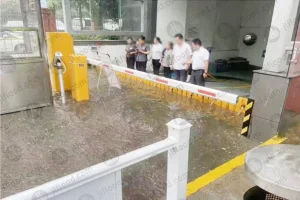
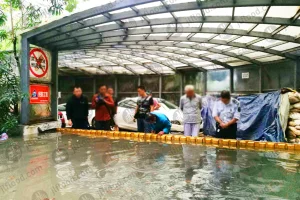
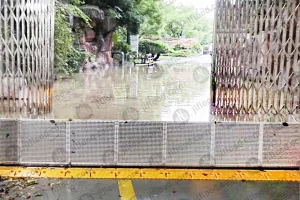
Why traditional flood mitigation fails during localized micro-burst rainfalls in Seoul's high-density metropolitan basin.
Seoul’s Metropolitan Area presents a complex hydrological environment characterized by steep mountain runoff flowing down toward the Han River basin. Low-lying districts such as Gangnam-gu (notably around Gangnam Station Exits 11 and 12), Daechi-dong, and Dorimcheon Stream basin in Gwanak-gu sit in natural funnel-shaped depressions. During extreme summer monsoons (Jangma) and typhoon events—such as the historic August 2022 flood where hourly rainfall exceeded 141.5 mm—urban drainage networks reach total hydraulic saturation within minutes.
When sewer surcharges occur, surface runoff rushes down garage ramps, subway entrance steps, and subterranean commercial shopping centers (such as COEX Mall and Express Bus Terminal Underground Arcades), turning critical underground spaces into high-risk water traps.
Traditional flood barriers deployed across South Korea historically relied on manual aluminum demountable stop-logs or electrically powered vertical lift gates. However, real-world flooding events highlight two fatal failure modes:
Nanjing Junli Technology’s Hydrodynamic Automatic Self-Rising Flood Barriers eliminate these failure vectors completely. Utilizing pure hydrostatic buoyancy and mechanical pressure leverage, our actual water-retaining flood barriers require zero electricity, zero manual intervention, and zero sensor triggers to achieve 100% watertight isolation.
A detailed look at the fluid dynamic principles protecting subterranean civil assets without human power.
Under non-flood conditions, the flood gate barrier panel rests completely flat within a recessed stainless steel foundation frame embedded into the driveway threshold, metro entrance lip, or portal curb. The top face plate withstands continuous heavy vehicle traffic (up to 40-ton axle loads) without structural deformation or noise, preserving aesthetic architectural continuity.
When surface water overflows the curb and enters the embedded retention basin, water flows through intake grates into the bottom hydraulic chamber. As water levels rise inside the chamber, hydrostatic Archimedes buoyancy forces act upon the engineered hollow panel. The front lip automatically floats upward, pivoting around a heavy-duty stainless steel hinge axis.
As the flood crest increases, pushing against the exposed face of the barrier panel, the outward water pressure further drives the panel backward into its vertical support posts. This pressure compresses continuous EPDM multi-cavity rubber gaskets along the perimeter wall side-frames, creating a tighter seal as hydraulic head pressure grows.
| Performance Matrix Parameter | Junli Passive Hydrodynamic Barrier | Manual Aluminum Stop-Logs | Electric Motorized Flip-Up Gates |
|---|---|---|---|
| Activation Requirement | 100% Water Buoyancy (Zero Power) | Manual Labor (2-4 Personnel Needed) | AC Grid Power / Electric Motor |
| Response Time | Sub-Second (Immediate Water Inflow) | 30 - 60 Minutes (Human Deployment) | 1 - 3 Minutes (If Power Intact) |
| Blackout Reliability | 100% Operational Immunity | Operational (If Staff Present) | 0% Operational (Fails without UPS/Gen) |
| Driveway Flush Integration | Seamless (Embedded 6063-T6 Frame) | Requires External Storage Racks | Requires Above-Ground Side Pillars |
| Maintenance Overhead | Minimal (Annual Debris Flush) | Seal Degradation in Storage | High (Motors, Sensors, Wiring) |
Delivering world-class precision civil engineering, full-scale hydraulic pool testing, and unmatchable cost efficiencies directly from China’s premier manufacturing hub.
Nanjing Junli Technology Co., Ltd., located in the Yangtze River Delta industrial corridor of Jiangsu, leverages China’s supreme raw material infrastructure. Our barriers utilize high-strength extruded T6-treated 6063 marine-grade aluminum alloy profiles combined with 304/316 structural stainless steel components. Compared to European or domestic Korean fabricators, our vertically integrated manufacturing facility reduces unit production costs by 35% to 50% while guaranteeing superior structural yield strengths.
Our automated robotic fiber laser cutting lines, multi-axis CNC milling centers, and specialized continuous vulcanization lines for age-resistant EPDM rubber seals ensure every barrier leaf manufactured for the Seoul market meets exact millimeter-level dimensional tolerances.
We believe actual water-retaining evidence is the only metric that matters in life-safety flood protection. Unlike trading vendors who offer speculative computer renderings, Junli operates an in-house full-scale Hydraulic Water Verification Testing Pool.
Prior to dispatching shipments to Incheon Port or Busan Port for Seoul municipal and private projects, every barrier design undergoes real-head hydrostatic pressure testing, dynamic flow impact simulation, and zero-leakage verification. Order-specific water testing video recordings, raw material mill certificates, and English structural engineering calculations are attached to every bill of lading.
Tailored flood prevention configurations engineered for high-density South Korean urban assets.
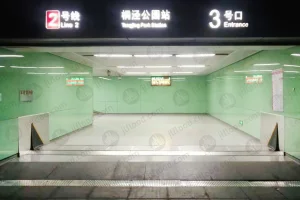
Designed for installation at Seoul Metro entrances (Line 1 through Line 9, Shinbundang Line). Surface-mounted (HM4D series) or embedded models prevent torrential surface water from entering stairwells during sudden cloudbursts, protecting thousands of daily commuters and underlying rail electronics.
Gangnam, Yeouido, and Gwanghwamun premium office towers require uninhibited daily vehicular ingress and egress. Junli flush-mounted hydrodynamic gates sit flat on ramp crests. Vehicles drive over them smoothly until floodwaters rise, automatically popping up to prevent basement vehicle submersion.
Power outages during urban floods create catastrophic secondary damage across Seoul's financial services and tech hubs. Our perimeter barrier systems safeguard cable trenches, transformer rooms, and switchgear buildings against water ingress up to 2.0 meters of hydrostatic head.
Browse our full catalog of water-retaining flood barriers certified for global infrastructure deployment.
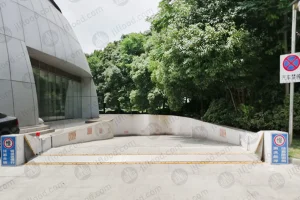
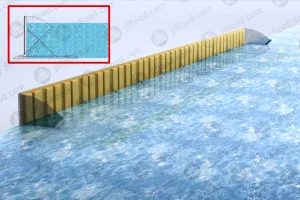
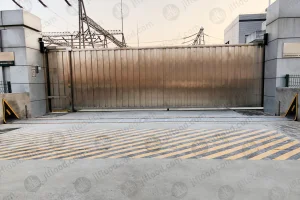
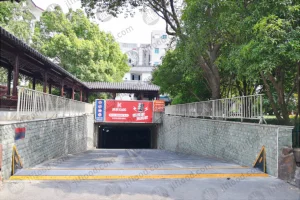
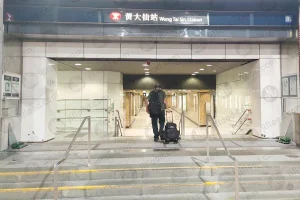
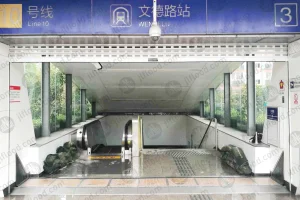
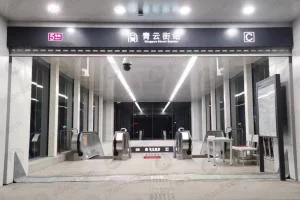
Detailed technical answers to common questions raised by South Korean civil engineers, EPC contractors, and property asset managers.
Seoul experiences severe freezing conditions during winter months. Junli flood barriers engineered for the Korean market incorporate frost-resistant EPDM vulcanized rubber seals rated down to -40°C. The bottom embedded frame features built-in electrical heating trace channel options and self-draining gravity outlets to prevent standing water from freezing inside the hydraulic chamber.
Yes. Junli engineers custom-tailor the pivot axis alignment and frame embedded depth to accommodate sloped ramp topography. For steep garage ramps common in Seoul hill districts (such as Yongsan or Seongbuk-gu), surface-mounted or stepped bottom frames maintain perfect seal integrity and horizontal lip alignment during hydrodynamic rising.
We supply complete CAD structural embedment drawings, 3D BIM models, material mill test certificates for 6063-T6 aluminum and 304/316 stainless steel, finite element structural calculations (FEA under 2.0m water head), zero-leakage hydrostatic test reports, and step-by-step English/Korean installation manuals.
We offer FOB, CIF, or DDP terms directly to project job sites in Seoul, Incheon, or Gyeonggi-do. Products are packed in export-standard reinforced fumigated wooden crates with internal moisture wrapping. Typical maritime transit from Qingdao or Shanghai port to Incheon takes only 2 to 3 days, ensuring rapid lead times for urgent flood season readiness.
Send your entrance dimensions, CAD elevation drawings, or site photographs directly to our engineering department for a free, customized hydrodynamic flood protection proposal within 24 hours.


