Factory-tested, hydrostatic pressure-verified automatic flood barriers engineered specifically for high-reliability municipal and commercial deployment across Uzbekistan.
An engineering whitepaper by Nanjing Junli Technology Co., Ltd. on structural hydraulic protection, hydrological testing paradigms, and localized civil resilience under Uzbekistan’s modernization mandate.
Under the strategic framework of Uzbekistan Vision 2030, the Republic of Uzbekistan is experiencing unprecedented urban expansion, industrial park construction, and massive transportation infrastructure development. Major metropolises such as Tashkent, Samarkand, Bukhara, and Namangan are witnessing vast investments in underground public utilities, subways, multi-level commercial parking, and strategic high-voltage power substations managed by JSC "National Power Grids of Uzbekistan".
However, the hydro-meteorological profile of Central Asia presents severe regional challenges. While Uzbekistan is predominantly characterized by an arid and continental climate, intense spring cloudbursts, accelerated snowmelt from the Tian Shan and Pamir-Alay mountain ranges, and extreme localized flash flooding (known locally as "Sel") pose significant threats to underground assets. The rapid urbanization of Tashkent has altered natural runoff pathways, converting sudden convective downpours into severe surface water accumulation within minutes.
When surface water breaches underground metro entrances, cable trenches, or basement car parks, the economic losses are catastrophic. Traditional flood control methods—such as sandbags or manually positioned aluminum stoplogs—fail due to two major critical flaws: delayed human intervention and power grid failures during extreme storms. To solve this structural vulnerability, Chinese hydrodynamic engineering technology, backed by rigorous factory water testing, provides an uncompromised defense line.
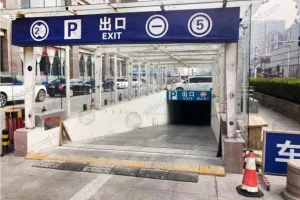
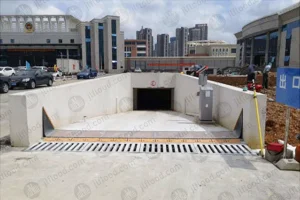
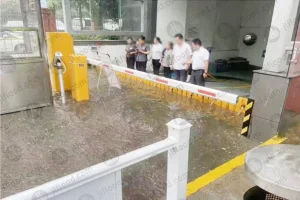
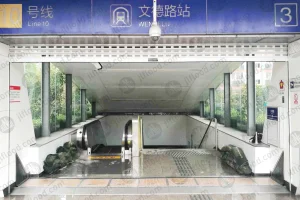
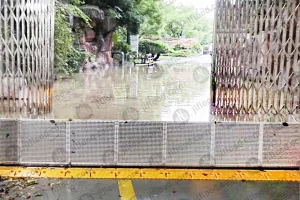
Subway concourses and subterranean parking ramps act as natural funnels for surface runoff during sudden torrential rains in Tashkent.
Electric motorized gates frequently fail during severe weather events due to grid trips, transformer submerged faults, or sensor failures.
Hydrodynamic passive activation systems use the physical buoyancy of incoming floodwater to raise barriers instantly without human operators.
Globally, urban flood defense has evolved through three distinct technical generations. First-generation barriers relied on manual labor (sandbags, modular aluminum slots). Second-generation systems introduced electromechanical actuation (hydraulic rams, electric motors triggered by water level sensors). Third-generation technology—pioneered by Nanjing Junli Technology Co., Ltd.—utilizes pure hydrodynamic automatic buoyancy mechanisms.
| Evaluation Parameter | Manual Demountable Barriers | Electromechanical Motorized Gates | Junli Hydrodynamic Automatic Barrier |
|---|---|---|---|
| Power Source | Manual Effort | Electricity / Diesel Generator | None (Pure Hydrodynamic Buoyancy) |
| Activation Time | 30 to 120 Minutes (Requires Team) | 1 to 3 Minutes (If sensor works) | 0.1 Second Passive Response |
| Seismicity & Extreme Cold (-25°C) | High Human Risk in Severe Cold | Motor freezing / mechanical Jamming | Heavy-Duty Freeze-Resistant EPDM Seals |
| Maintenance Overhead | Low Storage Cost / High Operational Risk | High (Sensors, Motors, Wiring, UPS) | Ultra-Low (Passive Mechanical Components) |
| Uzbekistan SNiP / KMK Alignment | Non-compliant for high-risk assets | Requires redundant back-up generators | Full Compliance with Passive Safety Directives |
In Uzbekistan, where winter temperatures can drop below -20°C in Northern provinces and summer ground temperatures exceed +50°C in Navoi, mechanical devices must endure high thermal expansion ranges. Electrical sensors and battery backups degrade rapidly under such climate volatility. Hydrodynamic self-closing and self-rising barriers embed directly into ground level, remaining completely flush with vehicle driveways during daily operation while providing automatic water-locking resilience during flood emergencies.
The underlying physical principles of Junli’s automatic flood barrier system rely on fluid dynamics, hydrostatic balance, and structural mechanical leverage. The system consists of three primary components: an embedded stainless-steel foundation trench, an aviation-grade aluminum alloy barrier door leaf, and high-durability EPDM triple-seal rubber gaskets.
1. The Hydrodynamic Buoyancy Activation Mechanism:
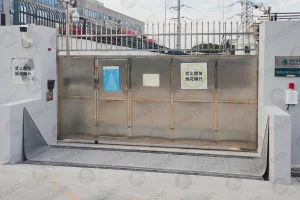
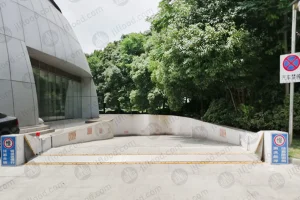
Under dry conditions, the barrier leaf rests inside the embedded frame flush with the road surface, allowing 40-ton heavy trucks to drive over smoothly. When floodwater reaches the entrance, water enters the foundation chamber through surface drainage grates. As water accumulates inside the chamber, the hollow interior structure of the door leaf creates powerful buoyant uplift. Simultaneously, hydrostatic pressure exerted by the rising water body forces the barrier leaf to rotate upward around its bottom stainless-steel axis until it locks into a vertical position at 45° to 90°.
2. Standardized Factory Water Testing Protocols:
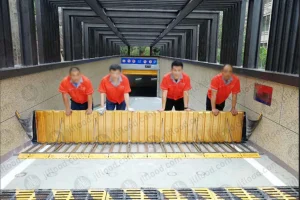
For international projects bound for Uzbekistan, empirical validation is paramount. Purchasing officers and general contractors cannot rely solely on computer simulation models. At Junli’s Nanjing manufacturing base, every production batch undergoes full-scale, real-water hydrostatic testing in dedicated testing pools prior to export packaging:
Every unit shipped to Central Asia is accompanied by factory hydrostatic test certificates, alloy material spectroscopy reports, EPDM aging resistance test documents, and step-by-step BIM/CAD civil works integration drawings translated into English and Russian.
Tailored civil-interface engineering for critical public infrastructure, industrial logistics, and high-value commercial properties.
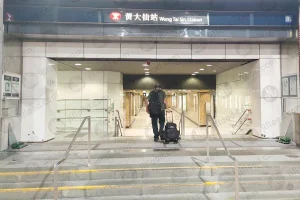
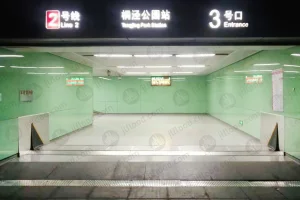
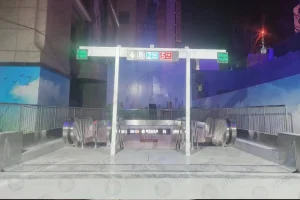
The Tashkent Metro system is expanding rapidly across districts like Yunusabad, Chilanzar, and Sergeli. Surface-mounted and embedded hydrodynamic barriers at station entrances, emergency exits, and underground connecting tunnels ensure passenger safety and protect complex electrical signaling equipment from unexpected deluge.
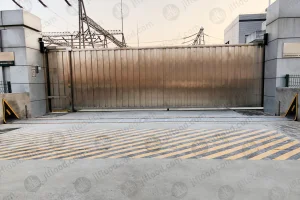
High-voltage substations powering major industrial zones in Almalyk, Chirchiq, and Angren require perimeter gateway flood barriers and cable trench isolation gates. Passive buoyancy gates guarantee zero electrical disruption during regional power grid emergencies.
Large-scale manufacturing plants, pharmaceutical warehouses, and logistics hubs in FEZ zones harbor expensive machinery and finished goods. Self-closing drive-over flood gates prevent flash flood intrusion into loading bays without obstructing heavy forklift traffic.
To ensure smooth adoption in Uzbekistan's construction ecosystem, Junli engineers design embedded foundation frames aligned with local building standards (specifically KMK and SNiP structural load specifications).
Seismic Resilience & Thermal Engineering:
Uzbekistan lies in a active seismic region (up to Magnitude 8 to 9 on the Richter scale). Junli flood barrier frames feature flexible perimeter expansion joints and high-tensile 304/316 stainless steel anchor arrays that withstand ground vibration without losing seal integrity. Furthermore, thermal expansion joints and anti-freeze drainage channels prevent ice formation inside the foundation chamber during severe winter drops.
10-Year Smart City Technology Roadmap:
As Uzbekistan transitions toward Smart City IoT frameworks, Junli is leading the integration of modern passive flood barriers with remote telemetry monitoring. Future deployments across Tashkent will feature solar-powered wireless status sensors that transmit real-time barrier angle, water level height, and maintenance alerts directly to municipal disaster command dashboards via NB-IoT networks.
Addressing critical engineering, logistics, installation, and compliance questions for Uzbekistan buyers.
Explore our full catalog of factory-tested automatic, flip-up, and embedded flood gates designed for metro lines, electrical substations, and underground garages.