


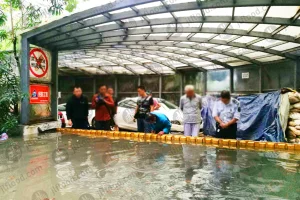

Pre-tested and hydrostatically verified automated barrier systems custom-configured for Nairobi, Mombasa, and regional East African climate challenges.
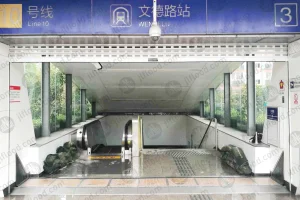
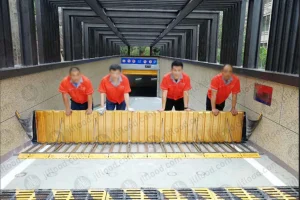
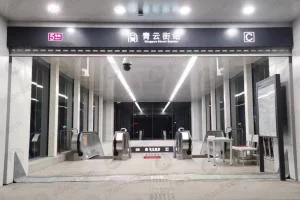
Kenya stands as East Africa’s economic and logistical engine, yet its rapid urbanization—evidenced by major infrastructure expansions across Nairobi, Mombasa, Kisumu, and Eldoret—faces an acute, escalating challenge: catastrophic flash flooding and urban waterlogging. The meteorology of the Horn of Africa is characterized by bi-modal rainfall cycles: the "Long Rains" (March to May) and the "Short Rains" (October to December). Over recent years, intensify by periodic El Niño Southern Oscillation (ENSO) anomalies and Indian Ocean Dipole (IOD) fluctuations, these rainy seasons have yielded torrential downpours exceeding 150mm within 24-hour windows.
In municipal hubs like Nairobi, the conversion of natural permeable land into dense concrete landscapes has compromised historical natural drainage corridors. Key arterial channels such as the Nairobi River Basin frequently overflow, resulting in severe surface runoff. This water naturally flows toward the lowest elevation points in modern commercial developments: underground car parks, basement utility vaults, electrical switchgear rooms, and subterranean transit walkways in high-density districts like Westlands, Upper Hill, Kilimani, and the Central Business District (CBD). Similarly, coastal infrastructure in Mombasa faces the dual threat of heavy monsoonal precipitation and high-tide storm surges, which threaten critical maritime logistics depots, dry ports, and subterranean fuel storage facilities near Kilindini Harbour.
Historically, property managers, civil engineering consultants, and public infrastructure authorities in East Africa relied on manual flood mitigation measures—primarily sandbagging, temporary aluminum slot boards, or electrically driven sump pumps. However, field data from recent flood events in Kenya reveal systemic vulnerabilities in these traditional methods:
To overcome these failure points, international engineering specifications in Kenya—guided by the Ministry of Roads and Transport, National Environment Management Authority (NEMA), and leading structural engineering consultancies—are mandating Hydrodynamic Automatic Self-Rising Flood Barriers. Engineered and manufactured by specialized Chinese factories, these passive systems operate entirely without electricity, human intervention, or electronic sensors, utilizing basic fluid dynamics and Archimedes' principle of buoyancy to achieve instantaneous 100% water defense.
Instant activation triggered purely by incoming hydrostatic surface water entering the bottom catch basin, elevating the panel automatically.
100% passive mechanical operation eliminates ongoing power draw, routine motor maintenance, and vulnerability to KPLC power outages during storms.
Reinforced aviation-grade structural aluminum extrusions support continuous heavy vehicular traffic (conforming to AASHTO HS-20 & HS-25 load rating).
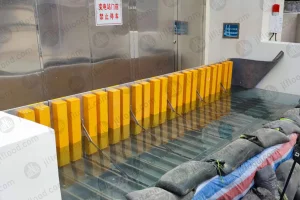
In high-stakes flood protection, an unverified barrier is a liabilities risk. Modern engineering procurement guidelines in Kenya (governed by the Kenya Bureau of Standards - KEBS, and international FIDIC contract frameworks) demand documented proof of performance. As China’s premier flood barrier manufacturing authority, our factory operates a state-of-the-art, full-scale hydraulic testing pool designed to simulate extreme tropical rainstorm conditions, dynamic hydrodynamic wave shocks, and sustained hydrostatic head pressures.
Factory Acceptance Testing (FAT) is conducted on every batch destined for export to East Africa. Unlike generic sheet metal fabricators, our engineering facility subjects every flood gate model to rigorous multi-stage water testing procedures prior to crate packing and CIF Mombasa dispatch.
The assembled barrier unit is recessed into our primary hydraulic testing basin. Water levels are incrementally raised to 100%, 125%, and 150% of the maximum design retaining height (ranging from 500mm to 2000mm). The system is held under continuous full hydrostatic pressure for 24 to 72 hours. Our engineering quality control team measures linear seal deflection and quantifies allowable leakage rates against international benchmarks (such as FM 2510 and BS EN 13564 standards). Our high-grade EPDM triple-stage sealing gaskets consistently demonstrate near-zero seepage rates (< 0.05 Liters per hour per linear meter of seal line), far exceeding standard construction tolerance limits.
Tropical floodwaters in regions like Garissa, Nakuru, or Kisumu do not rise static—they carry kinetic energy, floating urban debris, logs, and rapid surge currents. Our water testing facility utilizes high-output hydraulic wave generators to direct dynamic water shocks against the elevated barrier panel. This tests the structural resilience of the 6063-T6 marine-grade aluminum alloy extrusion profile, key hinge pin pivot assemblies, and wall-mounting embedded anchor channels under sudden impact loading.
| Testing Parameter | Chinese Factory Benchmark | Kenya Site Field Standard | Verification Method |
|---|---|---|---|
| Hydrostatic Pressure Head | Up to 2.0 Meters Water Column (150% Overload) | 0.6m to 1.2m Design Retaining Height | Full-Scale Test Pool Submergence |
| Seal Leakage Rate | < 0.05 L/hr per meter of seal line | Target Zero Visual Seepage | Calibrated Volumetric Measuring Trough |
| Buoyancy Response Time | Initial lift within 0.1s - 0.5s of water ingress | Instantaneous Passive Trigger | High-Speed Video Laser Sensors |
| Structural Deflection Ratio | < L/250 under maximum hydro pressure | Severe Structural Rigidity | Dial Gauge Deflection Transducers |
| Corrosion Resistance | Anodized Film Thickness ≥ 15µm + Fluorocarbon Coating | High Salinity (Mombasa) / UV Exposure | 1000-Hour Neutral Salt Spray Test (ASTM B117) |
Procurement directors and contractors in Kenya facing tight budget constraints often encounter exorbitant pricing from European or North American flood barrier suppliers. China’s advanced manufacturing ecosystem—centered in Jiangsu and Zhejiang industrial clusters—provides an unmatched cost-to-performance ratio. By integrating raw aluminum smelting, precision CNC extrusion tooling, automated robotic laser welding, and specialized EPDM vulcanization under one roof, our factory delivers world-class, fully tested flood defense systems at a fraction of Western landed costs.
When sourcing flood barriers for projects in Kenya, pricing is structured based on four main parameters: Retaining Height (H), Clear Width Span (W), Structural Load Rating (Vehicle vs. Pedestrian), and Installation Sub-Structure Type (Flush Embedded vs. Surface Mounting).
| Barrier Model Category | Standard Retaining Height | Application Scenario (Kenya) | Estimated Factory Price Range (FOB China) | Estimated Landed Price Range (CIF Mombasa) |
|---|---|---|---|---|
| Hydrodynamic Underground Ramp Barrier | 600mm - 900mm | Commercial Car Park Ramps (Nairobi Westlands, Kilimani) | $380 - $550 per linear meter | $430 - $620 per linear meter |
| Heavy-Duty Freight/Port Gate (HM4D) | 1000mm - 1500mm | Port Logistics Depots & Terminals (Mombasa Kilindini) | $580 - $850 per linear meter | $650 - $950 per linear meter |
| Power Substation Protection Gate | 500mm - 800mm | Substation Enclosures & Transformer Depots (KETRACO / KPLC) | $320 - $480 per linear meter | $370 - $540 per linear meter |
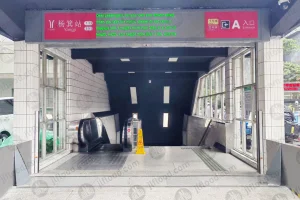
| Surface-Mounted Flip-Up Door Barrier | 400mm - 600mm | Pedestrian Entrances, Mall Pedestrian Doors, Utility Rooms | $220 - $350 per linear meter | $260 - $400 per linear meter |
*Note: Prices above serve as general budgetary guidance. Actual unit pricing varies based on custom width dimensions, specialized marine-grade anti-corrosion coatings for coastal regions, and order volume discounts.
Custom-engineered flood protection arrays designed to solve specific civil engineering challenges in Kenya’s primary urban and commercial hubs.
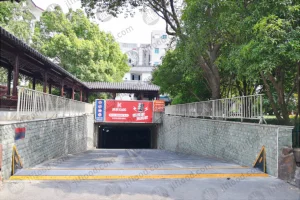
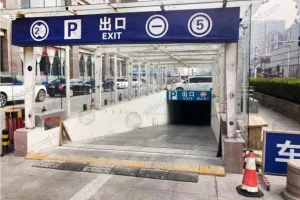
Underground ramp entrances in Westlands, Upper Hill, and Gigiri feature flush-mounted hydrodynamic barriers. Flush embedded frames allow seamless vehicle entry daily while ensuring instantaneous self-rising protection during heavy cloudbursts.
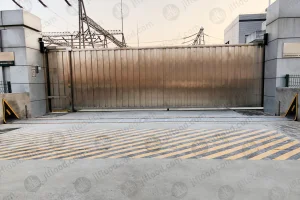
Protecting critical transformer rooms and cable vaults across regional distribution hubs. Our zero-power automatic barriers ensure uninterrupted power infrastructure even when perimeter drainage canals overflow.
High-salinity coastal environments require specialized anodized coating finishes and 316 stainless steel hardware components to resist marine atmospheric corrosion while shielding logistical warehouses from tide surges.
Consult with our lead engineering team. We supply complete CAD embedded drawings, structural calculation sheets, factory water test videos, and direct CIF Mombasa quotation estimates within 24 hours.
Send Inquiry NowExplore our specialized range of water-tested automatic gates, flip-up barriers, and substation protection units.
Detailed technical and logistical answers regarding importing, installing, and maintaining Chinese automatic flood barrier systems in Kenya.
The system operates on basic hydrostatic principles and Archimedes’ buoyancy principle. The main panel sits flush within a pre-installed ground foundation basin. When surface floodwater flows into the catch basin, internal buoyancy floats automatically raise the barrier panel. As the water level rises, hydraulic pressure forces the panel into an upright locked position against heavy-duty industrial seals. No electricity, motion sensors, human monitoring, or mechanical motors are required.
Yes. When resting flat in its non-flooded state, our reinforced structural 6063-T6 aluminum extrusion top plates are rated for heavy axle loads exceeding 40 tons (conforming to AASHTO HS-20 & HS-25 load standards). Fire engines, delivery trucks, passenger vehicles, and industrial forklifts can continuously drive over the barrier without causing structural deformation or seal degradation.
Sea freight shipments depart directly from Shanghai, Ningbo, or Guangzhou ports in China, arriving at Kilindini Harbour in Mombasa within 20 to 28 ocean transit days. From Mombasa Port, cargo is transported via the Standard Gauge Railway (SGR) freight service or container trucks to Nairobi inland container depots (ICD) within 24 to 48 hours.
We provide comprehensive export documentation packages including Mill Test Certificates (MTC), Factory Acceptance Water Test Video Records, ISO 9001 quality certificates, Structural Calculation Reports, Certificate of Origin (CO), and pre-shipment inspection verification (PVOC) documentation required by KEBS for seamless import customs clearance in Kenya.
We supply detailed 2D/3D AutoCAD civil concrete foundation drawings, embedded steel channel layout specs, and rebar reinforcement requirements. Local Kenyan contractors or civil engineering teams perform the basic concrete recess trough excavation. Our engineering team provides full step-by-step remote video commissioning guidance or can dispatch experienced installation engineers directly to site for major infrastructure projects.
Click below to submit your project opening dimensions, site photos, or tender parameters. Receive an engineer-approved quote within 24 hours.
Send Inquiry Now