
Field-tested hydrodynamic automatic flood barriers designed to protect commercial, residential, and industrial garage entrances across Norwegian coastal and urban terrains.
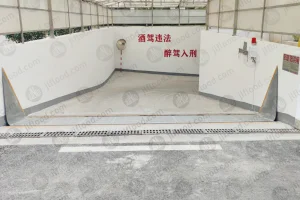
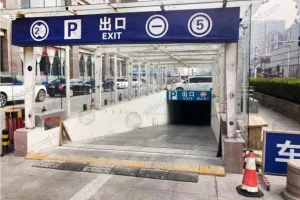
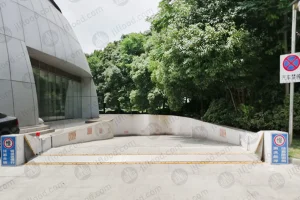
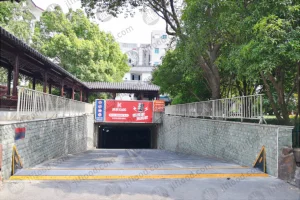
Technical evaluation of changing precipitation patterns, coastal storm surges, and the strict Norwegian building regulations (TEK17) governing underground commercial and municipal assets.
Norway’s unique geography—defined by steep fjord topographies, extensive coastlines, and rapidly expanding urban centers like Oslo, Bergen, Trondheim, Drammen, and Stavanger—presents an unprecedented hydro-meteorological risk profile. Recent meteorological assessments by the Norwegian Water Resources and Energy Directorate (NVE) indicate a marked increase in extreme cloudburst events (Overvann) alongside rising atmospheric temperatures. In coastal municipalities, severe weather phenomena such as Storm Hans have demonstrated that traditional perimeter drainage systems and manual sandbag deployments are structurally inadequate for modern subterranean infrastructure.
Underground parking garages, multi-level subterranean logistics hubs, and rail transit integration hubs represent high-value vulnerabilities. When torrential rain overwhelms municipal stormwater networks, surface runoff descends down garage entrance ramps within minutes. Under Norway’s TEK17 (Regulations on Technical Requirements for Building Works), structural integrity against 100-year and 200-year flood events is mandatory. However, cold-climate operational requirements introduce severe physical complications: standard motorized flood gates frequently experience electrical grid failure during severe winter tempests, mechanical actuators lock up under freeze-thaw slush cycles, and standard rubber seals degrade rapidly under saline coastal air exposure.
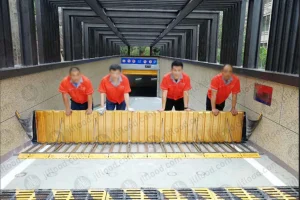
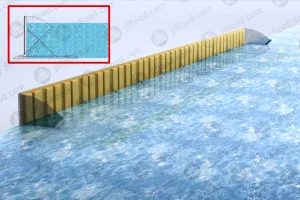
Severe storms routinely sever electrical power grids. Junli's hydrodynamic auto-rising flood barriers utilize the hydrodynamic buoyancy of incoming floodwaters to lift structural dam panels automatically without electricity, sensors, or manual activation.
Custom-formulated EPDM automotive-grade sealing gaskets paired with SUS316L marine stainless steel framing resist extreme Nordic sub-zero freeze-thaw expansion, winter slush accumulation, and heavy road-salt corrosion.
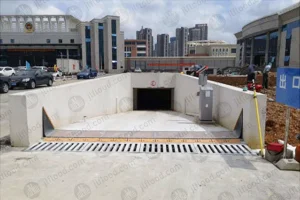
Designed to sit perfectly flush with garage access ramps, our structural embedded frame withstands heavy daily vehicle passage (up to 40-tonne axle loads) without disturbing everyday vehicle flow or snowplow blades.
Why Norwegian EPC contractors, municipal engineers, and property managers direct-source hydrodynamic flood gates from Nanjing Junli Technology.
Nanjing Junli Technology Co., Ltd. operates a high-tech manufacturing campus equipped with CNC fiber laser cutters, automated robotic arc welding stations, and high-precision bending machinery. Unlike trading intermediaries, we control 100% of the manufacturing workflow. Every garage flood barrier engineered for export to Norway undergoes rigorous physical pressure testing inside our state-of-the-art full-scale hydraulic testing pool.
We simulate dynamic water velocity, wave impact, sediment accumulation, and maximum hydrostatic retaining heads up to 2.0 meters. Leakage metrics are recorded under strict ISO 9001 and ISO 14001 quality assurance frameworks to guarantee complete zero-seepage performance prior to international logistics dispatch.
Detailed engineering evaluation comparing passive self-closing flood gates with traditional manual flood boards and electro-hydraulic barriers.
| Evaluation Parameter | Junli Hydrodynamic Passive Barrier | Manual Aluminum Stop-Logs | Electro-Hydraulic Powered Barrier |
|---|---|---|---|
| Activation Principle | Automatic Hydro-Buoyancy (Passive) | Manual Human Assembly | Electric Motor / Hydraulic Pump |
| Power Dependency | 0% Power Required (Works during blackouts) | 0% Power (Requires labor) | 100% Power (Requires backup generator) |
| Response Time | Immediate (< 30 seconds upon water arrival) | 1 to 3 Hours (Dependent on personnel) | 1 to 3 Minutes (If power intact) |
| Sub-Zero Freeze Reliability | High (EPDM Gaskets + Thermal Bottom Channel) | Medium (Manual icing removal needed) | Low to Medium (Actuator oil freezes) |
| Daily Vehicle Impact Load | Up to 60-Tonnes (Flush ramp integration) | N/A (Must be stored off-site) | 20 to 40-Tonnes (Complex mechanical joints) |
| 20-Year Operational TCO | Lowest (Minimal mechanical maintenance) | High (High ongoing labor overhead) | Highest (Motor & sensor replacement) |
Tailored structural designs deployed for commercial real estate, logistics hubs, and underground public transit infrastructure.
Urban underground parking facilities in central Oslo (Sentrum, Bjørvika, and Aker Brygge) face severe surface water overflow during summer cloudbursts. Junli’s flush-mounted embedded hydrodynamic barriers install smoothly at garage ramp crowns, ensuring seamless zero-obstacle vehicle access for tenants while providing 24/7 unassisted flood defense.
With Bergen averaging over 200 rain days per year, continuous moisture, salt-air exposure, and rapid runoff require heavy-duty corrosion isolation. Our marine-grade SUS316L automatic barriers feature specialized drainage channels and non-stick debris aprons that prevent slush, leaves, and coastal grit from fouling the buoyancy chamber.
Northern Norwegian climate zones experience prolonged freezing temperatures and extreme tidal surges. Junli barrier systems are engineered with integrated low-wattage heating cable conduits within the foundation frame to prevent sub-zero ice lockup, ensuring instantaneous hydrodynamic panel buoyancy down to -40°C.
Planning a garage flood barrier installation in Norway? Send us your driveway opening dimensions, kerb height specs, or civil drawings. We will provide detailed structural CAD proposals and tender pricing within 24 hours.
Send Inquiry NowExplore our complete range of automatic self-closing, flip-up, embedded, and surface-mounted flood protection barriers supplied directly from China to Norway.
How Nanjing Junli Technology collaborates with Norwegian engineering firms from initial survey to final sea freight delivery and installation commissioning.
Provide garage ramp opening width, slope angle, and target retaining height. Our engineering desk issues customized 2D/3D CAD embedment drawings adhering to Norwegian civil engineering standards.
Constructed using laser-cut SUS304/SUS316L stainless steel and high-tensile structural aluminum. Robotic arc welding ensures pressure-tight joints resistant to structural deflection.
Full assembly undergoes real water testing in our factory pool. Comprehensive inspection reports and video documentation are submitted prior to international packing.
Shipped via ocean freight directly to Oslo, Bergen, or Kristiansand in wooden export cases. Includes English/Norwegian step-by-step installation guides and remote technical guidance.
Expert insights on freeze prevention, compliance with TEK17 building standards, load capabilities, and shipping terms to Norway.
The Junli hydrodynamic flood barrier operates on pure hydrostatic and buoyancy physical principles. The barrier panel sits flush inside a recessed stainless steel foundation frame built into the garage entrance ramp. When surface floodwater flows toward the ramp, water enters the base chamber through intake grates. As water level inside the chamber rises, integrated high-density buoyancy modules exert upward force, raising and locking the panel automatically into a retaining posture.
For sub-zero winter operation in Norwegian locations like Oslo or Trondheim, we integrate optional thermal heating trace conduits inside the foundation chamber. These low-wattage self-regulating heat cables prevent slush and ice formation, ensuring the buoyancy mechanism remains completely fluid even when external ambient temperatures drop to -30°C.
Yes. Norwegian building regulations (TEK17 § 13-8) require structural protection against surface water run-off and 100/200-year flood levels. Junli flood barriers are engineered in strict alignment with European standards (EN 1991 Actions on Structures). The surface panels are reinforced with structural internal ribbing certified to sustain heavy vehicle passage—ranging from EN 124 Class C250 (25 tonnes) up to Class D400 and E600 (40 to 60 tonnes heavy delivery vehicles)—without structural deformation or frame displacement.
Because the system contains zero electrical motors, hydraulic pumps, or complex electronic sensors, maintenance requirements are exceptionally low. We recommend a semi-annual inspection routine: 1) Clearing accumulated leaves, grit, or road salt residue from the bottom foundation trough using a standard water hose; 2) Visually inspecting the EPDM sealing gaskets for physical damage or wear; 3) Performing a manual lift check using the built-in maintenance lever to verify smooth movement of mechanical hinges. Spare EPDM seal kits can be ordered directly from our factory for rapid delivery.
Standard manufacturing lead time for customized garage flood barrier arrays is 15 to 20 days post CAD approval. Ocean transport from Shanghai or Ningbo port to main Norwegian destinations (Oslo Port, Bergen Harbor, Larvik, or Kristiansand) takes approximately 30 to 35 days. We provide complete FOB, CIF, or DDP (Delivered Duty Paid) trade terms, managing custom export clearance, sea-worthy fumigated wooden crating, and direct delivery to your construction site in Norway.
Absolutely. While ideal for new building constructions, our engineering team regularly designs retrofit installations for existing commercial properties. Retrofitting involves cutting a shallow channel (typically 150mm to 300mm depth depending on retaining height) across the driveway concrete slab, embedding the stainless foundation chamber, connecting to local stormwater drainage conduits, and backfilling with high-strength non-shrink epoxy grout. Surface-mounted options are also available for locations where deep slab cutting is restricted.
Partner with China's leading hydrodynamic automatic flood barrier manufacturer. Direct factory engineering, robust quality control, and dependable shipping to Norway.
Send Inquiry Now

