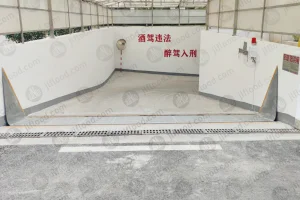
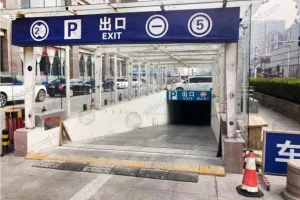
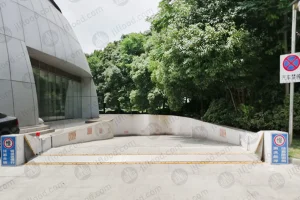
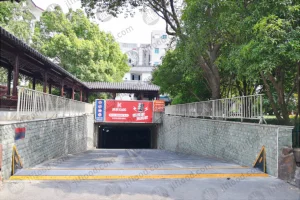
Deploying power-free, self-closing flood protection systems engineered for seamless integration into European building facades, parking ramps, and subterranean access hubs.
The urban landscape of Berlin—characterized by its glacial valley topography, high groundwater tables near the Spree and Havel rivers, and an increasingly dense network of underground garages, logistics hubs, and rail transit lines—presents unique hydraulic engineering challenges. As extreme weather events ("Starkregen" or heavy flash rainfall) become more frequent across Central Europe, traditional manual flashboards and electrically actuated flood gates are showing severe operational vulnerabilities. Mechanical power outages during severe storms frequently incapacitate motorized gates precisely when they are needed most.
This technical report evaluates why European civil engineering procurement teams in Berlin, Frankfurt, and Hamburg are increasingly partnering with top-tier Chinese flood barrier OEMs like Nanjing Junli Technology Co., Ltd. To meet stringent EU Floods Directive guidelines (2007/60/EC) and DIN standard requirements, modern flood mitigation requires non-electric, hydrodynamically auto-rising structural barriers capable of handling extreme surface runoffs while integrating seamlessly with heavy vehicle traffic ramps.
Subterranean structures in districts such as Berlin-Mitte, Charlottenburg, and Friedrichshain-Kreuzberg face two distinct flood pathways:
Conventional perimeter defenses rely heavily on human intervention or electrical sensors. However, real-world failure analyses reveal that human reaction times during sudden night storms are insufficient, and electrical grid collapses frequently freeze motorized barriers in the open position. The optimal engineering solution lies in hydro-buoyant, passive mechanical systems manufactured from structural marine-grade aluminum and engineered EPDM elastomeric sealing matrices.
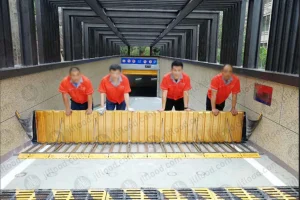
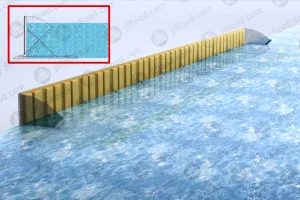
Utilizes incoming floodwater buoyancy to automatically deploy the barrier wall. Eliminates dependency on external power, PLC controllers, sensors, or manual labor during severe citywide grid outages.
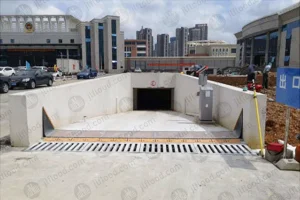
Flush embedded foundation frames engineered to withstand continuous heavy vehicular traffic (up to 40-ton axle loads, SLW60 German standard), allowing unhindered daily car access.
Constructed using T6063-T6 extruded aluminum profiles and SUS304/316 stainless steel components, offering superior resistance against de-icing salts, chemical runoff, and urban grime.
A comparative analysis of structural reliability, operational expenditure, and emergency response capabilities for commercial developers and public sector specifiers in Berlin.
| Performance Parameter | Junli Hydrodynamic Barrier (China OEM) | Traditional Electrically Actuated Gates | Manual Demountable Aluminum Stop Logs |
|---|---|---|---|
| Deployment Mechanism | 100% Passive Hydrodynamic (Buoyancy Driven) | Motorized / Hydraulic Piston Driven | Manual Physical Assembly Required |
| Grid Blackout Vulnerability | Zero Risk (No Electricity Needed) | High Risk (Requires UPS/Backup Generator) | Zero Risk (Manual Labor Dependent) |
| Activation Delay | Instantaneous (< 0.5s upon water inflow) | 30s to 3 mins (Sensor + Motor Delay) | 30 mins to 2 Hours (Labor Deployment) |
| Standby Operational Cost | €0 / Year (Zero Electrical Draw) | High (Routine Electrical/Sensor Maintenance) | Medium (Storage & Labor Training Costs) |
| Driveway Load Rating | SLW60 Heavy Duty (Up to 40T Axle Load) | Varies (Often restricted by track gear) | N/A (Barrier must be manually cleared) |
| Sealing Efficiency | Custom EPDM Continuous Compression Seal (< 0.05 L/h/m) | Mechanical Compression Seals (< 0.2 L/h/m) | Variable based on installation tightness |
Our engineering department provides custom CAD shop drawings, structural load calculations, and DIN-aligned technical specifications tailored to your project entry widths and slope ramps.
Send Inquiry NowNanjing Junli Technology Co., Ltd. operates state-of-the-art manufacturing facilities in Nanjing, Jiangsu, utilizing advanced Industry 4.0 manufacturing processes. By combining automated fiber-laser cutting, robotic TIG/MIG seam welding, CNC high-precision machining, and automated EPDM vulcanization lines, Junli achieves extreme dimensional accuracy (tolerance within ±0.5mm), critical for leak-free long-span hydrodynamic barriers.
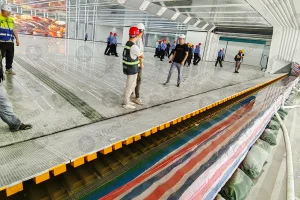
Unlike standard sheet metal manufacturers, Junli maintains a dedicated, full-scale hydrodynamic testing basin. Every custom barrier design undergoes full hydrostatic head pressure testing before export to international markets:
Custom engineering parameters derived from site surveys, architectural drawings, and local DIN requirements.
High-speed automated laser cutting and robotic seam welding ensures flawless structural frame geometry.
100% full-scale water basin immersion test to verify seal integrity, auto-buoyancy speed, and zero leakage.
Heavy-duty reinforced crate packaging with corrosion-inhibiting wrapping for direct sea freight to Hamburg/Berlin.
Partnering with a Chinese manufacturer for European civil projects requires strict alignment with local building codes, structural standards, and logistics workflows. Junli Technology provides a turnkey export package tailored specifically for General Contractors, Architectural Firms, and Municipal Authorities across Germany.
Our engineering documentation is prepared to meet European technical standards, including EN 1991 (Eurocode 1 for Actions on Structures) and German DIN 19700 guidelines for flood protection structures. We provide complete structural calculation packets for local engineering approval ("Prüfstatik").
To assist Berlin architects and MEP engineers, Junli delivers complete 3D BIM models (Revit, IFC) and 2D CAD details showing frame embedment depth, concrete trench rebar clearance, and surface-water drainage connectivity.
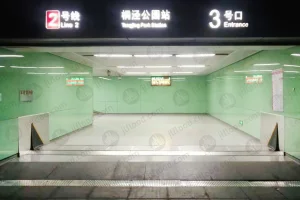
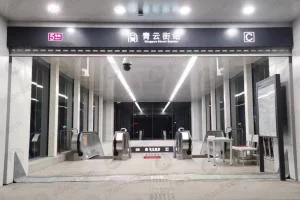
Whether designing a new commercial underground parking garage in Berlin-Mitte or retrofitting an existing underground railway station entrance, our modular frame designs allow both shallow recessed embedment and surface-mounted configurations.
We manage complete logistics operations from factory dispatch to Berlin job sites (DDP terms available). Comprehensive English/German installation manuals, step-by-step video guides, and remote commissioning support ensure hassle-free civil execution.
Detailed technical clarification regarding hydrodynamics, civil site prep, maintenance cycles, and procurement from China.
Explore our extended catalog of embedded, surface-mounted, and specialized transit flood gates engineered for commercial, municipal, and industrial applications.
Contact Nanjing Junli Technology today for complete technical catalogs, CAD drawings, hydraulic performance validation video reports, and competitive factory-direct quotations for European projects.