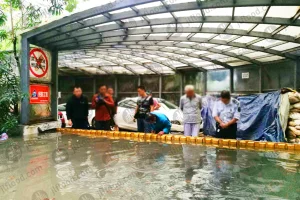
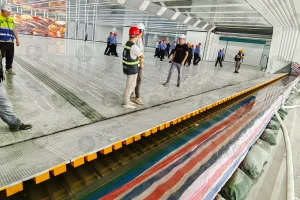
Direct factory supply models engineered with cold-resistant EPDM seals, automated hydrostatic activation, and heavy-wheel payload capacities up to 40 metric tons.
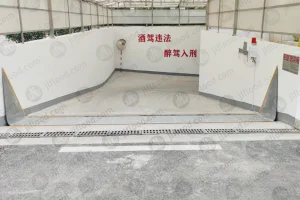
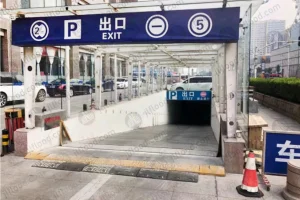
A rigorous assessment of urban topography, winter snowmelt surges, freezing soil dynamics, and industrial asset protection in Vitebsk and Belarus' Northern Region.
Situated in the northeastern territory of Belarus, the ancient city of Vitebsk occupies a deeply undulating riverine terrain sculpted by the confluence of the Western Dvina (Daugava), the Luchesa, and the Vitba rivers. This geographic configuration introduces profound hydrological challenges for modern subterranean architecture. As Vitebsk continues to expand its manufacturing powerhouses—spanning machine-building, chemical processing, textile manufacturing, and modern logistics hubs within the Free Economic Zone "Vitebsk" (FEZ Vitebsk)—the density of underground car parks, subterranean electrical vaults, and heavy freight loading ramps has scaled exponentially.
Unlike Mediterranean or subtropical river basins where rainfall is predominantly pluvial and transient, the hydro-meteorological risks in Vitebsk are bifurcated into two catastrophic scenarios: spring freshets (polovodye) driven by sudden snowpack melt across the Western Dvina catchment, and torrential summer cloudbursts that frequently overwhelm municipal storm drainage networks designed during the mid-20th century. During March and April, the rapid thaw of frozen ground generates massive surface runoff because the permafrost-like hardpan soil rejects infiltration. Water rushes downslope through arterial thoroughfares such as Moskovsky Avenue and Lenina Street straight toward low-lying commercial car parks, logistics basements, and basement substations.
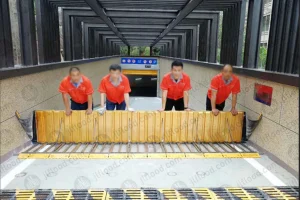
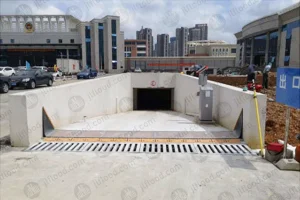
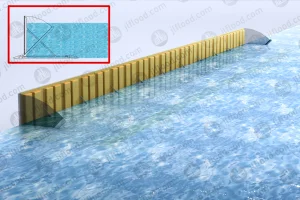
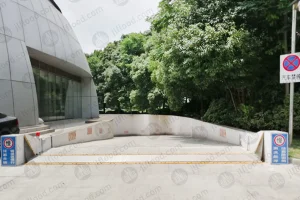
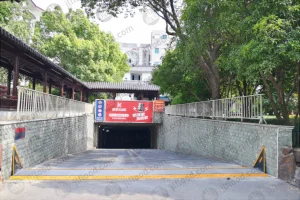
Consequently, industrial facilities, retail centers, and automotive terminals across Vitebsk require flush-mounted, non-electric, hydrodynamic automatic flood gates that reside seamlessly level with asphalt ramps during normal dry operations. Upon contact with incoming torrential runoff, these gates trigger autonomously using the buoyant energy of the intruding water, sealing subterranean portals before structural waterlogging compromises electrical gear, battery banks, or parked rolling stock.
Internationally, enterprise flood mitigation has migrated from disaster response to permanent structural resilience under ISO 22301 business continuity mandates and FM Global 1-34 standards. Facilities are required to maintain uninterrupted operations under 100-year inundation models without relying on active human intervention.
Global power grids regularly trip during peak meteorological storms. Junli's hydrodynamic barrier designs eliminate dependency on electrical feeds, motors, relays, or remote telemetry triggers, relying solely on Archimedes' buoyancy principle and hydrostatic equilibrium to lift robust barrier panels.
In sub-boreal zones like Vitebsk, frost heave can crack poorly engineered concrete chambers. Junli flood barriers integrate decoupled stainless steel embedded frame modules, specialized weep drain pathways, and frost-heave expansion gaskets that absorb volumetric soil movement safely.
Precision engineering solutions designed to retrofit existing entries or cast into new construction developments throughout the Vitebsk Oblast.
Distribution warehouses feature depressed loading docks that form artificial reservoirs during sudden downpours. Our surface-mounted and embedded gates stop runoff from filling dock pits and spoiling inventory.
Modern residential complexes on Pobedy Avenue and Frunze District feature subterranean garages vulnerable to street runoff. Flush-mount barriers permit smooth daily vehicle traffic without tire jolting.
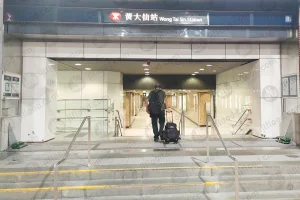
Regional district heating vaults and electrical distribution stations require watertight security. Self-closing flip-up barriers prevent short circuits and regional power outages when Vitba river levels crest.
Machinery machine tool factories, meat processing hubs, and textile plants along Gorky Street require high axle-bearing flood gates capable of supporting 40-ton articulated lorries transporting materials.
| Performance Characteristic | Junli Hydrodynamic Automatic Gate | Traditional Electrically Driven Gate | Manual Demountable Flood Panel |
|---|---|---|---|
| Activation Reliability During Blackouts | 100% (Mechanical Buoyancy Only) | 0% Failure Without Backup Genset | Requires Human Crews on Site |
| Sub-Zero Response (-25°C Frost) | Engineered EPDM & Thermal Tracing Ready | Mechanical Drive Chains Often Freeze | Seals Freeze Hard; Slots Blocked with Ice |
| Daily Traffic Interface | Completely Flush-Mount (No Bump) | Raised Threshold Channels | Requires Storage Racks & Manual Fitting |
| Deployment Response Speed | 0.1 to 1.5 Seconds per Influx Rate | 45 to 90 Seconds Motor Cycle | 15 to 45 Minutes Labor Dependent |
| Maintenance Overhead | Biannual Sediment Flushes & Visual Check | Monthly Motor & Relay Inspections | Component Loss & Gasket Degradation |
Leading Chinese manufacturing excellence directly addressing Northern Eurasian climate shifts through advanced alloy materials science and passive fluid mechanics.
Integrated vortex sumps with heavy-grit separators to ensure sand, gravel, and road salt brought in by melted snow cannot seize gate rotation hinges.
Adoption of 6063-T6 marine aerospace extruded aluminum alloy combined with internal structural ribbing, delivering high flexural modulus at 40% reduced tare mass.
Optional low-draw PTC self-regulating electric heating lines embedded inside perimeter frame rebates to vaporize ice glaze prior to high-water mechanical lift.
Passive hydrodynamic mechanisms equipped with ultra-low-power NB-IoT and LoRaWAN position sensors reporting real-time barrier closure status directly to Vitebsk civil protection centers.
Municipal resilience in flood-prone industrial corridors requires an interconnected, multi-layered defensive strategy. Junli Technology provides end-to-end engineered perimeter flood solutions consisting of three synchronized barriers:
Tier 1: Perimeter Crest Defense. Surface-mounted automatic flood barriers installed at entry property gates block overflowing river water from the Vitba and Luchesa basins from flooding parking lots and freight staging lanes.
Tier 2: Ramp Lip Hydraulic Defense. Embedded hydrodynamic flood gates positioned right at the top transition of underground garage ramps. As sheet water crosses the curb grade, it fills the recessed collection chamber, immediately lifting the defensive leaf and cutting off down-ramp flow.
Tier 3: Compartmentalized Subterranean Isolation. Lightweight flip-up and self-closing watertight barriers installed at interior stairwells, electrical switch rooms, generator bays, and elevator shafts, assuring total facility preservation even if primary vehicular entries encounter catastrophic water levels.
Connect with Nanjing Junli's certified hydraulic and civil engineering team. We furnish turnkey structural drawings, CAD embedment details, drainage flow calculation sheets, and cold-region installation specifications within 24 hours.
Send Inquiry Now (Free CAD & Engineering Proposal)Direct technical answers addressing civil installation, cold climate performance, international logistics, and structural longevity.
Explore our full line of tested hydrodynamic automatic flood barriers, heavy-duty subway gates, and surface-mount units serving commercial properties globally.