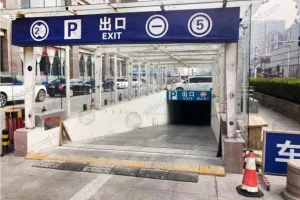
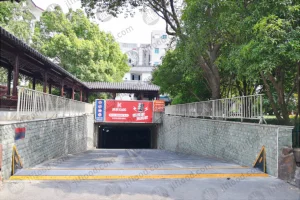
Engineered for climate resilience, automated passive activation, and full compliance with Northern European underground civil standards.
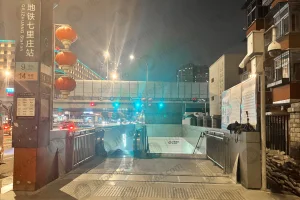
Urban transportation systems across Scandinavia—most notably the Copenhagen Metro (Metroselskabet) and the Aarhus Light Rail (Aarhus Letbane)—represent the pinnacle of modern driverless transit efficiency. However, increasing North Sea storm surges, rising Baltic Sea water levels, and severe local cloudbursts (locally known as Skybrud) present unprecedented flood risk profiles to subterranean infrastructure. In extreme meteorological conditions, surface runoff rapidly overwhelms municipal stormwater networks, threatening to inundate underground station portals, concourses, cable trenches, and ventilation shafts.
As a leading Chinese designer and original manufacturer of zero-power hydrodynamic automatic flood barriers, Nanjing Junli Technology Co., Ltd. delivers state-of-the-art infrastructure defense solutions tailored specifically for Danish civil engineering contractors, municipal authorities, and engineering procurement consultants (EPCs). Operating without electricity, human intervention, or electronic sensors, Junli’s hydrodynamic barriers deploy purely through fluid buoyancy and hydrostatic pressure—ensuring 100% operational integrity during complete grid blackouts.
Aligning Chinese high-precision hydraulic manufacturing with Danish Standards (DS/EN), Eurocodes, and municipal climate adaptation plans.
Extreme rainfall events in Denmark (exceeding 15mm in 30 minutes) frequently cause localized Flash Waterlogging. Sub-surface metro access corridors require instantaneous, low-latency barrier deployment without relying on human staff activation.
Our engineering design meets Danish Building Regulations (BR18) and Structural Eurocodes. Structural calculations guarantee zero permanent deformation under dynamic hydrostatic heads exceeding 2.0 meters water column.
Given Denmark’s marine atmosphere and widespread winter road-salting practices, Junli utilizes 316L stainless steel structural frames combined with anodized marine-grade aluminum alloy panels and freeze-resistant EPDM dual-lip gaskets.
How Junli’s patented self-rising flood gate eliminates human error and grid dependency.
The core innovation of Nanjing Junli’s metro flood barrier resides in its fully passive hydromechanical architectural design. Installed flush with the finished floor level of metro station entrances, pedestrian plazas, or vehicle access ramps, the system remains completely hidden and unobtrusive during daily operations.
Tailored engineering layouts for diverse civil interfaces across underground rail networks.
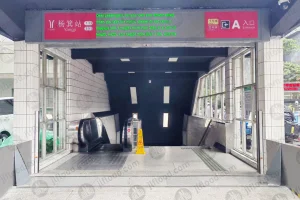
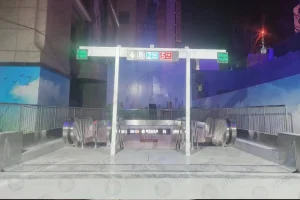
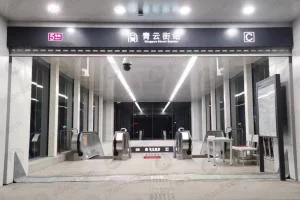
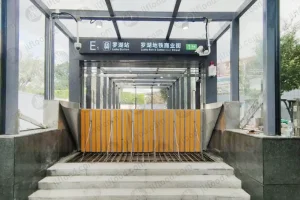
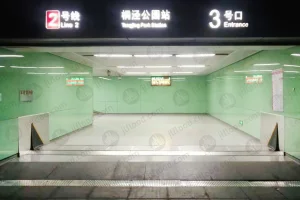
Flush embedded flood barriers installed at stairwells and escalator entrances. Designed for rapid foot traffic during dry conditions, turning into a watertight barrier automatically when surface water arrives.
Subterranean passages connecting metro concourses directly to commercial shopping centers or underground garages. Prevents cross-contamination flooding between commercial property and rail lines.
Heavy-duty drive-over surface and embedded models capable of withstanding axle loads up to 30 tons (EN 124 Class D400 / E600), protecting underground service tunnels and train storage depots.
Power supply failure halts entire metro networks. Junli provides specialized flip-up and hydrodynamic flood gates for electrical switchgear rooms, high-voltage transformer vaults, and cable trenches.
Rigorous factory testing, structural dimensions, and material compositions for Danish engineering tenders.
| Parameter / Feature | Embedded Hydrodynamic Model | Surface Mounted Model | Flip-Up Automatic Barrier |
|---|---|---|---|
| Standard Retaining Height | 500 mm – 2000 mm (Customizable) | 400 mm – 1200 mm | 600 mm – 1500 mm |
| Single Clear Span Width | Up to 6000 mm (Modular multi-leaf array >30m) | Up to 5000 mm | Up to 4500 mm |
| Structural Material | EN AW-6063 T6 Anodized Aluminum / SUS316L Base | EN AW-6061 T6 Aluminum Alloy | SUS304 / SUS316 Stainless Steel Frame |
| Sealing System | Dual-Lip Continuous EPDM / Silicone Profile | EPDM Compression Gasket | High-Elasticity Inflatable/Mechanical EPDM |
| Response Time | < 0.1 sec upon water chamber entry | Immediate water displacement activation | < 3 seconds passive mechanical flip |
| Load Rating (Closed) | D400 (40 Tonne) / E600 Rail Transit Standard | C250 (25 Tonne) Drive-over rated | B125 Pedestrian / Light Commercial vehicle |
| Power Consumption | 0.0 kW (100% Zero Power / Hydromechanical) | 0.0 kW (Zero Power) | 0.0 kW (Zero Power / Counterweight) |
| Certification Compliance | CE, ISO9001, ISO14001, Structural EU Standards | CE, ISO9001 | CE, ISO9001 |
When procuring metro-grade flood protection systems from China for deployment in Denmark, buyers (such as main contractors, municipal authorities, and trading partners) must evaluate total cost of ownership (TCO) beyond initial FOB equipment costs. Nanjing Junli Technology provides transparent, highly competitive factory direct quotes while supporting OEM customization.
Validated across 30+ major metro systems facing severe typhoons, cloudbursts, and extreme hydraulic pressures.
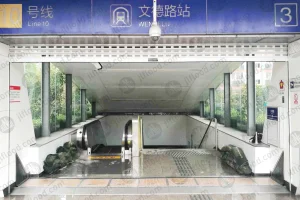
Installed across multiple underground entrances and connection channels. Successfully blocked super-typhoon floodwaters with 100% zero water leakage recorded, maintaining train transit continuity.
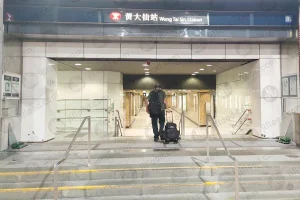
High-density pedestrian portals retrofitted with Junli embedded hydrodynamic gates. Engineered to handle extreme seasonal cloudbursts while maintaining seamless everyday passenger flow.
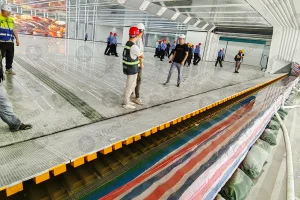
Severe coastal saline conditions required customized 316L stainless steel structural housings. Operates reliably under high humidity, salt spray, and sub-zero winter freeze conditions.
The convergence of passive hydrodynamic mechanics with IoT smart city monitoring.
As smart cities evolve, underground flood defense must combine physical mechanical autonomy with digital infrastructure telemetry. Junli Technology’s R&D roadmap focuses on three critical technology fronts:
Detailed answers addressing engineering, logistics, maintenance, and compliance questions.
Explore our full line of tested flood gates, metro station barriers, and substation protection systems.
Partner with China’s premier hydrodynamic flood barrier manufacturer. Get customized engineering drawings, structural calculation packs, and FOB/CIF Denmark price quotes tailored for your project.
Send Inquiry Now →