
Immediate deployment solutions for municipal transit networks, subterranean concourses, and commercial parking structures built to withstand severe weather events.
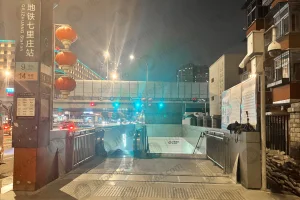
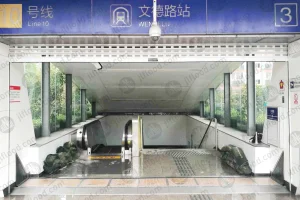
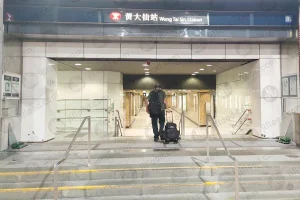
Canada’s urban centers—including Toronto (TTC), Montreal (STM), Vancouver (TransLink), and Calgary (CTrain)—are experiencing unprecedented hydrometeorological shifts. The intensification of atmospheric rivers along the Pacific coast, combined with high-volume cloudbursts and rapid spring snowmelt (freshet) across Eastern and Central Canada, has exposed critical vulnerabilities in underground transit networks and subterranean municipal infrastructure.
Subway station portals, ventilation shafts, emergency egress stairwells, and underground pedestrian walkways act as natural funnels for uncontrolled surface runoff. When localized storm sewer capacities are exceeded, thousands of cubic meters of water can breach station entrances within minutes. The catastrophic economic fallout includes structural damage to track beds, traction power substations, signal relay rooms, rolling stock, and multi-million-dollar business interruptions across interconnected subterranean commercial complexes.
Conventional flood mitigation relies on manual sandbagging, modular aluminum stop-logs, or electrically driven flood gates. During severe meteorological events, municipal power grids frequently experience localized blackouts. Manual barrier deployment requires on-site personnel who may be trapped by citywide traffic gridlock or emergency evacuations. Hydrodynamic passive flood barriers eliminate human error, power reliance, and operational delays entirely by leveraging the hydrostatic buoyancy of the floodwater itself to actuate the barrier panel.
Canadian urban environments present brutal freeze-thaw cycles. Sub-zero temperatures risk freezing water in baseline drainage tracks or seizing mechanical joints. Standard barriers fail under ice buildup; specialized engineering with heating trace elements and cold-resilient EPDM seals is mandatory.
Flash flooding caused by torrential convective rain is regularly accompanied by lightning strikes and utility outages. Passive hydrodynamic flood gates utilize unpowered buoyancy chambers, ensuring 100% operational readiness even during total grid collapse.
Road salt (sodium chloride, calcium chloride) heavily contaminates Canadian winter runoff. Barrier materials must utilize marine-grade 316L stainless steel, fluorocarbon-coated extruded structural aluminum, and specialized anti-corrosion barrier coatings.
Procuring infrastructure equipment for Canadian transit networks requires strict alignment with municipal code, provincial transit guidelines, and national structural standards. As a premier Chinese manufacturer, our engineering team collaborates directly with Canadian EPC contractors, structural consulting engineers, and municipal procurement departments to supply fully compliant shop drawings and custom-fabricated units.
| Canadian Specification Standard | Engineering Compliance & Manufacturing Requirement | Junli Barrier Solution Integration |
|---|---|---|
| CSA S6 (Canadian Highway Bridge Design Code) | Extreme axle-load resistance for embedded ground frames subject to heavy maintenance vehicles, buses, and high pedestrian traffic. | Heavy-duty structural steel embedment frames rated for HS-20 / CL-625 truck loading without frame deformation. |
| National Building Code of Canada (NBC) Section 5 | Environmental separation and moisture control barriers ensuring structural integrity under continuous hydrostatic heads. | FEA-verified structural panels rated up to 2.0m retaining heights with dual-stage hydrostatic perimeter seals. |
| ASTM F3057 / ASTM F2589 Standards | Standard test methods for flood mitigation barriers and structural performance verification under water pressure. | 100% factory water-pool tested for zero-leakage tolerance, certified dynamic pressure resilience, and deflection limits. |
| Low-Temperature Elastomer Resilience (-40°C) | Gasket materials must maintain elastic memory and tensile strength during extreme arctic cold snaps without cracking. | Custom formulation EPDM and silicone continuous seals tested down to -40°C with UV and road-salt anti-degradation additives. |
China’s high-speed rail and urban subway infrastructure expansion over the past two decades is unparalleled in scale. Operating across 30+ major domestic transit networks—including Guangzhou Metro, Beijing Subway, Shenzhen Metro, and Hong Kong MTR—our manufacturing facilities have developed world-leading expertise in hydrodynamic flood gate engineering.
Our state-of-the-art Nanjing facility utilizes multi-axis CNC laser cutting, automated robotic welding, and specialized surface-passivation lines. By centralizing raw material procurement and advanced fabrication, we offer Canadian projects direct manufacturer pricing—delivering savings of 30% to 45% compared to domestic Western European or North American fabricators without compromising structural tolerances.
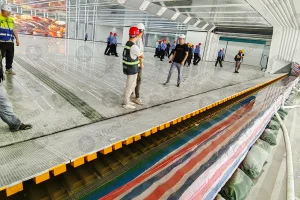
Unlike trading companies or local assembly workshops, every single engineering order undergoes rigorous full-scale hydrostatic testing in our dedicated water testing basin prior to packing. We measure deployment response time, seal tightness under simulated wave actions, dynamic hydraulic load limits, and issue comprehensive factory inspection reports per order.
The core mechanism of our automatic metro flood barrier operates on basic fluid dynamics: Archimedes’ principle of buoyancy combined with hydro-mechanical leverage. No sensors, human monitoring, or electric motors are required.
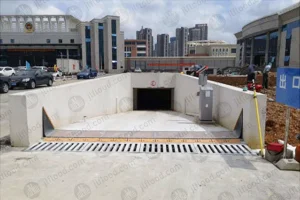
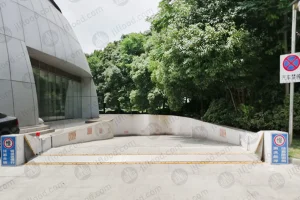
The barrier panel lies perfectly flush inside a shallow stainless steel ground frame embedded at the station threshold. Pedestrians and maintenance vehicles cross smoothly with zero obstruction.
As surface floodwaters reach the entrance curb, water flows into the bottom chamber intake slots. The rising water level fills the interior reservoir, instantly exerting vertical buoyant force underneath the lightweight, high-rigidity structural door panel.
As the water level continues to rise, hydrostatic head pushes the elevated barrier panel tightly against the vertical side mullions. Compression seals form a watertight lock, completely stopping inflow into the subway portal.
Customized installation configurations engineered specifically for Canadian urban topography, underground connectivity, and climate challenges.
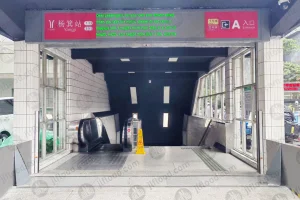
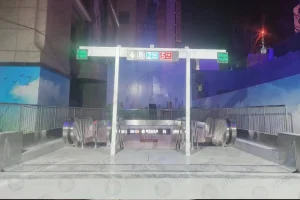
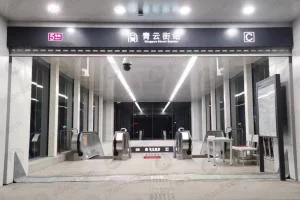
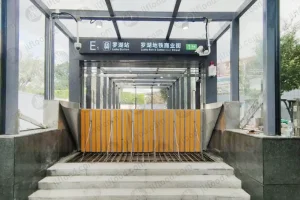
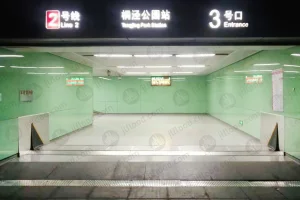
Canadian high-density downtown hubs (such as Yonge-Dundas in Toronto or Ste-Catherine in Montreal) feature station street entrances that step directly down into underground platforms. Flush-embedded automatic barriers prevent sudden surface water surge caused by urban flash floods from descending stairways.
Electrical equipment rooms powering municipal light-rail lines (LRT) cannot tolerate moisture ingress. Compact flip-up or surface-mounted flood gates secure perimeter access doors, preventing multi-million dollar electrical transformer short-circuits during severe storms.
Canada’s vast underground pedestrian networks—Montreal’s RÉSO and Toronto’s PATH—connect metro stations directly to commercial skyscrapers, shopping centers, and parking garages. Connection channel flood gates isolate high-risk zones, keeping flood waters contained before spreading through interconnected subterranean complexes.
Wide clear-span openings at vehicle maintenance depots and open-cut railway portals require modular multi-leaf flood barrier arrays. Designed to withstand heavy vehicular loading during non-flood periods, these systems automatically deploy when water accumulates in lower depot troughs.
We streamline international procurement for Canadian transit authorities, general contractors, and engineering consultants. From initial drawing review to sea freight delivery at Port of Vancouver or Port of Montreal, our engineering export team handles every phase.
Send site opening dimensions (clear span, curb height, target retaining level). Our engineers produce customized 2D/3D CAD shop drawings and civil recess detail plans within 48 hours.
Receive itemized commercial quotes detailing FOB/CIF pricing, material grade certifications, custom heating trace cable inclusions, and factory testing schedules.
Upon fabrication completion, your unit is assembled in our hydro-test pool. We provide video verification reports, sealing tightness certificates, and structural inspection logs.
Custom export crate packaging featuring anti-moisture treatment. Shipped via ocean freight to Vancouver, Montreal, or direct rail-intermodal transport to Toronto & Calgary.
Explore our full line of field-tested automatic flood barriers, connection channel gates, and specialized subway station flood protection systems.
Technical details regarding winter operation, installation integration, freight shipping, and warranty coverage for Canada.
Connect with our senior flood defence engineering team today. Get tailor-made CAD shop drawings, factory testing documentation, and competitive direct-factory pricing for your Canadian transit project.


