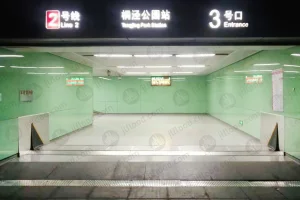
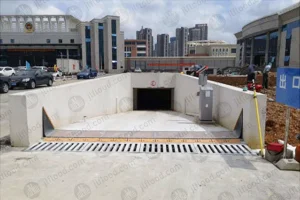
Deployable self-rising barriers specifically tailored for underground transit portals, station concourses, and high-traffic municipal structures.
As Greater Melbourne expands its subterranean transit networks—highlighted by Victoria’s Big Build, the Metro Tunnel Project, and ongoing arterial station upgrades—the exposure of underground infrastructure to extreme hydrological events has elevated significantly. The city’s geographic location within the Yarra River basin and Port Phillip Bay catchment creates a unique micro-climate subject to high-intensity flash flooding, severe convective summer storms, and sea-level surges.
Melbourne’s CBD, Southbank, Docklands, and inner-northern corridors experience rapid storm-water runoff. Subsurface railway portals, pedestrian entry shafts, and underground parking lots can inundate within minutes when urban drainage systems reach hydraulic saturation.
Traditional motorized or sensor-dependent flood gates fail precisely during extreme weather events when localized power grids collapse. Passive hydrodynamic systems eliminate electrical single-point-of-failure vulnerabilities completely.
Infrastructure specifiers and civil contractors across Victoria demand strict compliance with AS/NZS structural standards, BCA waterproofing mandates, and heavy dynamic vehicle load ratings (up to AS 5100 bridge loading standards for driveways).
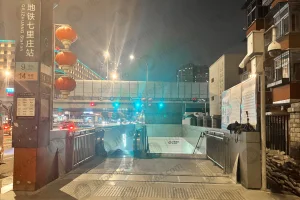
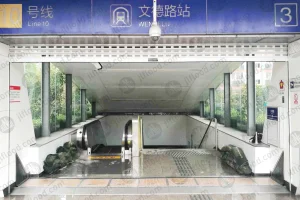
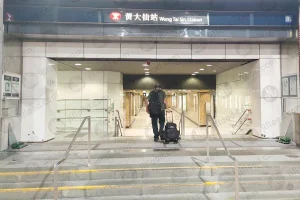
Underground railway infrastructure such as State Library, Town Hall, Anzac, Parkville, and Arden stations require modular passive flood barrier solutions that seamlessly integrate with architectural footings while providing immediate zero-human-intervention water sealing during 1-in-100-year storm events.
Unlike manual aluminum stop-logs that demand physical deployment, or electro-mechanical gates prone to power failures during storm surges, Nanjing Junli Technology’s hydrodynamic flood barriers operate strictly on fundamental hydraulic principles: fluid buoyancy and hydrostatic head pressure.
| Technical Characteristic | Junli Hydrodynamic Automatic Gate | Traditional Manual Aluminum Stop-Logs | Electric Motorized Flood Gates |
|---|---|---|---|
| Activation Energy Source | Water Buoyancy & Hydrostatic Force (Zero Power) | Manual Human Labor | Electricity Grid / Backup Generator |
| Response Time | Instantaneous (< 0.1s activation initiation) | 30 - 120 Minutes (Required transport & assembly) | 1 - 5 Minutes (If power intact) |
| Grid Blackout Reliability | 100% Operational Guarantee | 100% Operational (Labor-dependent) | High Risk of Failure during localized blackout |
| Aesthetic & Footprint Integration | Flush Underground Recessed Pit (Invisible on dry days) | External Storage Depot Required | Heavy Above-ground Motor Housings & Posts |
| Structural Material Grade | 6063-T6 Aircraft Extruded Aluminum / Stainless 316 | Standard Structural Aluminum 6061 | Mild Steel / Powder Coated Iron Framework |
| Drive-Over Weight Capability | AS 5100 / Heavy Duty Commercial Bus & Truck Rated | N/A (Barrier is physically installed over roadway) | Light Vehicle / Restricted Axle Weight |
The system is installed inside a recessed stainless steel or hot-dip galvanized concrete housing frame set flush with surrounding paving or asphalt. During dry conditions, the top panel forms a seamless road surface capable of enduring continuous heavy vehicular traffic without structural deflection.
As water reaches the trigger threshold, surface runoff flows through engineered inlet grates directly into the foundation chamber. High-density composite air pockets embedded beneath the structural panel generate immediate positive buoyancy, lifting the main flood wall into position before water levels penetrate the threshold.
Once deployed, rising floodwater exerts lateral hydrostatic head pressure against the barrier panel. This pressure forces high-grade EPDM vulcanized rubber seals tightly against side frames and floor plates, creating a hermetic seal that prevents water ingress even under prolonged 2.0-meter hydrostatic heads.
Headquartered in Nanjing, Jiangsu Province, Nanjing Junli Technology Co., Ltd. stands as one of Asia's premier engineering manufacturers dedicated exclusively to flood control systems. By bridging direct-factory manufacturing efficiency with rigorous international engineering standards, Junli provides Melbourne civil contractors, developers, and government agencies with unparalleled value and quality control.
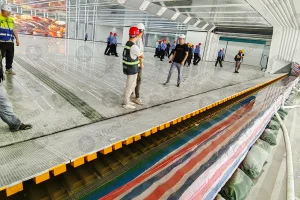
Unlike standard sheet metal fabricators, Junli operates a dedicated, full-scale hydraulic testing pool. Every batch destined for export undergoes full hydrostatic pressure testing, seal leakage measurements, and structural deflection verification prior to shipment dispatch.
We work directly from BIM/CAD drawings provided by Australian engineering consultancies. Span lengths, retaining heights, foundation frame profiles, and load ratings are custom-built to match exact site geometry across Melbourne projects.
Orders exported to the Australian market include complete structural calculation sheets, material mill certificates, AS/NZS compliance cross-references, step-by-step English installation templates, and long-term maintenance protocols.
Our broad spectrum of surface-mounted, embedded, and flip-up automatic flood barriers engineered to safeguard diverse urban assets.
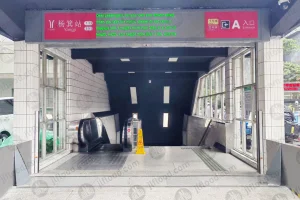
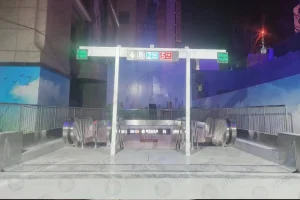
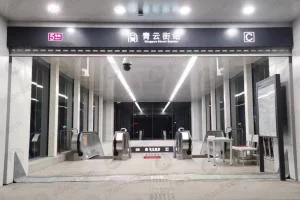
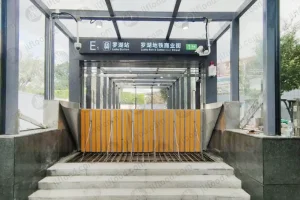
Integrated at pedestrian concourse portals, underground connecting tunnels, and station ventilation shafts to ensure zero disruption to rail transit services during violent rainfall events.
Installed at basement car park entry ramps in high-density office towers (Docklands, Southbank, St Kilda Road). Vehicles drive over flush panels daily until flash floods trigger instant elevation.
Protecting critical transformer rooms, switchgear enclosures, and data vaults where even minor water contact causes catastrophic power grid downtime and asset destruction.
As municipal authorities integrate Smart City frameworks and IoT urban sensing, flood protection systems must evolve beyond isolated mechanical components into connected, intelligent urban defense nodes.
While mechanical rising remains 100% passive and unpowered, embedded micro-sensors record angle of incline, water rise speeds, and seal compression dynamics, transmitting live status updates straight to Metro Central Control Rooms.
Future hydrodynamic frames feature self-cleaning hydro-dynamic flumes that prevent mud, leaves, and urban trash from clogging mechanical pivot points during severe runoff conditions.
Integrating carbon-reinforced polymer panels to further reduce structural weight by 35% while doubling resistance to corrosive salt-water storm surges in coastal districts like Williamstown and Docklands.
Ensuring lifetime operational integrity demands precise civil integration during foundation casting and clear preventative maintenance schedules.
Formwork is set according to Junli’s engineering template. Embedded steel frames are connected directly to structural slab rebar before pouring high-strength concrete to prevent differential settlement under heavy traffic loads.
The foundation chamber bottom is plumbed directly into the facility storm-water sump or municipal gravity drain, ensuring the chamber drains completely within 30 minutes after floodwaters recede.
Routine maintenance requires zero specialized technical tools: quarterly debris inspection inside the pit frame, biannual water jetting of drainage channels, and annual EPDM seal elasticity audits.
Everything asset managers, structural engineers, and tier-1 procurement directors need to know.
Explore our full catalog of proven station, channel, and surface-type automatic water barriers designed for global transit networks.
Contact Nanjing Junli Technology’s senior engineering team to request comprehensive technical data sheets, CAD foundation drawings, factory test videos, and direct wholesale pricing for your Victoria tenders.