


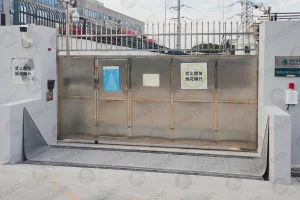

Engineered specifically to withstand high-volume cloudbursts and coastal surge conditions across Japan’s regional power grids (TEPCO, KEPCO, Chubu Electric Power specs).
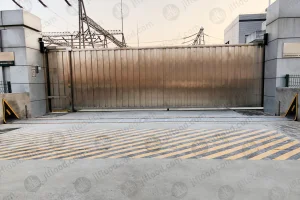
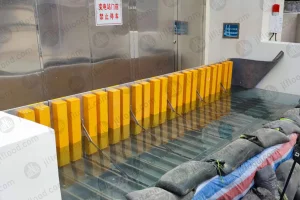
Japan's electrical transmission and distribution network faces unprecedented climate exposure. The combination of intense typhoon-induced precipitation (such as severe rainfall events seen during Typhoon Hagibis and Typhoon Nanmadol), coastal storm surges, and high-density urban geography creates extreme flood risks for critical power infrastructure. Electrical substations located in low-lying alluvial plains across Kanto, Kansai, and Chubu regions are exceptionally vulnerable to flash inundation.
When floodwaters penetrate transformer vaults, switchgear enclosures, or underground control rooms, the results are catastrophic: long-duration grid outages, multi-million-dollar equipment destruction, and cascading economic disruption. The Ministry of Economy, Trade and Industry (METI) has tightened technical guidelines for power supply resilience, instructing utility operators (including TEPCO, KEPCO, Chubu Electric, and Kyushu Electric) to harden baseline physical defences against "Guerrilla Rainstorms" (*Gu-rira Gou-u*) exceeding 100mm per hour.
Conventional electro-mechanized flood gates rely on sensory arrays and electrical power. During severe typhoons or seismic events, grid power fails first. If backup generators flood, electromechanical gates remain immobilized, leaving critical transformer assets completely exposed.
Japan's demographic shift presents severe structural labor challenges. Relying on facility staff to manually stack sandbags or deploy demountable aluminum stop-logs during sudden midnight cloudbursts is no longer viable or compliant with modern risk management standards.
Updated technical standards mandate physical flood barriers at ground-level cable entries, perimeter gates, and basement ventilation shafts, requiring verified zero-leakage performance under continuous hydrostatic load.
As a premier Chinese manufacturer specializing in critical infrastructure flood control, Nanjing Junli Technology Co., Ltd. delivers advanced hydrodynamic automatic flood barriers designed specifically for unmanned power substations. Unlike traditional active gates, our system utilizes the natural physical energy of incoming floodwaters to activate protection.
The barrier panel is installed flush into a recessed foundation trench at the substation perimeter or door threshold. Under dry conditions, heavy maintenance vehicles, cable trucks, and personnel drive freely over the reinforced top plate (capable of supporting up to 60-ton vehicle loads).
When surface runoff reaches the threshold, water flows through intake grates into the subterranean retaining chamber. As the water level inside the chamber rises, integrated buoyancy chambers generate hydrostatic lift, causing the door panel to automatically pivot upward. As water levels increase, hydrostatic pressure presses the panel tightly against industrial EPDM rubber seals, forming a continuous watertight barrier.
| Evaluation Parameter | Junli Hydrodynamic Auto-Gate | Motorized Electric Gate | Manual Aluminum Stop-Logs |
|---|---|---|---|
| Power Dependence | Zero Power (100% Passive Hydrodynamic) | High (Requires Mains / GenSet) | None |
| Activation Speed | Instantaneous (< 0.1s Water Buoyancy Response) | 1 to 3 Minutes (If Powered) | 30 to 90 Minutes (Labor Intensive) |
| Unmanned Facility Compatibility | 100% Autonomous (Ideal for Remote Sites) | Medium (Requires Remote Sensor Telemetry) | Zero (Requires On-Site Personnel) |
| Maintenance & Lifecycle | Minimal (No Mechanical Gearbox or Motors) | High (Annual Motor/Cable/Sensor Audits) | Low (Storage & Gasket Degradation Risk) |
| Traffic Load Rating | Up to 60 Heavy Trucks (T60 Standard) | Varies (Track Obstruction Risk) | N/A (Barrier Must Be Installed Prior) |
| Total Cost of Ownership (15 Yr) | Lowest (Zero Standby Energy & Low Maintenance) | High (Continuous Servicing & Testing) | High (Labor Costs During Flood Alerts) |
Substation facilities feature diverse civil architectural interfaces. Junli Technology provides tailored flood mitigation designs covering three primary security zones:
Wide-span vehicular entrances require high structural strength. Junli’s embedded hydrodynamic flood barriers span clear widths from 3 meters up to multi-leaf modular configurations exceeding 20 meters, allowing unobstructed heavy vehicle access daily while securing the outer boundary during inundation.
Pedestrian doorways leading to delicate SCADA controls, relay rooms, and indoor GIS switchgear utilize flip-up or compact hydrodynamic gates. These units prevent micro-seepage and can be customized with status signaling micro-switches connected to remote monitoring networks.
Underground cable conduits act as highways for floodwaters. Junli provides specialized subterranean water-retaining bulkheads and embedded barrier frames designed to prevent backflow into basement transformer pits.
Supplying structural products to Japanese electric power companies (EPCs) and major construction general contractors (*Zenecon* such as Kajima, Taisei, and Obayashi) demands stringent compliance, precision documentation, and material traceability.
All structural frame components are fabricated from high-grade SUS304 or SUS316 stainless steel or heavy-duty marine-grade anodized aluminum alloy (6063-T6). This ensures long-term resistance to coastal salt-spray degradation across Japan's littoral industrial zones.
Recognizing Japan's intense seismic conditions, Junli’s foundation embedded frames incorporate flexible anchor joints and high-elasticity EPDM seals that absorb ground tremors without cracking or losing seal integrity during earthquakes.
We provide Japanese engineering consultants with complete 3D BIM (Revit) models, 2D AutoCAD civil interface drawings, hydrostatic load calculations, and full factory water-testing certification videos before shipment.
While the mechanical opening operation of Junli barriers is 100% power-free, modern digital substations require real-time status telemetry. Our latest technical roadmap bridges purely passive hydraulics with smart utility monitoring networks:
Integrated, battery-powered micro-sensors detect gate deployment angle and chamber water level, transmitting instant alert signals to the central utility SCADA system without requiring external grid wiring.
Heavy-duty magnetic switches provide dry/wet contact verification, allowing central control rooms in Tokyo or Osaka to confirm remote barrier closure in real time during severe typhoon conditions.
Explore our full line of specialized flood gate models engineered for global utility, rail transit, and commercial applications.
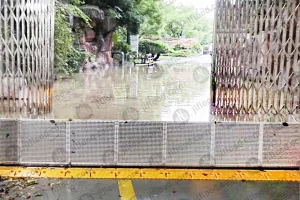
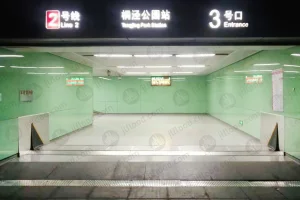
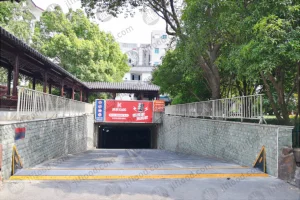
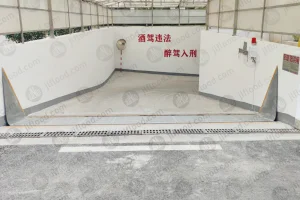
Our flood gates utilize dual-tier heavy-duty EPDM (Ethylene Propylene Diene Monomer) rubber seals combined with mechanical side-mullion compression joints. As floodwater hydrostatic pressure increases, the water itself forces the barrier panel tighter against the seal framework. Every unit undergoes full-scale hydraulic pool testing in our Nanjing factory to verify zero-leakage performance under design head pressure prior to export.
Yes. For cold-climate installations, Junli provides optional low-voltage self-regulating electric heating cables integrated within the subterranean embedded trench frame. This prevents ice formation and keeps drainage channels clear, ensuring smooth hydrodynamic buoyancy movement even in sub-zero ambient temperatures.
For existing facilities where major excavation is restricted, we offer surface-mounted low-profile automatic barriers and demountable structural frame options. For new builds or major upgrades, a shallow recessed concrete trench with embedded anchor bolts is prepared based on our provided CAD templates. Installation can be completed without interrupting live high-voltage power transmission operations.
Our dedicated international engineering team provides complete technical submission packages including 2D/3D CAD models, BIM objects, structural calculation reports, material test certificates, and English/Japanese installation guidebooks. We collaborate directly with EPC specifiers to ensure custom dimensions align perfectly with site constraints.
Maintenance is minimal compared to electromechanical systems. We recommend bi-annual visual inspections to clear leaf debris or sediment from the bottom intake trench and clean the EPDM seals. A manual lift test using standard maintenance leverage tools can be performed annually to inspect hinge smooth-pivoting action without requiring water flooding.
Partner with China’s leading hydrodynamic flood barrier manufacturer. Send us your entrance dimensions and site requirements to receive custom BIM drawings, engineering specs, and competitive price quotes within 24 hours.
Send Inquiry Now