


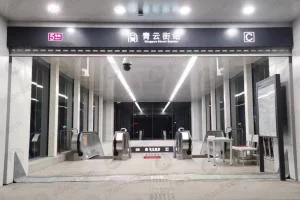

Standardized automatic flood barrier assemblies pre-validated through dynamic water testing for municipal subway entrances, subterranean logistics tunnels, and high-density commercial assets.
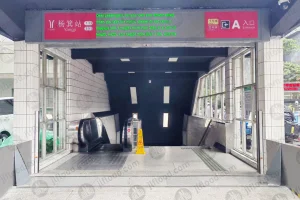
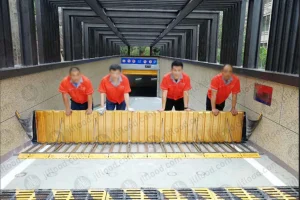
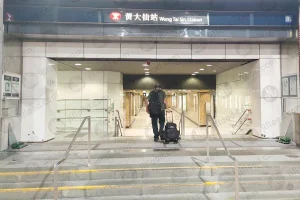
Nagoya, located at the heart of the Nobi Plain in Aichi Prefecture, presents a uniquely complex subterranean flood vulnerability profile. Bound by the Kiso Three Rivers (Kiso, Ibi, and Nagara) to the west and opening into Ise Bay to the south, the municipality features extensive "zero-meter zones" (海抜ゼロメートル地帯) where land surface lies below mean high-water sea levels.
Historically vulnerable to severe typhoons such as the catastrophic Vera (Isewan Typhoon) and recent extreme cloudburst events associated with the Tokai Heavy Rain disaster, Greater Nagoya's industrial corridor—spanning Minato, Nakagawa, and Nishi wards—requires uncompromised perimeter flood defenses. The city’s dense subterranean infrastructure, including the expansive Nagoya Municipal Subway network (Higashiyama, Meijo, and Tsurumai lines) and underground commercial complexes around Meieki and Sakae, presents critical ingress points for storm surges and flash urban waterlogging.
In response to updated disaster prevention guidelines issued by the Aichi Prefectural Government and Japanese Ministry of Land, Infrastructure, Transport and Tourism (MLIT), structural asset managers are transitioning from manual aluminum stoplog assemblies to power-free hydrodynamic automatic flood gates. Because extreme rain events frequently trigger localized power grid failures, flood mitigation barriers must operate with 100% mechanical auto-buoyancy reliability—eliminating reliance on electrical sensors, pumps, or human intervention.
As a dedicated flood barrier manufacturer supplying international civil engineering projects, our quality assurance framework relies on empirical physical water testing rather than theoretical FEA simulation alone.
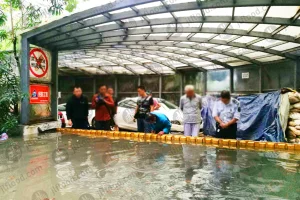
Every modular layout undergoes static water retention trials in our multi-stage testing basin. Barrier panels are subjected to maximum design water heads (up to 2,000mm) for 72 continuous hours to verify structural rigidity and structural frame displacement.
Typhoon surges in Ise Bay produce aggressive hydrodynamic wave slap. Our testing facility simulates surface wave action and floating debris impacts, validating that EPDM bottom seals maintain elastic memory under variable dynamic stress.
Our water retention testing protocols adhere strictly to international ISO 22341 guidelines for urban flood protection equipment, meeting Japanese Industrial Standards (JIS) for sealing integrity, corrosion protection, and mechanical cycle endurance.
| Test Parameter | Standard Specification | Factory Testing Limit | Validation Protocol |
|---|---|---|---|
| Static Water Head | 0.5m to 2.0m Continuous Head | 2.5m Overload Capacity | 72-Hour Continuous Hydrostatic Exposure |
| Allowable Leakage Rate | < 0.5 L/hr/m (ISO 22341 Class A) | < 0.05 L/hr/m (Zero Visible Drip) | Calibrated Gravimetric Collection Trough |
| Buoyancy Trigger Sensitivity | Self-activation at 50mm surface depth | Immediate trigger at 30mm water ingress | Automated Hydraulic Basin Flooding |
| Structural Deflection | L/250 of total clear span width | L/400 (High-Grade T6063 Aluminum) | Laser Displacement Sensor Array |
| Saline Salt-Spray Resistance | JIS Z 2371 Standard (Coastal zones) | 1,000 Hours Continuous Fog Exposure | Fluorocarbon Coating & SUS316 Fasteners |
Integrating passive mechanical reliability with IoT telemetry for smart city resilience in Nagoya’s smart district developments.
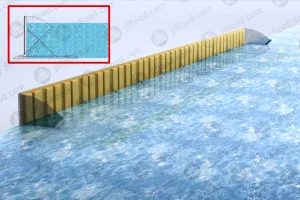
Zero-electricity mechanical auto-buoyancy system. Water ingress triggers natural hydraulic uplift, raising the aviation-grade aluminum panel to form a continuous seal. Eliminates human error during emergency flash floods.
Embedded micro-sensors monitor panel deployment angle, water height, frame tilt, and seal pressure in real time. Transmits operational alerts directly to Nagoya municipal control centers and commercial building management systems (BMS).
Future integration with Japan Meteorological Agency (JMA) radar feeds and local storm-surge AI models. System provides pre-activation warnings and automatically verifies drainage clearance before peak rainfall hits the Nobi Plain basin.
Leveraging advanced manufacturing clusters in Eastern China to deliver custom-engineered flood barriers directly to the Port of Nagoya with unprecedented lead time and cost efficiency.
Our production facility utilizes automated laser cutting and multi-axis robotic welding cells, maintaining tight manufacturing tolerances (±0.5mm) required for flawless embedment frame alignment in concrete foundations.
Situated near major deep-water ports (Shanghai/Ningbo), we provide direct maritime freight route dispatch straight to the Port of Nagoya (Tobishima/Kinjo Piers), delivering fast 5-to-7 day transit times for emergency contract fulfillments.
By eliminating middleman trading markups while upholding Japanese civil engineering quality standards, we offer Japanese contractors and municipal distributors direct factory-level pricing with comprehensive technical submittal packages.
Tailored structural designs matching the physical constraints of Nagoya's urban topology, from underground driveways to power substation perimeters.
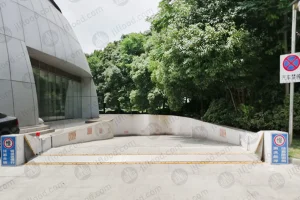
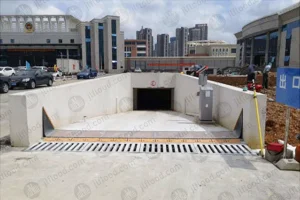
Flush embedded ramp barriers installed at shopping malls and office towers in Sakae and Meieki. Heavy vehicular load-bearing capability (up to 60-ton truck rating) allows uninterrupted traffic flow until water triggers automatic uplift.
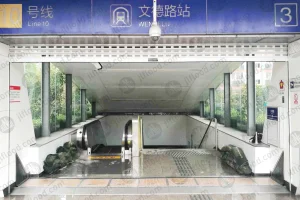
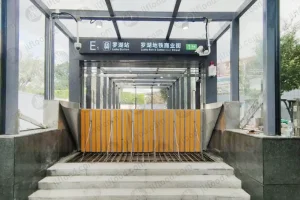
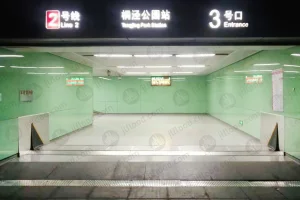
Designed specifically for Nagoya Municipal Subway pedestrian portals and subterranean connection channels. Multi-leaf modular barrier configurations provide wide-span protection with ultra-flat floor transitions.
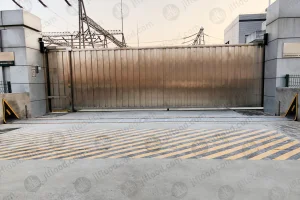
Protection of electrical transformer vaults and substation gateways for regional energy utilities across Aichi Prefecture. Prevents catastrophic grid outages caused by storm surge inundation into high-voltage equipment bays.
Explore our full range of factory water-tested flood defense solutions available for direct export to Nagoya, backed by complete civil installation drawings and operational documentation.
We work directly with Japanese engineering consultants, general contractors (ゼネコン), and facility owners to ensure seamlessly integrated flood defenses.
Complete 2D Auto-CAD profiles, 3D STEP models, and BIM objects provided for project specification submittals. Customized civil recessed pit templates matched to Japanese structural rebar layouts.
Overseas clients can request live video-monitored FAT water testing or third-party inspection certificates (SGS/TÜV) confirming zero-leakage parameters before container loading.
Modular design allows rapid replacement of rubber seals and stainless steel torsion mechanisms. Complete spare part kits shipped directly with initial product deliveries for 20-year service life assurance.
Detailed answers addressing engineering, water-testing verification, and installation requirements for the Japanese market.
Contact our flood protection engineering team today for opening dimension evaluations, CAD embedment details, water-testing reports, and factory direct price quotes.
Send Inquiry Now