
Standard-setting automatic flood protection gates validated through rigorous hydrodynamic testing pool protocols. Optimized for heavy vehicular traffic, zero-power operation, and high-head water retention.
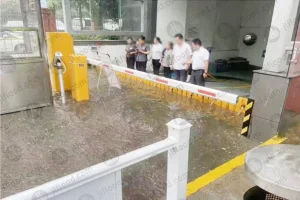
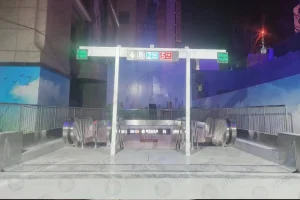
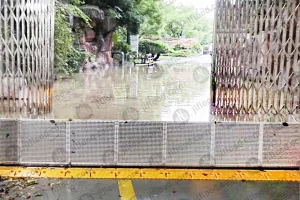
From the coastal industrial belts of Casablanca and Mohammedia to the logistics gateways of Tanger-Med and the rapid urban growth in Rabat-Salé, the Kingdom of Morocco faces accelerating hydrometeorological challenges. Under the national framework of the Plan National de l'Eau (PNE 2020-2050), implementing field-verified flood defense systems has become a critical engineering imperative.
Metropolitan areas like Greater Casablanca generate over 30% of Morocco’s GDP. High-density commercial districts such as Casablanca Finance City (CFC) feature multi-level underground parking and electrical vaults vulnerable to sudden flash floods during intense atmospheric river events.
Moroccan river basins (Oued Bouregreg, Oued Sebou, and Oued Tensift) experience brief yet catastrophic flash discharges. Arid surface soil limits immediate water absorption, turning municipal road networks into sudden high-velocity torrents within 15–30 minutes.
Major state assets—including ONEE high-voltage transformer substations, OCP Group chemical complexes in Jorf Lasfar, and ONCF high-speed rail lines—require continuous protection against water ingress to guarantee operational continuity and avoid regional grid blackouts.
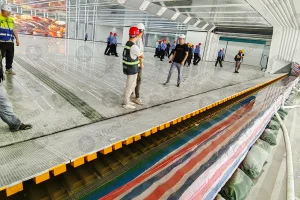
Specifying flood control systems for municipal tenders in Casablanca or industrial facilities in Tangier requires absolute structural certainty. Our factory employs full-scale hydraulic testing pools where every barrier unit is tested under real hydrostatic pressure heads before global shipment.
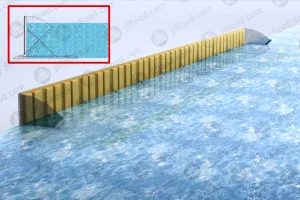
Unlike generic flood gates that rely on manual panel insertion during emergencies, hydrodynamic automatic flood barriers operate on buoyancy principles without human intervention. Water testing is not merely checking if rubber seals fit—it involves measuring dynamic lifting speed, hydrostatic deflection under full design head, debris tolerance, and micro-leakage thresholds in compliance with International Testing Standards (ASCE 24-14 / FM 2510 / EN 12211).
| Testing Standard & Parameter | Hydrodynamic Auto-Barrier (Junli) | Traditional Manual Aluminum Stop-Logs | Electromechanical Vertical Gates |
|---|---|---|---|
| Power Requirement | 0kW (100% Passive Hydraulic) | 0kW (Manual Assembly) | 3.5kW – 11kW (Grid/Generator Dependent) |
| Deployment Speed | Automatic (<30 Seconds upon water inflow) | Manual (30–90 Minutes requiring staff) | Automated (Requires intact electrical sensors) |
| Water Leakage Rate | < 0.05 Liters/Hour per meter (EPDM Sealing) | 1.5 – 5.0 Liters/Hour per meter | 0.2 – 0.8 Liters/Hour per meter |
| Over-Drive Load Resistance | 30–60 Ton Heavy Truck Capacity (Flush Frame) | None (Must be removed for traffic) | Limited (Requires overhead clearance) |
| Maintenance Schedule | Annual Visual Inspection & Sediment Flush | Regular Gasket Replacement & Storage Checks | Quarterly Electrical & Hydraulic Servo Maintenance |
Barrier panels are installed in a calibrated hydraulic testing pool. Water level is raised to maximum retaining head (up to 2000mm) and maintained for 24 hours to measure zero structural deflection.
Water is introduced into the bottom embedded basin at varying flow velocities. Sensors verify that the panel lifts autonomously within 0.1 to 0.5 seconds of water arrival.
Laser sensors scan the side frame wall interfaces under maximum hydraulic load, guaranteeing that seal compression prevents micro-seepage even under turbid floodwater conditions.
Simulated flood runoff containing sand, gravel, and organic urban debris is pumped through the chamber to verify that bottom self-cleaning drainage channels prevent mechanism jamming.
No two flood protection projects in North Africa present identical civil constraints. Our hydrodynamic systems are designed to integrate seamlessly into diverse architectural and structural environments across Morocco.
Port logistics hinterlands face combined risks from sea-level surges and torrential inland runoff. Junli's marine-grade SUS316 stainless steel components and high-strength 6063-T6 aluminum alloys deliver exceptional corrosion resistance against coastal salt spray while retaining surface water up to 2.0m height.
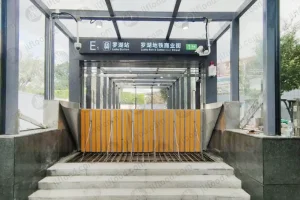
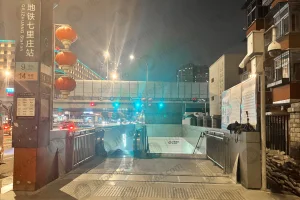
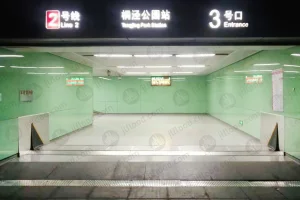
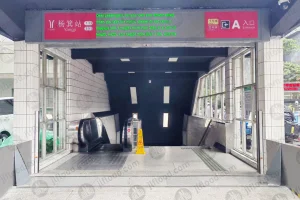
Underground station pedestrian access portals, connection channels, and ventilation shafts require passive defense that guarantees 100% activation even during complete city power cuts. Tested under simulated typhoon-season rainfalls, our gates rise automatically within seconds of water reaching the threshold curb.
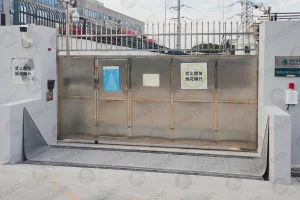
Flooding in electrical control rooms or phosphate chemical processing plants leads to millions of dollars in equipment damage and extended operational downtime. Our surface-mounted and embedded flood barriers protect cable trenches, transformer station gates, and critical power distribution centers.
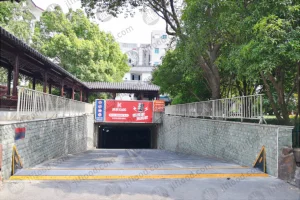
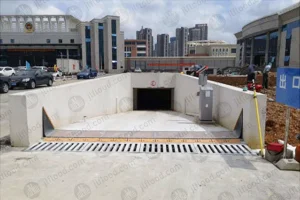
Shopping malls, luxury hotel underground garages, and residential towers require aesthetic integration. When lowered, Junli hydrodynamic barriers lay completely flat with ground level, allowing smooth passage for passenger vehicles and high-end luxury sports cars without bumper impact.
Headquartered in Nanjing, Jiangsu Province, Nanjing Junli Technology Co., Ltd. operates an advanced Industry 4.0 production facility dedicated exclusively to hydrodynamic flood defense systems. Our direct maritime logistics network provides seamless delivery to Moroccan ports including Casablanca, Tanger-Med, and Agadir.
High-precision 12,000W fiber laser cutting ensures sub-millimeter tolerances for embedment frames and structural panels. Robotic seam welding guarantees structural integrity capable of withstanding dynamic wave impact loads.
Every production lot undergoes raw material spectral analysis, tensile testing, and 100% seal hydrostatic testing. Inspection reports, material test certificates (MTC), and water-testing videos are attached to export document sets.
Barriers are protected with heavy-duty fumigated wooden crates, waterproof vacuum wrapping, and custom structural framing for sea freight. Complete installation manuals, BIM drawings, and CAD embedment files are provided in French and English.
When preparing Bill of Quantities (BOQ) or technical submittals for Moroccan engineering consultants (such as CID, NOVEC, or international EPCs), ensure the following parameters are explicitly specified:
Specify that the barrier panel must reach 100% full retaining height purely via water buoyancy without requiring AC/DC power supply, manual lever pulling, or human attendance on site.
For driveway entrance ramps, require certified wheel load ratings (e.g., AASHTO HS20-44 or EN 124 Class D400 - 40 Tons) to prevent top frame deformation under continuous truck and bus traffic.
Demand order-specific water testing documentation showing the actual manufactured units holding design head water level in a test pool with verified leakage rates below 0.05 L/hr/m.
Request complete embedded frame template drawings, rebar arrangement notes, and bottom drainage outflow details to ensure seamless poured-in-place concrete execution by local civil contractors.
Direct technical insights regarding hydrodynamic water testing, installation details, maintenance requirements, and shipping timelines for the Moroccan market.
Explore our complete catalog of hydrodynamic, embedded, flip-up, and metro-grade automatic flood barriers tailored for infrastructure projects across Morocco and global markets.
Contact our senior hydraulic engineering team today. Submit your site opening dimensions, clear spans, and required retaining heights for a comprehensive CAD layout proposal, water-testing specification set, and direct factory pricing.


