
Proven in heavy flash flood zones, operating automatically without electricity to protect transformer bays, control rooms, and cable trenches.
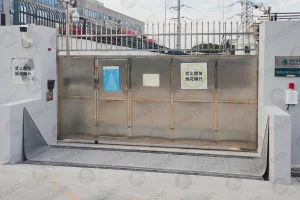
Modular hydrodynamic perimeter protection designed for high-voltage substations and industrial facilities.
View Product Details →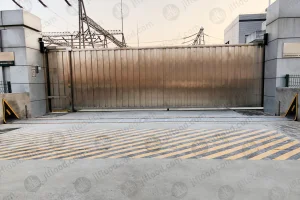
Self-rising buoyancy gate designed for wide perimeter vehicular gates with up to 40-ton axle loading capacity.
View Product Details →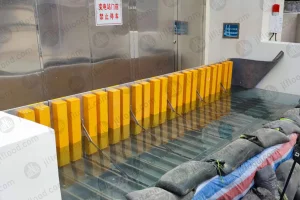
Uninterrupted 24/7 passive protection against sudden torrential surface runoff during the Ethiopian Kiremt monsoon.
View Product Details →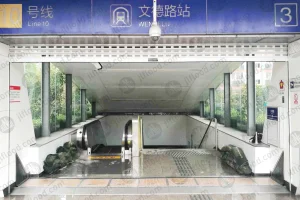
Ideal for retrofit projects where civil excavation is restricted. Fast surface installation for electrical rooms.
View Product Details →As East Africa's fastest-growing economy and the energy powerhouse of the region, Ethiopia is undergoing an unprecedented modernization of its electrical grid. Guided by the Ten-Year Development Plan (2021–2030) and driven by flagship power generation assets such as the Grand Ethiopian Renaissance Dam (GERD), the country is rapidly expanding its high-voltage transmission networks under the management of Ethiopian Electric Power (EEP) and distribution networks via Ethiopian Electric Utility (EEU).
However, the physical security of critical electrical assets—specifically 400kV, 230kV, and 132kV primary substations, step-down transformer yards, and industrial park switching stations—faces an increasingly severe threat from extreme climate events. The Ethiopian climate features a severe monsoon regime known as the Kiremt rainy season (spanning June through September), during which intense, localized cloudbursts hit high-altitude plateaus and river basins like the Awash and Blue Nile valleys.
Rapid urbanization in Addis Ababa, Adama, Hawassa, Mekelle, and Dire Dawa has created expansive impervious concrete surfaces. Combined with steep topographic slopes along the East African Rift Valley, surface runoff velocities routinely exceed municipal drainage capacities, converting access roads into torrents that inundate low-lying substation compounds.
A single flood incident entering a substation switchgear room or transformer cable trench causes cataclysmic damage: dielectric breakdown, arc flashes, transformer explosions, and multi-day blackouts. For manufacturing hubs like Bole Lemi, Kilinto, and Hawassa Industrial Parks, power failure translates into millions of USD in lost production.
Traditional flood mitigation measures—such as sandbags, manual aluminum stop logs, or electric motor-driven flood gates—fail systematically during real-world storm events in Sub-Saharan Africa.
| Protection Parameter | Manual Sandbags / Stop Logs | Electric Motorized Flood Gates | Junli Hydrodynamic Automatic Barrier |
|---|---|---|---|
| Activation Trigger | Manual labor required (2-4 hours delay) | Water level sensors & electric motors | 100% Passive Water Buoyancy (Instantaneous) |
| Grid Blackout Reliability | N/A (Labor dependant) | Fails during power outages (Unless costly UPS acts) | Operates with 0% Electricity Required |
| Maintenance Overhead | High decay rate, constant replacement | High (Sensory recalibration, mechanical gears) | Ultra-low (Periodic flushing & visual seal inspection) |
| Vehicle Traffic Impact | Blocks entrance permanently when built | Obstruction risk during power failure | Flush ground embedding; up to 40T axle transit |
| Sealing Efficiency | Severe leakage (>15 L/min/m) | Moderate leakage (5-10 L/min/m) | EPDM Double-Lip Sealing (<0.1 L/min/m) |
Nanjing Junli Technology’s hydrodynamic flood barriers utilize fundamental hydrostatic principles to turn floodwater from a destructive force into the exact driving energy that activates the barrier panel.
The high-strength 6063-T6 aluminum alloy panel rests fully flush inside a embedded stainless-steel bottom basin. Heavy utility vehicles, oil tank trucks, and personnel traverse smoothly over the gate without structural deflection.
As floodwater reaches kerb height, it flows through front intake grates into the bottom basin. Water buoyancy acts on the engineered structural hollow cavities of the panel, causing it to pivot upward automatically as water levels rise.
Once fully upright, hydrostatic pressure pushes the panel tightly against side frames and EPDM rubber gaskets. The higher the floodwater rises, the tighter the hermetic seal becomes, creating a zero-leakage protective shield.
Securing infrastructure hardware for Ethiopian tenders requires a balance between strict engineering compliance, long-term durability under tropical high-UV conditions, and competitive capital expenditure (CAPEX).
Headquartered in Nanjing, Jiangsu Province, China, Nanjing Junli Technology Co., Ltd. is a high-tech enterprise occupying over 20,000 m² of specialized production floor space. We integrate in-house precision laser cutting, automated robotic welding, structural finite element analysis (FEA), and a full-scale hydraulic testing pool.
By eliminating trading intermediaries, Ethiopian power contractors and EPC firms access factory-direct pricing. Our optimized modular design allows rapid container consolidation at Shanghai or Ningbo ports, reaching Djibouti Port within 18–22 shipping days.
Different power infrastructure assets present unique architectural and environmental conditions. Junli Technology provides specialized engineering variations for every critical entry point.
High-voltage substations in Addis Ababa (e.g., Kaliti, Gotera, Sebeta substations) feature wide perimeter vehicle gates. Junli’s multi-panel modular hydrodynamic barrier spans widths from 4m up to 30m with standard retaining heights of 0.6m to 1.5m, supporting heavy transformer delivery trailers.
Target Asset: 400kV / 230kV Outer GateHousing delicate SCADA servers, protection relays, and GIS switchgear, control room doorways require absolute water sealing. Lightweight flip-up and automatic embedded barriers prevent flash surface water ingress during extreme storm events.
Target Asset: GIS & Control Room DoorsIndustrial zones such as Hawassa, Bole Lemi, Kombolcha, and Adama rely on dedicated step-down substations. Installing Junli automatic barriers guarantees unbroken manufacturing activity and prevents supply chain interruptions for tenant exporters.
Target Asset: Industrial Grid InfrastructureRail transit substations along the Addis Ababa Light Rail Transit (AALRT) and Ethio-Djibouti Railway require submerged cable trench protection and subterranean transformer vault protection against localized urban drainage overflows.
Target Asset: Railway Electrification FacilitiesSubmit your substation gate dimensions, historical rainfall data, or civil tender drawings. Our senior engineering team will return a complete technical proposal within 24 hours.
Send Inquiry Now →To assist consulting engineers, EPC contractors, and Ethiopian Electric Power procurement teams in drafting tender requirements, we provide our standard technical specification parameters below.
Frame Material: Stainless Steel SUS304 / SUS316 (Thickness ≥ 4.0mm)
Panel Material: High-Strength Aviation Aluminum Alloy 6063-T6
Sealing System: Anti-Aging EPDM Polymer (UV & Heat Resisting)
Standard Retaining Heights: 600mm, 900mm, 1200mm, 1500mm, 2000mm (Customizable)
Load Rating: Heavy Commercial (40-Ton Truck Axle Transit)
Activation Mechanism: Hydrodynamic Buoyancy & Hydrostatic Pressure
Response Time: Fully Elevated within 30-90 Seconds of Intake
Operating Temp Range: -30°C to +80°C (Tested for Tropical High Heat)
The barrier panel is installed inside a recessed concrete foundation pit flush with the driveway ground level. When flash floods strike, surface runoff enters the intake grates into the base chamber. The natural buoyancy of the engineered hollow aluminum panel lifts it automatically as water levels rise. Hydrostatic pressure from the retained floodwater then forces the panel firmly against the EPDM sealing gaskets, locking it into place. Because it relies purely on gravity and fluid dynamics, the system operates with 100% reliability during grid power failures—the exact moment storm surges typically occur.
Yes. Junli substation flood barriers are engineered specifically for high-load industrial environments. The top surface of the resting panel and the embedded stainless steel foundation frame are structurally reinforced with internal ribbing. Standard units are rated to withstand axle loads up to 40 tons (conforming to heavy commercial truck transit standards), ensuring zero deformation when heavy maintenance vehicles or transformers cross the gate.
For embedded models, the contractor must excavate a shallow trench across the opening according to our detailed CAD civil construction drawing, pour a reinforced concrete foundation, embed the bottom basin, and connect a standard gravity drain pipe to the municipal or site drainage channel (to drain residual rainwater after floodwaters recede). For retrofit sites where trench excavation is impossible, surface-mounted flip-up barriers are available, requiring only surface anchor bolting into sound concrete.
Ethiopia's high-altitude regions (such as Addis Ababa at 2,350m above sea level) experience intense solar ultraviolet (UV) radiation and significant diurnal temperature shifts. Our barrier panels are constructed from anodized 6063-T6 aviation-grade aluminum alloy coated with fluorocarbon (PVDF) weather-resistant finishes. The critical sealing gaskets are manufactured from high-grade automotive EPDM compound blended with anti-aging UV stabilizers, rated for a continuous service lifespan exceeding 15–20 years without degradation.
Standard manufacturing lead time at our Nanjing factory is 14 to 21 days depending on order volume and customization details. Sea freight from Shanghai or Ningbo Port to the Port of Djibouti takes approximately 18 to 22 days. From Djibouti, inland transport via truck or the Ethio-Djibouti Railway to Modjo Dry Port or Addis Ababa takes an additional 3 to 7 days. We provide complete sea-worthy export wooden box packaging with internal moisture barriers and corner protection.
Yes. Every barrier series is backed by full laboratory test reports covering water tightness, structural static load deflection, material chemical composition analysis, and salt spray corrosion resistance. Inspection certificates from international testing bodies (such as SGS or TÜV) can be arranged upon request prior to factory dispatch.
Explore our extended range of automatic, embedded, hydrodynamic, and self-closing flood gate solutions.
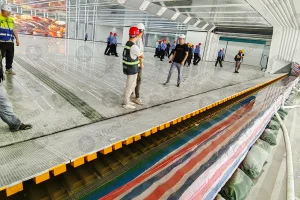
Automated mechanical counterweight design ensuring instant elevation and automatic reset after flood recession.
View Product Details →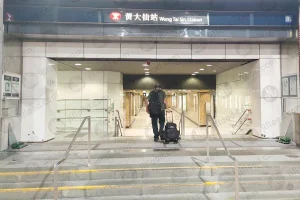
Compact flip-up barrier ideal for narrow doorway entries, cable trenches, and indoor equipment rooms.
View Product Details →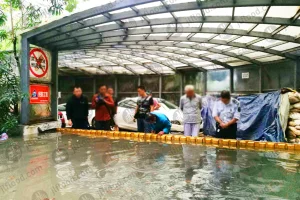
Engineered for seamless multi-leaf linkage across wide perimeter entrances exceeding 10 meters.
View Product Details →
Rugged anodized aluminum barrier custom-built for high-voltage power substation perimeter defense.
View Product Details →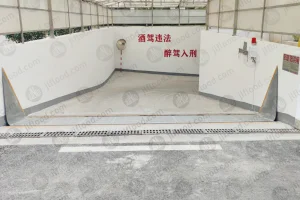
Precision-engineered embedded model featuring reinforced stainless steel side columns and double-lip seals.
View Product Details →
Proven across major underground infrastructure networks to block high-velocity flash floods.
View Product Details →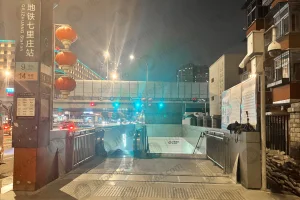
Flush-mount foundation framework delivering maximum structural strength for critical infrastructure.
View Product Details →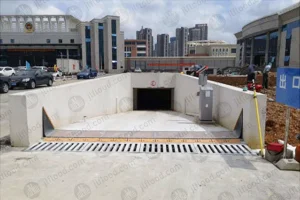
Heavy-duty automatic closing mechanism with integrated debris resistance and minimal maintenance requirements.
View Product Details →Contact our factory engineering team for CAD drawings, budget quotes, and technical tender documents.


