
Hydrodynamic, Power-Free Automatic Self-Rising Flood Protection Systems Engineered for Colombia’s Infrastructure, Commercial Real Estate, and Industrial Sectors
Below are our primary hydrodynamic and zero-power automated flood barriers, tailored for structural integration into underground parking ramps, metro access points, and power utility sites in Colombia.
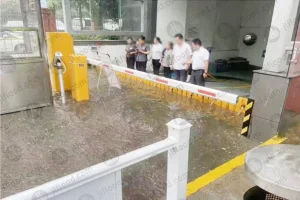
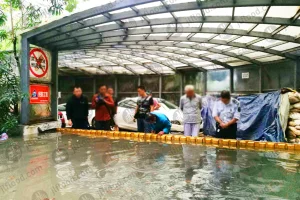
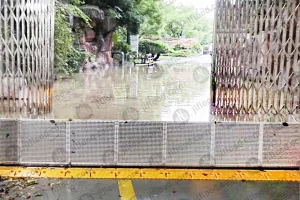
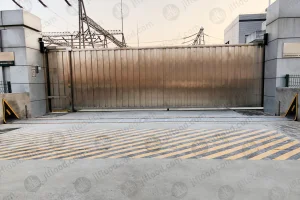
Rapid urbanization across Colombia’s major metropolitan regions—including the Andean high plateau of Bogotá D.C., the narrow valley topography of Medellín (Aburrá Valley), the industrial infrastructure of Cali, and the tropical coastal ports of Barranquilla and Cartagena—has intensified urban flood risk profiles. Driven by persistent climate phenomena such as La Niña cycles, localized flash floods (arroyos), and extreme pluvial runoff, municipal storm networks regularly exceed capacity.
Historically, commercial asset managers and municipal engineers in Latin America relied on reactive, manual containment methods: sandbags, removable aluminum stop-logs, or electrically actuated pump-gate systems. However, empirical field data demonstrates high failure rates for legacy systems during catastrophic weather events due to grid blackouts, delayed human deployment, mechanical wear, and seal deterioration under hydraulic head pressure.
This technical report examines the deployment of Actual Water Retaining Flood Barriers engineered by Nanjing Junli Technology Co., Ltd. Utilizing advanced hydrodynamic buoyancy principles, these passive barrier systems auto-deploy without electricity, human intervention, or external sensor triggers—offering structural defense tailored to Colombia’s severe hydrometeorological landscape.
Colombia's Instituto de Hidrología, Meteorología y Estudios Ambientales (IDEAM) regularly highlights the compounding factors of high precipitation, mountainous runoff, and poor soil infiltration in high-density urban areas. In cities like Barranquilla, high-velocity surface flows (arroyos) can inundate underground assets within 15 minutes of rainfall onset, rendering manual flood barrier assembly physically impossible.
Major municipal investments—such as the ongoing construction of the First Line of the Bogotá Metro (Metro de Bogotá), expansion of the Medellín Metro Network, underground logistics centers, multi-level retail garages, and high-voltage power substations operated by regional utilities—demand continuous, maintenance-free flood resistance up to hydrostatic heads of 2,000 mm.
Modern international procurement standardizations—governed by frameworks such as FM 2510, ANSI/2510, and European EN standardizations—have shifted global architectural specifications away from active or manual flood barriers. Engineering firms across Latin America, North America, and Asia-Pacific now mandate three foundational metrics for civil tenders:
Eliminating sensors, PLCs, backup diesel generators, and electrical actuators removes points of failure. Passive hydraulic levitation utilizes the inherent potential energy of incoming floodwater to raise structural retaining panels.
Automatic actuation guarantees 100% operational readiness 24/7/365, neutralizing human negligence, delayed response times, or road blockages that prevent maintenance crews from accessing target infrastructure.
When not deployed, self-rising barriers rest completely flush inside a recessed concrete foundation trench, ensuring unimpeded vehicular and pedestrian passage while maintaining building aesthetic integrity.
Nanjing Junli Technology Co., Ltd. operates as a specialized engineering manufacturer of intelligent civil defense and flood control systems. Headquartered in Nanjing, Jiangsu Province, our facilities integrate advanced digital manufacturing processes to deliver unmatched supply chain reliability for international infrastructure buyers in Colombia and across Latin America.
Our structural aluminum alloy (6063-T6) and stainless steel (SUS304/SUS316) components undergo precision robotic laser cutting and continuous automated TIG/MIG welding. This guarantees structural integrity capable of resisting high dynamic wave impacts and debris strikes during extreme flooding.
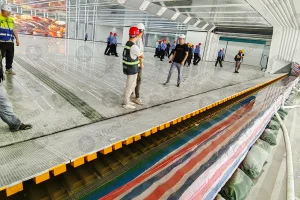
Unlike trading intermediaries, Junli houses an in-house full-scale hydraulic testing pool. Every batch of custom-engineered hydrodynamic flood gates undergoes physical water-retention verification, seal pressure testing, and deflection measurements prior to export packaging.
| Evaluation Parameter | Junli Technology Industry 4.0 Standard | Traditional Regional Fabricators |
|---|---|---|
| Activation Principle | Hydrodynamic Automatic Passive Buoyancy | Manual Stop-Logs or Electrical Actuators |
| Power Consumption | 0.0 kWh (100% Hydraulic Passive) | 2.2 kW – 15.0 kW (Generator-backed) |
| Structural Material | Aviation-Grade High-Strength Extruded Al-Alloy / SUS304 | Standard Structural Mild Steel (Prone to Rust) |
| Sealing Polymer | Custom Co-Extruded EPDM / Fluororubber Compound | Generic Neoprene Strip (Rapid UV/Thermal Degradation) |
| Traffic Load Rating | AASHTO HS-20 / EN 124 D400 Heavy Vehicle Compliant | Light Pedestrian Duty Only (< 2.5 Tons) |
| QA / Testing Verification | 100% Factory Water Pool Tested + Video Certificate | Calculated/Theoretical Model Only |
The core technological innovation behind Junli’s Actual Water Retaining Flood Barrier lies in its self-balancing, hydrostatic pressure differential activation. The entire assembly consists of a ground-embedded foundation frame box, a movable structural retaining panel, high-resilience end-seals, and dual-side hydraulic damping dampening units.
Under dry conditions, the retaining panel rests horizontally inside the embedded stainless steel ground frame. The top surface of the panel is level with the surrounding pavement, supporting daily vehicular and pedestrian traffic seamlessly.
When heavy storm runoff reaches the entrance, floodwater enters the bottom foundation chamber through specialized intake grates. As water accumulates, the buoyant panel naturally rises according to Archimedes' principle.
As the external flood height increases, the hydrostatic head forces the barrier panel upward into its maximum vertical retaining angle (typically 75° to 90°), compressing the side EPDM seals against the frame walls for zero-leakage retention.
Junli’s water retaining systems are modularly configurable to suit Colombia's diverse civil engineering requirements:
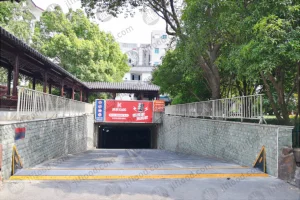
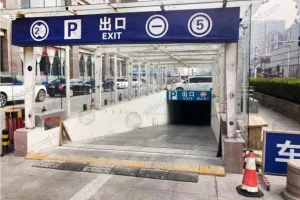
High-rise residential complexes in Medellín’s El Poblado, commercial towers in Bogotá’s Zona Rosa, and logistics parks in Cali require unhindered ramp access. Our embedded self-rising barriers install at the crest or foot of parking ramps, auto-deploying when storm drains overflow to protect subterranean vehicles and mechanical rooms.
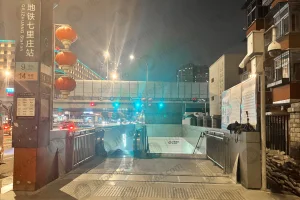
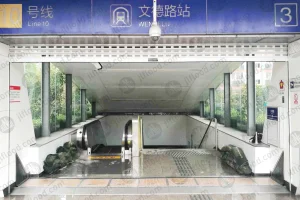
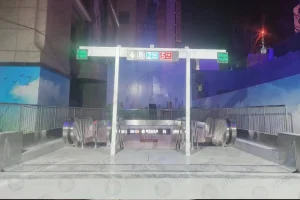
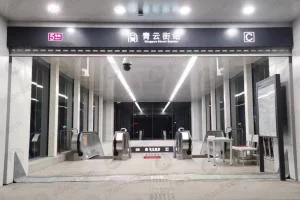
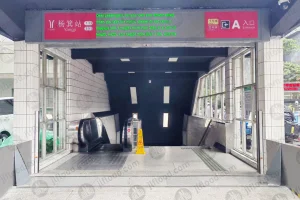
Subway entrances, pedestrian underpasses, and emergency ventilation shafts for metro networks require robust, tamper-proof flood defense. Surface-mounted and embedded flip-up models guarantee immediate containment against localized flash flooding without disturbing commuter traffic.
Electric power substations operated by regional utilities (such as EPM, CODENSA, or CELSIA) house high-voltage transformers and control cabinets sensitive to water exposure. Junli substation perimeter barriers provide watertight sealing around transformer bays and cable trench entryways.
Facilities located within the Free Trade Zones (Zonas Francas) of Cartagena, Barranquilla, and Buenaventura face tidal surges and tropical downpours. Our multi-leaf wide-span flood barriers shield warehouse loading docks and manufacturing bay doors against coastal saltwater and heavy runoff.
Successful long-term barrier performance relies on precise civil integration. Nanjing Junli Technology provides full CAD embedding drawings, structural load calculation reports, and step-by-step installation support for Colombian EPC contractors and engineering consultants.
| Installation Metric | Embedded Foundation Type | Surface-Mounted Retrofit Type |
|---|---|---|
| Primary Application | New Civil Projects, Metro Ramps, Major Commercial Real Estate | Existing Buildings, Historic Structures, Fast Retrofits |
| Trench Excavation Depth | 300 mm to 600 mm (Depending on Retaining Height) | 0 mm (No Floor Cutting Required) |
| Drainage Requirement | Connect Foundation Box to Site Storm Sewer / Sump Pump | Gravity Drainage via Side Abutments |
| Frame Anchor Spec | M12/M16 Chemical Anchors into C30/37 Reinforced Concrete | M12 Stainless Steel Expansion Anchors |
| Max Single Span Width | Up to 6.0 Meters (Multi-leaf arrays available for >20m) | Up to 4.5 Meters per leaf |
The barrier panel is installed inside a recessed concrete foundation frame flush with the driveway surface. When floodwaters overflow surrounding storm drains, water enters the foundation trough via intake grates. The accumulating water generates hydrodynamic buoyancy and hydrostatic pressure, which naturally lifts and locks the panel into its vertical water-retaining position. No power, pumps, sensors, or manual labor are needed.
Yes. Junli embedded hydrodynamic barriers are engineered with structural internal ribbing and heavy-duty top plates rated for axle loads exceeding AASHTO HS-20 standards (280 kN / 40-ton truck loads). They are fully certified for continuous heavy vehicle traffic at commercial garages, freight terminals, and industrial logistics centers.
We manufacture custom retaining heights ranging from 500 mm up to 2,000 mm. Single clear spans reach up to 6.0 meters, while multi-leaf modular arrays can span unlimited entrance widths (over 30+ meters) using intermediate removable or embedded support pillars.
We ship globally under FOB, CIF, or DDP terms directly from major Chinese ports (Shanghai/Ningbo) to key Colombian sea ports including Puerto de Buenaventura (Pacific Coast) and Puerto de Cartagena / Barranquilla (Atlantic Coast). All products are export-packed in reinforced steel-framed wooden crates with protective moisture barriers.
Because the system operates passively without motors or electrical wiring, routine maintenance is minimal. We recommend quarterly inspection to clean debris/silt from the foundation chamber trough and checking the EPDM side seals for structural integrity. Seal replacement kits are available directly from our factory.
Review our full technical range of flip-up, embedded, surface-mounted, and specialized rail-transit automatic flood barriers designed for global distribution.
Whether you are an engineering consultant in Bogotá, a general contractor in Medellín, or an industrial procurement manager in Barranquilla, our technical team provides customized CAD layouts, hydraulic calculation files, and factory-direct pricing for your project requirements.


