
Engineered specifically for low-elevation transit hubs, commercial ramps, and subterranean utilities vulnerable to Boston Harbor tidal surges and inland runoff.
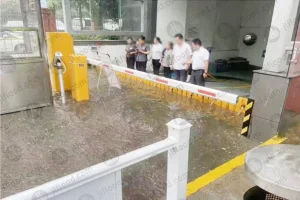
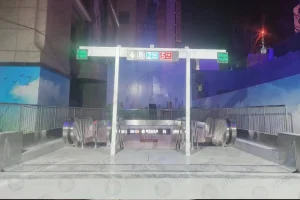
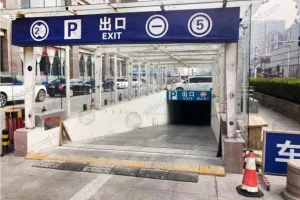
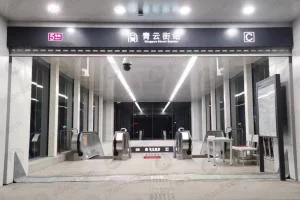
Evaluating the unique hydrodynamic challenges of Boston Harbor coastal inundation, King Tides, and historic Nor'easters for urban asset protection.
The Metropolitan Area of Boston, Massachusetts, presents one of North America's most complex hydro-meteorological risk profiles. With extensive coastal urban footprints spanning the Seaport District, Downtown Waterfront, East Boston, South Boston, and Charlestown, municipal and private real estate assets face compound flooding threats. The convergence of rising sea levels, astronomical King Tides, and high-energy coastal storms (Nor’easters) routinely challenges traditional perimeter defenses.
In response to changing sea level projections outlined by the Boston Planning & Development Agency (BPDA), the city enacted the Coastal Flood Resilience Zoning Overlay District (Article 25A). This standard mandates that critical infrastructure, underground parking structures, commercial life-science labs, and public transit portals maintain robust barrier systems capable of resisting projected 2070s 100-year flood levels plus safety freeboards.
A flood barrier design is only as reliable as its empirical validation. Laboratory calculations often fail to predict elastomeric seal compression dynamics under dynamic hydro-static loads. Real-world conditions—such as debris impact and multi-directional hydrostatic head pressure—demand full-scale factory water testing prior to job-site shipment.
Inside Nanjing Junli Technology’s testing procedures: Providing verified, quantifiable information gain for Boston MEP engineering specifiers.
Every manufactured barrier array undergoes controlled basin immersion. Water depth is elevated to 100% and 125% of the design retaining height. Deflection measurement sensors monitor mid-span panel deflection to ensure dynamic structural yield margins remain under L/250 tolerances.
Utilizing continuous EPDM / Fluorocarbon co-extruded elastomeric seals, the barrier bottom and lateral junctions are checked for zero-leakage performance. Test benches measure allowable seepage rate against strict international standard limits (< 0.50 L/hr/meter of seal length).
For automatic self-closing systems, buoyancy forces are evaluated without electrical input. Water ingress rate into the sub-frame chamber is calibrated against lifting speed to ensure panel activation occurs within seconds of water arrival during flash floods.
| Testing Parameter | Standard Commercial Barrier Specs | Junli Factory Acceptance Protocol (Boston Line) | Engineering Advantage |
|---|---|---|---|
| Hydrostatic Verification | Theoretical finite element calculation only | 100% Physical Water Tank Testing per Order | Eliminates site installation seal failure risks |
| Buoyancy Response Time | Manual deployment or electric sensors | Passive Hydrodynamic Buoyancy (0.1s activation) | Functions seamlessly during power blackouts |
| Structural Frame Material | Standard Painted Carbon Steel | High-strength 6063-T6 Aluminum / Stainless 316L | Resists Boston coastal saline water corrosion |
| Allowable Seepage Rate | Up to 2.50 L/hr/meter | < 0.10 L/hr/meter (Near Zero-Leakage Class) | Protects critical life-science equipment & server rooms |
Delivering high-capacity manufacturing throughput and custom architectural integration for general contractors, engineering firms, and municipal developers.
As a specialized manufacturer based in Nanjing with extensive experience across major infrastructure projects worldwide, Nanjing Junli Technology Co., Ltd. provides global procurement teams with direct factory pricing, tailored engineering shop drawings, and turnkey fabrication capabilities.
For US engineering firms and Boston-based contractors, sourcing through an established specialized OEM manufacturer ensures that custom dimensions—ranging from 1.5-meter entry doorways to multi-span 30-meter commercial parking garage ramps—are manufactured with millimeter-precise tolerances.
Get technical drawings, calculation packages, and factory direct quotes within 24 hours.
Explore our complete inventory of automatic, flip-up, modular, and electrical substation flood barrier solutions engineered for global export.
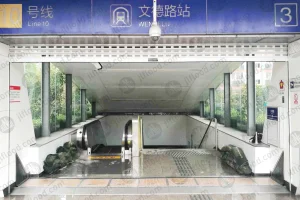
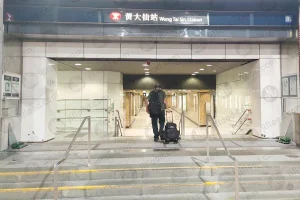
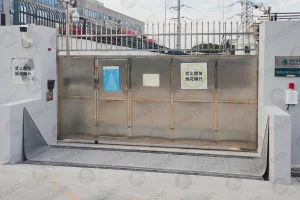
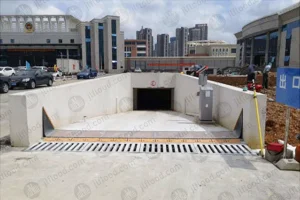
From preliminary architectural design reviews to final site acceptance testing (SAT) in New England.
Our engineering team collaborates with local Boston civil consultants to provide tailored rebar clearance drawings, embedded steel channel templates, and gravity drainage connection details matching local Boston Water and Sewer Commission (BWSC) standards.
All product modules are packed in ISPM-15 certified wooden cases engineered for ocean transit directly to the Port of Boston. Complete customs documentation, technical compliance datasheets, and mill test certificates accompany every consignment.
Remote commissioning support and English maintenance manuals guide local general contractors through final Site Acceptance Testing (SAT). Periodic annual seal inspection programs ensure long-term readiness over a 20+ year design life.
Technical clarity on power-free mechanics, testing documentation, lead times, and regulatory compliance.
Whether you are designing a new life science center in Cambridge, retrofitting a commercial garage in the Seaport District, or tendering for transit resilience upgrades, our engineering team is ready to deliver full-scale tested protection.


