
Custom-engineered passive water-retaining flood gates built in certified Chinese manufacturing facilities for rapid deployment across Mexico City’s Metro Lines 1 through 12, station concourses, and deep underground access portals.
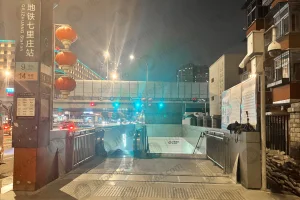
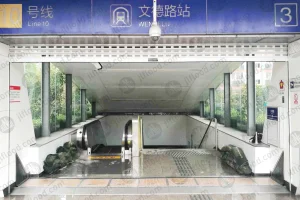
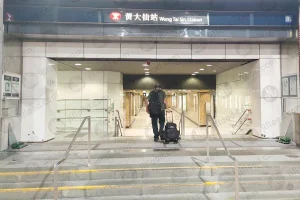
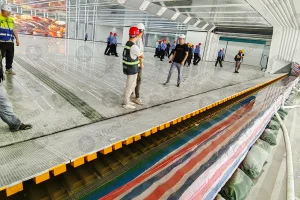
Mexico City (Distrito Federal / CDMX) presents one of the world's most unique and challenging urban hydrological environments. Built upon the former lakebed of Lake Texcoco within the endorheic Basin of Mexico, the metropolitan area faces severe recurring flood events—locally termed encharcamientos and high-impact inundations—during the North American Monsoon season (May through October). For the Sistema de Transporte Colectivo (STC) Metro, which serves over 4.5 million daily commuters across 195 stations, surface stormwater runoff poses an existential threat to underground tunnel networks, electrical traction substations, and passenger safety.
Standard flood protection measures often fail in Mexico City due to three compounding geological and structural factors:
Ground compaction from aquifer over-extraction causes Mexico City to sink at rates between 10 to 50 centimeters annually. This uneven land subsidence shifts station foundation gradients, creating localized low-lying troughs at subway entrances in municipalities like Cuauhtémoc, Iztapalapa, and Venustiano Carranza.
High-altitude convective storms frequently unload over 50mm of precipitation in under an hour. The municipal storm sewer system (Drenaje Profundo) regularly operates under high hydraulic head capacity, resulting in immediate back-pressure surges that overflow onto main thoroughfares like Calzada de Tlalpan and Avenida Insurgentes.
Extreme weather events routinely cause localized electrical grid failures across CDMX. Traditional electric motor-driven flood gates or submersible sump pumps frequently lose power at the critical moment water begins descending into subway pedestrian access stairwells.
To mitigate the extreme operational risks in Mexico City, transit authority specifiers and civil engineering contractors are shifting from manual sandbagging and active electromechanical gates to Hydrodynamic Automatic Self-Rising Flood Barriers. Engineered by specialized Chinese factories, these barriers utilize the natural buoyancy force of rising floodwater to deploy without human intervention or electrical power.
The structural assembly consists of a high-strength embedded bottom frame recessed flush into the station entrance pavement. Under dry conditions, pedestrian traffic and maintenance vehicles cross smoothly over the reinforced top plate. When incoming floodwater reaches the entrance, water enters the bottom chamber through intake grates. As water accumulates, hydrostatic pressure and buoyancy lift the engineered barrier panel automatically, forming an impenetrable vertical wall up to 2,000 mm in retaining height.
| Engineering Parameter | Specification Standard (Nanjing Junli Technology) | Benefit for Mexico City Metro Applications |
|---|---|---|
| Activation Mechanism | Pure Hydrodynamic Buoyancy (Passive Self-Rising) | Operates 100% reliably during severe blackout storms in CDMX. |
| Primary Structural Material | High-Strength Marine Grade Aluminum (6063-T6) / 316L SS | Resists urban atmospheric corrosion and chemical washouts. |
| Structural Load Rating | EN 124 Class D400 (Up to 40-Ton Axle Load Capacities) | Withstands heavy emergency vehicles driving over recessed frame. |
| Sealing System | Dual-Lip EPDM / Fluororubber Polymer Gasket Matrix | Zero-leakage sealing under extreme hydro-head pressure. |
| Subsidence Tolerance | Floating Frame Anchoring with Flexible Grout Sleeves | Accommodates annual ground movement without structural jamming. |
Sourcing metro flood defense solutions directly from established Chinese factories provides infrastructure projects in Mexico City with significant procurement advantages:
Metro networks are complex ecosystems with multiple vulnerable points where surface water can penetrate. A comprehensive flood defense plan for Mexico City requires targeted barrier configurations engineered for specific asset geometries:
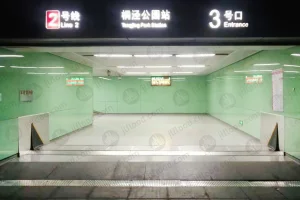
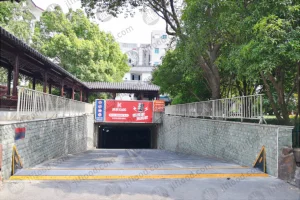
Underground station stairways along high-density corridors like Metro Zaragoza or Pantitlán require non-intrusive embedded automatic barriers. When flash floods sweep down street pavements, low-profile self-rising units emerge seamlessly, preventing water cascades into ticketing concourses.
Passageways linking metro lines to subterranean commercial centers (such as connections in Centro Histórico or Bellas Artes) demand wide-span modular flip-up barriers. These systems prevent multi-directional flood propagation across public and private property boundaries.
CDMX metro lines rely on high-voltage equipment yards and underground cable trenches. Surface-mounted hydrodynamic barriers seal critical equipment doors against water ingress, protecting multi-million-dollar transformers from short-circuiting during tropical cloudbursts.
Metro train maintenance yards require ultra-heavy-duty flood gates capable of supporting frequent rail service and maintenance vehicle traffic without deforming embedded hydraulic tracks or seal channels.
Procuring metro-grade flood defense equipment from OEM/ODM factories in China involves detailed technical validation and logistics planning. Follow these standardized engineering steps to ensure compliance with Mexico City municipal tender specifications:
Our expert flood control engineering team provides customized CAD details, specification datasheets, and competitive factory-direct wholesale quotes within 24 hours.
Speak to a Senior Flood Control Engineer NowExplore our full range of field-tested hydrodynamic flood gates, automatic barriers, and custom connection channel systems engineered for global metro transit applications.
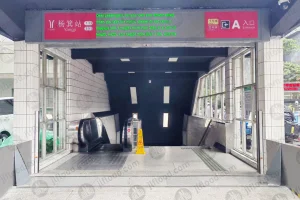
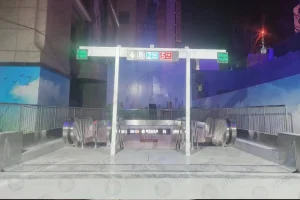
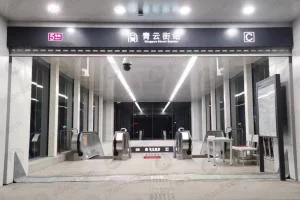
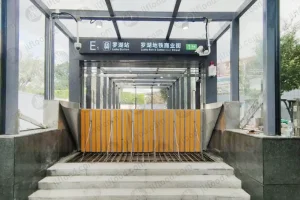
Our hydrodynamic automatic flood barriers use buoyancy and hydrostatic head pressure. The panel rests flat inside a flush embedded foundation frame under dry conditions. When storm runoff flows into the intake chamber, incoming water fills the internal float basin. Buoyancy forces push the gate panel upward automatically, engaging mechanical self-locking latches. Because the deployment mechanism relies purely on basic physical fluid dynamics, the gate activates with 100% reliability during grid power failures.
Yes. Mexico City’s clay soil consolidation causes severe regional subsidence. Our engineering team designs embedded frames with perimeter floating grout joints and flexible structural anchor assemblies. This structural tolerance prevents frame distortion caused by minor ground shifts, ensuring the automatic barrier panel continues to rise smoothly without binding.
Standard hydrodynamic gate modules feature water-retaining heights ranging from 500 mm to 2,000 mm. Single clear spans cover up to 6,000 mm per leaf module. For wider metro concourses, pedestrian plazas, or vehicle maintenance depots (spans exceeding 20 meters), we link multiple automated barrier units with removable or automatic retractable mullion posts.
Because there are no electric motors, hydraulic pumps, or complex electronic sensors, maintenance demands are exceptionally low. Routine maintenance involves quarterly clearing of debris, silt, or leaves from the bottom intake chamber grates, along with an annual visual inspection and manual lubrication of the pivot seals. EPDM seals are field-replaceable after 10 to 15 years of operational service.
Barrier assemblies are fully pre-fitted, tested in our water pool, and packaged into heavy-duty fumigated wooden crates designed for international sea transport. Shipments route directly from Chinese ports (such as Shanghai or Ningbo) to Manzanillo or Veracruz in Mexico. From there, flatbed overland transit delivers the units directly to job sites across Greater Mexico City.
Yes. Every wholesale order includes comprehensive engineering packages: stamped CAD dimensional drawings, structural deflection calculations under design water head, raw material inspection reports (316L SS / Aluminum alloy mill certificates), full factory water-testing video logs, and installation/maintenance manuals in English and Spanish.
Protect Mexico City's transit infrastructure with proven hydrodynamic flood barriers. Contact our engineering division today to receive a complete technical catalog, CAD library, and direct wholesale pricing.
Send Inquiry Now

