
Top-tier power-free automatic flood control gates deployed in metro networks, underground car parks, and high-voltage electrical substations globally.
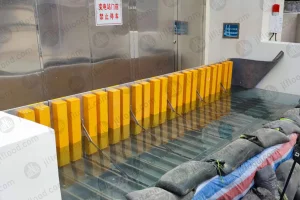
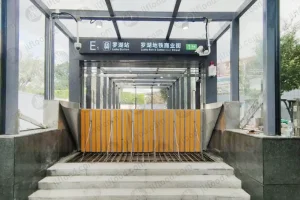
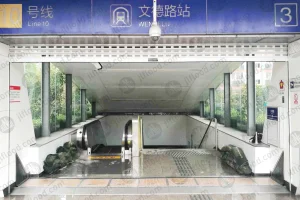
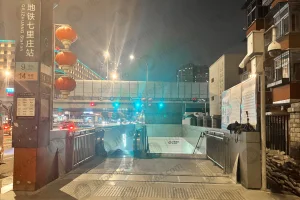
Analyzing the macro shift from reactive human intervention to passive, autonomous civil infrastructure protection.
Extreme precipitation events driven by global micro-climate volatility have exposed severe structural vulnerabilities in subterranean infrastructure worldwide. Traditional flood barriers—such as manual sandbagging, modular aluminum stop-logs, and electrically driven vertical lift gates—exhibit alarming failure rates during catastrophic cloudbursts. The core vulnerability stems from dual systemic dependencies: human delay during unexpected flash floods and power grid failures during severe typhoons.
To address these structural vulnerabilities, civil engineering standards across North America, Europe, and Asia-Pacific are increasingly mandating Passive Hydrodynamic Automatic Flood Baffles. Manufactured with precision engineering in China, these devices operate under pure fluid dynamic principles: using incoming floodwater's intrinsic hydro-buoyancy and hydrostatic pressure vectors to elevate, seal, and lock retaining barriers without requiring electrical power, human intervention, or electronic sensors.
Historical flood audit data indicates that over 78% of urban inundation disasters occur simultaneously with municipal power grid trips or substation submersions. Electric flood gates equipped with backup UPS batteries frequently fail due to battery degradation, waterlogged logic controllers, or mechanical relay fusion. A purely mechanical, hydrodynamic zero-power system eliminates 100% of single-point electronic failure modes, establishing a true zero-standby-cost safety barrier for critical assets.
Understanding the physics of Archimedean buoyancy and hydrostatic pressure balancing in modular flood barriers.
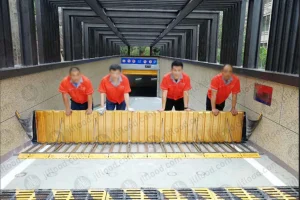
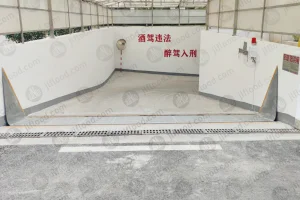
The device rests flush within a shallow concrete trench embedded at entrance thresholds. When surface runoff overflows the threshold curb, water flows into the chamber through stainless steel debris grates. High-density closed-cell hydrophobic composite cores generate instant hydraulic buoyancy, forcing the barrier panel to pivot upward within seconds.
As the water level continues to rise outside the building or station entrance, head pressure acts against the exterior face of the elevated barrier panel. This hydrostatic force presses the panel against heavy-duty structural side frames, converting fluid force into mechanical sealing force against EPDM compression gaskets.
Once floodwaters recede, water inside the recessed foundation chamber drains out through bottom weep holes or integrated gravity drainage pipes into municipal storm drains. Lacking hydrostatic pressure and buoyancy, the panel automatically lowers back flush into the ground, restoring unhindered vehicular and pedestrian traffic.
| Parameter / Metric | Surface-Mounted Light Series | Embedded Heavy-Duty Series | Substation Custom Modular Series |
|---|---|---|---|
| Retaining Height Range | 300 mm – 600 mm | 500 mm – 1500 mm (Up to 2000 mm) | 600 mm – 1200 mm |
| Structural Material Grade | Marine-Grade Al-6063-T6 / SUS304 | Structural Carbon Steel / Stainless 316 | High-Strength Anodized Aluminum Alloy |
| Axle Load Rating (Vehicular) | 10 – 15 Tonnes (Light Vehicle) | 30 – 50 Tonnes (Heavy Truck / Fire Engine) | 20 – 30 Tonnes (Utility Fleet) |
| Trigger Hydro-Head Depth | ≥ 30 mm surface runoff | ≥ 50 mm surface runoff | ≥ 40 mm surface runoff |
| Sealing Gasket Compound | Vulcanized EPDM Triple Lip Seal | Fluorocarbon / EPDM Composite Gasket | Co-Extruded EPDM Anti-Aging Rubber |
| Design Service Life | 25+ Years (Zero Electronics) | 30+ Years (Corrosion Resistance C4/C5) | 25+ Years Maintenance-Free |
Engineering customized flood barriers tailored for diverse urban civil structures.
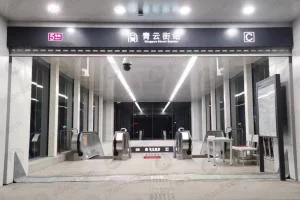
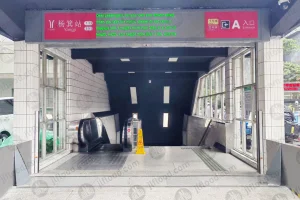
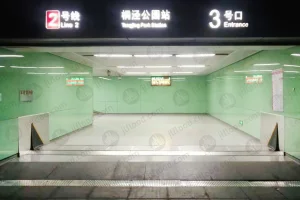
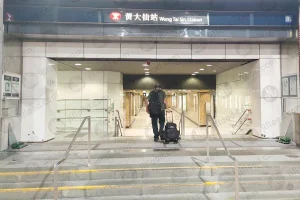
Subway entrances and connection channels represent high-risk flood paths. A breach can submerge underground tunnels, electrical traction systems, and signaling equipment, resulting in massive operational losses. Hydrodynamic barriers installed at station portals rest flush with concourse tiles. When severe rainstorms overwhelm surface sewers, the gates deploy automatically, preserving multi-billion-dollar transit networks.
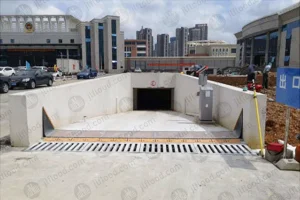
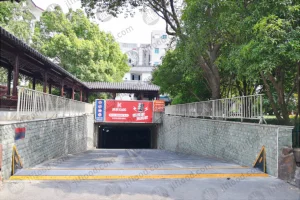
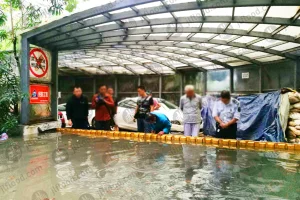
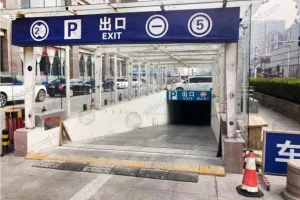
Basement parking garages are prone to rapid water ingress during sudden cloudbursts. Conventional modular stop-logs require site managers to manually fetch and install aluminum panels—a process that often fails during nighttime storms or sudden flash floods. Embedded automatic flip-up flood baffles allow continuous vehicle crossing under dry conditions and activate instantly during floods without human intervention.
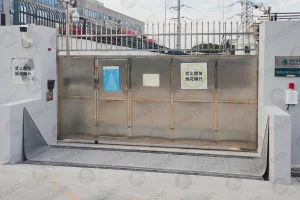
Electrical utility substations house transformers, switchgear, and battery racks sensitive to moisture. Inundation can trigger widespread regional blackouts. Installing power-free automatic flood gates at perimeter access gates and cable trench portals ensures isolated flood barrier deployment—even if the grid is severed and facility communication is lost.
Data centers and chemical plants require stringent risk mitigation against surface runoff flooding and toxic liquid runoff containment. Automated hydrodynamic baffles operate bidirectionally: keeping external floodwaters out while containing internal hazardous chemical spills within designated processing zones.
Examine factory hydro-testing pool verifications and real flood-event retention records.
At Nanjing Junli Technology Co., Ltd., we validate every automatic flood gate design through full-scale hydrodynamic pool simulation before project delivery. Our test pit subjects barriers to simulated typhoon surges, hydrodynamic wave impact pressures, and continuous hydrostatic head retention for up to 72 hours.
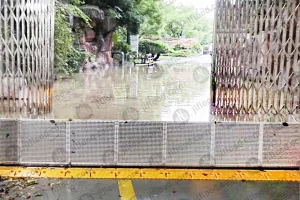
During real typhoon events—such as Typhoon Bebinca and Typhoon In-fa—sites equipped with Junli automatic hydrodynamic barriers blocked incoming surface water automatically, protecting critical subterranean assets without operator intervention or utility power.
How Chinese manufacturers are shaping the future of autonomous civil resilience.
Next-generation baffles incorporate carbon-fiber and graphene-reinforced aluminum alloys, reducing panel rotational inertia by 40%. This structural optimization enables instant activation under low runoff depth while enhancing resistance to debris impact.
While physical barrier deployment remains 100% power-free and mechanical, low-power self-charging wireless sensors embedded within the chamber communicate real-time angle deployment status, water depth metrics, and maintenance alerts directly to Smart City digital twin platforms.
Standardized component interfaces allow shallow trench excavation (under 150mm depth) without disturbing pre-existing subterranean utilities. Civil works can be completed overnight, minimizing disruption for operating commercial assets.
In-depth technical answers addressing civil integration, maintenance protocols, durability, and purchasing procedures.
The device utilizes buoyancy and hydrostatic pressure principles. The barrier panel rests flush within a shallow foundation frame installed at an entrance threshold. As surface water flows into the chamber through drainage grates, high-density buoyant cores within the panel create upward force, lifting the baffle. As water depth increases outside, hydrostatic pressure firmly seals the panel against lateral frame gaskets, forming a tight water barrier. The entire process is purely mechanical and requires zero electrical power, sensors, or manual effort.
Yes. Junli embedded hydrodynamic flood barriers are engineered to meet heavy vehicular load standards (HL-93, AASHTO, and Chinese National Heavy Standard GB/T). Constructed from high-yield structural steel or marine-grade T6 aluminum alloy with internal load-bearing ribs, our heavy-duty models sustain wheel loads between 30 to 50 tonnes without structural deflection, panel warping, or seal damage.
The top of the recessed frame features removable stainless steel sediment filter grates that strain large debris. The interior foundation pit incorporates slope-flushing drainage channels. When floodwaters recede and the panel lowers, remaining water and micro-sediments flush into municipal drainage connections. Routine quarterly inspection and simple hose cleaning keep the chamber operational.
Single-leaf standard retaining heights range from 300 mm to 1500 mm (with custom reinforced designs up to 2000 mm). For entrance widths exceeding single-leaf manufacturing limits (typically 6 meters per leaf), multiple leaves can be interconnected using modular intermediate support columns or seamless continuous hinge joints. This configuration supports wide openings, such as 30-meter garage ramps or multi-lane facility entrances.
We utilize co-extruded UV-stabilized, anti-aging EPDM triple-lip composite rubber seals, tested for severe operational temperature ranges (-40°C to +120°C). When the barrier is resting flush, the seals are shielded inside the frame channel away from direct solar radiation and mechanical abrasion, ensuring a service life exceeding 25 years.
For embedded models, contractors excavate a shallow concrete trench according to Junli CAD embedment drawings, install reinforcing rebar, set the embedded steel chassis, connect a gravity drainage outlet pipe, and pour non-shrink concrete slurry. For retrofit projects where deep trenching is not feasible, our surface-mounted low-profile models can be anchored directly onto cured concrete slabs.
Junli exports globally using ocean-freight steel-framed crates designed for heavy equipment protection. Every shipment includes step-by-step English structural installation manuals, civil trench excavation drawings, hydro-static test certificates, material compliance documentation, and maintenance protocols. We also offer remote video commissioning support and technical engineering guidance.
Nanjing Junli Technology Co., Ltd. is a specialized flood-control technology enterprise with dedicated R&D engineering divisions, proprietary hydraulic patents, and in-house testing pools. Unlike general metal fabricators, our products undergo rigorous fluid dynamic modeling, structural finite element analysis (FEA), and real water verification, ensuring compliance with international infrastructure standards.
Select specialized models tailored for subterranean passages, substations, metro channels, and high-traffic garage portals.
Are you an architectural consultant, civil contractor, or municipal specifier? Provide your portal dimensions and local rainfall parameters to receive customized structural drawings, hydraulic load calculations, and tender specification sheets within 24 hours.


