Engineered for zero-power, instantaneous deployment across urban transit, substation infrastructure, and underground facilities.
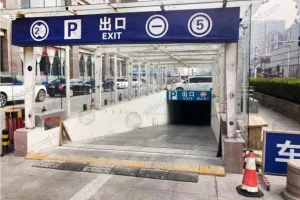
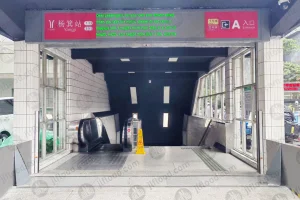
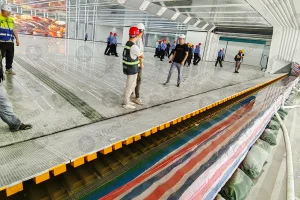
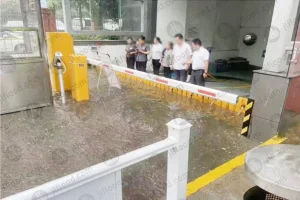

Addressing the critical shift from reactive emergency pumping to passive, zero-power flood retention across global urban centers.
Urban waterlogging, cloudburst events, and sea-level surges pose catastrophic threats to underground transportation networks, high-voltage power distribution assets, and subterranean parking structures. Historically, facility managers relied on manual sandbag deployment, powered sluice gates, or heavy motorized flood barriers. However, severe atmospheric events invariably trigger regional power grid outages, render manual response times inadequate, and expose critical assets to catastrophic inundation.
As a global leader in specialized flood control engineering, Nanjing Junli Technology Co., Ltd. has revolutionized flood mitigation through hydrodynamic automatic flood barrier systems. Built upon pure fluid dynamics, mechanical buoyancy principles, and structural structural engineering, these barriers activate passively within fractions of a second when water invades the foundation chamber—requiring zero electricity, zero human intervention, and zero digital sensor signals.
Why Tier-1 EPC contractors, municipal transit authorities, and commercial developers are standardizing on Chinese hydrodynamic suppliers.
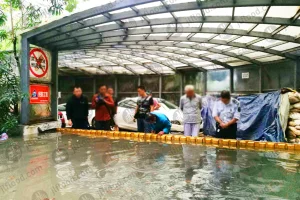
Flash flooding frequency has increased by 40% in metro hubs globally. Impervious urban concrete prevents natural drainage, turning subway entrances and parking ramps into rapid water channels during storm events.
Traditional electric flood gates fail during power grid blackouts—the precise time extreme storms occur. Passive hydrodynamic gates eliminate electrical dependency, guaranteeing 100% operational uptime.
Insurance underwriting criteria and municipal building codes now mandate certified flood barriers for below-grade openings, directly influencing commercial asset valuations and underwriting premiums.
While active motorized barriers incur annual costs in sensor calibration, back-up battery replacements, motor overhauls, and manual operator drills, passive hydrodynamic automatic barriers reduce 20-year TCO by over 65%. The absence of electrical actuators and complex logic controllers yields virtually zero standby maintenance expense.
An in-depth look into the mechanical buoyancy forces, seal geometry, and structural alloy selection powering Junli flood gates.
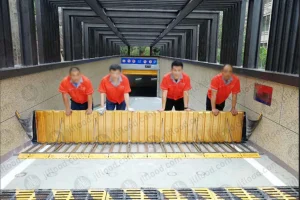
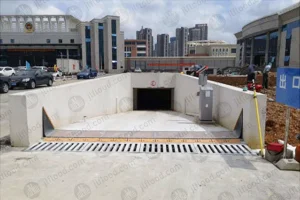
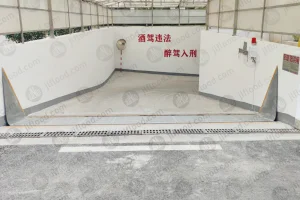
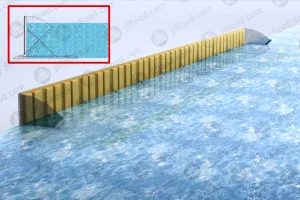
The hydrodynamic self-closing flood barrier panel is seated completely flush within an embedded ground frame during dry conditions. Vehicles and pedestrians pass over the heavy-duty structural top plate with zero obstruction. When flash flooding occurs, surface water enters the recessed foundation chamber through intake grates. As the internal water level rises, buoyancy forces generate upward lift on the hollow extruded aluminum door leaf. As water continues to fill the chamber, hydrostatic head pressure automatically rotates and locks the panel into its upright 90-degree retaining stance.
Achieving absolute zero-leakage performance under variable hydrostatic head requires advanced polymer engineering. Junli gates utilize continuous EPDM double-lip compression seals mounted along the side jambs and base pivot point. As the retaining height increases, the outward hydrostatic pressure against the barrier panel increases compression forces against the resilient EPDM profile—creating a self-tightening seal mechanism capable of withstanding continuous water pressure without degradation.
Underground garage ramps and logistics center driveways require drive-over surface strength. Our surface-mounted and embedded trough frames are manufactured using high-tensile structural steel (Q235B/Q355B) treated with hot-dip galvanization or marine-grade 6063-T6 aluminum alloys. Designed to meet standard AASHTO HS-20 vehicle loading limits, the top plate withstands concentrated wheel loads up to 40 tons without structural deflection or frame warping.
Tailored engineering configurations meeting the rigorous demands of global infrastructure assets.
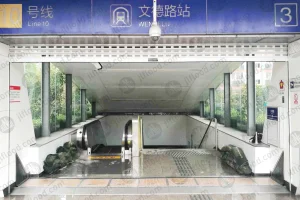
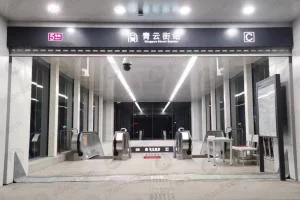
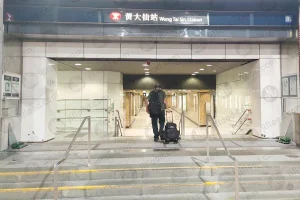
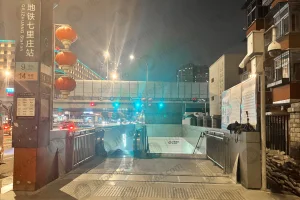
Station portals, pedestrian entry stairwells, and ventilation shafts require robust, fast-acting protection. Applied across major networks including Guangzhou Metro, Dalian Metro, Suzhou Metro, and Hong Kong Transit System.
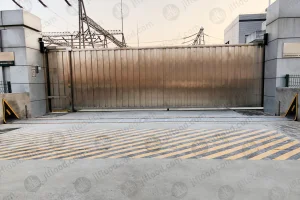
Power distribution hubs face permanent damage if transformer vaults or cable trenches flood. Junli perimeter gate barriers automatically seal equipment bays, securing continuous electrical grid operation during catastrophic storms.
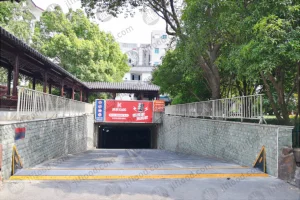
Basement car parks are prime collection basins for urban runoff. Surface-mounted and embedded flip-up gates prevent millions in vehicular asset damages across commercial shopping plazas and residential towers.
How overseas procurement managers and engineering consultants evaluate Chinese flood defence manufacturers.
Sourcing automatic flood barriers internationally requires strict compliance verification, material traceability, and seamless civil works integration. When evaluating Chinese OEMs and manufacturing factories, international B2B buyers should inspect three critical layers of engineering validation:
Computer simulations cannot replace empirical hydrostatic testing. Nanjing Junli Technology maintains standard full-scale water verification basins. Every customized batch undergoes 100% full-head water containment testing before export packing, measuring exact deflection rates, sealing pressure thresholds, and self-clearing chamber drainage capabilities.
Proper integration with site civil works prevents sub-surface leakage around the frame. Junli provides complete English CAD assembly drawings, concrete recess rebar detail schedules, embedded steel frame positioning jigs, and step-by-step foundation pouring specifications tailored to local contractor capabilities.
Factory production aligns with ISO 9001 (Quality Management), ISO 14001 (Environmental Management), and ISO 45001 (Occupational Health & Safety) standards. Standard material test reports (MTR) according to EN 10204 3.1 are supplied for all aluminum alloys, stainless steel fasteners, and synthetic EPDM rubber compounds.
Integrating smart telemetry, carbon composite materials, and AI predictive flood monitoring into passive flood defence infrastructure.
Combining passive mechanical execution with digital awareness. Wireless, battery-powered IoT sensors transmit real-time deployment status, chamber water level telemetry, and maintenance alerts directly to municipal SCADA control centers.
Researching ultra-light carbon-fiber reinforced polymer door panels for wide span openings (>10 meters per leaf) to achieve maximum structural yield strength while drastically lowering activation water depth requirements.
Designing zero-excavation surface-mounted framework cassettes that allow legacy underground parking structures to install complete hydrodynamic flood defence systems within single-day maintenance windows.
Addressing essential technical, operational, and commercial questions from international EPC engineers and buyers.
The system relies entirely on basic Archimedean fluid buoyancy and hydrostatic leverage. The barrier panel rests flush inside an embedded ground foundation trench during normal conditions. When floodwaters reach the entrance, water enters the chamber via inlet grates. The buoyancy of the engineered hollow door panel causes it to float upward. As the water head outside the barrier rises, hydrostatic pressure pushes the gate into a fixed 90-degree upright retaining position, locking the EPDM compression seals tightly against the side frames. No electric motors, sensors, backup batteries, or human operators are required.
Standard retaining heights range from 0.5 meters to 2.0 meters (approx. 20 inches to 80 inches). Single continuous clear spans can extend up to 6.0 meters per leaf. For extra-wide vehicle ramps, logistics portals, or metro openings exceeding 20 meters, modular multi-leaf arrays with intermediate removable or automatic pop-up support mullions are implemented to ensure continuous structural integrity under maximum hydraulic load.
Because there are no electrical components, maintenance is minimal. Periodic semi-annual inspections are recommended to clear debris, leaves, or sediment from inside the foundation trough drainage channels. EPDM rubber seals should be inspected annually for physical damage or degradation. Flushing the chamber with clean water during routine building maintenance checks is typically sufficient to keep the mechanical pivot hinges operating smoothly for decades.
Yes. Junli embedded hydrodynamic gates are constructed with heavy-gauge structural steel frames and reinforced aluminum alloy top covers engineered to meet AASHTO HS-20 and Chinese GB Class A axle-load ratings. They support concentrated wheel loads up to 40 tons, making them completely safe for continuous daily passage of heavy fire engines, delivery trucks, and dense passenger traffic.
Absolutely. Every custom engineered barrier undergoes rigorous full-scale hydrostatic testing in our factory test pool prior to shipping. We verify opening activation response speed, mechanical lock engagement, side and bottom seal compression, and overall structural deflection under design water head. Testing documentation, video records, and third-party inspection certificates (such as SGS or TÜV) can be provided upon request.
For embedded installations, a concrete trench must be excavated according to our engineering drawings, with dedicated connection points for bottom drainage pipes to handle residual rainwater. For locations where trenching is not feasible, Junli offers surface-mounted flip-up barriers (such as model Hm4d-0006E) which bolt directly onto the existing concrete slab using anchor bolts, requiring minimal civil work disruption.
Explore specialized industrial models tailored for utility gates, subway portals, and high-load driveways.