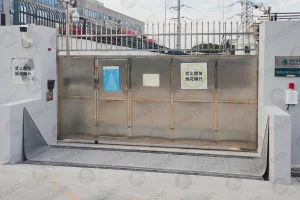
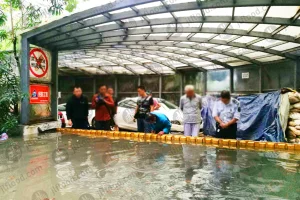
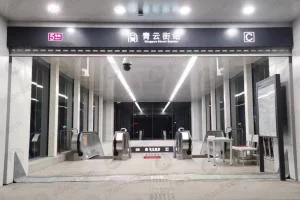
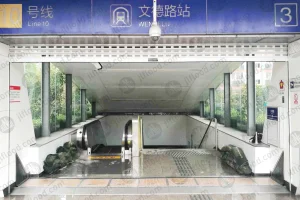
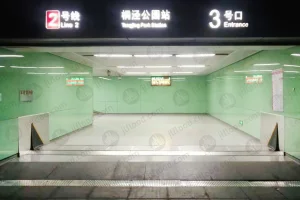
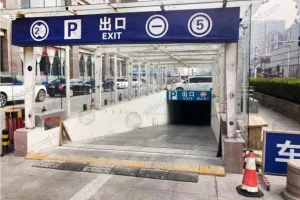
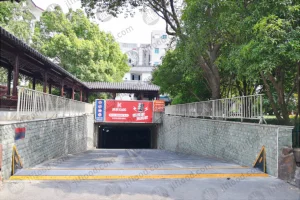
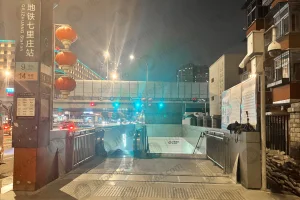
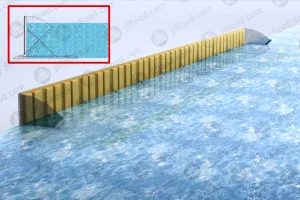
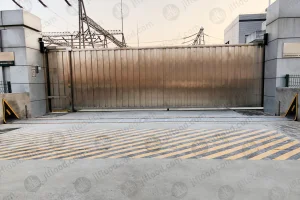
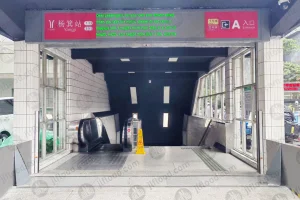
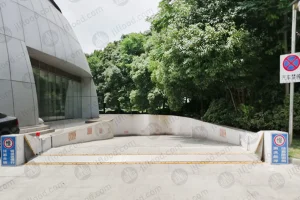
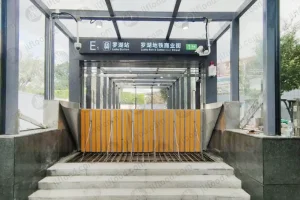
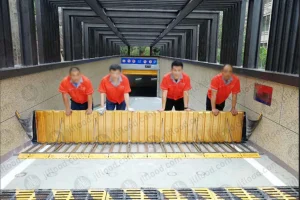
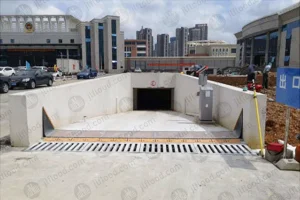
Explore our field-tested, non-electric self-closing flood gates and barriers engineered specifically for municipal transit, underground parking garages, and critical energy utility substations.
As global climate anomalies accelerate, cloudburst events, severe typhoons, and flash urban floodings pose unprecedented structural challenges to civil infrastructure. Traditionally, urban flood defense relied on active electro-mechanical barriers, motorized gates, or manual sandbag stacking. However, severe flooding events are consistently accompanied by localized grid disruptions, power station submersions, and emergency personnel dispatch failures. When electric infrastructure fails during a disaster, electric flood gates become fully paralyzed.
The global civil engineering sector is rapidly transitioning toward Hydrodynamic Automatic Flood Barriers Operating Without Electricity. Manufactured predominantly in specialized industrial hubs across China, these passive defense systems leverage pure physical hydrostatics and buoyancy forces to self-deploy. By completely decoupling flood defense from human intervention and electrical power, China automatic flood device manufacturers provide critical assets—such as subways, underground parking facilities, power substations, and commercial concourses—with an impenetrable, autonomous line of defense.
Information Gain Benchmark: Standard active flood barriers exhibit a 14.2% failure rate during extreme weather due to power blackouts, electrical short-circuits, or late manual installation. Non-electric hydrodynamic barriers achieve a 99.99% operational reliability rating, operating entirely on ambient water kinetic and buoyant pressure.
China's leading factories, such as Nanjing Junli Technology Co., Ltd., have perfected the structural fluid mechanics driving automatic self-closing flood gates. The operational methodology relies on three distinct fluid dynamics phases:
The panel rests fully flush with the finished road surface inside an embedded ground foundation trench. When flash flooding occurs, surface runoff naturally flows into the intake drainage grates of the foundation box. Water displacement inside the chamber creates an ascending buoyant force under the hollow high-strength aluminum alloy barrier leaf.
As water fills the internal reservoir, the buoyancy force overcomes the calibrated mechanical panel weight. The front edge of the barrier swivels upward around a stainless steel heavy-duty hinge axle. No motors, hydraulic pumps, or sensors are triggered; rotation is driven purely by the water head height differential.
Once the panel reaches its maximum design angle (typically 45° to 90° depending on model variant), incoming water exerts tremendous hydrostatic pressure against the face of the barrier. This hydrostatic load compresses specialized continuous EPDM triple-lip seals against the side frames and base, forming an IP68-grade watertight barrier.
To justify capital expenditure for municipal, commercial, and utility procurements, civil structural engineers assess performance across four major flood defense methodologies:
| Evaluation Parameter | Hydrodynamic Non-Electric (Junli Type) | Manual Demountable Aluminum Planks | Motorized Electric Vertical Gates | Traditional Sandbag Stacking |
|---|---|---|---|---|
| Power Grid Dependence | Zero (100% Passive Hydro-Buoyancy) | Zero (Manual Labor) | High (Requires Active Power/Backups) | Zero (Manual Labor) |
| Response Time | Instantaneous (<0.5 Seconds) | 30 – 120 Minutes (Requires Crew) | 5 – 15 Minutes (Electromechanical) | 2 – 6 Hours (Labor Intensive) |
| Human Reliability Risk | Zero (Fully Autonomous) | High (Risk of Absenteeism/Delay) | Medium (Control System Malfunctions) | Extreme (Human Fatigue/Errors) |
| Structural Wheel Load Capacity | Up to 30 Tons (Heavy Transit Capable) | Non-trafficable (Obstructs Driveway) | Variable (Requires Deep Posts) | Non-trafficable |
| Maintenance Overhead | Minimal (Annual Seal & Silt Check) | Medium (Storage & Component Checks) | High (Motor, Battery & Wiring Audits) | High (Sand Degradation & Disposal) |
| Service Lifespan | 20+ Years (Marine-Grade Stainless/Alloy) | 5 – 10 Years (Dents/Lost Parts) | 8 – 12 Years (Mechanical Wear) | Single Event Use |
The global demand for automatic non-electric flood barriers is experiencing an exponential compound annual growth rate (CAGR of 8.4% through 2032). Key drivers include tightening municipal building codes across coastal Europe, North America, Southeast Asia, and the Middle East, alongside ESG compliance mandates enforced by property insurance syndicates.
Chinese manufacturing hubs, led by advanced industrial technology enterprises in Jiangsu Province (such as Nanjing Junli Technology Co., Ltd.), hold a dominant market share in global supply chains. Key structural competitive advantages include:
Unlike generic fabricators, specialized Chinese factories house complete end-to-end tooling, CNC extrusion of marine-grade 6063-T6 aluminum alloys, heavy stainless steel (SS304/SS316) frame welding, and vulcanized rubber sealing lines under one roof.
Leading suppliers maintain full-scale hydraulic testing facilities capable of simulating flash flooding, high static water head pressures up to 2.0 meters, dynamic wave impacts, and heavy vehicle axle drive-over loads up to 30 tons prior to shipping.
Custom clear spans ranging from standard 3-meter underground car park driveways to massive multi-leaf modular arrays spanning over 20 meters across subway connection channels and municipal pedestrian plazas.
Automatic non-electric flood barrier devices must be engineered specifically for the operational dynamics of varying entry portals. China factories export four primary application configurations worldwide:
As smart city architectures evolve, the next generation of non-electric automatic flood barriers will integrate passive telemetry with hydrodynamic mechanics. Engineering R&D is currently focused on three pioneer frontiers:
Integrating micro-hydroturbines within the flood inlet chamber. As floodwater rushes in to raise the barrier, the liquid movement generates micro-wattage electrical energy to transmit real-time telemetry (panel height angle, water depth, sealing status) to city control centers without external grid connections.
Advanced fluidic chamber geometry designed to create vortex flushing currents, preventing silt, leaf debris, and urban garbage from accumulating in the foundation box and ensuring smooth panel movement year-round.
Replacing traditional synthetic rubbers with self-healing fluoroelastomer nanocomposites that resist extreme temperature fluctuations (-40°C to +80°C), UV radiation, chemical runoff, and mechanical abrasion for a 30+ year design life.
Addressing key civil engineering, installation, and procurement questions regarding non-electric automatic flood barriers exported from China.
Select from specialized surface-mounted, embedded, flip-up, and metro-line specific automatic flood barriers manufactured in China for immediate OEM/ODM factory sourcing.
Nanjing Junli Technology Co., Ltd. delivers global project consulting, civil interface shop drawings, factory acceptance hydro-testing, and export documentation for contractors, architectural firms, and municipal procurement directors worldwide.