
Direct factory supply of certified automatic flood doors designed for zero human dependency. Field-proven across rail transit, power utility grids, and commercial subterranean assets.
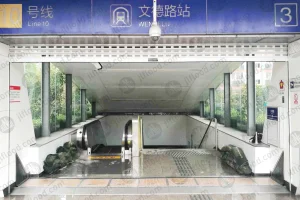
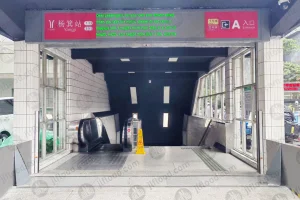
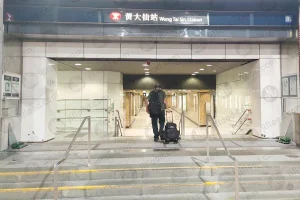
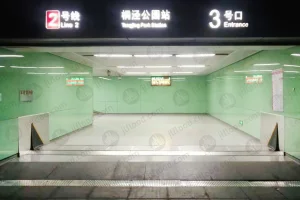
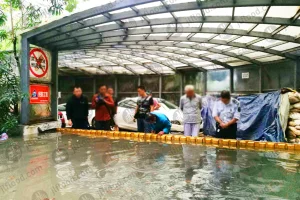
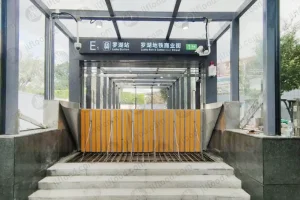
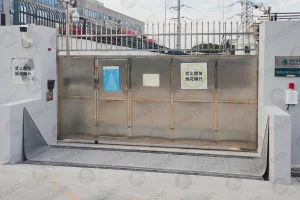
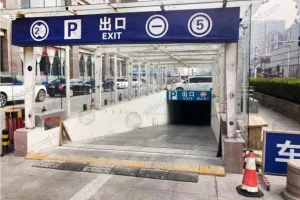
Rapid climate change, intense cloudbursts, and flash urban waterlogging present an existential risk to subterranean municipal infrastructure, underground parking structures, metro transit networks, and high-voltage electrical power substations. Historically, facility managers relied on active flood protection measures: manual aluminum slot-in stop logs, sandbags, motor-driven electric flood gates, or hydraulic pumps.
The core technological advantage of the automatic flood door without personnel on duty lies in Archimedes' principle of buoyancy integrated with hydrostatic pressure dynamics. The structural assembly consists of a embedded structural bottom basin, a buoyant door panel hinge matrix, self-adjusting side seals, and automatic mechanical lock locks.
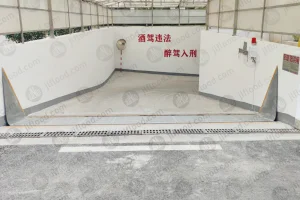
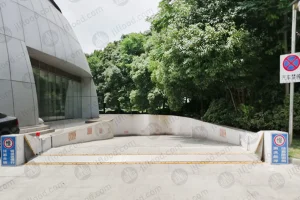
In dry weather, the barrier panel rests completely flat within an embedded stainless steel or structural aluminum frame box flush with the road surface. Vehicles, buses, and heavy trucks can drive over it without noise or structural deflection, withstanding axle loads up to 40-50 metric tons.
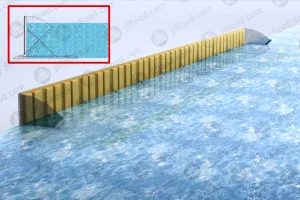
When surface runoff overflows the curb and reaches the threshold, water flows through the inlet grille into the bottom retention basin. As the internal water level rises, the ultra-lightweight closed-cell foam-filled aluminum door panel experiences upward vertical buoyancy forces.
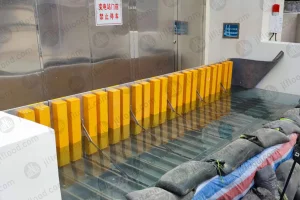
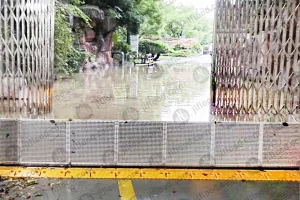
As the door panel rises to a 90-degree vertical position, the lateral hydrostatic head pushes the door panel firmly against the rubber seal frame. The higher the floodwater level, the tighter the compression seal becomes against the structural frame, achieving zero-leakage isolation.
| Engineering Parameter | Standard Commercial Grade | Heavy-Duty Metro & Substation Grade | Custom Infrastructure Grade |
|---|---|---|---|
| Retaining Height (H) | 300 mm – 600 mm | 600 mm – 1200 mm | Up to 2000 mm (Custom modular) |
| Drive-Over Load Rating | 20 Tons (Standard Vehicles) | 40-50 Tons (Heavy Duty Trucks/Buses) | 60+ Tons (Specialized Machinery) |
| Activation Trigger Delay | < 30 Seconds | < 15 Seconds (Hydrodynamic fast-inlet) | Immediate passive response |
| Sealing Efficiency | < 0.15 L/h per meter span | Zero measurable drip (<0.01 L/h/m) | Bubble-tight IP68 performance |
| Primary Material | 6063-T6 Extruded Aluminum Alloy | 6005A-T6 High-Tensile Alloy / SS304 | Marine Grade SS316L / Anodized Aluminum |
| Gasket Elastomer | EPDM Automotive Rubber | High-Density UV-Resistant EPDM | Fluororubber / Special Silicone Blend |
As global infrastructure engineers and B2B procurement managers seek reliable flood defense systems, China has emerged as the premier manufacturing hub for advanced hydrodynamic flood protection doors. Sourcing directly from top-tier Chinese OEMs and factories delivers distinct competitive and technological advantages:
China's Yangtze River Delta and Pearl River Delta industrial clusters house the world's most sophisticated aluminum extrusion plants, precision CNC machining centers, and automated laser-welding facilities. This raw-material integration lowers production lead times by up to 60% compared to European or North American fabricators.
Leading Chinese manufacturers maintain 1:1 full-scale hydrodynamic test basins. Every batch of unmanned self-closing flood gates undergoes rigorous hydrostatic head pressure testing, structural deflection checks, and seal leakage verification before leaving the factory floor, backed by third-party ISO/CE inspection reports.
Whether your project requires custom retaining heights, non-standard clear spans (up to 10+ meters single leaf or infinite modular array), or anti-corrosive marine coatings for coastal environments, Chinese suppliers offer fully customized OEM/ODM engineering at highly competitive factory-direct pricing.
China's rapid urban subway expansion (across Guangzhou, Shenzhen, Beijing, Shanghai, and Nanjing) has provided an unprecedented real-world testing ground. Chinese flood doors have withstood multiple super-typhoons and record-breaking microburst floods, proving their absolute operational reliability.
Urban planning, real estate development, and municipal engineering are undergoing a major shift toward climate adaptation resilience. Major trends shaping the global demand for unmanned automatic flood doors include:
Municipal authorities worldwide (such as the UK Environment Agency, US FEMA standards, and Asian Sponge City guidelines) now mandate passive, non-electric flood barriers for all subterranean access points, subterranean garages, and critical infrastructure.
Commercial real estate developers and asset owners who install certified zero-power hydrodynamic flood barriers can negotiate significantly lower flood-risk insurance premiums, turning physical hazard mitigation into direct financial payback.
Environmental, Social, and Governance (ESG) criteria require asset managers to protect operations against climate disruptions. Zero-energy passive flood doors consume zero standby electricity, directly reducing carbon footprints while guaranteeing 24/7 disaster protection.
Every urban entrance presents unique structural loading, drainage, and clear-width challenges. Our automatic flood doors without personnel on duty are designed for seamlessly localized installation across four primary infrastructure domains:
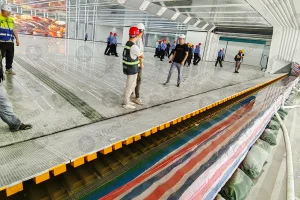
Metro pedestrian entrances and ventilation shafts are primary pathways for water ingress during severe urban waterlogging. Installing surface-mounted or embedded hydrodynamic flood doors at subway entrances prevents devastating flooding of underground tunnels, protecting passenger safety and multi-billion-dollar transit assets.
Substation power transformer rooms, cable trench entries, and data center basements require 100% operational continuity. Water intrusion can cause explosive short-circuits and widespread blackout. Passive unmanned flood doors seal these openings automatically during flash floods.
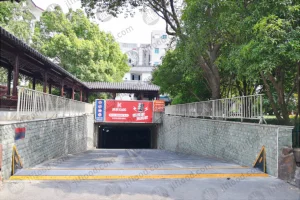
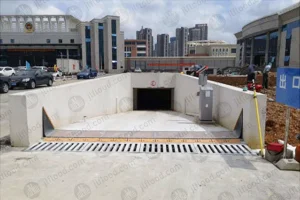
Underground parking ramps at commercial shopping malls, luxury residential complexes, and financial towers are highly susceptible to rapid surface runoff inundation. Flush-embedded self-rising flood gates permit smooth vehicle driving during daily operations while deploying automatically during cloudbursts.
Chemical manufacturing plants and logistics warehouses require double-directional containment: stopping floodwaters from entering sensitive storage facilities, while preventing hazardous chemical spills or contaminated runoff from escaping into municipal storm drains.
When evaluating manufacturers and suppliers for automatic flood doors without personnel on duty, procurement directors and consulting engineers should verify the following five critical engineering benchmarks:
Comprehensive answers to the technical, operational, and installation questions asked by global civil engineers and procurement specialists.
Explore specialized automatic flood doors tailored for utility substations, underground car parks, and high-frequency transit hubs.
Partner with China's leading automatic flood door manufacturer. Get custom CAD drawings, FEA calculations, and factory-direct pricing for your municipal or commercial project today.


