Explore field-proven hydrodynamic automatic flood protection barriers engineered for rapid deployment during urban surface water runoff events. Manufactured in compliance with international structural safety and hydraulics standards.
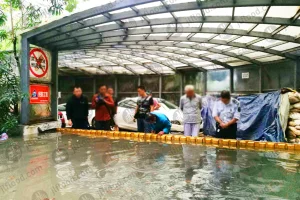
In an era defined by intensifying micro-burst precipitation events and urban microclimate shifts, conventional flood risk management models are failing. Municipal infrastructure, subterranean commercial car parks, rail transit networks, and high-voltage electrical substations face unprecedented inundation risks. Historical reliance on manual flood barrier assembly (such as sandbags or modular aluminum stop-logs) or electric-powered vertical lift gates has proven mathematically flawed during severe severe weather occurrences.
When severe urban waterlogging strikes, structural power grids frequently experience catastrophic trips or proactive shutdowns. Electric flood gates, pneumatic seals, and automated sump pumps lacking emergency generator backup become instantly paralyzed. Simultaneously, extreme rainfall causes localized traffic gridlock, preventing emergency staff from reaching vulnerable access ramps to deploy manual barriers. The global infrastructure sector is consequently shifting toward unattended, zero-electricity, hydrodynamic self-rising flood gates.
The foundational principle of the Chinese hydrodynamic self-rising flood gate lies in hydrostatic pressure dynamics and Archimedes' buoyancy principle. Unlike motor-driven barriers, these gates convert the energy of incoming floodwater into mechanical lifting force.
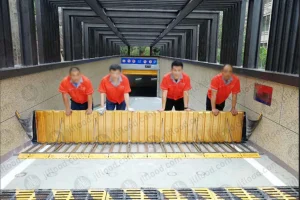
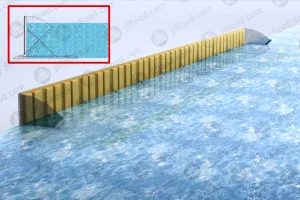
During dry periods, the flood gate panel lies completely flat inside a recessed structural frame embedded flush with the road surface. Vehicles, transit buses, and pedestrians cross without resistance. Integrated drainage channels route daily rainwater away.
As surface floodwaters overflow the curbing and enter the embedded basin, water enters the intake chamber. Internal buoyant structural chambers engineered within the aviation aluminum or stainless steel panel experience immediate upward displacement force ($F_{buoyant} > W_{panel}$).
As water depth rises, the panel rotates upward around a stainless steel pivot axle to a 45°–90° retaining angle. Hydrostatic pressure forces high-density EPDM rubber seals against structural side jambs, creating a hermetic seal against water ingress.
| Performance Metric | Passive Hydrodynamic Flip-Up Gate | Electric Motorized Barrier | Manual Modular Stop-Logs |
|---|---|---|---|
| Power Dependence | Zero Power Required (Hydrokinetic) | High (Requires Mains / Backup Gen) | Zero Power (Requires Human Labor) |
| Human Response Time Needed | 0 Minutes (Fully Autonomous) | 5 – 15 Minutes (Remote/Sensor) | 45 – 120 Minutes (Manual Assembly) |
| Blackout Vulnerability | 100% Immune | High Risk of Failure | Immune (If personnel present) |
| Maintenance Burden | Low (Visual Inspection & Debris Clearance) | High (Motors, Sensors, Wiring, UPS) | Medium (Storage Audit & Gasket Checks) |
| Vehicle Load Bearing | Up to H20 / AASHTO HS20 (30+ Tons) | Varies (Often Light Duty) | None (Basin open during setup) |
When sourcing flood defense equipment from OEM factories in China (such as specialized manufacturers in Nanjing, Jiangsu), commercial procurement managers must evaluate pricing based on structural metrics rather than simple square-meter unit costs. Below is an engineering breakdown of cost drivers in standard OEM pricelists:
Entry-level models utilize Marine-Grade 6063-T6 Extruded Aluminum Alloy for optimal buoyancy-to-weight ratios. High-salinity coastal applications or chemical industrial zones require AISI 304 or AISI 316 Stainless Steel frameworks, shifting the baseline cost by 25% to 40% while extending corrosion resistance up to 30 years.
Pedestrian walkway gates require lower structural stiffness. Driveway barriers installed at subterranean parking entrances must sustain heavy vehicle roll-over loads (EN 124 Class C250 to D400 rating). Heavy internal cross-ribbing and reinforced top covers scale material thickness from 6mm to over 12mm.
Standard single-leaf widths range from 1.5m to 6.0m. Wide entrances (e.g., 20m wide logistics bays or metro concourses) require multi-leaf modular arrays equipped with intermediate hydrodynamic support pillars. Engineering these continuous seal joints influences factory quotation matrices.
Standard Factory Price Spectrum (Indicative OEM Wholesale Tiering): Standard 0.6m retaining height aluminum automatic flip-up units generally baseline between $450 to $850 USD per linear meter for bulk engineering orders, whereas heavy-duty 1.0m to 1.5m retaining height 316-stainless steel systems range from $900 to $1,800 USD per linear meter depending on load customization and custom civil embedment accessories.
Nanjing Junli Technology Co., Ltd. and top-tier Chinese flood barrier OEMs design specialized modifications for specific civil engineering challenges:
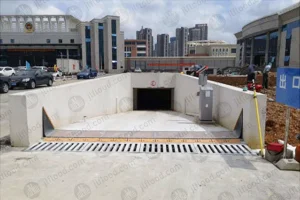
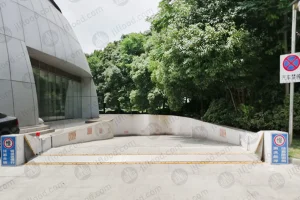
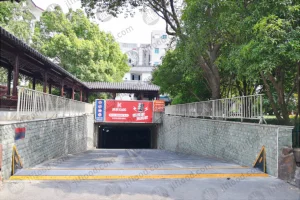
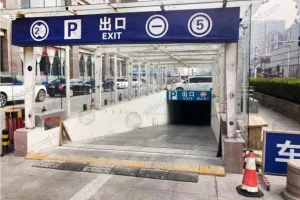
Car park ramps represent the single largest point of entry for urban flash flooding. A flush-mounted flip-up barrier remains hidden beneath vehicle tires daily. When water reaches threshold height, the gate rises autonomously, preventing millions of dollars in vehicle sublock and building mechanical room destruction.
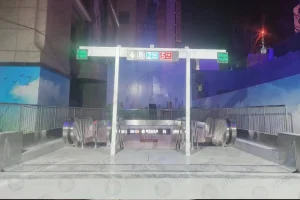
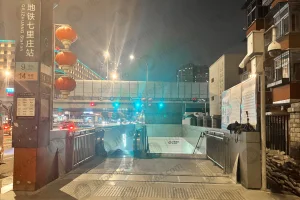
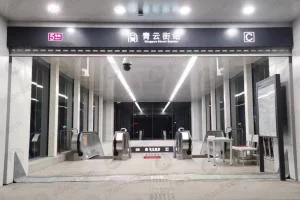
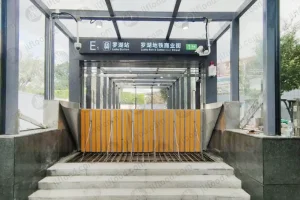
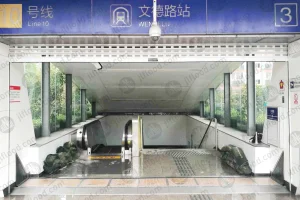
Subway station pedestrian entrances require ultra-reliable barriers that integrate seamlessly with architectural stone finishes. Specially designed surface-mounted and embedded hydrodynamic flip-up gates protect metro lines in transit hubs across Asia, satisfying stringent rail safety directives.
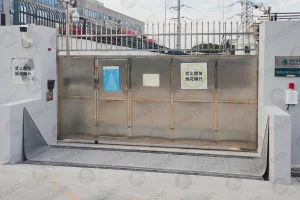
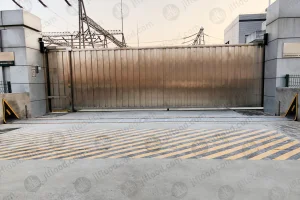
Electrical grid substations house critical high-voltage GIS equipment, cable trenches, and control rooms. Inundation results in catastrophic grid regional blackouts. Passive power-free flood barriers deployed at substation outer perimeter gates guarantee uninterrupted protection even if grid power is cut.
Under Google Search Quality Rater Guidelines (E-E-A-T), claims of structural reliability must be backed by documented evidence, manufacturing standards, and rigorous factory testing protocol. Chinese manufacturing leaders like Nanjing Junli Technology execute rigorous quality assurance workflows before exporting products globally.
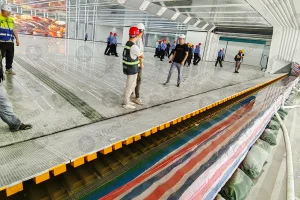
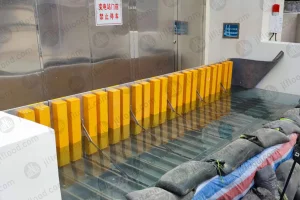
1. Full-Scale Hydraulic Test Pool Verification: Prior to dispatch, custom flood barrier orders undergo full-scale simulation testing inside factory water basins. Dynamic lifting speed, seal tightness under max hydrostatic head water pressure, and structural panel deflection are measured and certified.
2. Material Integrity & Metallurgical Traceability: Aluminum profiles undergo anodization and powder coating treatments to resist saltwater corrosion. Stainless steel components are tested to ASTM A240 standards. Dual-membrane EPDM rubber gaskets are tested for weather aging resistance under extreme temperature swings (-40°C to +90°C).
3. Technical Support & Civil Works Integration: Global project success depends on accurate civil work integration. Overseas buyers receive comprehensive English Civil Layout Drawings, Embedded Channel Anchor Templates, Drainage Connection Schematics, and On-Site Commissioning Handbooks.
Browse additional hydrodynamic and self-closing flood gates tailored for sub-stations, metro connection passages, commercial building doorways, and municipal flood control projects.
Partner directly with China's specialized flood barrier engineering team. Submit your structural opening dimensions, site water retention height requirement, and vehicle load rating for a free technical consultation packet.
Contact Engineering Team ([email protected])