Explore our certified range of hydrodynamic, automatic, and embedded flood barriers designed for high-density transit hubs, commercial garages, and power utilities.
Urbanization, combined with violent cloudbursts and rising sea levels, has exposed structural vulnerabilities in underground civil engineering across major global metropolises. Traditional flood defense systems are experiencing systemic failures due to human delay and power grid blackouts.
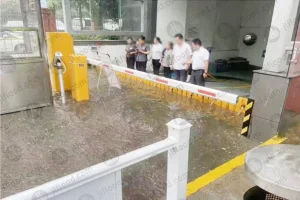
Historically, underground garages, subways, and utility vaults relied on motorized barrier gates or manual aluminum stop logs. However, severe meteorological events almost universally coincide with regional power outages, lightning strikes, or severe labor mobilization delays. When flash floods strike within minutes, manual deployment is physically impossible, and motorized systems fail without standby generator power.
Modern civil engineering standards now prioritize Hydrodynamic Automatic Flip-Up Floodgates. Operating strictly on the principle of buoyancy and hydrostatic equilibrium, these barriers utilize the rising water itself as the sole kinetic driving force. As water flows into the bottom recessed basin, the engineered door panel rises automatically, locking into a water-tight seal prior to floodwaters overwhelming the threshold.
Unlike basic floating barriers, Nanjing Junli Technology’s flip-up floodgates incorporate a dual-stage counterweight leverage arm. The initial buoyancy activates at a water depth of just 30–50mm within the bottom channel. As the water head increases, the hydrostatic pressure forces the EPDM gasket against the side jambs, creating a seal that tightens exponentially as the flood height increases.
Procurement managers, EPC contractors, and municipal consultants require rigorous structural integrity, material corrosion resistance, and low life-cycle maintenance. Below is an engineering comparison of primary flood protection technologies currently specified in global tenders.
| Evaluation Parameter | Hydrodynamic Flip-Up Barrier (Junli) | Motorized Electric Drop-Down Gate | Manual Modular Stop-Logs |
|---|---|---|---|
| Power Reliance | 0% (Zero Electricity Required) | 100% (Grid or UPS Backup Required) | 0% (Manual Labor Required) |
| Deployment Speed | Autonomous (< 30 Seconds) | 1 – 3 Minutes (If sensor triggers) | 30 – 120 Minutes (Human Assembly) |
| Vehicle Load Capacity | Heavy-Duty (Up to 60 Tons / AASHTO HS-20) | Light to Medium Duty | Non-trafficable during setup |
| Human Reliability Risk | Zero Risk (Fully Automatic) | Low-Medium (Sensor/Control failure) | High Risk (Labor unavailability/traffic jam) |
| Main Structural Alloys | 6063-T6 Aluminum / Stainless Steel 304/316 | Structural Steel / Powder Coated Iron | Extruded Aluminum Profiles |
| Sealing Gasket Integrity | Multi-Lip Vulcanized EPDM (20-Year Lifespan) | Standard Rubber Strips | Compression Neoprene Strips |
Designed to withstand heavy vehicle passage including fire engines, fully loaded delivery trucks, and high-frequency transit buses. Base plate frames are reinforced with internal ribs engineered via Finite Element Analysis (FEA).
Utilizing high-tensile EPDM elastomeric compounds resistant to ozone degradation, diesel spills, UV exposure, and extreme temperature fluctuations (-40°C to +120°C).
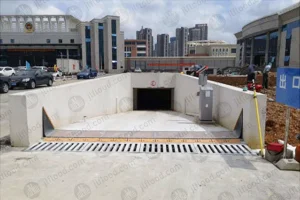
When inactive, the floodgate rests 100% flush with the concrete road surface, creating zero pedestrian trip hazards and zero restriction to vehicular clearance speeds.
Headquartered in Nanjing, Jiangsu Province, Nanjing Junli Technology Co., Ltd. represents the apex of Chinese high-tech flood mitigation manufacturing. By combining localized raw aluminum extrusion ecosystems with advanced digital twin engineering, we deliver unmatched technical quality at globally competitive cost baselines.
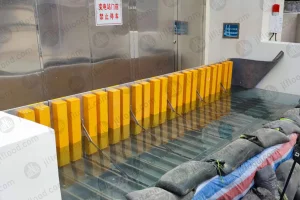
We do not rely solely on digital simulations. Every batch design undergoes empirical hydro-testing in our dedicated physical test tank, measuring seal deflection, dynamic pressure surges, and fill-drain response cycles under real-world water head pressure.
Frame assemblies are fabricated using high-precision CNC laser cutters and automated robotic welding arms, guaranteeing dimensional tolerances within ±0.5mm across spans exceeding 10 meters.
Whether fitting a tight 1.5-meter subway pedestrian doorway or a 30-meter multi-lane commercial underground garage ramp, our modular manufacturing pipeline delivers tailored engineering drawings within 48 hours.
Junli Technology’s flood barriers are field-proven across critical infrastructure networks in more than 30 tier-1 metropolises. Below are real-world operational deployments validating our technology during severe rainfall and typhoon events.
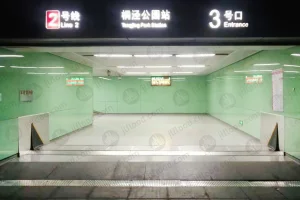
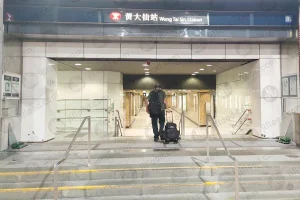
Case Reference: Guangzhou Metro, Dalian Metro & Hong Kong MTR
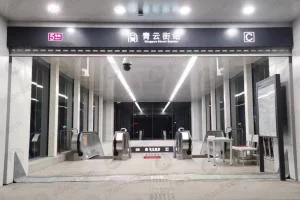
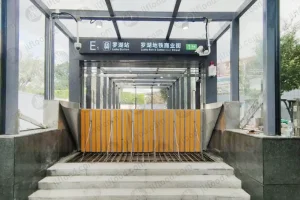
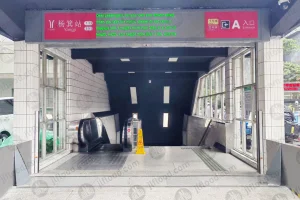
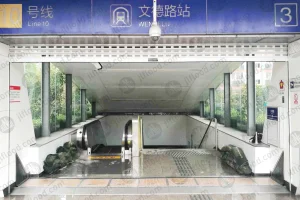
Subway entrances and connection channels represent high-risk flood pathways where incoming water can inundate deep tunnel systems. Junli metro flood gates fit seamlessly into station steps and connection channels, rising automatically during urban river surges without interrupting emergency egress.
Case Reference: State Grid Jiangsu & Beijing Substation Gates
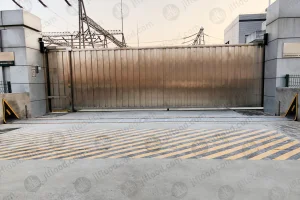
Water intrusion into transformer rooms or electrical cable trenches causes catastrophic regional grid blackouts. Junli automatic substation barriers protect perimeter gates and equipment room thresholds, maintaining isolated operational protection 24/7/365.
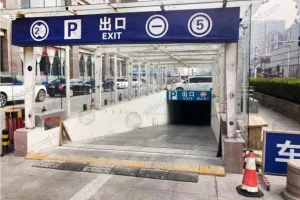
Case Reference: Wanda Plaza (Hefei) & Commercial Complexes in Suzhou
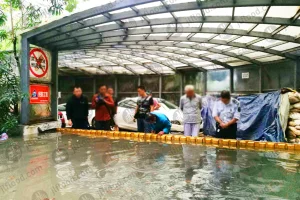
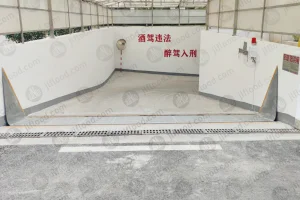
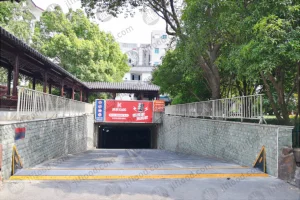
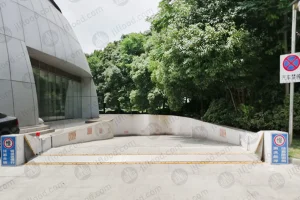
Underground car parks are prone to rapid water accumulation during flash cloudbursts. Installed at the crown of access ramps, Junli garage barriers permit continuous vehicular transit daily, snapping upward to seal the opening as surface runoff reaches critical levels.
Case Reference: Jinan Civil Defense Street & Guangzhou Airport
Protecting underground pedestrian street networks, hospital basements, and airport landside infrastructure. Certified under rigorous municipal civil defense water-tightness mandates, resisting both direct wave action and static water pressure head.
Select from our factory-direct list of specialized flood gates, surface-mounted barriers, and self-closing protective systems.
Successful flood gate installation requires seamless coordination between structural engineering, concrete recess work, and drainage connectivity. Junli Technology provides full English civil layout templates with every order.
For embedded models, a concrete trench is cast at the entrance threshold. A drainage pipe connection (DN100 or larger) is linked from the bottom chamber to the municipal storm drain to clear residual rainwater post-flooding.
The high-strength structural steel frame is placed inside the trench and adjusted using high-precision laser leveling devices to ensure absolute horizontal alignment within ±1mm across the entire span.
Non-shrink C35/C40 concrete is poured around the embedded frame anchors. Once cured, the door leaf assembly, buoyancy chambers, and counterweight dampener systems are installed.
Detailed answers to technical, operational, and commercial queries for international consultants and engineering buyers.
The barrier panel is housed flush inside a recessed foundation chamber. As surface floodwater approaches, water enters the front inlet channels into the chamber, generating natural buoyancy dynamic hydraulic lift. This hydrostatic pressure elevates and mechanically locks the panel into the water-retaining position. No power supply, electrical sensors, motors, or human interventions are required.
Standard hydrodynamic flip-up barriers support retaining water heights from 0.5 meters to 2.0 meters per single panel module. Clear widths can range from 1.5 meters for single pedestrian doors up to unlimited widths using modular multi-leaf arrays connected with removable intermediate mullions.
Yes. Every engineered unit model undergoes rigorous hydro-testing in our factory test pool to measure activation response speed, gasket seal leakage rate, and structural deflection under design hydraulic head. Third-party inspection reports (SGS/TÜV) and factory video recordings can be supplied per order contract.
When inactive, the flood gate lies flush with the road grade. The top cover plate is constructed from heavy-gauge 6063-T6 aluminum extrusion or stainless steel with internal structural stiffeners, rated to handle vehicle axle loads up to AASHTO HS-20 (60-ton gross vehicle weight).
Maintenance is minimal. We recommend semi-annual inspection to clear sediment, leaves, or debris from the bottom chamber using a hose, alongside checking the rubber EPDM side seals for physical damage. The mechanical hinge joints require grease lubrication once per year.
Yes, we support global engineering buyers with complete OEM/ODM solutions, CAD/BIM drawing files, structural calculation notes, and English installation manuals. Remote commissioning support is provided for all projects, and engineer dispatch can be arranged for major infrastructure projects.
Empowering Infrastructure Resilience through High-Tech Mechanical Innovation
Nanjing Junli Technology Co., Ltd., located at No.104 Shi Men Kan, Qinhuai District, Nanjing, Jiangsu Province, China, is a high-tech enterprise specializing in intelligent flood control systems, civil defense doors, and hydraulic barrier engineering.
With an extensive internal portfolio of invention patents and structural utility certifications, our engineering team operates across four core domains: Intelligent Civil Defense, Intelligent Urban Flood Control, Structural Bridge Safeguards, and Smart Energy Grid Barrier Systems. By working closely with municipal planners, rail transit authorities, and electrical grid operators, we deliver uncompromised safety assets built to survive maximum credible flood scenarios.
Direct Factory Contact Details:
📍 Address: No.104 Shi Men Kan, Qinhuai District, Nanjing, Jiangsu Province, China
📞 International Sales Phone: +86-17397957068
✉ Engineering Email: [email protected]