Precision-engineered unpowered self-rising flood gates, embedded substation gates, and heavy-duty garage protection barriers verified by real water-retaining field deployment.
As global climate volatility intensifies, severe atmospheric rivers, urban flash floods, and typhoon-induced sea surges pose unprecedented risks to subterranean municipal infrastructure, underground parking structures, subway stations, and electrical substations. Traditional flood barriers—such as manual sandbag stacking, removable aluminum flood planks, or electrically driven barrier gates—exhibit critical single-point failures: heavy reliance on human activation lead-time, power grid collapse during storm surges, and human error.
Headquartered in Qinhuai District, Nanjing, Jiangsu Province, Nanjing Junli Technology Co., Ltd. stands as China's premier manufacturer and engineering leader in automatic hydrodynamic flood gates. Spanning four advanced technology divisions—Intelligent Civil Defense, Intelligent Flood Control, Smart Bridge Engineering, and Intelligent Energy Resilience—Junli Technology delivers certified structural engineering solutions tailored for demanding global infrastructure tenders.
Municipal authorities, structural engineers, and insurance underwriting bodies across North America, Europe, Asia-Pacific, and the Middle East are revising commercial building codes and infrastructure resilience mandates. The historical paradigm of active manual flood barrier setup is rapidly giving way to passive, autonomous water-retaining systems.
International standards (including EN 12101, ISO 22315, and localized civil defense mandates) increasingly require zero-power passive defense mechanisms for critical subterranean ingress points. Under extreme weather, municipal grid collapses often cut power to electric pump gates; passive hydrodynamic barriers guarantee 100% operational readiness.
Global property insurers (such as FM Global and Swiss Re) are mandating validated flood control barriers before issuing flood coverage for underground assets. Hydro-tested, unpowered barrier systems dramatically lower actuarial risk ratings, cutting premium costs for industrial park developers and commercial REITs.
Modern architectural design favors hidden subterranean barriers. Traditional drop-down gates ruin aesthetic curbs and obstruct high-clearance vehicles. Ground-embedded hydrodynamic flood gates sit completely flush with the roadway, enduring heavy traffic loads (AASHTO HS-20/HS-25) during normal operations without compromising site aesthetics.
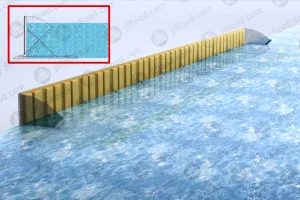
The core innovation of Junli Hydrodynamic Flood Gate lies in its buoyancy-driven self-rising kinematic mechanism. The gate assembly consists of a ground-recessed frame embedded flush in concrete, an internal hydraulic water retention chamber, an engineered lightweight door leaf, dynamic side wiper seals, and a continuous bottom hinge seal.
When surface runoff exceeds kerb height, incoming water drains into the front catchment grates of the subterranean frame. As water fills the basin, hydrostatic buoyancy acts against the bottom of the composite door panel, initiating passive lifting.
As external water level rises, hydraulic head pressure pushes the door panel up to a vertical 90-degree angle. High hydrostatic pressure forces the EPDM gasket tightly against the lateral door frame, forming a hermetic leak-proof barrier.
Constructed from high-tensile structural steel (Q235B hot-dip galvanized or SUS304/SUS316L stainless steel), the surface panel supports heavy vehicular traffic up to 40 tons (AASHTO HS-20 rating) with zero structural deflection.
Once floodwaters recede through municipal storm drains, water inside the embedding chamber empties via gravity-assisted check valves, allowing the panel to lay flat back flush into the ground automatically.
| Performance Feature | Junli Hydrodynamic Barrier | Electric Motorized Gate | Removable Aluminum Planks | Sandbag Stacking |
|---|---|---|---|---|
| Power Source | 0 W (Passive Hydrostatic) | 2.2 kW – 7.5 kW Electric Grid | Manual Labor Required | Manual Labor Required |
| Activation Speed | 0.1s – 3.0s Autonomous | 45s – 180s Motorized | 30 – 120 Mins Manual Assembly | 2 – 6 Hours Labor Heavy |
| Blackout Reliability | 100% Operational | Fails without UPS/Generator | Operational (Human Dependent) | Operational (Human Dependent) |
| Traffic Load Rating | AASHTO HS-20 / 40-Ton Truck | Varies / Often Obstruction | Zero (Must be removed) | Zero |
| Service Life Span | 20+ Years (SUS304/316L) | 5–8 Years (Mechanical wear) | 10 Years (Seal degradation) | Single-use |
| Operational Standby Cost | $0 / Year | High (Annual Motor Service) | Storage & Labor Logistics | High Disposal Cost |
Junli Technology custom-engineers flood barrier arrays based on precise hydrological analysis, opening span dimensions, and localized architectural constraints.
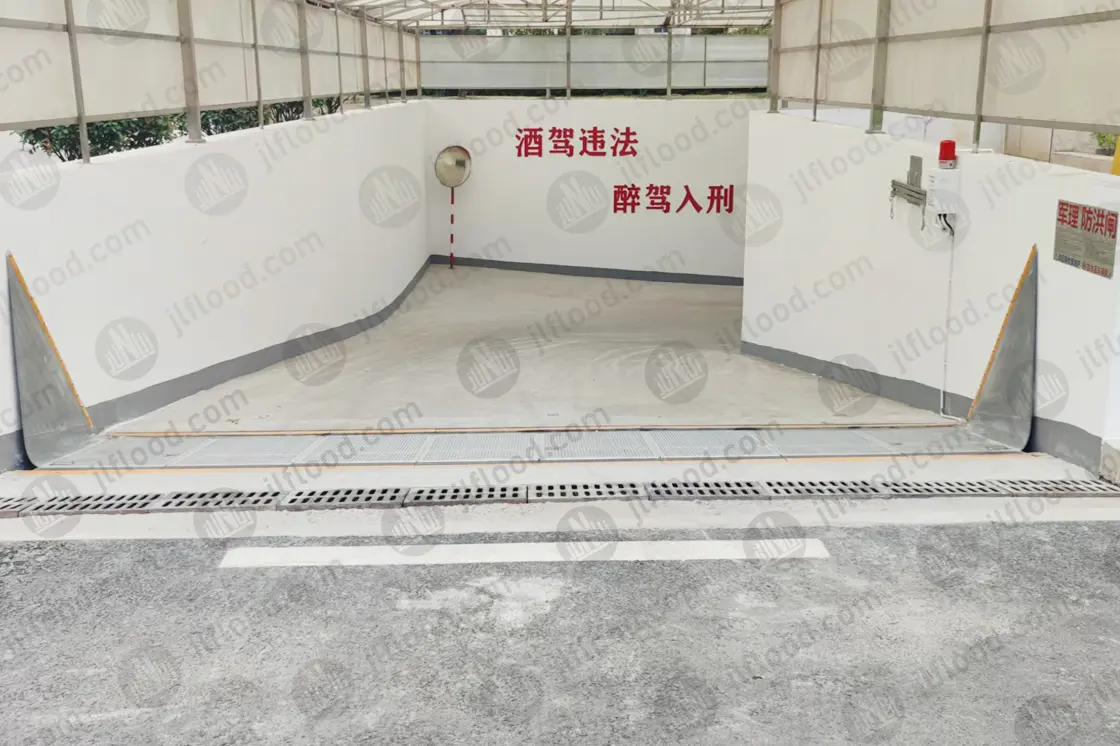
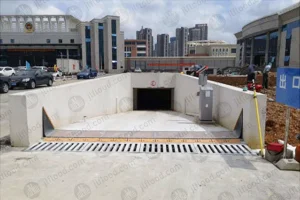
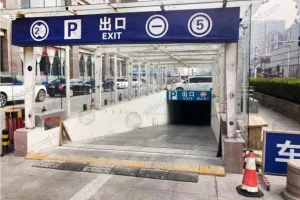
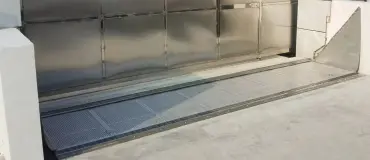
Subterranean parking entrances are primary paths for urban flash floods. Junli Garage Flood Barriers embed directly at the apex or toe of entrance ramps. Vehicles pass over smooth flush surface plates daily without vibration or tire wear. During heavy cloudbursts, the panel floats upright to block water down to zero leakage.
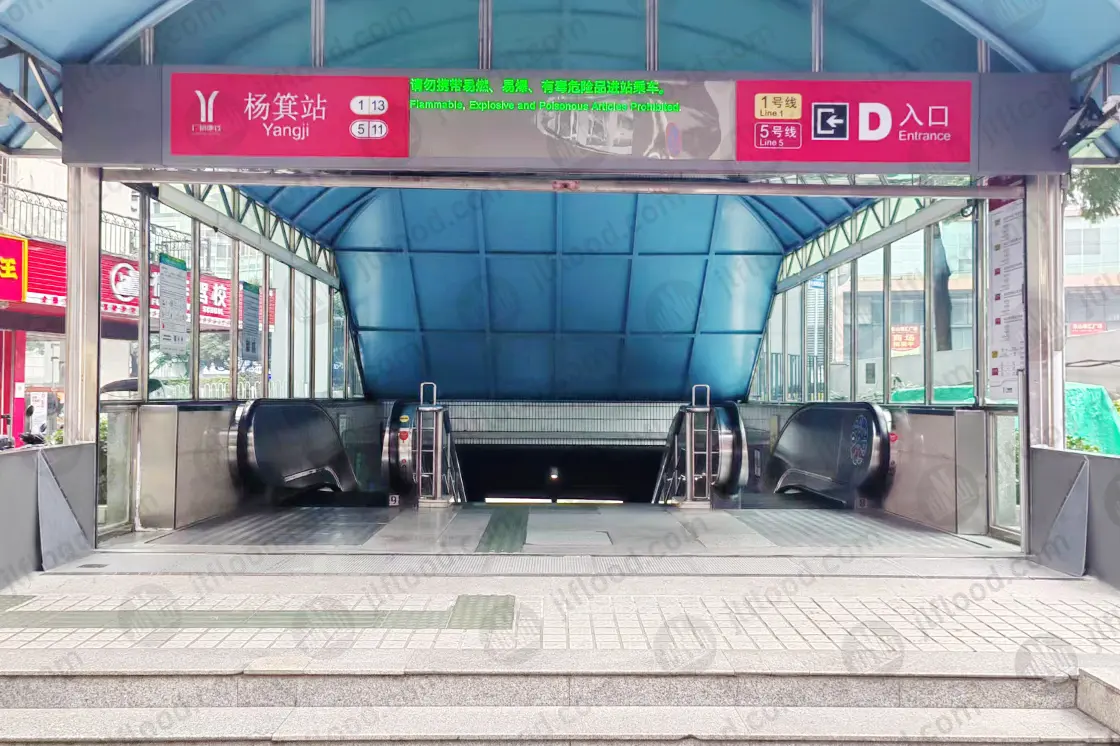
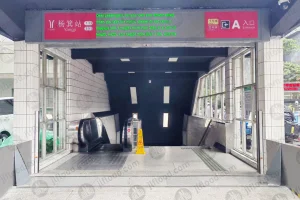
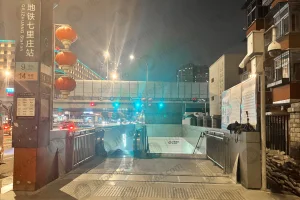
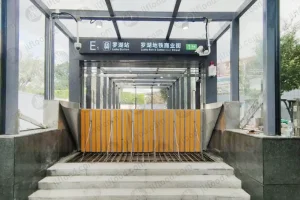
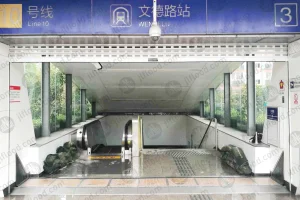
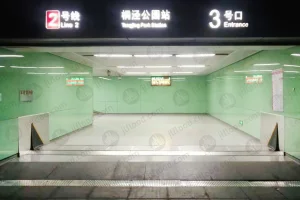
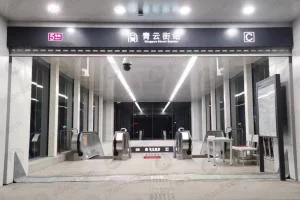
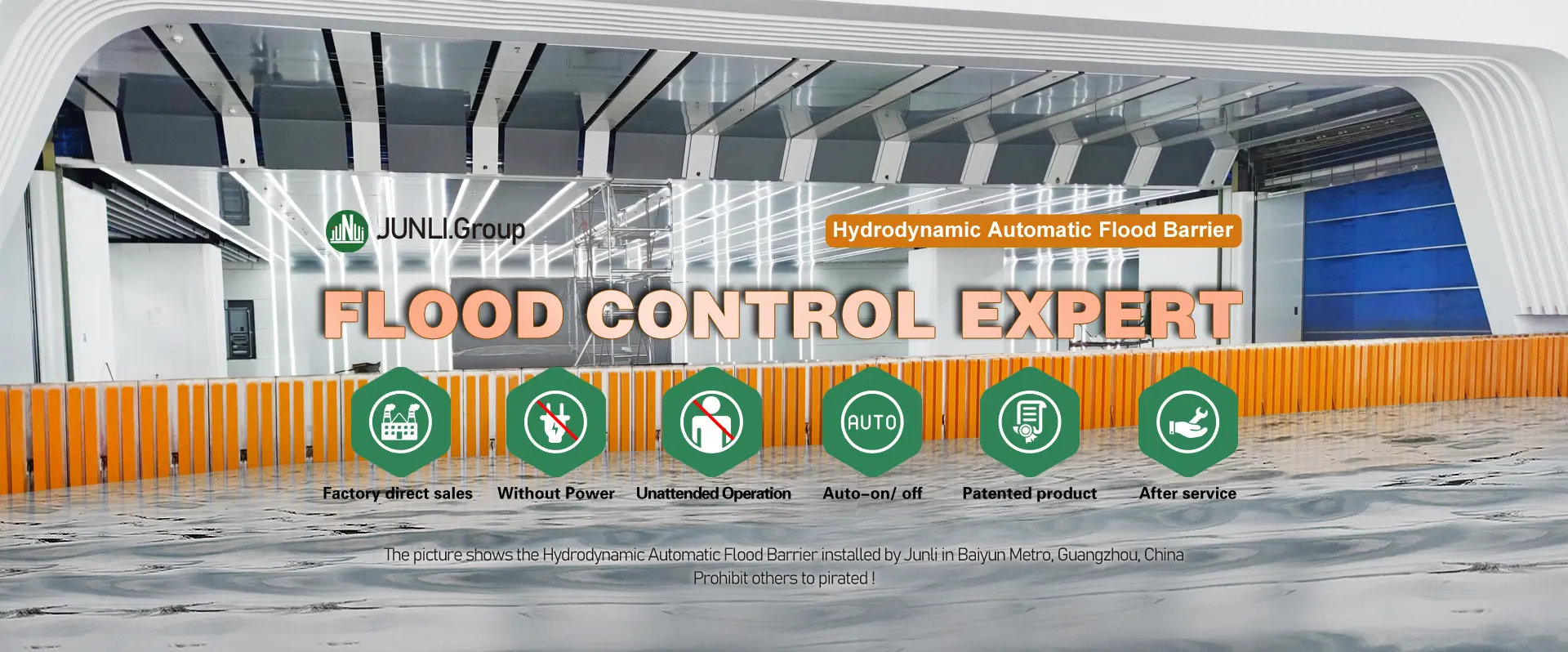
Subway station entrances, pedestrian vent shafts, and connection channels require rapid protection. Deployed across metro networks in Guangzhou, Beijing, Shenzhen, Suzhou, Nanjing, and Hong Kong, Junli Metro Flood Gates withstand rapid hydrostatic head accumulation while maintaining emergency egress clearances.
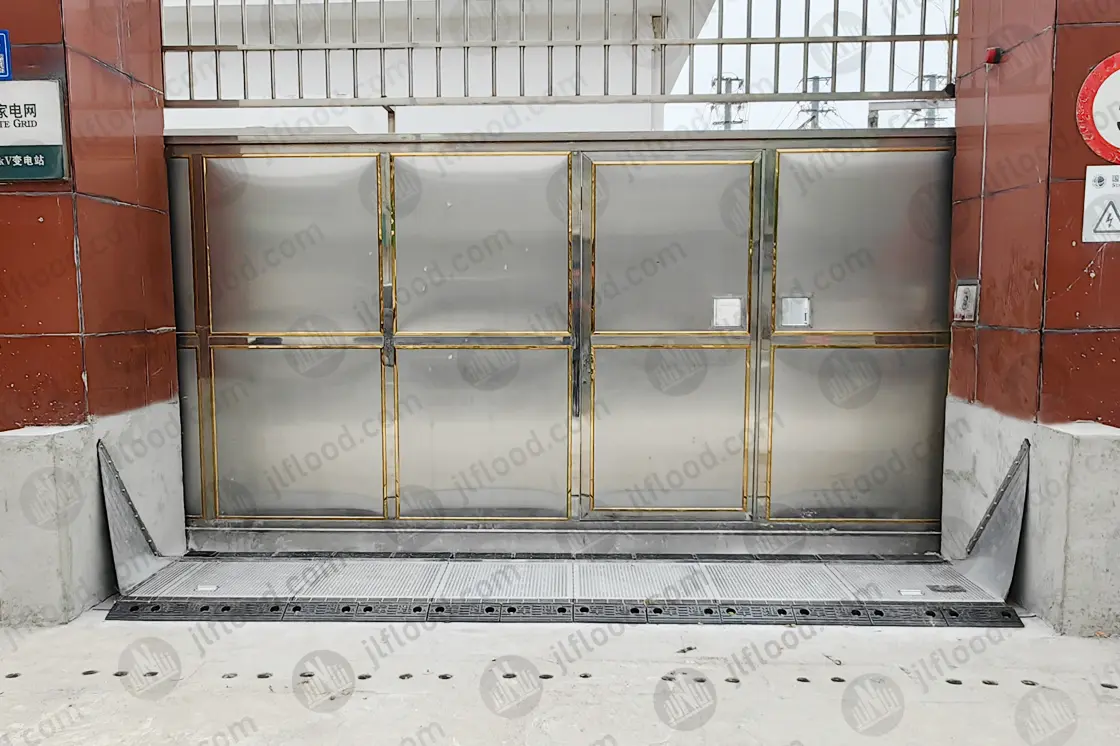
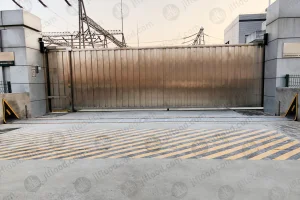
Electrical transformer vaults and high-voltage substations face catastrophic short-circuit risks during water ingress. Junli Substation Flood Barriers feature dielectric isolation seals, corrosion-resistant stainless frames, and continuous multi-leaf link bars capable of sealing wide driveway perimeter openings up to 30 meters wide.
Purchasing managers and lead structural consultants should never specify life-safety flood barriers based solely on 3D renderings. Junli Technology provides full-scale hydrostatic testing and live storm performance footage for every model series.
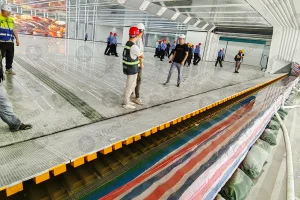
Before dispatch, every custom-built Junli flood gate panel undergoes hydrostatic head testing in our factory test basin. We test structural deflection, lifting speed, dynamic seal compression, and zero-leakage tolerances under 1.5x design water head pressure.
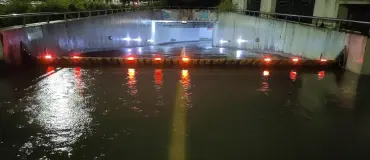
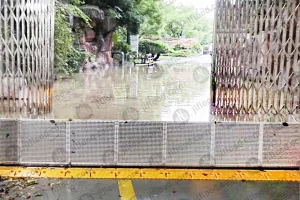
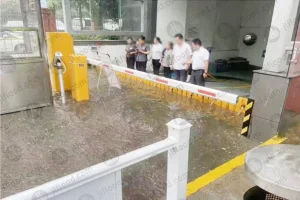
Documented live flood holding performance during severe typhoon rainstorm inundation.
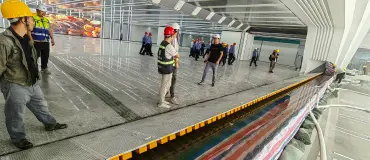
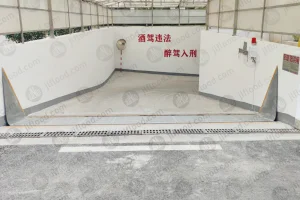
Zero-energy, unpowered self-rising mechanics activated by hydrodynamic water pressure.
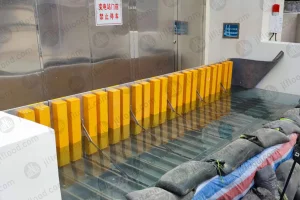
Full-scale pool hydro-testing verifying zero leakage and structural deflection parameters.
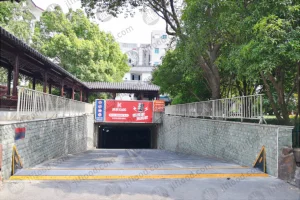
Heavy vehicular flush installation providing unobtrusive 24/7 subterranean defense.
Nanjing Junli Technology supports international EPC contractors, municipal procurement agencies, and private developers with end-to-end engineering support—from initial site survey translation to custom CAD drawing generation and global sea-freight export packaging.
We provide complete AutoCAD embedded channel blueprints, rebar clearance schematics, concrete pouring schedules, and drainage outlet calculations tailored to your local site civil works.
Manufactured under ISO 9001 quality management, ISO 14001 environmental safety, and strict CE structural directives. Mill test certificates (MTC) for SUS304/316L are supplied with every order.
Robust sea-worthy wooden box packaging with corrosion-resistant wrapping. Complete English commissioning manuals, video tutorials, and optional remote or on-site engineering supervision available.
Junli Technology's R&D team is pushing the boundaries of autonomous physical asset security by bridging mechanical fluid hydrodynamics with IoT smart city infrastructure.
Embedding wireless, solar-assisted sensors into the flood barrier housing to broadcast real-time water elevation level, angle tilt state, and seal compression data directly to municipal SCADA control rooms.
Researching composite graphene-aluminum matrix panel cores to reduce panel mass by 40% while doubling yield tensile strength, allowing passive deployment at water heads as low as 20 mm.
Standardizing modular inter-locking barrier leaves capable of spanning sea-wall ports and riverbank breaches exceeding 100 meters without requiring vertical support pillars.
Addressing primary technical, installation, and procurement queries from global civil engineering contractors.
Submit your project entrance width, design retaining height, and site photos. Our senior hydraulic structural engineers will return a complete CAD embedment drawing set, bill of materials, and competitive FOB/CIF price proposal within 24 hours.
Factory-direct wholesale pricing, OEM manufacturing support, and tailored structural configurations for global infrastructure projects.