
Explore high-performance modular flood protection gates, automatic hydrodynamic barriers, and engineered barrier options directly manufactured in China for immediate global export.
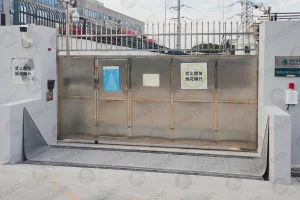
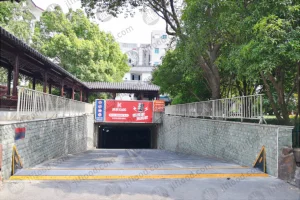
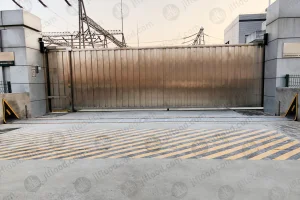
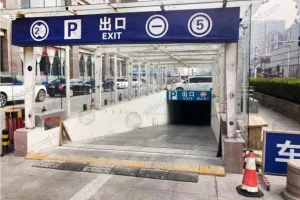
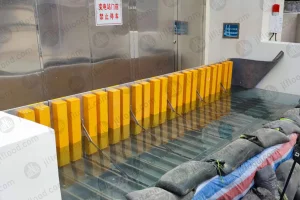
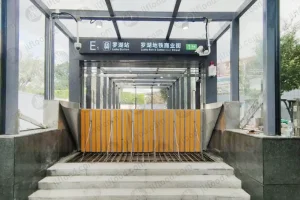
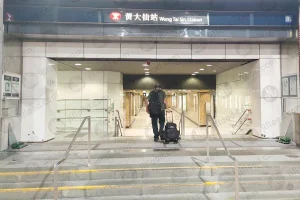
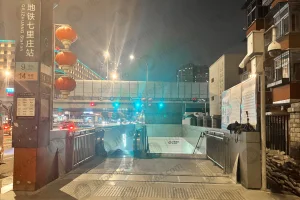
Historically, municipal authorities, commercial property managers, and civil defense agencies relied heavily on traditional flood obstacle sandbags as the first line of defense against flash floods and urban waterlogging. While woven polypropylene (PP) sandbags offer low initial unit purchase costs, modern hydrological reality—driven by micro-burst storms, climate anomalies, and rapid urban concrete build-ups—has exposed severe operational bottlenecks in manual sandbag deployment.
As leading China Flood Obstacle Sand Bag Manufacturers and structural flood barrier pioneers such as Nanjing Junli Technology Co., Ltd. have demonstrated, modern flood mitigation requires an evolution from reactive human-dependent labor to automatic, hydro-dynamic passive defense mechanisms. This comprehensive white paper provides global EPC contractors, procurement directors, and municipal engineers with technical insights, financial pricelists, life-cycle evaluations, and manufacturing standards governing the modern flood obstacle landscape.
A detailed engineering comparison outlining why global procurement managers are transitioning from temporary sand bags to permanent, power-free automatic flood control gates.
| Evaluation Parameter | Traditional Woven Sand Bags | Heavy-Duty Water Baffle Obstacles | Hydrodynamic Auto Flood Barrier (Junli Standard) |
|---|---|---|---|
| Deployment Speed | 2 - 6 Hours (Requires heavy manual labor) | 15 - 30 Minutes (Manual placement) | 0 Seconds (Fully automatic by water power) |
| Power Dependence | None | None | Zero Electricity Required (Hydro-buoyancy) |
| Human Reliability Risk | High (Requires night shifts / standby crew) | Medium (Requires staff on site) | Zero (Operates seamlessly during blackouts) |
| Sealing Efficiency | High seepage (30% - 50% leakage rate) | Moderate seepage (EPDM strip seals) | 99.9% Watertight (Triple EPDM aviation seals) |
| Structural Material | Woven Polypropylene + Sand / Dirt filling | ABS Plastics / Light Aluminum | Aircraft Aluminum 6061-T6 / Stainless Steel 304 |
| Lifecycle Expectancy | Single-use to 6 months (Degrades under UV) | 3 - 5 Years | 20+ Years Maintenance-Free Architecture |
| Storage & Logistics Footprint | Extremely bulky; requires large warehouse storage | Requires designated storage racks | Flush ground embedment; 0 surface footprint |
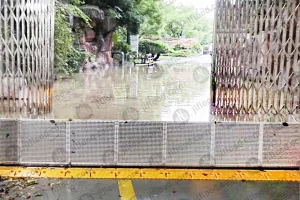
While sand bags serve as emergency temporary dikes during riverbank overtopping, installing them at critical building entrances (metro shafts, power substations, underground car parks) carries catastrophic risk. If flash flooding strikes at 3:00 AM during a storm-induced power blackout, manual sandbag placement inevitably fails due to labor delays. Hydrodynamic auto-gates respond within 0.1 seconds of water entry, requiring zero human intervention.
China’s specialized industrial clusters in Jiangsu and Zhejiang provinces have combined metallurgical engineering, synthetic elastomer R&D, and automated precision fabrication to establish worldwide leadership in flood protection manufacturing.
Chinese factories leverage localized supply chains for T6-treated 6061 aviation-grade aluminum alloys and 316/304 stainless steel plates. This ensures high structural strength-to-weight ratios capable of withstanding 20+ kN/m² hydrodynamic impact loads from rushing flood waters.
Watertight integrity depends on elastomer resilience. Chinese research centers have engineered specialized UV-resistant, anti-aging EPDM seals that maintain structural elasticity between -40°C and +90°C, ensuring zero seal degradation over decades of flush-ground exposure.
Leading Chinese exporters like Nanjing Junli Technology feature dedicated full-scale hydraulic testing pools. Every custom barrier design undergoes real-head water testing, measuring precise deflection rates, buoyancy velocity, and seal tightness prior to export packaging.
Understand the cost dynamics, wholesale unit prices, and long-term financial ROI across different flood protection categories directly from Chinese OEM facilities.
FOB Price Range: $0.25 - $0.85 / Piece
MOQ: 10,000 Pieces
Standard UV-stabilized woven polypropylene bags (40cm x 60cm or 50cm x 80cm) suitable for manual soil/sand filling. Best for temporary municipal earthworks, but incurs recurring labor deployment costs of $50-$100/meter per flood event.
FOB Price Range: $45 - $90 / Meter
MOQ: 50 Meters
Self-anchoring L-shaped plastic flood barriers. Ideal for quick surface assembly along roadsides and commercial entrances during impending rainfall warnings. Stackable for storage.
FOB Price Range: $180 - $350 / Square Meter
MOQ: 10 Sets
Extruded aluminum stop-log panels with side posts. Installed prior to storm events in doorways, basement windows, and factory perimeter walls. Reusable for over 15 years.
FOB Price Range: $450 - $950 / Meter
MOQ: 1 Set (Custom Dimensions)
Flush-embedded, power-free automatic gates engineered with 6061-T6 aluminum paneling, modular stainless steel foundation frame, and self-closing mechanics. ZERO operational labor cost over a 20-year lifespan.
* Note: Prices vary based on customization specifications, structural load requirements (pedestrian vs heavy truck load capacity), surface coating finishes, and containerized freight terms. Request exact CAD drawings and quotes from [email protected].
Tailored engineering implementations designed to eliminate water ingress across mission-critical city assets.
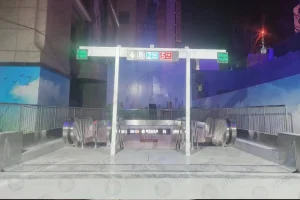
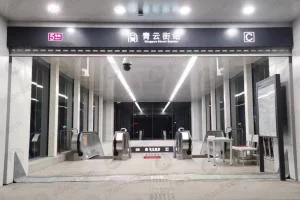
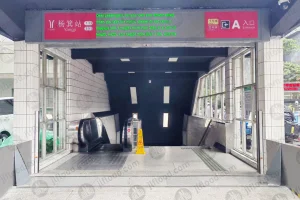
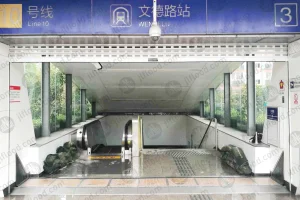
Subway stations represent high-density subterranean environments vulnerable to flash flood inflows. Surface-mounted and embedded hydrodynamic barriers automatically deploy at station entrance stairs, connecting passages to shopping malls, and ventilation shafts, ensuring passenger safety and rail electrification preservation in cities like Guangzhou, Beijing, and Hong Kong.
Power grid failure during flood events plunges cities into darkness, halting emergency pumps. Substation gate flood obstacles and equipment-room barriers feature zero-power hydrodynamic mechanisms, ensuring 100% boundary isolation for grid infrastructure even when local power grids are completely compromised.
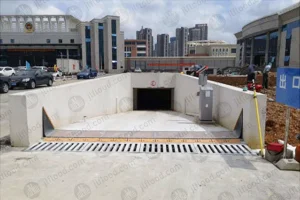
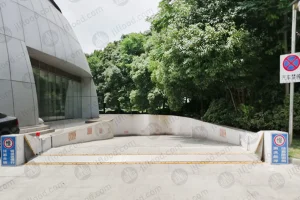
Underground parking ramps act as natural conduits for flood runoff. Flush embedded hydrodynamic barrier systems allow vehicles to drive smoothly over the foundation plate during daily operation. When storm water flows down the driveway, the barrier panel automatically rises to block water up to 2.0 meters high.
Underground pedestrian crossings, municipal utility corridors, and civil defense facilities require heavy-duty load-bearing capacity. Modular aluminum barriers withstand multi-directional water pressure while integrating seamlessly with smart municipal sensors for remote status monitoring.
Step-by-step framework for international contractors, architects, and procurement agents sourcing flood control hardware from China.
Provide clear opening widths, curb heights, anticipated maximum flood water heads (0.5m to 2.0m), and traffic axle load specs (e.g., 20-ton truck load rating for parking garage ramps vs light pedestrian doorways).
Factory engineers generate structural calculation sheets, anchor stress analysis, frame embedment drawings, and localized drainage channel layout details for consultant sign-off.
Components undergo laser cutting, robotic TIG welding, anodization, and triple EPDM seal assembly. Factory acceptance testing (FAT) is conducted in full-scale water pools with high-definition video recording or third-party SGS inspection.
Heavy-duty export wooden crates protect barrier panels during ocean freight. Comprehensive English installation manuals, embedment templates, and remote engineering commissioning support are provided to local contractors.
Direct answers to technical questions asked by international buyers, municipal engineers, and procurement directors.
Traditional sandbags require hours of manual filling and heavy lifting, degrade quickly under UV light, allow high water seepage, and frequently fail when floods strike without warning at night. Hydrodynamic automatic barriers rise autonomously using water buoyancy alone—requiring zero electricity and zero manual labor—providing immediate 100% watertight protection.
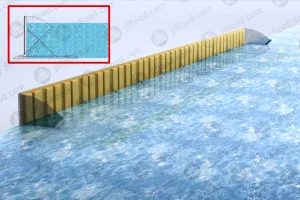
The barrier panel rests flush inside a stainless steel foundation casing embedded into the ground. When surface flood water enters the intake chamber, hydro-buoyancy pushes the lightweight, high-strength aluminum panel upward. As water levels increase, hydrostatic pressure pushes the panel tightly against vertical frame EPDM seals, locking it in place.
Yes. Factory-engineered garage and driveway flood barriers are designed with heavy-duty structural ribbed aluminum panels and reinforced steel top cover plates capable of supporting wheel load ratings from 15 to 40+ tons (conforming to international bridge and roadway axle load standards).
Standard dimensional barriers are produced within 7 to 15 business days. Large-scale custom infrastructure projects (such as multi-station subway line orders or wide-span power substation gates) typically require 20 to 35 days, inclusive of CAD drafting, factory water testing, and export packing.
Because the system operates passively without motors, hydraulics, or electrical wiring, maintenance is minimal. Routine procedures involve periodic clearing of leaves or debris from the foundation drainage channel and annual visual inspection of the EPDM elastomer seals.
Yes. Professional Chinese manufacturers like Nanjing Junli Technology issue official factory inspection reports, material mill test certificates (MTC), and full-scale water pool test videos showing pressure-head retaining and seal zero-leakage performance for every order.
Explore additional engineered automatic and surface-mounted flood protection solutions manufactured to strict international quality standards.
Contact Nanjing Junli Technology Co., Ltd. today. Send us your entrance dimensions, site photos, or tender specifications, and our engineering team will provide detailed CAD drawings, flood elevation calculations, and competitive FOB/CIF pricelists within 24 hours.


