Facebook LinkedIn YouTube
Hydrodynamic Resilience Engineering

China Flood Proof Passive Flood Barrier Manufacturers & Quotes

Technical Whitepaper & Commercial Specification Guide for Next-Generation Zero-Energy Hydrodynamic Flood Protection Systems

Featured Hydrodynamic Barrier Systems (Primary Selection)

Engineered for high-density underground infrastructure, metro networks, power utilities, and commercial real estate.

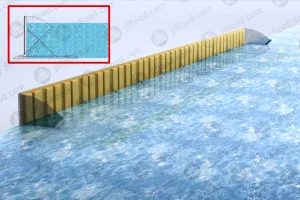
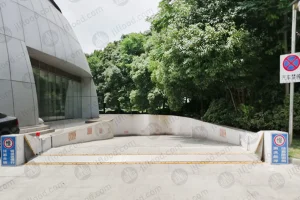
Wholesale Automatic flood barrier, Surface installation metro type: Hm4d-0006E Supplier, Quotes
Automatic Flood Barrier Surface Metro Hm4d-0006E
Get Technical Quotes
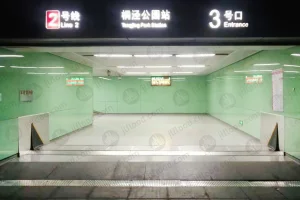
Wholesale Flood Barrier at Metro Connection Channel Manufacturer, Factories
Metro Connection Channel Automatic Flood Barrier
Get Technical Quotes
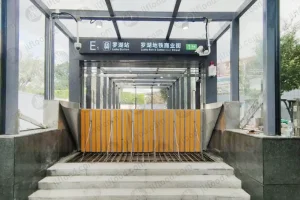
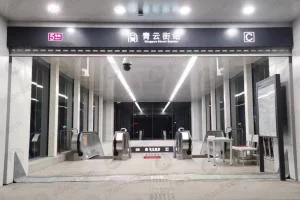
Wholesale Flood Barrier at Metro Stations Manufacturer, Quotes
Heavy-Duty Metro Station Entrance Flood Gates
Get Technical Quotes
China Flood Barrier at Dalian Metro Stations Manufacturers, Quotes
Dalian Metro Standard Modular Flood Barrier
Get Technical Quotes
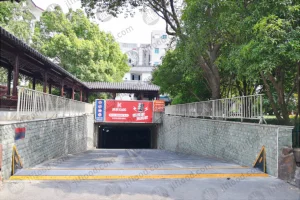
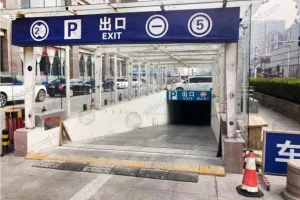
Wholesale Flip-up flood barrier for garages Manufacturer, Factory
Flip-Up Automatic Garage Ramp Flood Barrier
Get Technical Quotes
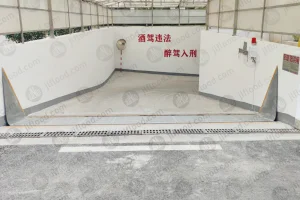
Wholesale Embedded type Automatic flood barrier for Metro Manufacturer, Suppliers
Embedded Automatic Metro Entrance Flood Barrier
Get Technical Quotes
China Surface type Automatic flood barrier for Metro Suppliers, Pricelist
Surface-Mounted Retrofit Metro Flood Gate
Get Technical Quotes
Wholesale Flood barrier, Flood defence automaticlly Manufacturer, Pricelist
Hydrodynamic Self-Rising Flood Protection Unit
Get Technical Quotes
0.1s
Hydrodynamic Activation Time
100%
Zero-Power Grid Operation
2.0m
Max Retaining Water Height
30+
Global Metro & Grid Projects

1. Executive Summary & Paradigm Shift in Flood Resiliency Infrastructure

Analyzing the global transition from active electromechanical barriers to passive hydrodynamic self-rising flood control systems.

Urban waterlogging, cloudburst floods, and severe sea-level surges caused by global climate instability present existential threats to modern underground infrastructure. High-density urban centers rely heavily on subterranean assets—including mass transit rail networks, underground commercial parking garages, high-voltage electrical substations, and utility cable vaults. Historically, structural protection relied on manual aluminum flood stop logs, electromechanical gates, or motorized flood barriers. However, empirical data from severe urban flooding events across Asia, Europe, and North America reveals a structural vulnerability in active mitigation systems: They fail precisely when urban grids collapse.

Active flood systems depend on three vulnerable prerequisites during a disaster: continuous mains electricity, functional sensor/PLC logic networks, and available emergency manpower. When extreme typhoons or intense rainstorms trigger regional power outages, urban traffic gridlock, or localized grid collapse, active systems become non-functional, leading to catastrophic water ingress. A single inundated subway station or damaged substation can incur direct structural damages exceeding tens of millions of dollars, coupled with severe operational downtime and societal loss.

This technical whitepaper examines the engineering fundamentals, economic advantages, and industrial supply chain metrics of Passive Hydrodynamic Flood Barriers manufactured in China. Operating entirely without electricity, external sensors, manual labor, or human intervention, passive barriers leverage fluid buoyancy and hydrostatic thrust to automatically deploy during flash flooding. As global civil engineering specifications pivot toward resilient infrastructure mandates (ISO 22301, FM 2510), Chinese original equipment manufacturers (OEMs)—led by engineering pioneers like Nanjing Junli Technology Co., Ltd.—have scaled precision manufacturing, supplying high-performance, cost-optimized flood protection gates globally.

Active Electromechanical Gates

Requires continuous power, PLC automation, and regular electrical testing. Highly vulnerable to grid power outages, sensor submerged failure, and delayed manual triggering during off-peak hours.

Manual Flood Stop Logs

Requires site assembly, physical labor, storage space, and pre-event warning windows. Fails during sudden flash floods, night-time cloudbursts, or when staff cannot reach the entrance due to surface traffic.

Passive Hydrodynamic Systems

Powered entirely by flood water. Panel remains flush in the floor chamber for vehicles/pedestrians, rising instantly upon water ingress. 100% fail-safe reliability during total electrical blackouts.

2. Global Market Dynamics & Procurement Demand Drivers

Evaluating international regulatory pressure, insurance mandates, and global infrastructure investment patterns.

Global commercial procurement demands for automated flood protection are accelerating rapidly, driven by three major macroeconomic factors:

  • Strengthening Municipal Building Regulations: Municipal authorities across Europe, Southeast Asia, North America, and the Middle East are amending civil engineering codes to enforce mandatory passive flood barrier installation at underground garage ramps and subway entrances situated below baseline flood elevation levels.
  • Insurance Underwriting Requirements & Business Continuity (BCP): Major property insurers and reinsurance conglomerates now require critical commercial assets—such as data centers, financial towers, and logistics hubs—to prove zero-power flood protection capability before issuing business interruption policies.
  • Urban Density & Underground Asset Protection: Rapid urban expansion has pushed critical utility assets underground. Micro-grid electrical substations powering dense metropolitan areas cannot tolerate water contact, making real-time, automated perimeter sealing essential.

Engineering Design Matrix: Passive vs. Active Flood Barriers

Specification Metric Passive Hydrodynamic Barrier Motorized / Hydraulic Gate Manual Stop Log System
Energy Source Hydrostatic Water Buoyancy (Zero Power) 3-Phase Electricity / Backup Genset Human Power (Manual Assembly)
Activation Time Immediate (< 0.1s trigger upon entry) 30 to 120 Seconds (Electric Motor) 15 to 45 Minutes (Manual Labor)
Blackout Reliability 100% Operational Immunity Vulnerable to Power/Generator Failure Not Dependent on Grid (Requires Labor)
Drive-Over Load Capacity Standard 40-Ton Heavy Duty Truck Load Variable (Limited by Hinges/Track) N/A (Barrier blocks lane permanently)
Annual Maintenance CAPEX Minimal (Visual Inspection & Gasket Check) High (Motors, Hydraulics, PLC, Battery) Low (Storage & Seal Preservation)

3. China Industry 4.0: Supply Chain Resilience & Manufacturing Edge

How Nanjing Junli Technology delivers structural integrity, precision sealing, and cost advantages to international buyers.

As international engineers and municipal project procurement teams evaluate global suppliers, China’s industrial manufacturing sector—exemplified by enterprise leaders like Nanjing Junli Technology Co., Ltd. (headquartered in Qinhuai District, Nanjing)—offers unprecedented technical capability, structural customization, and supply chain scalability.

The manufacturing process for high-load hydrodynamic passive flood gates requires advanced metallurgical knowledge, robotic welding precision, dynamic hydraulic seals, and intensive full-scale hydrostatic testing. China’s comprehensive industrial cluster allows manufacturers to integrate high-grade marine 6063-T6 aluminum extrusions, 304/316 stainless steel frame housings, and anti-aging EPDM vulcanized gaskets with optimized cost efficiencies.

Precision Engineering & Testing Pool Verification

Unlike standard sheet metal fabricators, dedicated Chinese flood barrier manufacturers operate dedicated high-capacity hydraulic test chambers. Every structural model undergoes full-scale hydrostatic testing, verifying seal leak-rate thresholds under elevated water heads prior to international dispatch.

  • Structural Rigidity: Engineered panel profiles withstand static water pressures up to 2.0m head heights and dynamic water wave impacts.
  • EPDM Seal Longevity: High-density vulcanized EPDM seals provide UV resilience, chemical protection, and a 20+ year operational lifespan.
  • Heavy Vehicle Drive-Over Capability: Reinforced surface panels safely support vehicle traffic loads up to 40 tonnes (AASHTO HS20 / EU Class D400 standards).

4. Localized Application Scenarios & Engineering Case Studies

Field-proven implementations across major transit networks, power grids, and municipal buildings.

Underground Metro Entrance & Pedestrian Subways

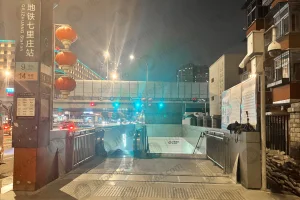
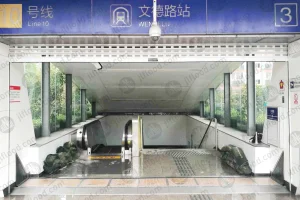
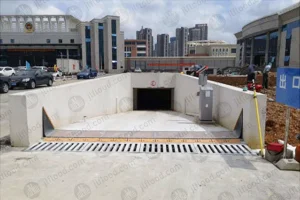
Mass transit networks in Guangzhou, Beijing, Suzhou, and Hong Kong deploy embedded hydrodynamic barriers at subway portals. Sitting flush with granite floor paving during dry weather, the barrier automatically rises as floodwaters exceed urban curb levels, isolating subway tunnels from massive flooding.

Power Transmission & Transformer Substations

Electrical utilities depend on zero-power flood barriers installed at perimeter gates and cable trench doors. Since grid failure often accompanies typhoon events, automated passive barriers guarantee that power transformer rooms remain dry without needing staff on site.

Commercial Real Estate & Underground Car Parks

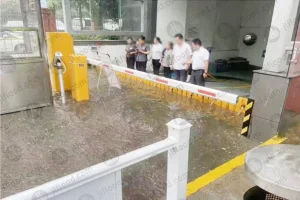
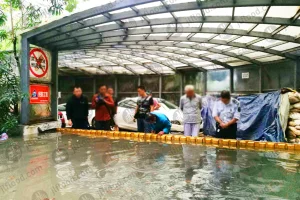
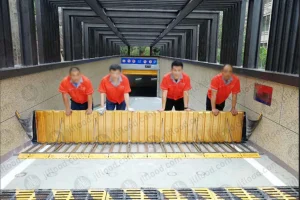
High-end shopping centers, private residential towers, and multi-level underground parking ramps utilize flip-up and surface-mounted passive barriers. Vehicles pass smoothly over the non-slip top plate, while water ingress automatically elevates the barrier to protect subterranean parking decks.

Technical FAQ: Specifier & Procurement Manager Insights

Comprehensive engineering details for international consultants, civil architects, and distribution partners.

How does a hydrodynamic automatic flood barrier operate completely without electrical power?
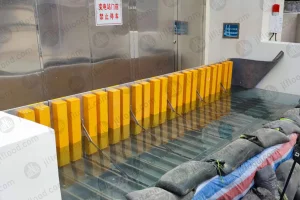
The hydrodynamic system utilizes fundamental principles of hydrostatic pressure and fluid buoyancy (Archimedes' Principle). The flood barrier panel rests horizontally flush inside a recessed stainless-steel foundation chamber embedded into the ground level. When floodwater reaches the entrance, water enters the intake grates of the foundation chamber. As the water level inside the chamber rises, it creates natural upward buoyancy on the engineered aluminum hollow panel. As the water head increases, hydrostatic pressure pushes and locks the panel tightly against vertical side wall gaskets, forming a watertight seal. The entire process requires zero electrical power, zero manual operation, and zero sensor logic.
What load ratings can the barrier panel sustain when vehicles drive over it during dry periods?
Standard heavy-duty garage and roadway models manufactured by Nanjing Junli are structural load-rated for AASHTO HS20-44 and European Union D400 wheel load standards. Constructed with internal high-strength aluminum alloy structural ribs and reinforced top stainless steel surface plates, the barrier supports axle loads up to 40 tonnes. Vehicles, buses, fire trucks, and heavy delivery trucks can drive over the recessed frame continuously without causing mechanical deformation or structural fatigue.
What preparation work is required from civil engineers for embedded barrier installation?
For embedded models, civil contractors must construct a concrete trench according to our structural embedment drawings. Key requirements include: (1) A smooth, level concrete base; (2) Adequate rebar alignment for anchoring embedded steel frames; and (3) A bottom drainage connection pipe linked to the site storm drain or sump pit to discharge residual water after floodwaters recede, allowing the panel to return flush into the ground automatically. Surface-mounted retrofit models require only flat concrete surface anchoring.
How are products tested and certified before international shipment?
Every flood barrier design undergoes modular pool testing in our factory hydraulic test facility. Tests evaluate lifting responsiveness, seal compression, structural deflection under maximum design water head (up to 2.0m), and side-wall gasket leak rate thresholds. International clients receive factory test reports, material certificates (304/316 stainless steel, 6063-T6 aluminum alloy), structural calculation sheets, and complete English installation manuals with every export container.

Complete Hydrodynamic Flood Gate Product Range (Secondary Selection)

Explore specialized embedded frames, self-closing configurations, and substation perimeter barriers.

Wholesale Modular hydrodynamic automatic flood gate Supplier, Factories
Modular Hydrodynamic Automatic Flood Gate System
Get Technical Quotes
China Self closing flood barrier Factory, Factories
China Industrial Self-Closing Flood Protection Barrier
Get Technical Quotes
Wholesale Automatic flood barrier, Embedded installation Manufacturer, Suppliers
Embedded Trench Automatic Hydrodynamic Barrier
Get Technical Quotes
Wholesale Flood Gate at Metro Stations Manufacturer, Suppliers
Mass Transit Station Pedestrian Flood Barrier
Get Technical Quotes
China Embedded flood barrier Hm4e-006C Manufacturer, Quotes
China Embedded Flood Barrier Model Hm4e-006C
Get Technical Quotes
China Flood Barrier at Substation Gate Manufacturer, Supplier
Electrical Substation Perimeter Gate Flood Barrier
Get Technical Quotes
Wholesale Self closing flood barrier Hm4d-0006D Suppliers, Pricelist
Self-Closing Hydrodynamic Flood Gate Hm4d-0006D
Get Technical Quotes
China Heavy duty automatic flood gate Hm4d-0006C Factory, Pricelist
Heavy-Duty Automatic Drive-Over Flood Gate Hm4d-0006C
Get Technical Quotes

Request Technical Specifications & Direct OEM Factory Quotes

Submit project dimensions, entrance profiles, and target flood retention heights for customized CAD drawings and pricing schedules.

Nanjing Junli Technology Co., Ltd.

Leading Chinese High-Tech Manufacturer of Hydrodynamic Automatic Flood Control Systems

📍 No.104, Shi Men Kan, Qinhuai District, Nanjing, China
📞 Direct: 0086 173 9795 7068
Request a Catalog