
Explore our primary hydrodynamic flood protection line engineered for subway stations, embedded infrastructure foundation chambers, and heavy civil works.
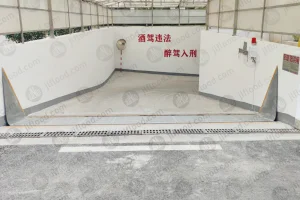
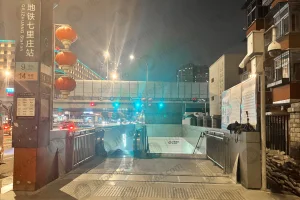
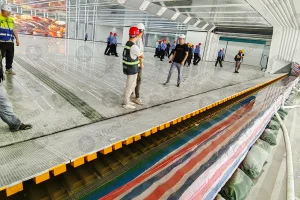
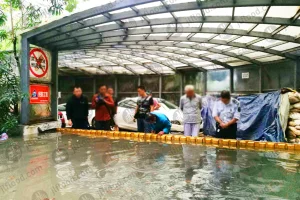
In an era defined by intensifying hydrological volatility, atmospheric rivers, and flash urban flood events, municipal infrastructure and industrial real estate face existential physical risks. Passive hydrodynamic protection systems represent a generational leap over legacy manual sandbagging and failure-prone motorized barriers.
Traditional flood control mechanisms rely heavily on electrical sensors, automated motor actuators, or manual emergency dispatch crews. However, acute typhoon surges and cloudburst storms are frequently accompanied by municipal power grid collapses, transformer station drownings, and localized traffic paralysis. When an electrical grid fails during a severe inundation event, active motorized gates freeze in their recessed state, resulting in catastrophic flooding of underground parking garages, subway line tunnels, and primary electrical distribution vaults.
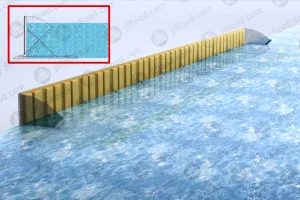
Hydrodynamic automatic flood barriers bypass human error and electrical dependencies entirely. Utilizing fundamental Archimedean buoyancy principles coupled with hydrodynamic water head pressure, incoming floodwater itself acts as the activation mechanism. As water enters the bottom recessed retaining frame, the buoyancy density differential forces the structural panel to pivot upward automatically. Once elevated, continuous hydrostatic head locks the sealing elements against the embedded frame, establishing an impenetrable water-retaining wall within seconds.
| Evaluation Criterion | Manual Aluminum Stop-Logs | Electric Motorized Vertical Barriers | Hydrodynamic Automatic Flood Barrier (Junli Spec) |
|---|---|---|---|
| Activation Trigger | Manual labor dispatch (1-3 hours minimum) | Electric sensor / Manual push-button | Automatic Hydrodynamic Buoyancy (Instant) |
| Blackout Reliability | High physical labor stress during storm | Fails during power outages without UPS | 100% Operational (Zero Power Needed) |
| Traffic Interface | Requires manual assembly across roads | Requires above-ground housing tracks | Flush ground embedding; vehicle load up to 40T |
| Annual Maintenance OpEx | High storage & drill management cost | High motor, battery & sensor servicing | Low (Routine gutter drain cleaning & seal check) |
| Typical Lifespan | 5 - 10 Years (Component wear) | 8 - 12 Years (Electrical degradation) | 25+ Years (Structural SUS304 / Aluminum 6063) |
An engineering breakdown of Nanjing Junli Technology’s patented automatic water-retaining gate mechanisms, fluid mechanics structural calculations, and corrosion resilience protocols.
The gate structure consists of a hollow dynamic buoyancy panel housed within a subterranean stainless-steel tray. When flash water depth reaches the threshold level (typically 30–50mm above curb level), water flows through the inlet grille into the bottom basin. The engineered volume of air inside the panel produces a net upward force $F_{buoyant} > W_{panel} + F_{friction}$, enabling smooth, self-rising deployment without external mechanical force.
Once elevated to its maximum vertical retaining angle (60° to 90° depending on model specification), hydrostatic head pressure from the retained water column pushes the primary panel against heavy-duty EPDM dual-lip gaskets. The greater the flood depth, the tighter the compression seal against the lateral frame walls, achieving an ultra-low leakage rate far exceeding international municipal standards.
Constructed from high-tensile marine-grade T6 aluminum alloy profiles (6063-T6) combined with 304/316 stainless steel foundation frames. The drive components undergo hard anodization and fluorocarbon coating processes, yielding exceptional corrosion resistance against deicing salts, coastal brackish water, and industrial urban runoff.
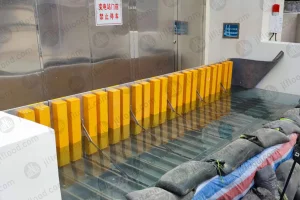
Watch the real-time hydraulic buoyancy test of Junli's modular automatic flood barrier rising under live water pressure in our Nanjing proving grounds.
Procurement directors and municipal EPC contractors must evaluate the total cost of ownership (TCO) when specifying flood protection solutions. Below is a comprehensive price guidance framework for wholesale purchasing from Chinese OEM manufacturers.
Continuous entrance spans over 6 meters require modular interlocking barrier segments with intermediate stainless-steel support mullions. Wide-span ramps for underground commercial parking ramps (e.g., 12m to 24m wide) incorporate internal structural ribs to withstand dynamic hydro-impact forces from debris carrying floodwaters.
Standard municipal flood gates utilize 600mm to 1000mm water retaining heights, suitable for 95% of urban cloudburst scenarios. Critical infrastructure applications such as sub-surface metro stations or high-voltage power substations frequently specify 1500mm to 2000mm custom height barrier profiles, increasing material density and foundation pit depth requirements.
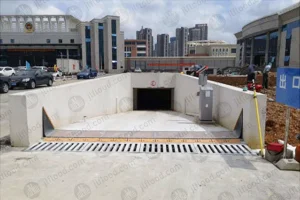
Embedded models (embedded flush with ground level) require ground trench excavation, concrete pouring, and integrated drainage linkage, commanding a higher initial installation civil work cost but delivering flawless zero-threshold driveability. Surface-mounted flip-up units offer lower civil installation expenses, ideal for retrofit projects on operational assets.
Standard 304 Stainless Steel vs. Marine-grade 316 Stainless Steel for coastal salt-spray environments. Fluorocarbon powder coatings in customized RAL colors to match commercial architecture standards also influence line-item pricing.
| Model Category | Installation Type | Standard Height | Est. Wholesale Price (USD / Meter) | Target Application |
|---|---|---|---|---|
| Hm4d-0006E Series | Surface Ramp Mounting | 0.6m - 0.9m | $380 - $550 / m | Commercial Car Parks, Warehouses |
| Hm4e-006C Embedded | Flush Foundation Pit | 0.6m - 1.2m | $450 - $720 / m | Metro Outlets, Substation Gates |
| Hydrodynamic Heavy-Duty | Modular Heavy Pit | 1.2m - 2.0m | $680 - $1,100 / m | Rail Transit Interchanges, Military Assets |
| Flip-Up Pedestrian Gate | Surface Baseplate | 0.4m - 0.8m | $290 - $420 / m | Equipment Room Doorways, Utility Entrances |
* Note: Pricing varies depending on structural steel index, exchange rates, custom engineering modifications, and total volume ordered. Request a direct factory quotation for detailed project engineering tenders.
Junli flood barriers are deployed in high-consequence environments across 30+ major metropolitan transit systems, power distribution utility stations, and commercial real estate hubs.
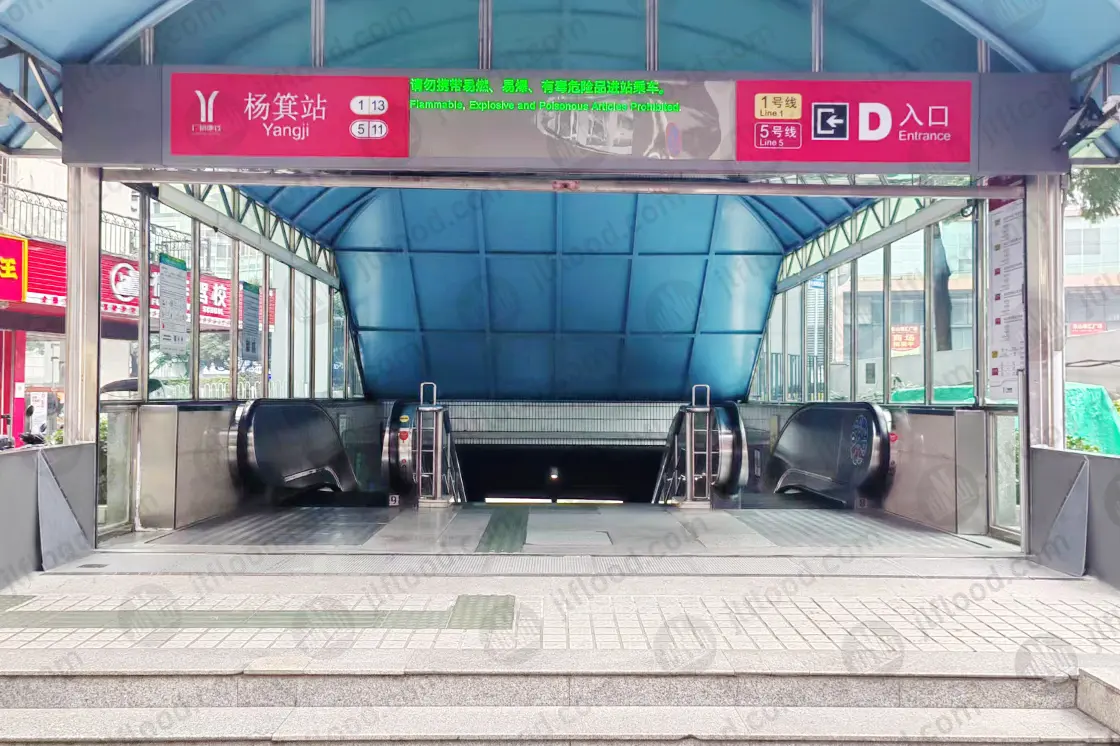
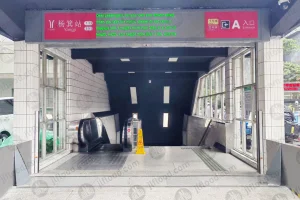
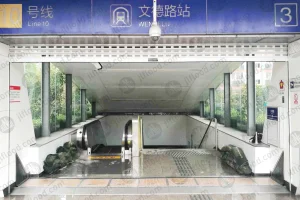
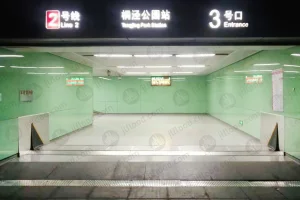
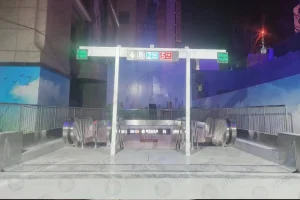
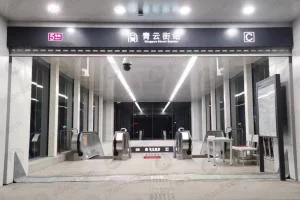
Metro station entrances represent high-vulnerability funnels for urban surface runoff. A breach at a single subway entrance can result in catastrophic tunnel flooding, train traction power damage, and massive economic disruption. Our hydrodynamic barriers installed at Guangzhou Metro Yangji Station, Suzhou Metro, and Beijing Metro feature rapid unpowered elevation within seconds of flash surface water entering the channel.
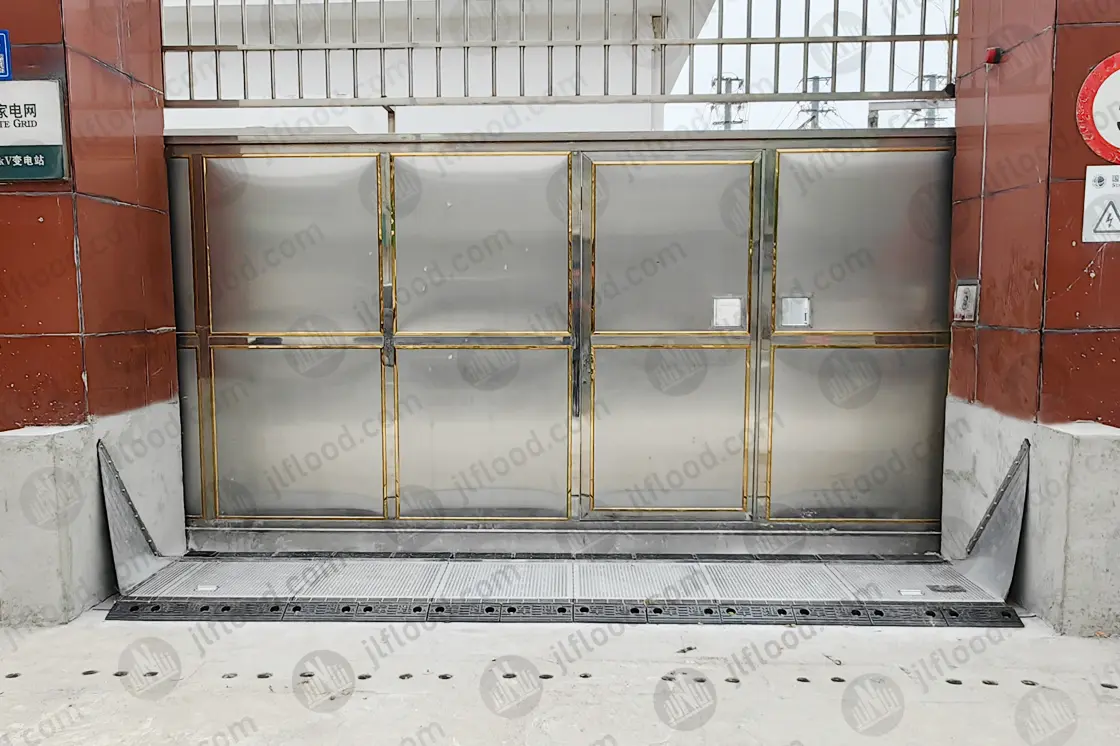
High-voltage transformer substations and underground cable distribution vaults require strict non-conductive, water-tight perimeter defense. Water ingress can cause multi-district blackouts and millions of dollars in equipment destruction. Junli substation gates feature heavy load capacity to withstand heavy utility vehicles while offering maintenance-free passive flood defense during regional grid outages.
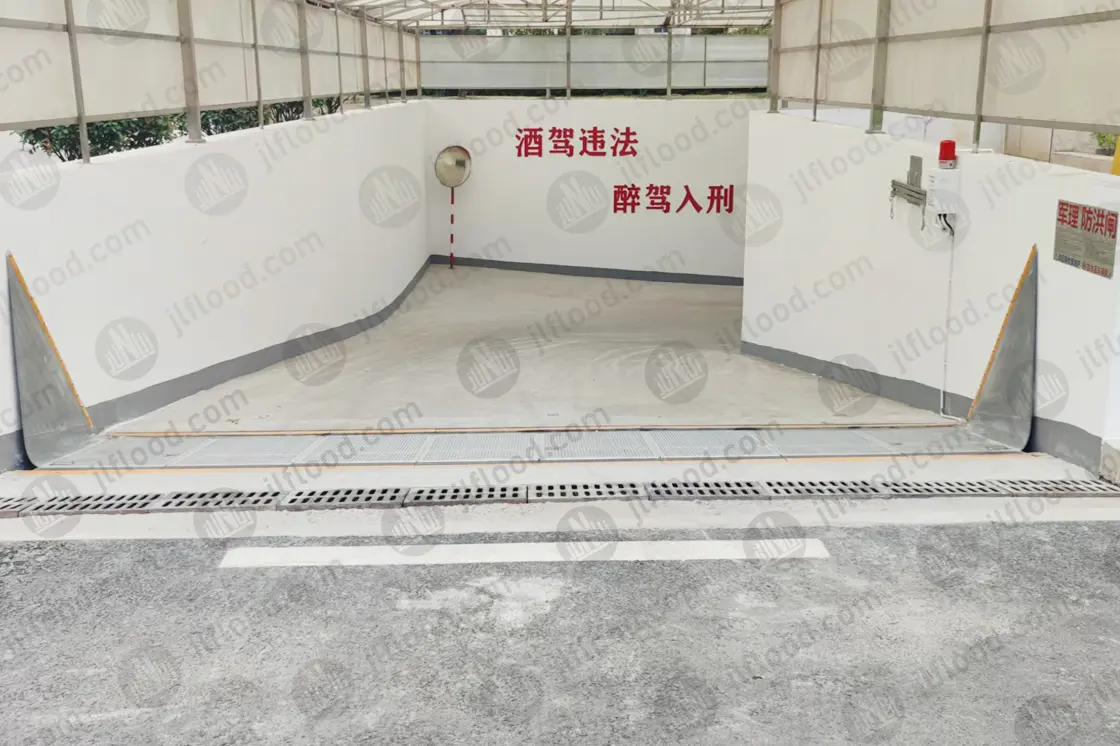
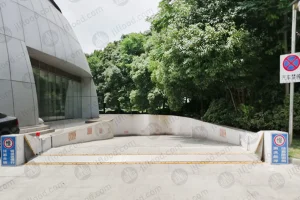
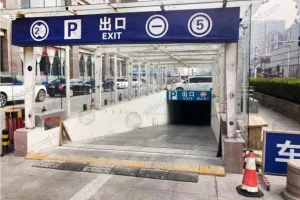
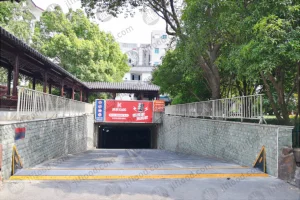
Commercial shopping malls and luxury residential towers with sub-level parking facilities require wide-span flood defense that does not disrupt daily vehicle transit. Embedded automatic barriers rest flush with the drive plane, allowing vehicles up to 40 tons axle weight to drive over continuously without causing structural fatigue to the internal buoyancy mechanism.
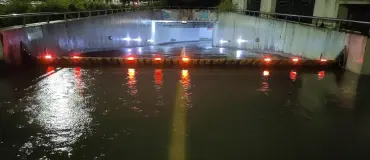
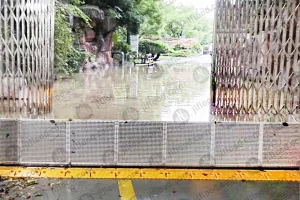
During Typhoon Bebinca and Typhoon Muifa severe weather landfall events, Junli barriers deployed autonomously at multiple property sites. Without site operators present and during local power outages, the rising waters filled the bottom chambers, triggering immediate vertical protection that saved underground infrastructure assets from complete submersion.
Nanjing Junli Technology supports global engineering consulting firms, municipal procurement bodies, and international EPC contractors with end-to-end technical documentation and localization services.
We provide comprehensive 2D CAD civil interface blueprints, 3D Building Information Modeling (BIM) Revit files, and foundation reinforcement rebar clearance notes to simplify integration into civil structural packages.
Every single flood barrier unit undergoes rigorous pressure testing in our full-scale testing pool prior to export shipment. We issue certified hydrostatic sealing reports, deflection measurement logs, and third-party inspection certificates.
Export-ready steel framework crate packing, ocean freight compliance, clear English installation manuals, spare seal kits, and remote commissioning support ensure flawless project execution in overseas markets.
Next-generation urban flood defense is evolving from isolated static barriers into connected, intelligent civil resilience grids.
While maintaining core 100% mechanical unpowered buoyancy operation, Junli’s new smart series incorporates micro-power LoRaWAN and Narrowband IoT (NB-IoT) wireless telemetry sensors. Real-time gate elevation angle, water level height, frame sediment accumulation, and seal compression pressure are transmitted directly to municipal Smart City digital twin command dashboards without requiring external power cables.
Future engineering models utilize high-strength carbon-reinforced polymer composites for gate panels. This reduces dynamic weight by 45% while doubling bending modulus under high hydro-impact debris loads, allowing even faster response times for extreme flash flood events in alpine and coastal urban zones.
Detailed answers to the most critical technical, civil interface, and procurement questions asked by international project engineers and municipal authorities.
Browse additional specialised flood barrier configurations including metro connection channels, power substation perimeter gates, and flip-up garage barriers.
Located in Qinhuai District, Nanjing, Jiangsu Province, Junli Technology is a high-tech manufacturer specializing in intelligent flood control systems, civil defense doors, and hydrodynamic gate engineering. Send your site entrance opening dimensions, flood level requirements, or tender documents to receive complete structural CAD proposal drawings and ex-factory B2B pricing within 24 hours.


