Explore our engineered hydrodynamic self-rising flood gates certified for residential driveways, commercial basements, metro channels, and power infrastructure.
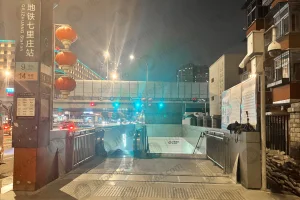

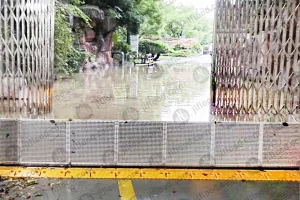
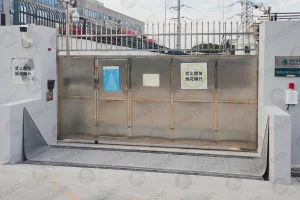
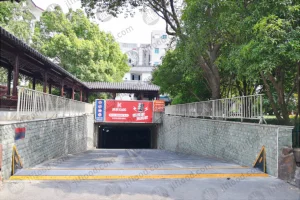
In an era defined by intensifying climate volatility, sudden cloudburst events, and rapid urban surface runoff, conventional flood defense strategies—such as manual sandbagging, modular stop-log panels, and electrically powered flood gates—have revealed fatal structural vulnerabilities. Human latency during unexpected midnight storms, power grid blackouts during typhoons, and mechanical actuator failures frequently lead to catastrophic inundation of residential underground garages, home driveways, commercial property basements, and critical urban utilities.
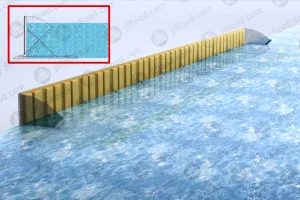
Engineering Core Concept: Hydrodynamic automatic self-rising flood barriers redefine structural flood safety. Operating entirely on fluid dynamics, hydrostatic pressure, and Archimedes' principle of buoyancy, these systems require zero electrical power, zero human operator intervention, and zero external sensor triggering. When floodwater reaches the embedded bottom foundation trench, the gate panel automatically floats, pivots, and locks into place within seconds—creating an impenetrable floodwall before water can breach the perimeter.
As a premier China Hydrodynamic Flood Barrier For Home Manufacturer, our engineering design integrates marine-grade aluminum alloy structural components (6063-T6/6005-T6), high-tensile EPDM vulcanized sealing matrices, and heavy-duty structural chassis engineered to sustain extreme hydrostatic head pressure and continuous vehicle transit. This whitepaper provides architectural specifiers, civil engineers, municipal procurement officers, and luxury residential property developers with an exhaustive technical guide to procuring, installing, and certifying passive hydrodynamic flood barriers.
A detailed look at the internal physics, buoyancy chambers, mechanical linkages, and sealing dynamics of zero-energy hydrodynamic barriers.
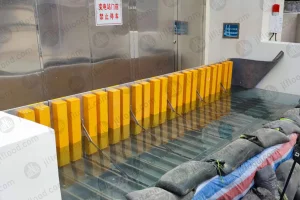
The system is recessed flush within the floor trench during dry conditions. When flash floods approach, water naturally enters the chamber bottom through intake grates. The engineered hollow-core aluminum panel acts as a hydrostatic float cell, generating immediate vertical buoyant uplift.
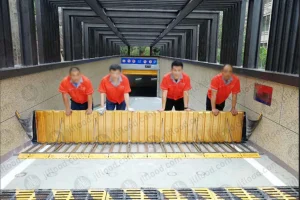
As buoyancy lifts the barrier door to its design height (ranging from 500mm to 2000mm), self-actuating mechanical stay braces engage. Hydrostatic pressure from the retained floodwater pushes the door tightly against the side frame seals, increasing seal compression as water depth rises.
Once floodwaters recede, water within the foundation basin drains through integrated non-return floor valves or subsurface drainage channels. The gate panel smoothly descends back into its recessed housing under controlled hydraulic dampening, restoring normal vehicle or pedestrian passage.
When procuring residential or commercial-grade hydrodynamic flood gates from a factory in China, procurement engineering teams must evaluate structural engineering parameters beyond simple linear price per meter. Below are the mandatory technical specifications required for tier-1 municipal and residential developments:
For home driveways, subterranean garage ramps, and commercial loading docks, the top plate cover must withstand continuous traffic loads without deformation. Standard specifications require compliance with AASHTO HS-20 / HS-25 or European EN 124 Class D400/E600 standards, ensuring heavy vehicles (fire trucks, delivery vehicles, SUVs) can drive over the recessed frame safely.
The perimeter gasket matrix must utilize industrial-grade, UV-stabilized EPDM or fluorocarbon rubber. Sealing profiles must maintain elasticity across thermal extremes (-40°C to +80°C) and exhibit resistance to hydrocarbons, oils, and chemical runoff typically found on residential driveway ramps.
To assist engineering teams in establishing RFQ (Request for Quotation) guidelines, the following matrix compares traditional flood barrier types with Hydrodynamic Automatic Self-Rising Barriers:
Modern urban resilience plans require seamless integration between building envelopes, underground transit systems, power distribution networks, and private residential properties.
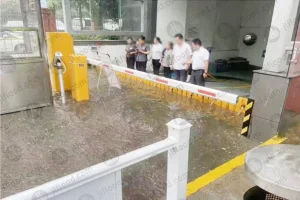
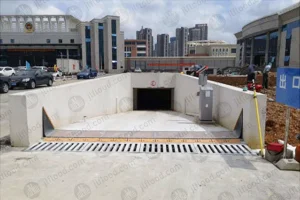
Custom-engineered residential home flood barriers protect garage openings, underground basements, and walkway entry points. Flush mounting preserves home aesthetic value while guaranteeing total ingress protection against cloudburst flooding.
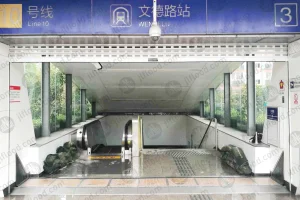
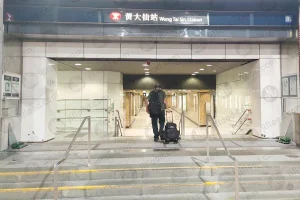
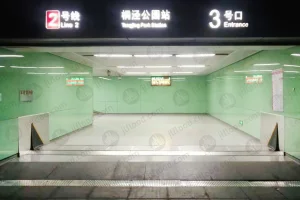
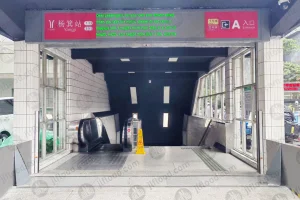
High-capacity embedded automatic flood barriers installed at metro station entrances, ventilation shafts, and connection channels prevent floodwaters from cascading into underground transit lines during extreme storm events.
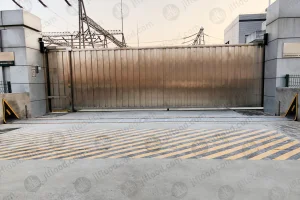
Protecting critical energy assets from moisture and water immersion. Heavy-duty non-conductive and corrosion-resistant hydrodynamic gates prevent grid failure by securing substation perimeters automatically.
Our engineering laboratory in China is pioneering next-generation hydrodynamic technologies that merge passive fluid dynamics with IoT smart sensing networks.
Integrating nano-graphene particles into vulcanized EPDM rubber matrices to increase tear resistance by 300% and extend seal lifetime beyond 30 years under constant UV exposure.
Embedding self-powered piezoelectric sensors within the barrier frame that send real-time SMS, SCADA, and building management system (BMS) alerts the moment the door rises.
Hydro-pneumatic impulse nozzles engineered into the bottom basin to purge mud, gravel, and fallen leaf debris automatically during the initial buoyancy lifting phase.
Replacing traditional aluminum panel cores with aerospace-grade carbon-fiber sandwich structures, reducing structural weight by 45% while doubling tensile resistance against wave impacts.
The global demand for China hydrodynamic flood barriers has transitioned from localized emergency municipal purchases to standardized inclusion in international building codes. Real estate developers across North America, Europe, Southeast Asia, and the Middle East now incorporate hydrodynamic self-rising flood gates during the early civil structural design phase.
Key economic drivers accelerating global adoption include:
Our factory engineering team provides complete OEM/ODM support, CAD/BIM drawing files, and full compliance with international engineering codes.
Engineered and tested in accordance with international standard guidelines including FM 2510 (Flood Abatement Equipment), BSI PAS 1188, ISO 9001:2015 quality management systems, and CE safety standards.
We supply full Autodesk Revit BIM objects, AutoCAD installation drawings, civil excavation trench details, and structural calculation reports customized to local ground geology and kerb dimensions.
Dedicated international technical support featuring multilingual installation manuals, video commissioning walkthroughs, factory hydro-testing video proof for every order, and technician dispatch for major infrastructure contracts.
In-depth technical answers addressing engineering queries, installation prerequisites, maintenance schedules, and factory lead times.
The system operates on pure physical fluid dynamics and hydro-buoyancy principles. The gate panel is installed flush within a stainless-steel or hot-dip galvanized foundation trench. As surface floodwater flows toward the protected entrance, water pours through top intake grates into the bottom chamber. The hollow water-tight door acts as a natural float; as water fills the basin, buoyant force lifts the door automatically. Once elevated, hydrostatic head pressure from the floodwater forces the door firmly against vertical side frame EPDM seals. The entire process requires zero electricity, zero wiring, and zero human intervention.
Our standard home garage flood barriers are rated for vehicle axle loads up to 15 metric tons (T-15 / Light Commercial). Heavy-duty commercial and municipal models designed for metro stations, industrial plants, and fire stations are engineered to support T-30, T-50, and EN 124 Class D400 loading (up to 50-ton vehicle weight), allowing continuous heavy truck transit over the barrier frame without structural deformation.
Our hydrodynamic flood barrier chassis features an integrated debris-filtration channel and removable stainless-steel sediment trays. Small particulate matter and sand are handled via self-flushing bottom slopes that connect directly to site drainage outlets. Annual routine maintenance involves removing top access plates and flushing accumulated sediment using a standard high-pressure water hose.
Standard retaining heights range from 500mm to 2000mm (0.5m to 2.0m). Single modular panel spans cover up to 6.0 meters in width. For wide residential driveways, multi-car underground garages, or commercial roadways over 20 meters wide, modular barrier units are joined seamlessly using intermediate structural mullions or interlocking continuous panel hinges.
The main structural panel and frame are fabricated from marine-grade anodized aluminum alloy (6063-T6) or SUS304/SUS316 stainless steel, offering a design service life exceeding 25–30 years. The vulcanized EPDM seal matrix has an engineered operational lifespan of 12–15 years and is designed as a modular plug-and-play component that can be replaced in less than two hours without removing the embedded barrier frame.
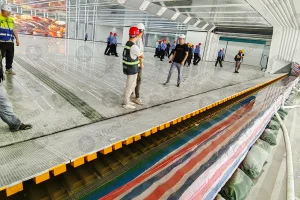
All hydrodynamic barriers undergo full assembly and factory hydro-testing in our specialized water test tank prior to dispatch. Products are packed in ISPM-15 compliant export fumigated wooden crates, fitted with corner protection shields, shock-absorption foam, and waterproof vacuum wrapping. Every shipment includes complete installation manuals, anchor bolts, spare seal kits, and certified water-testing quality documentation.
Select from our extended series of flip-up, self-closing, heavy-duty surface-mounted, and substation specialized flood protection gates.