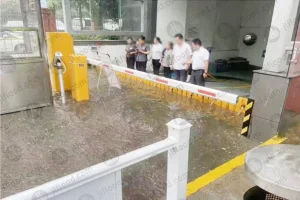
Explore our field-verified automatic flood retention systems manufactured in Nanjing, China. Built strictly according to global municipal and industrial resilience standards.
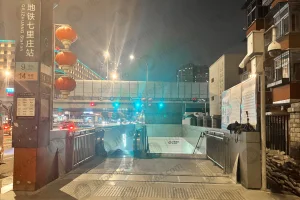
Rapid urban expansion, combined with escalating micro-climate volatility, has forced civil engineers, municipal managers, and corporate risk officers to re-evaluate traditional flood protection methodologies. Across North America, Europe, and the Asia-Pacific region, flash flooding events—characterized by high-intensity rainfall over brief durations—have exposed critical vulnerabilities in subterranean architecture, mass transit networks, and high-voltage power distribution assets.
Historically, flood mitigation relied upon manual sandbagging or active mechanical barriers that require human deployment, electric sensors, or auxiliary motor power. However, real-world disaster audits reveal a high rate of failure for active systems during severe weather events due to grid blackouts, disrupted communication channels, delayed operational crews, or mechanical motor jams caused by debris. Consequently, the global market has experienced a decisive structural shift toward hydrodynamic automatic flood barriers—passive engineering systems that utilize the physical energy of encroaching water itself to trigger, raise, and securely lock protective walls into position.
Eliminates reliance on municipal power grids or battery backup systems during catastrophic severe storms, ensuring operational integrity precisely when electrical infrastructure fails.
Fully passive hydraulic mechanism removes human error, transit delays for emergency maintenance teams, and labor safety hazards during extreme weather emergencies.
Recessed foundation housings allow seamless transit for heavy vehicles, trains, and pedestrians during normal operational conditions, preserving original architectural aesthetics.
China’s advanced industrial manufacturing ecosystem, anchored by high-precision specialized entities such as Nanjing Junli Technology Co., Ltd., has established a global benchmark in hydrodynamic barrier design and production. By synthesizing heavy metallurgical fabrication, customized EPDM polymer science, and advanced fluid dynamic modeling, Chinese manufacturing facilities now supply high-performance instant flood defense products to over 30 countries across metro rail networks, power utility grids, and commercial real estate developments.
The international flood defense hardware sector is transitioning through three critical structural shifts: from manual to passive automation, from isolated barrier components to integrated civil protection engineering, and from reactive disaster response to preventative structural resilience.
| Evaluation Parameter | Legacy Manual Barriers (Sandbags/Panels) | Motorized Active Flood Gates | Hydrodynamic Instant Flood Barriers (Junli Spec) |
|---|---|---|---|
| Deployment Latency | 1 to 4 hours (Requires labor force) | 30 to 180 seconds (Motorized activation) | Instantaneous / Passive Buoyancy Trigger |
| Power Grid Dependency | None (Pure manual labor) | High (Requires AC power or UPS batteries) | Zero Power (Pure Hydromechanical Physics) |
| Structural Integrity & Life | Low (Temporary, single-use decay) | Medium (Mechanical motor wear over time) | High (6063-T6 Aluminum / Stainless Steel, 20+ Yrs) |
| Urban Aesthetics & Footprint | Obstructive, requires external storage | Visible housing, overhead tracks | 100% Flush Ground Recessed Housing |
| Maintenance & Testing | Manual periodic drills | Complex electrical/hydraulic servicing | Minimal (Self-cleaning chamber & seal check) |
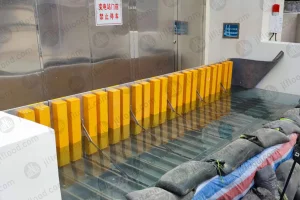
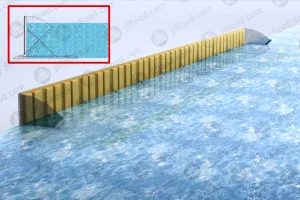
The core technological trajectory emphasizes modular hydrodynamic equilibrium. When flash flood waters overflow entry kerbs, surface runoff flows into a specialized intake drainage channel integrated into the embedded barrier frame. As water accumulates inside the underground chamber, buoyant force acts directly on the high-density internal flotation modules engineered within the structural barrier panel.
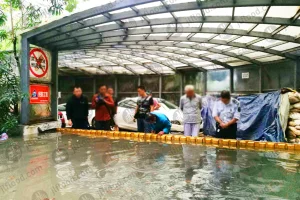
As water levels rise, hydrostatic pressure reinforces the lifting angle, pushing the panel upward until it automatically locks into a rigid 45° to 90° retaining orientation. The continuous inward hydrostatic pressure further compresses the continuous EPDM structural rubber gaskets against the perimeter frame, achieving a watertight seal without electric motors, hydraulic pumps, or human intervention.
Flood mitigation requires highly specialized physical configurations depending on the structural geometry, traffic loading, and hydraulic head of the operational site.
Power grid substations represent single-point-of-failure vulnerabilities for municipal energy infrastructure. Water ingress into transformer bays or subterranean cable trenches can trigger wide-scale grid failure. Substation barriers are engineered with high-strength dielectric insulation interfaces, surface-mounted or semi-embedded frames, and rapid manual bypass locks to ensure critical power transformers remain operational during heavy deluges.
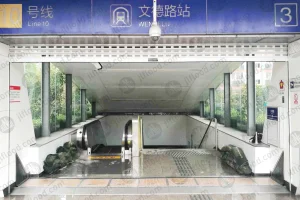
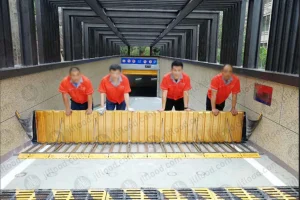
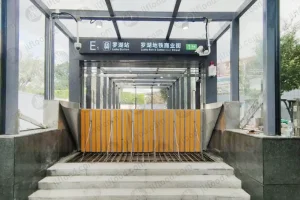
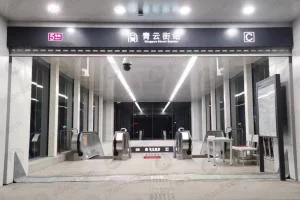
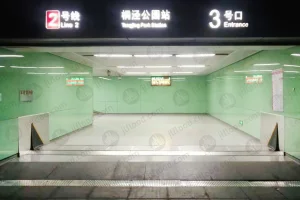
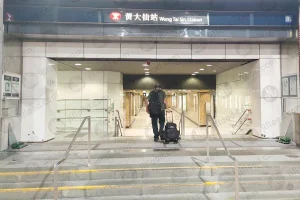
Subway station entrances, pedestrian connection channels, and ventilation shafts require robust structural protection capable of supporting heavy foot traffic and emergency service vehicles. Embedded automatic barriers sit completely flush with concourse tiling. Tested across tier-1 metro transit systems in Guangzhou, Beijing, Hong Kong, and Suzhou, these gates handle continuous axle loads up to 30 tons while remaining ready to trigger instantaneously during cloudburst events.
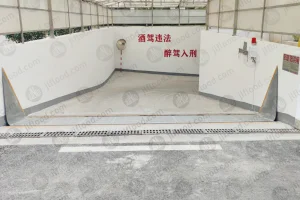
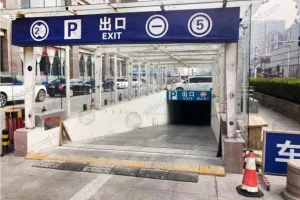
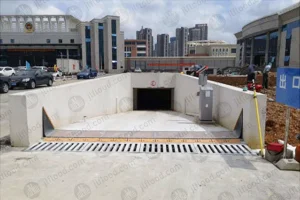
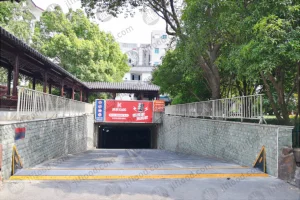
Commercial office towers, shopping centers, and high-density residential buildings utilize ramp-installed hydrodynamic flood barriers. Vehicles drive smoothly over the embedded stainless-steel top plate during daily routines. Upon water intrusion down the access slope, the barrier elevates to block water depths up to 2.0 meters, shielding subterranean mechanical rooms, server parks, and parked vehicles from costly flood damage.
As smart cities evolve, instant flood barriers are undergoing technical integration with urban IoT monitoring networks, digital twin civil software, and advanced composite materials.
While the primary deployment mechanical loop remains 100% power-free and hydrodynamic, next-generation barrier assemblies feature non-contact micro-power IoT sensors. Powered by long-life lithium-thionyl batteries or solar harvesting cells, these sensors transmit real-time panel elevation angles, water height metrics, and chamber drainage flow rates via NB-IoT or LoRaWAN protocols to municipal emergency operations centers.
Future manufacturing standardizations focus on optimizing structural strength-to-weight ratios. Moving from heavy structural steel to extruded marine-grade 6063-T6 aluminum alloys and carbon-fiber reinforced polymer matrix panels reduces the hydraulic initiation volume required for flotation. This enables rapid deployment within 0.1 seconds of water entry into the intake trough.
Addressing seal degradation caused by fine sediment, gravel, and urban road debris, upcoming materials leverage self-healing elastomeric seals and dual-lip continuous EPDM profiles. These seals automatically conform around small trapped particulates, maintaining zero leakage rates even under maximum rated hydrostatic head pressure.
Selecting a reliable Chinese instant flood barrier factory requires evaluating heavy structural manufacturing capabilities, full-scale hydraulic testing facilities, and comprehensive QA certification documentation.
At Nanjing Junli Technology Co., Ltd., located in Qinhuai District, Nanjing, engineering processes integrate four critical technological disciplines: intelligent civil defense engineering, structural bridge expansion design, intelligent flood control automation, and high-load mechanical sealing. Unlike commercial door assembly vendors, dedicated flood control manufacturers maintain in-house full-scale hydraulic testing pools.
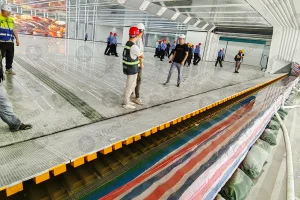
Every custom panel length is subjected to hydrostatic pressure testing in factory pools to verify zero-leakage elastomeric performance under simulated typhoon conditions.
Embedded housing frame assemblies undergo cyclic finite element analysis (FEA) testing to ensure structural integrity under heavy vehicle axle loads up to 30 tons.
Aluminum alloy components receive 25-micron anodic oxidation treatments or fluorocarbon electrostatic powder coatings, ensuring resistance to salt spray and urban chemical runoff.
Technical responses to essential questions asked by civil engineers, architects, and international procurement managers.
The barrier panel rests completely flush within a recessed foundation chamber installed across an opening. When surface floodwaters approach, runoff enters the chamber through an integrated intake grate. As water fills the sealed sub-surface basin, internal high-buoyancy modules generate hydrostatic uplift. This lifting force rotates the barrier panel upward along stainless steel pivot hinges until it locks securely into a retaining angle. Inward water pressure automatically forces perimeter EPDM seals against the side frame, creating a watertight barrier without sensors, motors, pumps, or human intervention.
Standard single-panel retaining heights range from 0.5 meters to 2.0 meters. Clear span widths for single leaf units extend up to 6.0 meters. For wider access entrances—such as multi-lane subterranean parking ramps or broad logistics park gates—multiple hydrodynamic panels are linked in series using intermediate mullion support pillars or modular hydrodynamic array connections, covering clear widths exceeding 30 meters.
For embedded installation, civil contractors construct a reinforced concrete trench according to Junli’s dimensional engineering drawings. The trench must include a dedicated bottom drainage outlet connected to the site’s storm drain network or sump pump pit to handle minor debris and cleanout water. Stainless steel embedded frames are cast into the concrete trench, after which the factory-assembled barrier modules are lowered, levelled, anchored, and sealed.
Yes. When resting in its non-deployed, horizontal position, the top cover plate of the embedded barrier is rated for heavy vehicular traffic. Heavy-duty units (such as the Hm4d-0006C series) are constructed using high-tensile structural steel or reinforced 6063-T6 aluminum alloy profiles engineered to withstand wheel loads up to 30 tons (AASHTO HS20 / Eurocode heavy traffic loading standards).
Yes. Nanjing Junli Technology maintains an in-house hydraulic test pool. Every designed panel model undergoes hydrostatic pressure testing to verify lifting responsiveness, panel deflection limits, and seal integrity under maximum rated head pressure. Third-party testing documentation, factory quality inspection certificates, and video evidence are compiled and supplied with international shipments.
Maintenance requirements are minimal due to the passive nature of the system. Routine inspection schedules involve periodic removal of leaf litter, sediment, or street debris from the bottom chamber through the removable top intake grate. Elastomeric EPDM perimeter seals should be visually inspected annually for physical wear or chemical degradation and treated with silicone lubricant to maintain elasticity over a 20-year service life.
Complete your specification requirement with our secondary range of surface-mounted, flip-up, and metro connection channel barriers.
Protecting urban infrastructure against severe climate events requires proven hardware engineering, rigorous quality assurance, and specialized design capabilities.
As a leading Chinese designer and factory manufacturer of automatic hydrodynamic flood barrier systems, Nanjing Junli Technology Co., Ltd. provides comprehensive technical support for international engineering projects—including CAD embedment drawings, structural load calculations, custom profile fabrication, and remote installation guidance. By eliminating electrical reliance and human operational dependency, Junli flood barriers deliver reliable 24/7 disaster protection for public metro lines, power utility substations, commercial facilities, and municipal basements worldwide.