
Explore specialized automatic flood barrier systems field-tested across mega-infrastructure, metro networks, and power substations.
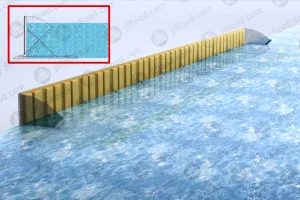
Automatic flood barrier, Surface installation metro type: Hm4d-0006E
Explore Specification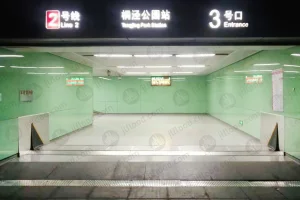
Flood Barrier at Metro Connection Channel Solutions
Explore Specification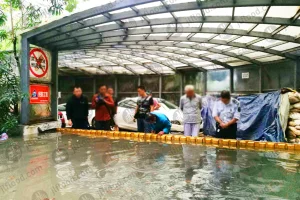
Modular Hydrodynamic Automatic Flood Gate System
Explore Specification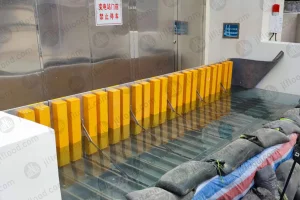
Heavy-Duty Flood Barrier at Substation Gateway
Explore Specification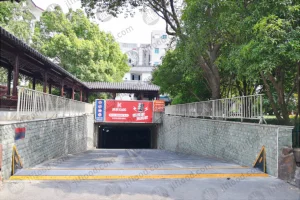
Wholesale Flip-up Flood Barrier for Commercial Garages
Explore Specification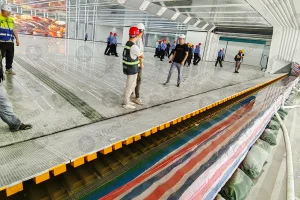
China Self Opening & Closing Hydrodynamic Flood Gate
Explore Specification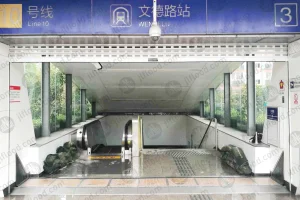
Surface Type Automatic Flood Barrier for Metro Entrances
Explore Specification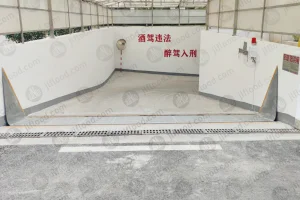
China Embedded Flood Barrier Gateway: Hm4e-006C
Explore SpecificationIn an era defined by accelerating climate volatility, extreme precipitation events, and urban flash floods, traditional manual flood gates and powered barrier systems are rapidly approaching technical obsolescence. Modern smart cities and civil infrastructure planners face an undeniable operational vulnerability: severe urban storms frequently cause localized power grid failures, rendering electromechanical doors useless right at the crucial moment floodwaters inundate ground-level access points.
China self closing flood barrier gate manufacturers and factories have led a technological revolution by developing hydrodynamic auto-rising flood barrier systems. These systems rely entirely on fundamental physics—hydrostatic pressure and Archimedes’ buoyancy principle—eliminating any reliance on human intervention, electrical wiring, sensors, or auxiliary backup generators.
Information Gain Summary: Unlike traditional mechanical gates requiring up to 30 minutes of manual setup or active motor drive power, modern Chinese self-closing flood gates deploy automatically within seconds of water accumulation. When dry, they rest completely flush with the roadway, accommodating heavy vehicular traffic without restricting pedestrian or logistics movement.
Global regulatory frameworks—such as the EU Floods Directive, US FEMA floodproofing design guidelines, and Asia-Pacific Sponge City urban initiatives—are enforcing strict resilience standards on underground assets. Procurement teams now require zero-failure resilience for metro stations, subterranean parking garages, electrical distribution substations, and logistics hubs.
Conventional powered gates demand perpetual maintenance budgets for motor servicing, wiring checks, sensor calibration, battery unit replacements, and manual drills. Self-closing hydrodynamic flood gates feature zero standby energy draw and minimal maintenance overhead, offering a vastly superior TCO over a 20-year service lifecycle.
An in-depth look at the fluid dynamics, mechanical linkages, and structural materials engineered into Chinese-manufactured automatic flood barriers.
As surface runoff flows into the flush-mounted stainless steel foundation trench, water fills the internal float chamber. Engineered high-density hydrophobic aluminum-alloy door panels immediately experience buoyant force, initiating auto-elevation without sensors or electricity.
As the floodwater depth escalates, incoming water exerts increasing hydrostatic head pressure against the leaf panel face. This force drives the barrier panel forward against dual-lip EPDM structural seal gaskets, forming a watertight barrier that scales resistance with water level.
Once peak surge subsides and external water levels drop, internal drainage check-valves evacuate water from the trench basin. The barrier panel safely lowers back into its subterranean protective recess, returning the roadway to normal traffic flow.
| Performance Parameter | Surface-Mounted System (e.g., Hm4d Series) | Embedded Foundation System (e.g., Hm4e Series) |
|---|---|---|
| Retaining Height Range | 300 mm – 1000 mm (Customizable) | 500 mm – 2000 mm (Multi-leaf modular) |
| Structural Load Rating | 15 Ton Axle Load (Pedestrian & Cars) | 60+ Ton Heavy Truck / Aircraft Towed Load |
| Primary Construction Material | Extruded Marine-Grade T6063 Aluminum Alloy | 304/316 Stainless Steel Frame + Aluminum Core |
| Sealing Gasket Compound | Dual-Compound UV/Oil-Resistant EPDM | Industrial Vulcanized EPDM + Silicone Core |
| Leakage Rate Standard | < 0.15 L/hr per meter frame perimeter | < 0.05 L/hr per meter (Exceeds ASTM F3057) |
| Civil Installation Depth | Zero excavation (Surface anchored 60-90mm) | 300 mm – 600 mm Recessed Concrete Pit |
Sourcing automatic flood protection systems from top-tier Chinese manufacturers requires evaluating technical certification, modular scalability, and long-term supply chain reliability.
Subway portals, underground ramp entrances, and logistics loading bays vary widely in architectural span—from standard 3-meter garage driveways to 30-meter wide plaza conduits. B2B buyers mandate modular designs where independent flood gate modules can be joined seamlessly using interconnecting structural mullions without compromising water sealing integrity.
Real-world floods carry mud, urban trash, leaves, and sediment. Top Chinese factories integrate self-flushing bottom channels, silt clearance cleanouts, and anti-jamming stainless steel pivot hinges. This design ensures that solid debris cannot block the leaf panel during auto-elevation or return cycles.
For ramp installations, the flush top-plate of the flood barrier must withstand continuous vehicular traffic, including heavy municipal emergency vehicles, delivery trucks, and buses. Precision T6-treated extruded aluminum alloys and internal gusset ribbing prevent structural deformation across decades of daily operation.
While the mechanical barrier operates 100% passively, smart facility managers demand digital connectivity. Advanced configurations incorporate non-powered micro-switches connected to building management systems (BMS), triggering visual strobe lights, audible alarms, and remote SCADA alerts as the barrier activates.
Configured flood defense architectures adapted to mission-critical infrastructure applications worldwide.
Protecting underground pedestrian entrances, ventilation shafts, and connection channels. Embedded shallow-trench models integrate smoothly with subway granite finishes while preventing flash flood surges from entering rail networks.
Protecting transformer vaults, switchgear rooms, and cable trenches. Substation gates feature high dielectric isolation, perimeter flood sealing, and heavy corrosion resistance against chemical runoff and environmental aging.
Preventing vehicle asset destruction in shopping malls, residential towers, and corporate headquarters. Surface-installation models allow easy retrofitting without disturbing existing underground utility lines.
Ensuring smooth tender approvals and structural compliance for international civil engineering contracts.
Every design layout undergoes finite element analysis (FEA) testing and 100% full-scale water tank hydrostatic seal testing before export release.
Manufacturing lines strictly adhere to ISO 9001 quality, ISO 14001 environmental management, and CE structural safety certification for European and American import standards.
Engineering teams provide parametric BIM/Revit models and detailed CAD cross-sections to civil consultants for tender specification integration.
Providing detailed English civil installation manuals, embedded anchor templates, maintenance video guides, and international engineer site dispatch.
Where China's hydrodynamic flood barrier technology is heading over the next decade.
Next-generation automatic flood gates are adopting ultra-lightweight carbon fiber and reinforced composite alloys. This reduces total barrier inertia, allowing deployment activation times under 0.05 seconds while significantly boosting resistance to coastal salt-spray corrosion.
Future iterations combine zero-power mechanical reliability with low-power NB-IoT and LoRaWAN sensor networks. Real-time telemetry tracks barrier deployment status, water level growth curves, and silt accumulation metrics directly into municipal smart city dashboards.
With extreme global weather anomalies, seal formulations are evolving to operate reliably under extreme temperature ranges—from freezing arctic environments (-40°C with automated heating elements) to severe desert heat conditions (+80°C anti-UV degrading elastomeric compounds).
Advancements in surface coating allow barrier top plates to match surrounding stone pavers, architectural granite, or decorative stamped concrete. This ensures historic urban sites maintain their aesthetic beauty while benefiting from flood protection.
Select specialized equipment designed for subways, municipal gates, cable tunnels, and underground parking structures.
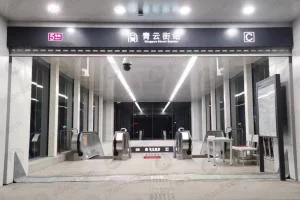
Wholesale Flood Gate for Metro Station Access Points
Explore Specification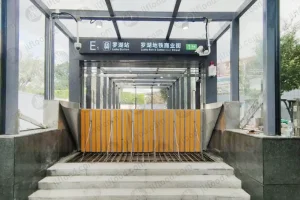
Wholesale Heavy-Duty Flood Barrier at Metro Stations
Explore Specification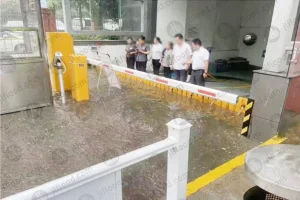
Automatic Flood Defence System for Urban Protection
Explore Specification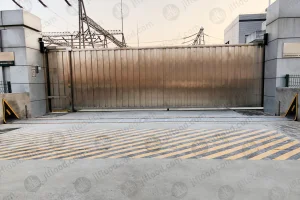
Automatic Flood Barrier at Electrical Substation Gate
Explore Specification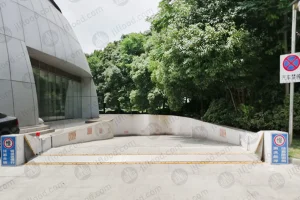
Embedded Installation Automatic Hydrodynamic Barrier
Explore Specification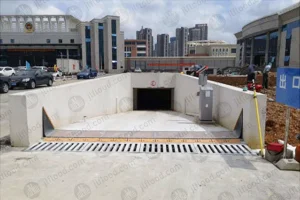
Wholesale Self Closing Flood Barrier: Hm4d-0006D Series
Explore Specification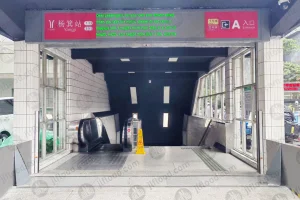
Flood Barrier Case Study: Guangzhou Metro Yangji Station
Explore Specification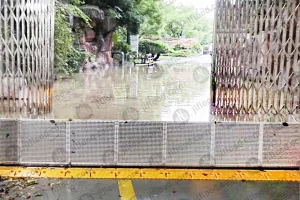
China Automatic Flood Barrier Without Electric Power
Explore SpecificationClear answers to complex technical questions concerning purchasing, installing, and maintaining self-closing flood gates.
The system uses buoyancy and hydrostatic pressure. The flood barrier rests flush inside a foundation pit embedded in the roadway. When flooding occurs, water flows into the chamber, causing internal buoyant floats to rise. As water levels escalate, the hydrostatic head pressure pushes the barrier leaf firmly against EPDM structural seals. This locks the gate in place and blocks incoming water—all without sensors, pumps, or grid power.
Standard surface-mounted models (such as Hm4d) support up to 15-ton axle loads, ideal for passenger vehicles and light delivery vans. Heavy-duty embedded models (such as Hm4e) feature internal structural rib reinforcement engineered to withstand 60+ ton heavy vehicular traffic, including fire engines, fully loaded freight trucks, and public transit buses.
Surface-mounted automatic barriers require minimal civil intervention: the roadway surface needs to be flat, level, and anchored via expansion bolts into sound concrete (typically completed within 4–8 hours). Embedded flood gate models require excavating a 300mm–600mm deep trench to house the stainless steel foundation frame, linked into the site’s drainage infrastructure.
Leading Chinese manufacturers design foundation pits with sloping drainage channels, sediment filtration grates, and bottom cleanout access points. Routine maintenance involves an annual inspection and flushing out accumulated leaves or silt using a standard water hose.
Yes. Even though mechanical deployment relies entirely on hydrodynamic forces, non-powered limit switches and wireless IoT modules can be integrated. When the gate begins auto-rising, signal signals trigger local audio-visual strobe sirens and broadcast status alerts to central SCADA or BMS management consoles.


