
Engineered for instant deployment during extreme weather events without electrical power or human intervention.
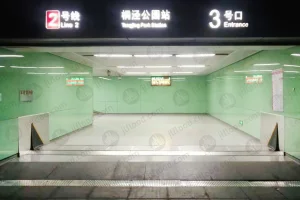
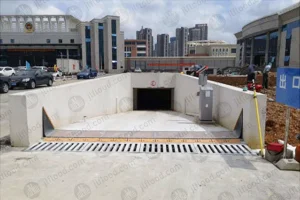
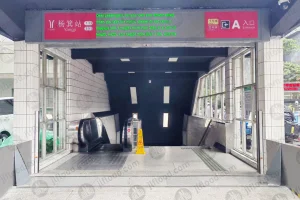
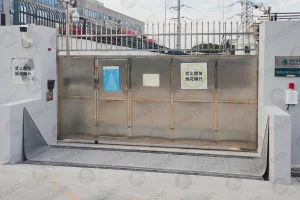
Operational data compiled from over 500+ municipal and industrial installations worldwide.
Hydrodynamic Activation Response
Zero-Power Passive Operation
Maximum Drive-Over Load Rating
Global Metro & Infrastructure Lines
Analyzing modern urban hydrological challenges and the shift toward autonomous civil defense systems.
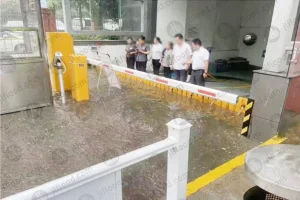
Rapid urbanization, paired with microclimate volatility and intense precipitation events, has fundamentally altered the flood risk landscape for modern municipal, commercial, and industrial built environments. Traditional manual flood barriers—such as floodgate stop logs, sandbags, and motor-driven flood gates—suffer from systemic vulnerabilities: dependence on human intervention, vulnerability to power outages during severe storms, and slow deployment times. When flash flooding impacts underground infrastructure, response windows are often measured in minutes, not hours.
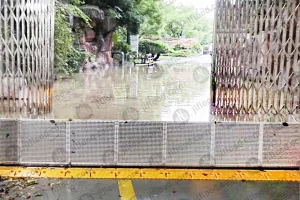
As a leading Chinese designer and manufacturer of self-closing flood doors for buildings, Nanjing Junli Technology Co., Ltd. has engineered next-generation hydrodynamic automatic passive flood barriers. Operating strictly on hydrostatic pressure and hydrodynamic buoyancy principles, these passive barriers require zero electricity, zero sensor arrays, and zero human supervision. When surface runoff exceeds kerb thresholds, water enters a subsurface retention basin, naturally raising the door panel into a locked, watertight retaining vertical barrier.
This technical whitepaper examines the global procurement demand, material science standards, fluid-structural engineering considerations, and manufacturing cost efficiencies of sourcing self-closing flood doors directly from specialized Chinese suppliers and factories.
Operates autonomously under blackout conditions. Fluid pressure drives mechanism engagement, eliminating electrical component failure risks.
Reinforced structural aluminum (6063-T6) and stainless steel frames validated to sustain hydraulic pressure up to 2.0 meters of water head.
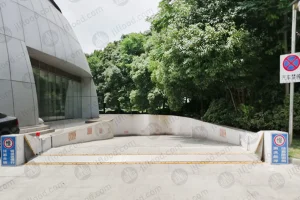
Installed level with existing roadways and thresholds. Heavy vehicle traffic drives smoothly over recessed stainless top plates daily.
Understanding the exact water-buoyancy feedback loop governing automatic deployment.
The core operating mechanism of a self-closing flood door for buildings centers on hydro-buoyancy dynamics. The system consists of three main sub-assemblies: the embedded concrete foundation basin, the structural retaining panel, and the multi-lip elastomeric gasket perimeter seal.
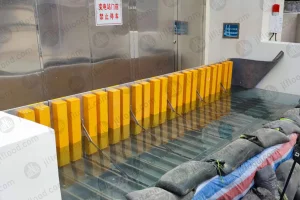
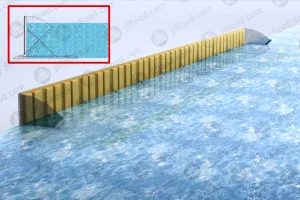
Under non-flood conditions, the flood door sits flat inside a shallow ground-recessed trench, protected by high-strength top cover plates capable of supporting heavy vehicular traffic (up to HS-20/AASHTO standard vehicle loading). When floodwaters breach the entry threshold, water flows into the chamber through targeted inlet grilles. As water level inside the chamber rises, Archimedes' principle triggers upward thrust on the integrated high-density buoyancy tanks built inside the door panel.
As the door panel rotates upward along a stainless steel continuous hinge axis, the center of gravity shifts. Upon reaching its fully deployed angle (typically 75° to 90° relative to horizontal), incoming hydrostatic water pressure acts against the front face of the door, forcing it firmly against structural frame stops. The greater the external water height, the tighter the compression against the self-energized EPDM rubber seal.
Once storm runoff subsides and external water levels drop, water contained within the basin drains passively via built-in check valves or dedicated sump lines. The door panel slowly returns to its recessed resting position automatically, restoring unhindered pedestrian or vehicular access across the threshold.
Standardized specifications engineered for extreme structural durability and 20+ year lifespan.
| Engineering Parameter | Standard Specification | High-Load / Custom Variant |
|---|---|---|
| Primary Panel Material | Aviation Grade 6063-T6 Aluminum Extrusion | AISI 304 / 316L Stainless Steel Structural Plate |
| Frame & Basin Base | Hot-Dip Galvanized Structural Steel (Q235B / Q355B) | Full 316 Stainless Steel Enclosure (Marine/Corrosive) |
| Gasket & Sealing System | Multi-Lip High Elasticity EPDM Elastomer | Fluororubber (FKM) for Chemical/Industrial Plants |
| Standard Retaining Heights | 0.5m, 0.8m, 1.0m, 1.2m, 1.5m, 2.0m | Custom Height Up to 3.0m per Engineering Specs |
| Single Leaf Span Width | 1.0m to 6.0m Single Span | Modular Multi-Array (Unlimited Width with Intermediate Pillars) |
| Response Time | < 15 Seconds (Hydrodynamic Trigger) | Custom Tailored Orifice Flow Control Rate |
| Load Capacity (Recessed) | 15–30 Ton Truck Axle Weight | 60 Ton Heavy Heavy Equipment / Airport Apron Load |
| Operating Temperature | -40°C to +80°C | Integrated Heating Elements for Sub-Zero Freeze Protection |
Why Tier-1 global EPC contractors and developers source flood doors directly from China suppliers.
China's rapid infrastructure growth over the past two decades—spanning high-speed rail, urban mass transit metro systems, and massive urban underground civil defense projects—has fostered an unparalleled industrial manufacturing ecosystem for specialized flood control hardware.
As an established factory direct supplier based in Nanjing, China, Nanjing Junli Technology Co., Ltd. offers global buyers distinct technical and commercial advantages:
Direct sourcing of aluminum billet extrusions, stainless steel laser cutting, precision CNC machining, and rubber vulcanization within a 50km manufacturing radius minimizes procurement lead times.
Every single flood door production run undergoes hydrostatic sealing and structural load testing in our dedicated factory water testing basin prior to export shipment.
Complete flexibility in custom structural calculations, CAD/BIM drawing generations, embedded frame templates, and tailored structural anchoring systems for overseas civil works.
Optimized flood mitigation solutions designed for high-risk critical infrastructure.
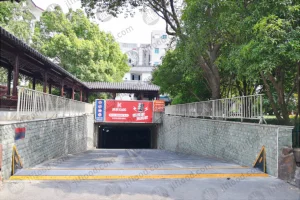
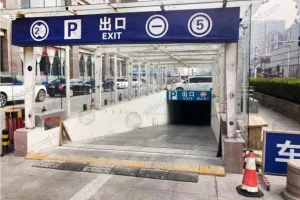
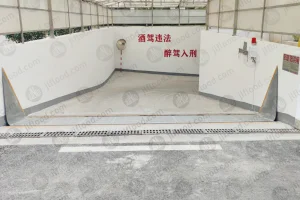
Flush floor installation at subterranean parking ramps prevents sudden storm runoff inundation while allowing smooth daily entry for passenger cars and heavy delivery trucks.
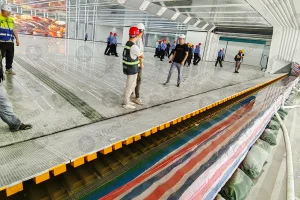
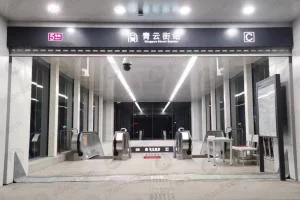
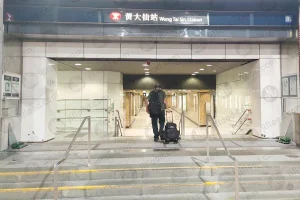
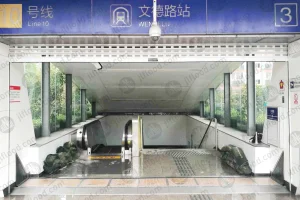
Station entrances, connection channels, and emergency ventilation shafts are shielded by heavy-duty self-closing flood gates tested across major urban transit lines.
Protect vital electrical transformers, cable trenches, and server rooms from catastrophic water damage that causes widespread grid failure and data loss.
Comprehensive answers regarding design parameters, civil engineering installation, and quality assurance.
The door relies exclusively on passive hydrodynamic buoyancy and hydrostatic pressure. When floodwaters enter the embedded foundation basin, buoyancy tanks attached to the panel rise naturally. The water pressure itself locks the door against the continuous frame seals. No electricity, hydraulic pumps, batteries, or electronic sensors are involved, guaranteeing 100% operation during severe blackout conditions.
For embedded self-closing flood barriers, a recessed concrete pit must be prepared at the threshold according to our engineered civil drawings. The pit must feature adequate reinforcement rebar layout, level base concrete, and connection points to a gravity drain or sump drainage pump to allow post-flood recession. We provide precise embedded frame templates and anchor bolt layouts to contractors before delivery.
Yes. Standard commercial models are load-rated for 15 to 30-ton axle weights. For industrial logistics parks, fire stations, or airport service roads, we manufacture heavy-duty reinforced stainless steel variants capable of supporting single axle loads exceeding 60 tons (AASHTO HS-20 / Eurocode load standards).
The bottom frame includes removable stainless steel top mesh grilles that prevent large leaves, gravel, and rubbish from clogging the interior. Routine maintenance involves a simple bi-annual inspection to vacuum small sediment accumulation and flush the basin with a standard water hose.
Our multi-lip structural seals are manufactured from UV-stabilized, ozone-resistant EPDM elastomer designed for an operational lifespan of 15 to 20 years. Gaskets are mechanically clamped into engineered retainers rather than glued, allowing fast, low-cost replacement on site if mechanically damaged.
Explore our complete engineering portfolio for substations, subway lines, and building entrances.
Send us your project width, clear opening height, and site flood mitigation specs. Our engineering team provides complete technical proposals within 24 hours.


