Engineered for immediate passive activation during extreme rainstorms. Explore key models manufactured by China's leading flood control engineering specialist.

In an era marked by accelerating climate volatility, extreme atmospheric rivers, and urban flash flooding, municipal infrastructure planners and commercial property managers face unprecedented risk. Traditional flood defenses—such as manual aluminum stop logs, sandbags, and electrically powered motorized flood gates—have proven increasingly vulnerable during severe storm events. Manual barriers demand rapid human deployment during unpredictable midnight downpours, while motorized gates frequently fail due to storm-induced power outages or sensor submerged short-circuits precisely when water retention is required.
This critical operational vulnerability has driven a global paradigm shift toward passive, self-closing flood gate systems (hydrodynamic automatic flood barriers). These advanced passive defense systems leverage pure fluid dynamics, buoyancy principle, and hydrostatic weight differential to automatically deploy without requiring external electrical power, human supervision, or digital sensor triggers. As leading urban centers across North America, Europe, Asia-Pacific, and the Middle East rewrite their resilience standards, sourcing from established China self closing flood gate manufacturers has become the primary strategy for obtaining enterprise-grade infrastructure protection with validated E-E-A-T credentials and cost-efficient scalable delivery.
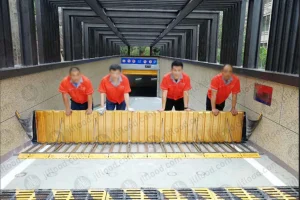
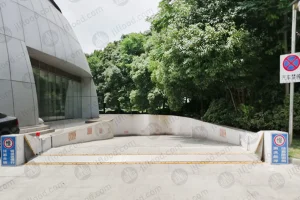
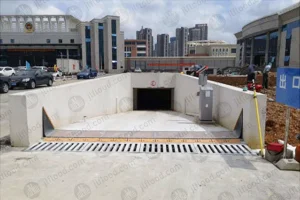
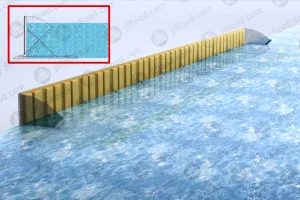
A hydrodynamic self-closing flood barrier operates on a closed-loop mechanical buoyancy principle. Embedded flush within the entrance roadway or threshold, the barrier panel rests completely flat inside a recessed steel foundation chamber during dry conditions. Vehicles and pedestrians pass over the heavy-duty top cover with zero disruption to regular operational flow.
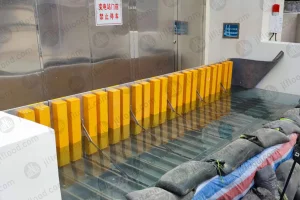
When heavy rainfall generates rising surface runoff, the floodwater naturally drains into the embedded foundation basin via specialized inflow grates. As water accumulates inside the chamber, the Archimedean buoyant force acts upon the high-density hollow structural gate panel. Hydrostatic pressure simultaneously pushes against the lower hinge axis, raising the barrier smoothly from 0 to 90 degrees. Once fully deployed, the water pressure locks the barrier's multi-lip EPDM seal array against the structural frame, creating an impenetrable water-retaining wall that automatically scales its sealing pressure with increasing flood depth.
| Technology Parameter | Hydrodynamic Self-Closing Barrier (Junli) | Manual Aluminum Stop-Logs | Motorized Electric Flood Gate |
|---|---|---|---|
| Power Supply Requirement | Zero (100% Mechanical Hydrodynamic) | None | High (AC 380V/220V + Backup UPS) |
| Human Deployment Need | Zero (Fully Autonomous Passive Activation) | High (Requires 2-4 Trained Workers) | Low (Remote / Button Control) |
| Blackout Reliability | 100% Operational Immunity | N/A | High Failure Risk if UPS Fails |
| Trigger Reaction Time | 0.1s Water Inflow Initiation | 30 to 120 Minutes Manual Setup | 5 to 15 Seconds Motor Run |
| Axle Load Capacity | Heavy-Duty (Up to 60T Vehicles) | Pedestrian / Light Vehicle Only | Medium to Heavy |
| Lifespan & Maintenance | 20+ Years / Minimal Mechanical Wear | High Seal Degradation in Storage | High Motor/Sensor Maintenance |
As the world's primary industrial manufacturing hub, China has developed unmatched engineering depth and supply chain integration within structural flood defense systems. Leading China self closing flood gate manufacturers deliver high-precision structural integrity, superior metallurgy, and cost advantages that non-integrated overseas suppliers cannot duplicate.
At the apex of this engineering ecosystem is Nanjing Junli Technology Co., Ltd. Located in Qinhuai District, Nanjing, Jiangsu Province, Junli Technology operates as a premier high-tech enterprise integrating research and development, structural modeling, prototype hydrostatic testing, precision robot welding, and international procurement support. Unlike specialized commercial trading companies, Junli maintains total ownership of tooling, extrusion dies, vulcanization equipment, and dynamic testing basins.
Every standard and customized flood gate model undergoes full-scale hydraulic testing in Junli's specialized water pool. We record kinetic rising velocity, boundary seal pressure retention, dynamic buoyancy torque, and deflection behavior under maximum hydrostatic head before issuing factory clearance certification.
Constructed utilizing structural stainless steel frame units (SUS304 / SUS316) combined with high-grade marine anodized aviation aluminum alloy panels (6063-T6). Seal systems incorporate specialized multi-lip EPDM compound formulated to resist UV exposure, road salts, hydrocarbon oil spills, and extreme temperature fluctuations from -40°C to +90°C.
Junli engineers across four interdisciplinary technological domains: Intelligent Civil Defense, Intelligent Flood Control, Intelligent Bridge Infrastructure, and Intelligent Energy Security. This systemic cross-industry experience guarantees seamless civil engineering integration for complex infrastructural junctions.
The versatility of self-closing flood barrier technology enables complete structural protection across diverse urban engineering layouts. Entrance geometry, surface runoff hydraulic velocity, traffic load ratings, and subterranean depth require targeted engineering configurations:
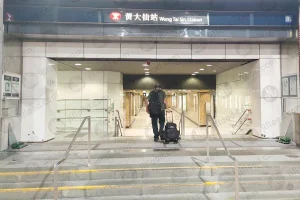
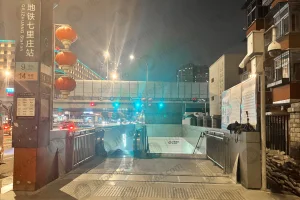
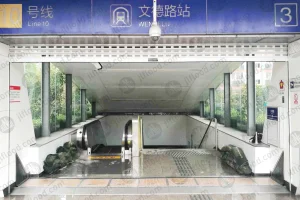
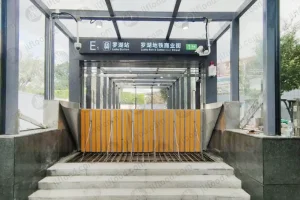
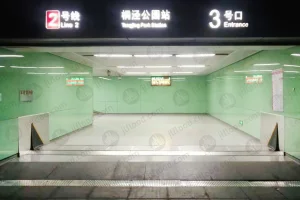
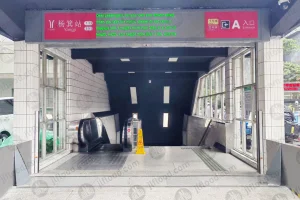
Underground subway networks represent high-risk urban assets where water ingress leads to catastrophic loss of life and equipment damage. Junli hydrodynamic flood barriers are installed at station passenger access portals, subway line connection channels, vent shafts, and auxiliary emergency escape tunnels. Deployed across major rail lines in Guangzhou Metro (Yangji Station), Suzhou Metro, Beijing Metro, Dalian Metro, Shenzhen Metro, and Hong Kong MTR networks, these barriers guarantee zero-latency activation even during sudden typhoon storm surges.
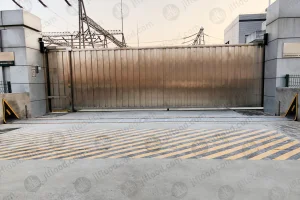
Electrical power substations and distribution centers demand zero tolerance for water infiltration. A single flooded transformer pit or cable trench can disable power grids across an entire municipality. Standard surface-mounted and embedded self-closing flood gates protect substation perimeter driveway gates, high-voltage equipment vault doorways, and subterranean cable duct conduits against flash inundation.
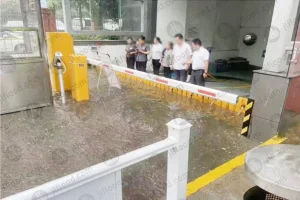
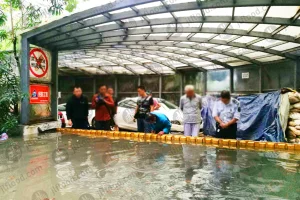
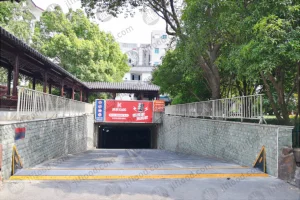
Multi-level basement parking ramps act as natural funnels for surface water runoff during heavy rainfall events. Installing Junli flush-embedded hydrodynamic flood gates at ramp crests or base thresholds provides continuous, maintenance-free security for luxury commercial developments, shopping centers (e.g., Wanda Plaza projects in Hefei and Shanxi), hospital emergency driveways, and high-density residential towers.
Public civil defense shelters, high-speed railway station concourses (such as Guilin South Railway Station), and airport landside infrastructure (such as Guangzhou Baiyun International Airport) require modular multi-leaf barrier arrays capable of spanning wide openings exceeding 30 meters without intermediate columns obstructing traffic.
When engineering consultants, EPC contractors, and global procurement directors evaluate self-closing flood gate manufacturers, adherence to international quality benchmarks is essential. Standard procurement tender specifications should audit the following critical criteria:
Verify manufacturer finite element structural calculations (FEA) for dynamic hydraulic impact, wave loads, static hydrostatic head pressure up to 2.0m retaining heights, and structural bending strain margins.
Ensure the civil embedded frame design incorporates self-cleaning debris slopes, integrated silt sedimentation traps, and high-capacity gravity drainage outlets to prevent silt accumulation from inhibiting panel movement.
Confirm vehicular drive-over load ratings match site conditions. Standard options range from EN124 Class C250 (25-ton municipal car park traffic) to Class F900 (90-ton heavy industrial loading for fire trucks and freight loading bays).
The next generation of self-closing flood barrier systems seamlessly bridges passive mechanical physics with smart city IoT infrastructure. While the lifting action remains 100% mechanical and water-driven, integrated wireless micro-switches and LoRaWAN/5G telemetry modules transmit real-time gate deployment status alerts to central municipal command software, building automation systems (BAS), and mobile security teams instantly when water arrives.
Detailed answers to common engineering, civil works, maintenance, and purchasing inquiries from international specifiers.
Review our full engineering portfolio of heavy-duty automatic flood gates, modular hydrodynamic barriers, and specialized surface-mounted units.