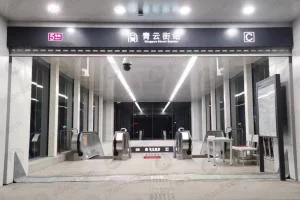
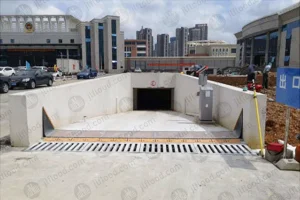
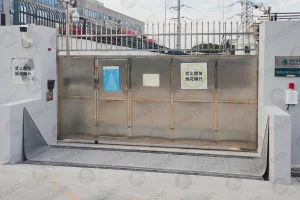
Engineered to deliver zero-power automatic response, structural resilience under hydrodynamic pressure, and absolute watertight sealing for substations, metros, and basement environments.
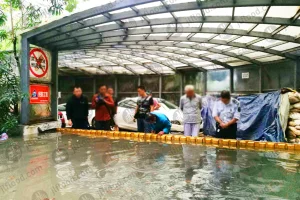
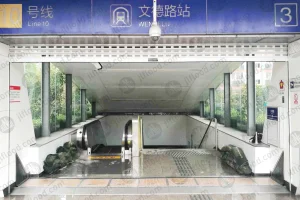
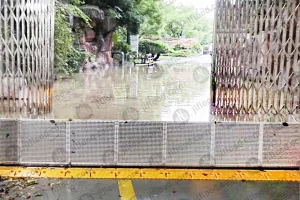
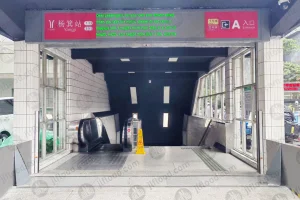
Electric power substations—encompassing step-up transformation facilities, regional distribution hubs, and high-voltage Gas-Insulated Switchgear (GIS) halls—represent critical civil infrastructure. In an era characterized by intensifying climate volatility, unprecedented cloudburst events, and urban heat-island-induced flash flooding, substations are acutely exposed to water ingress risks. A single flooding breach into a 110kV, 220kV, or 500kV substation can trigger catastrophic electrical short circuits, transformer explosions, thermal runaway, and localized grid blackouts costing millions of dollars per hour in industrial downtime.
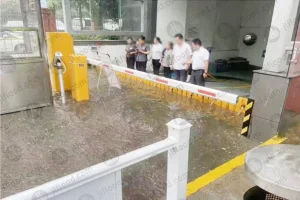
Traditional flood mitigation protocols, such as manual deployment of sandbags, modular stoplogs, or electrically driven flood gates, have demonstrated structural vulnerabilities during extreme weather events. Power grid failures frequently accompany municipal storms, rendering electrically dependent gates useless precisely when needed. Consequently, international power grid operators (including State Grid Corporation of China, China Southern Power Grid, and global utility majors) are rapidly mandating the procurement of Solid Flood Door Devices for Substations—specifically hydrodynamic, power-free, auto-rising mechanisms engineered for 20+ year operating lifespans.
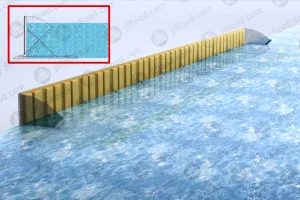
The core innovation behind modern solid flood door devices manufactured in China lies in the application of hydrodynamic buoyancy forces coupled with hydrostatic lever mechanics. Unlike conventional motor-driven roll-up doors or manual panel insertion systems, passive hydrodynamic flood gates require no human activation, sensor signals, or external electricity.
When surface floodwaters approach a substation entrance, water drains into a subterranean structural basin beneath the door assembly. The integrated hollow panel—constructed from high-strength 6063-T6 architectural aluminum or 304/316 stainless steel—displaces water, generating instant upward buoyancy force that tilts the panel upward around its pivot axis.
As the water level continues to rise outside the substation, the hydrostatic pressure pushing against the vertical surface of the barrier panel increases proportionally. This force compresses specialized dual-lip EPDM (Ethylene Propylene Diene Monomer) vulcanized rubber gaskets against the heavy-duty side frames, achieving near-zero leakage (<0.05 L/hr per meter of joint).
Once the external floodwaters recede and the basin drains via municipal storm networks or integrated gravity outlets, the weight of the solid gate panel smoothly returns it to its horizontal recessed position flush with the vehicle transit surface, restoring unrestricted vehicular access.
| Performance Parameter | Standard Heavy-Duty Substation Specification | Subterranean Metro & Cable Trench Spec |
|---|---|---|
| Structural Material | T6 Temp 6063 Aluminum Alloy / Stainless Steel 304 | Stainless Steel 316L / Reinforced Composite Armor |
| Standard Water Protection Height | 500mm to 2000mm (Customizable per hydrological study) | 600mm to 3000mm High-Head Pressure Gates |
| Axle Load Bearing Capability | 30 Tons to 60 Tons (Heavy equipment transport capable) | 40 Tons (ISO container loader & transformer trucks) |
| Response Mechanism | Hydrodynamic Passive Buoyancy (Zero Electric Power) | Dual Hydrodynamic + Hydraulic Servo Fail-Safe |
| Sealing Gasket Compound | Vulcanized EPDM Weather & UV Resistant Seal | Fluororubber Oil-Resistant & Flame-Retardant EPDM |
| Infiltration Rate Standard | GB/T 33749-2017 Class 4 Waterproof Compliance | Zero Visible Seepage under 1.5x Design Head |
Substation facilities require layered flood containment strategies. A failure at any perimeter point can lead to widespread grid cascading outages. Junli Technology provides comprehensive engineering matrix solutions across four critical zones:
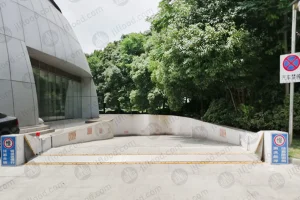
Wide-span vehicular driveways leading into outdoor substation compounds require heavy-duty surface-mounted or embedded hydrodynamic barriers. These systems sit flush with the driveway, allowing daily passage of heavy transformer maintenance trucks up to 60 tons, while providing immediate perimeter defense during torrential downpours.
Substation cable trenches act as dangerous conduits for floodwaters, transmitting incoming runoff directly into high-voltage switchgear rooms. Solid mechanical cable trench flood seals and automatic flip-up barriers prevent water migration across compartment walls without impeding routine cable inspection.
Gas-Insulated Switchgear (GIS) buildings housed in semi-basement structures demand secondary safety doors. Light-type auto-rising barriers and stainless steel solid flood doors located at pedestrian access points prevent water accumulation from reaching critical SCADA control panels.
Urban compact substations frequently store transformers below ground. Custom hydrodynamic flood barrier doors integrated into air ventilation shafts and access ramps provide continuous passive water-retaining resilience even during total substation auxiliary power loss.
Substation flood defense requirements vary dramatically across global climate zones. Manufacturers in China have spearheaded modular, highly adaptable engineering designs capable of enduring extreme local environments:
Characterized by sudden cloudbursts exceeding 100mm/hr and severe storm surges. Installed barriers feature anti-silt flushing channels to prevent debris and sand from clogging the buoyancy chamber during extreme typhoon events such as Typhoon Bebinca and Haikui.
Substations in colder regions require freeze-resistant rubber profiles and optional low-wattage self-regulating heating elements embedded within the foundation frame to prevent ice formation inside the drainage pan during winter melt-freeze cycles.
Salt-spray corrosion severely degrades standard carbon steel doors. Substation devices tailored for coastal environments employ marine-grade anodized 6063-T6 aluminum alloys and SUS316 stainless steel hardware, tested to 1,500 hours of continuous salt spray exposure without surface degradation.
As power utilities transition toward fully unmanned, autonomous smart substations, flood defense hardware is evolving from standalone mechanical structures into intelligent, IoT-connected network assets.
Integration of non-contact millimeter-wave radar sensors and magnetic proximity switches into passive flood doors. Real-time gate elevation status, water ingress levels, and structural displacement data are transmitted directly to central substation SCADA dashboards.
Development of micro-encapsulated hydrophobic polymer seals that automatically swell upon water contact to seal micro-cracks or trapped sediment, maintaining high water-tightness even if the primary seal is damaged by physical debris.
Linking substation flood gates with localized meteorological radar feeds. AI algorithms predict flash flood arrivals and pre-arm electro-hydraulic auxiliary locks ahead of water arrival, ensuring maximum structural rigidity against high-velocity kinetic wave impacts.
When evaluating suppliers and requesting quotes for solid flood door devices, engineering buyers must account for specific structural parameters. Pricing from Chinese original equipment manufacturers (OEMs) typically ranges between $350 USD and $1,200 USD per linear meter depending on technical specifications:
| Flood Door Model Type | Protection Height Range | Material Construction | Estimated OEM Price Range (USD/Meter) | Best Application Suitability |
|---|---|---|---|---|
| Light Flip-Up Door (Manual/Spring Assisted) | 300mm - 600mm | Aluminum 6063-T6 | $280 - $450 / m | Pedestrian doorways, electrical equipment control rooms |
| Hydrodynamic Auto-Rising Flood Gate (Surface Mount) | 500mm - 1200mm | Heavy Alloy + EPDM Seals | $500 - $850 / m | Substation driveway retrofits, metro entrance ramps |
| Hydrodynamic Auto-Rising Gate (Embedded Foundation) | 600mm - 2000mm | Structural Aluminum / Stainless Frame | $750 - $1,400 / m | New build substations, heavy vehicle access points |
| Heavy-Duty Mechanical Solid Gate (High Head Water Pressure) | 1500mm - 3500mm | 316 Stainless Steel Reinforced Plate | $1,200 - $2,800 / m | Underground cable vaults, riverfront utility facilities |
Explore Junli Technology's field-proven range of automatic flood barriers, embedded frames, and specialized equipment room gates.
Authoritative answers to critical engineering, installation, and maintenance questions raised by electrical consultants, EPC contractors, and procurement officers.