Deploying field-proven hydro-mechanics to isolate civil infrastructure against catastrophic inundation events.
As global weather anomalies escalate, urban inundation presents an unmitigated threat to underground garages, commercial real estate, and municipal transport networks worldwide.
Historically, property managers relied on manual sandbags or demountable aluminum stop-logs. However, sudden cloudbursts and flash floods frequently strike with less than 15 minutes of actionable lead time. Human delay, coupled with power grid failures during severe storms, renders electrical pumps and manual gates ineffective. This operational reality has driven a massive global pivot toward unpowered hydrodynamic solid modular flood baffles.
Leading commercial insurers now mandate passive, automated flood mitigation systems as a prerequisite for asset coverage in high-risk coastal and riverine floodplains, directly expanding the commercial footprint of solid modular flood barriers across Europe, North America, and the Asia-Pacific region.
China has established itself as the global manufacturing hub for advanced structural flood control systems. Modern Chinese facilities leverage precision high-strength aluminum extrusion (6063-T6), laser cutting, robotic welding, and specialized synthetic EPDM rubber vulcanization.
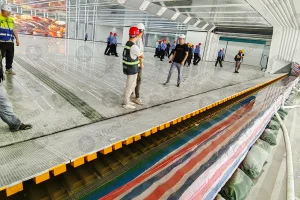
As a primary global manufacturer and supplier, companies like Nanjing Junli Technology Co., Ltd. combine full-scale hydraulic testing pools with rigorous structural engineering. This guarantees that solid modular garage flood baffles meet international safety factors, offering custom OEM/ODM configurations that conform strictly to localized building codes and architectural entrance designs.
Explaining the hydrodynamic physics, structural integrity, and dynamic sealing mechanisms that ensure zero-water penetration.
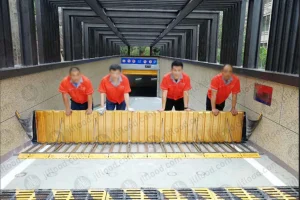
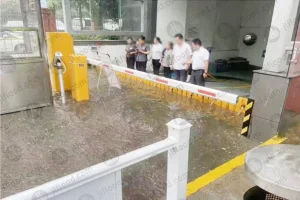
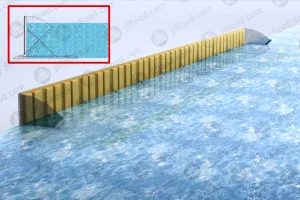
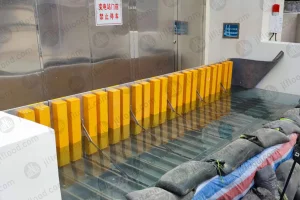
Unlike motorized or manual barriers, solid hydrodynamic modular baffles operate on fundamental hydrostatic laws. The unit is installed flush inside a recessed foundation trench at the garage entrance. When water flows into the chamber, incoming floodwaters generate natural buoyancy, lifting the lightweight, rigid barrier panel. As the water level rises, hydrostatic head pressure forces the panel firmly against vertical seals, creating a tighter seal as water depth increases.
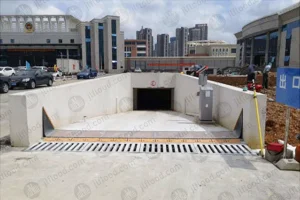
Engineered to withstand both static hydraulic pressure and dynamic wave impacts, the panels feature multi-cavity aviation-grade alloy extrusions (6063-T6) or heavy 304/316 stainless steel. Designed with high section modulus, the modular barrier resists deflection even when subjected to floating debris or vehicle impacts. Embedded bottom frames feature heavy load-bearing top grates capable of supporting 40-ton vehicle drive-over traffic continuously without distortion.
Sealing integrity is paramount. Junli barriers employ high-grade EPDM (Ethylene Propylene Diene Monomer) dynamic gaskets resistant to UV degradation, extreme temperatures, and chemical exposure. Dual-cavity bottom and side profiles ensure elastic memory recovery, maintaining tight seal interface across thousands of compression cycles and preventing water seepage through micro-gaps.
A comprehensive engineering assessment evaluating efficiency, labor dependency, fail-safe mechanisms, and long-term operating costs.
| Evaluation Parameter | Solid Modular Hydrodynamic Gate | Manual Aluminum Stop-Logs | Motorized Hydraulic/Electric Dam | Traditional Sandbag Stacking |
|---|---|---|---|---|
| Deployment Speed | Instant (Passive Hydrodynamic) | Slow (15–45 Mins Manual Labor) | Moderate (3–5 Mins Sensor Trigger) | Extremely Slow (Hours) |
| Power Grid Dependency | Zero Power Required (100% Mechanical) | Zero Power Required | High (Fails during Blackouts without UPS) | Zero Power Required |
| Human Error Risk | Zero (Fully Automated) | High (Requires On-Site Crew) | Medium (Sensor/PLC Malfunctions) | Extreme (Labor Availability Issues) |
| Drive-Over Capability | Flush-Mounted (Up to 40T Axle Load) | Requires Removal of Sill Frame | Variable Surface Ramp Bump | Impassable to Vehicles |
| Lifespan & Maintenance | 20+ Years (Minimal Rubber Inspection) | 10+ Years (Storage Space Required) | 5–8 Years (High Hydraulic Engine Costs) | Single-Use Waste |
Customized solid modular flood barrier layouts tailored to distinct structural and civil environments.
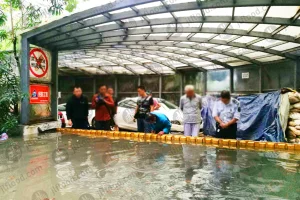
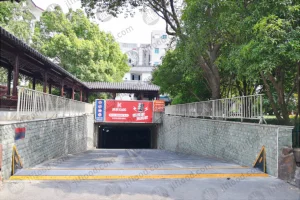
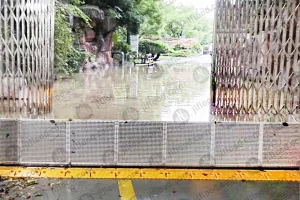
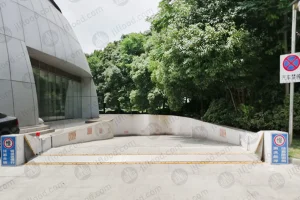
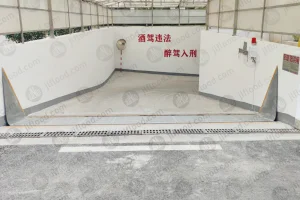
Underground car parks are vulnerable point-of-entry zones where rapid surface runoff quickly overwhelms municipal stormwater drainage. Installing flush-mounted hydrodynamic modular baffles at the top or base of parking ramps prevents multimillion-dollar water damage to parked vehicles, elevator shafts, and electrical distribution rooms located in basements.
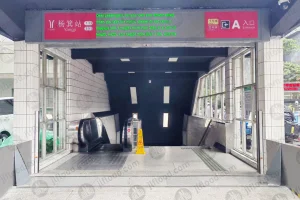
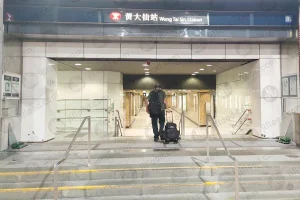
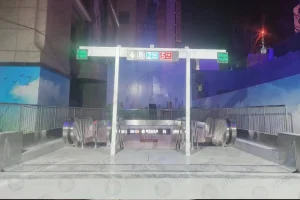
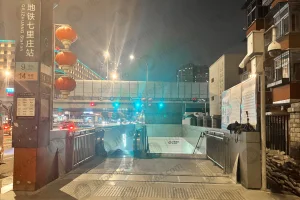
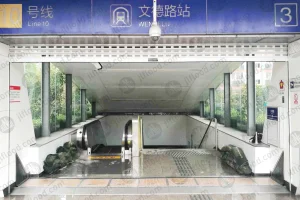
Subway networks demand zero flood breach tolerance due to extreme life-safety risks and potential network-wide shutdowns. Modular flood gates installed at station entrances, connection channels, and ventilation shafts seal within seconds of water accumulation. Proven in rail projects across Guangzhou, Beijing, Suzhou, and Hong Kong transit lines.
Transformer stations, power grid hubs, and data centers house sensitive medium-to-high voltage equipment. Flooding at these locations can lead to catastrophic regional blackouts and data loss. Junli's surface-mounted and embedded solid modular baffles provide perimeter isolation against flash urban surge water without interrupting daily facility operations.
Industrial loading docks and freight handling yards require wide-span barrier setups capable of enduring continuous heavy container truck traffic. Modular multi-leaf arrays feature reinforced connection columns that can be deployed across wide perimeter spans exceeding 20 meters, providing high retaining heights up to 2.0m.
How smart sensing, material science, and AI telemetry are redefining structural flood safety.
Integrating passive hydrodynamic baffles with low-power LoRaWAN and 5G sensor modules. Facility engineers receive real-time mobile notifications and SCADA alert logs the instant water enters the foundation chamber, confirming physical panel rise and water depth without requiring grid power for barrier activation.
Adopting graphene-enhanced nanocoatings and hydrophobic surface treatments on aluminum and stainless steel components. This eliminates marine salt-spray corrosion, chemical degradation from urban runoff, and ice accumulation, extending the maintenance-free seal window beyond 25 years in coastal environments.
Connecting localized flood gates into smart city municipal storm networks. AI algorithms analyze micro-weather radar data, tide surges, and catchment basin telemetry to validate barrier status remotely, establishing fully synchronized urban flood defense networks.
In-depth answers to common technical, installation, and procurement questions asked by structural engineers, specifiers, and contractors.
The system utilizes purely mechanical hydrodynamic buoyancy and hydrostatic pressure. The panel rests flush inside a recessed foundation chamber installed across the garage doorway. When surface water enters the chamber, natural buoyancy causes the panel to rise. As water level increases, hydrostatic head pressure pushes the panel firmly against vertical frame sealing gaskets, creating an impermeable barrier without needing electricity, sensors, motors, or manual labor.
Junli’s solid modular embedded foundation structures feature heavy-duty structural steel framing and load-bearing top covers engineered to support heavy vehicle traffic. Standard models are rated for 20-ton to 40-ton axle loads, allowing fire trucks, commercial delivery vehicles, and daily passenger cars to drive over the flush threshold without structural damage or seal displacement.
Standard retaining heights range from 0.5 meters to 2.0 meters per barrier leaf. Clear span widths for single modules reach up to 6 meters. For wide garage openings, logistics yards, or multi-lane driveways exceeding 20 meters, modular intermediate support columns and multi-leaf panel arrays are connected to deliver complete perimeter sealing.
Foundation chambers are designed with integrated sediment collection troughs and drainage outlet connection ports. Small debris and silt sink into dedicated sump zones beneath the panel lifting arc. Standard routine maintenance involves flushing the bottom channel twice a year with a standard high-pressure water hose through accessible top stainless steel grates.
Yes, both embedded and surface-mounted options are available. For existing structures where excavation depth is restricted, surface-mounted flip-up barriers or shallow-trench modular gates can be installed directly onto existing concrete slabs using high-tensile anchor bolts, requiring minimal civil work disruption.
Precision-engineered systems engineered for subway portals, power substations, and underground garage entrances.