
Explore our field-tested range of stainless steel automatic flood barriers, embedded protection gates, and unpowered hydrodynamic systems manufactured in China for high-load industrial and municipal applications.
As extreme weather events, typhoons, and cloudburst-induced pluvial flooding increase in frequency, municipal authorities and industrial enterprise procurement managers globally are shifting from reactive disaster relief to proactive structural defense engineering.
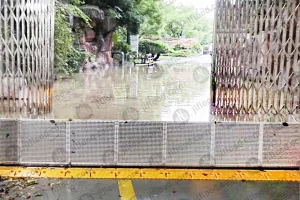
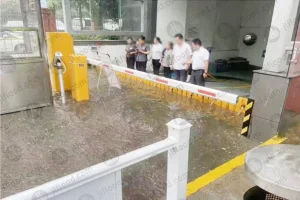
Modern commercial buildings, subterranean mass rapid transit (MRT) networks, high-voltage electrical substations, and industrial manufacturing plants face severe financial losses and safety hazards when storm surges inundate basements and subterranean utility shafts. Traditional flood mitigation measures—such as manual sandbagging, temporary demountable aluminum stoplogs, or electrically driven motorized flood gates—exhibit critical failure points:
Consequently, global EPC (Engineering, Procurement, and Construction) contractors are prioritizing heavy-duty Stainless Steel Automatic Hydrodynamic Flood Barriers manufactured by specialized Chinese engineering entities like Nanjing Junli Technology Co., Ltd. These systems rely on purely mechanical buoyancy principles, leveraging the physical properties of incoming water to self-actuate without human intervention or electric power.
Choosing the correct alloy composition is paramount when engineering permanent sub-surface flood gates exposed to municipal wastewater, road de-icing salts, coastal marine atmospheres, and high wheel-load traffic.
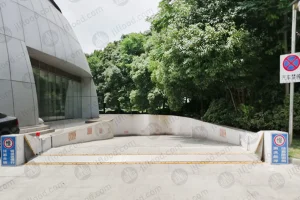
AISI 304 stainless steel contains 18% chromium and 8% nickel, rendering it exceptionally resilient against atmospheric oxidation and freshwater immersion. It is the primary structural material specified for standard urban commercial developments, residential parking ramps, and inland electrical substations.
For coastal infrastructure, sub-sea metro connection channels, and industrial chemical facilities, 316L stainless steel is specified. The inclusion of 2-3% Molybdenum increases resistance to chloride pitting corrosion (PREN ≥ 23) and stress corrosion cracking.
| Material / Parameter | Yield Strength (MPa) | Corrosion Resistance | Maintenance Lifespan | Hydrodynamic Deflection Risk |
|---|---|---|---|---|
| Junli SS316L Stainless Steel | ≥ 220 MPa | Ultra-High (Marine & Chloride Resistant) | 25+ Years | Negligible (FEA Optimized) |
| Junli SS304 Stainless Steel | ≥ 205 MPa | High (Urban Pluvial Environments) | 20+ Years | Extremely Low |
| Extruded Aluminum Alloy (6063-T6) | ≥ 170 MPa | Moderate (Susceptible to Galvanic Pitting) | 8-12 Years | Moderate under High Water Head |
| Structural Carbon Steel (Q235/Q355) | ≥ 235 MPa | Low (Requires Frequent Anti-Rust Coating) | 5-10 Years | Low (Heavy Weight Issues) |
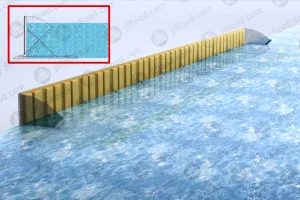
The foundational technological innovation of Junli's hydrodynamic flood barrier lies in its gravity-and-buoyancy mechanical loop. It eliminates all electronic reliance, ensuring fail-safe protection during catastrophic storm-induced power outages.
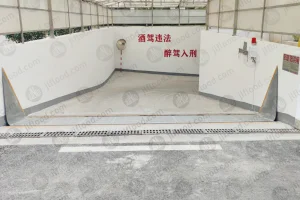
In dry weather, the stainless steel door leaf rests completely flat inside a recessed embedment foundation tray. Vehicles, buses, and heavy commercial transport drive over the unit seamlessly without structural vibration or noise.
As surface floodwaters breach the initial curb height, water naturally flows into the embedded intake chamber through front drainage grates. The engineered buoyancy modules attached to the stainless steel panel generate immediate upward force.
As the chamber fills, water pressure forces the barrier panel upward into a 75°–90° vertical orientation. Hydrostatic pressure presses the specialized EPDM dual-lip rubber gaskets tightly against side wall frames, forming a watertight seal.
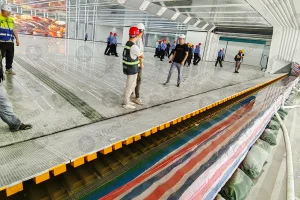
Every structural model designed by Nanjing Junli Technology undergoes full-scale hydrostatic testing in our proprietary hydraulic laboratory. The barriers are subjected to static head pressure equal to 1.5x design retaining height, as well as dynamic wave impact simulations to verify frame deflection limits (L/250 max).
To verify design specs for your engineering project, explore our Actual Water Retaining Flood Barrier Case Records and review our factory verification procedures at Flood Barrier Water Testing Documentation.
Different entryways present distinct civil engineering challenges. Junli engineers custom frame geometries, load-bearing capacities, and seal configurations for four core infrastructure domains.
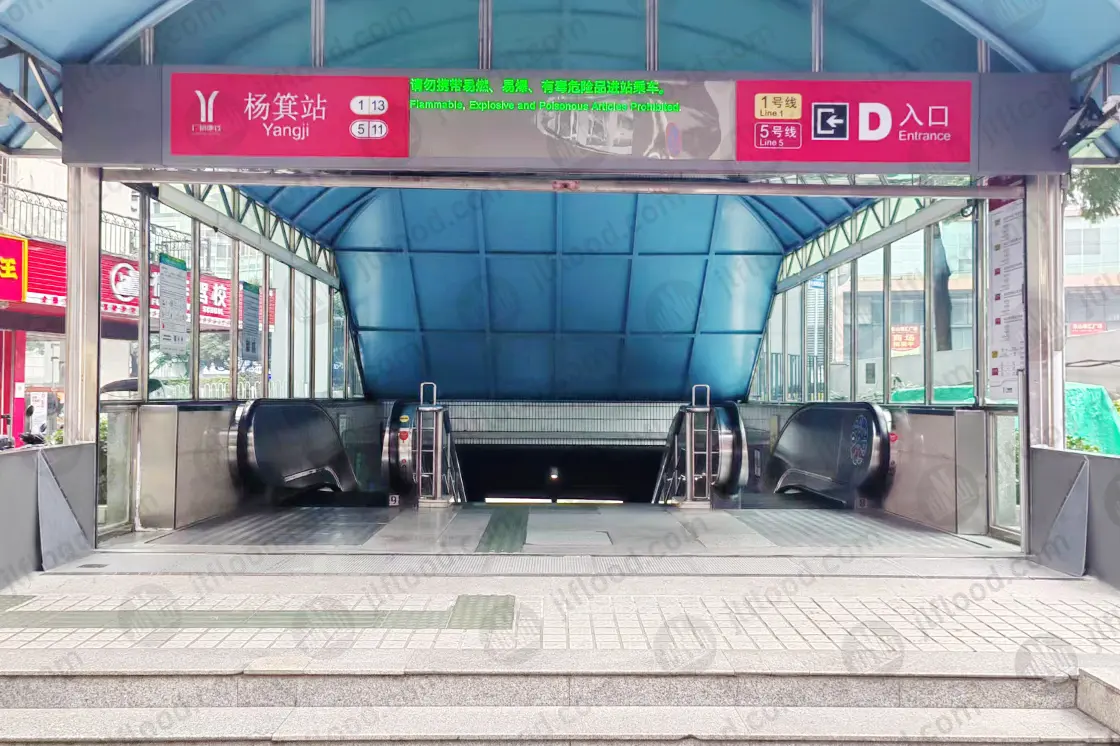
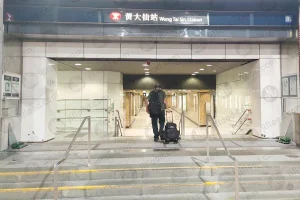
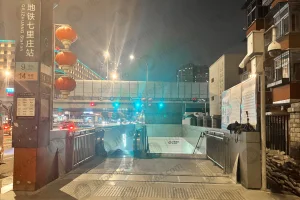
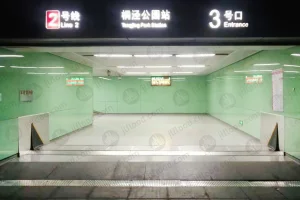
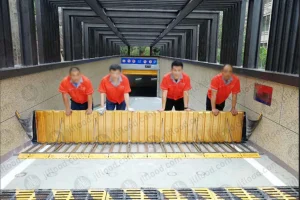
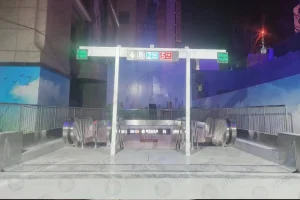
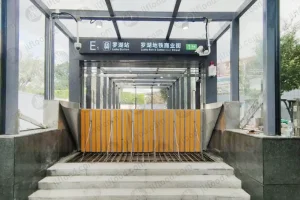
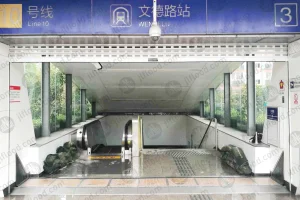
Metro station entrances, pedestrian vent shafts, and underground connection passages require zero-clearance embedded installations that do not obstruct daily passenger flows during peak hours.
Junli's hydrodynamic metro barriers are installed in major rail networks including Guangzhou Metro, Beijing Metro, Suzhou Rail Transit, Dalian Metro, and Hong Kong MRT facilities. Review detailed technical drawings in our Metro Flood Barrier Solution Section.
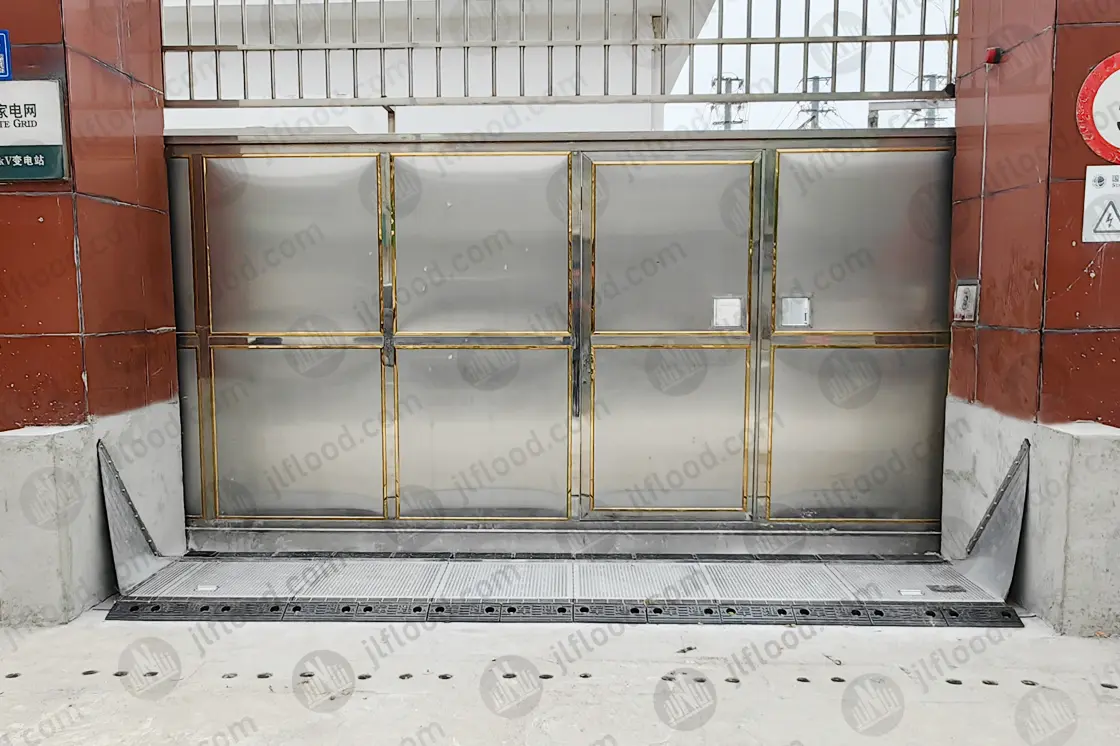
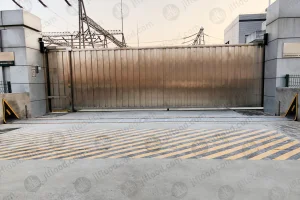
Water ingress into high-voltage transformer rooms or underground cable vaults causes catastrophic short-circuits, district blackouts, and millions of dollars in equipment damage.
Our stainless steel surface-mounted and embedded barriers provide 24/7 continuous isolation for power utilities across State Grid projects. Learn more via our Substation Flood Barrier Engineering Directory.
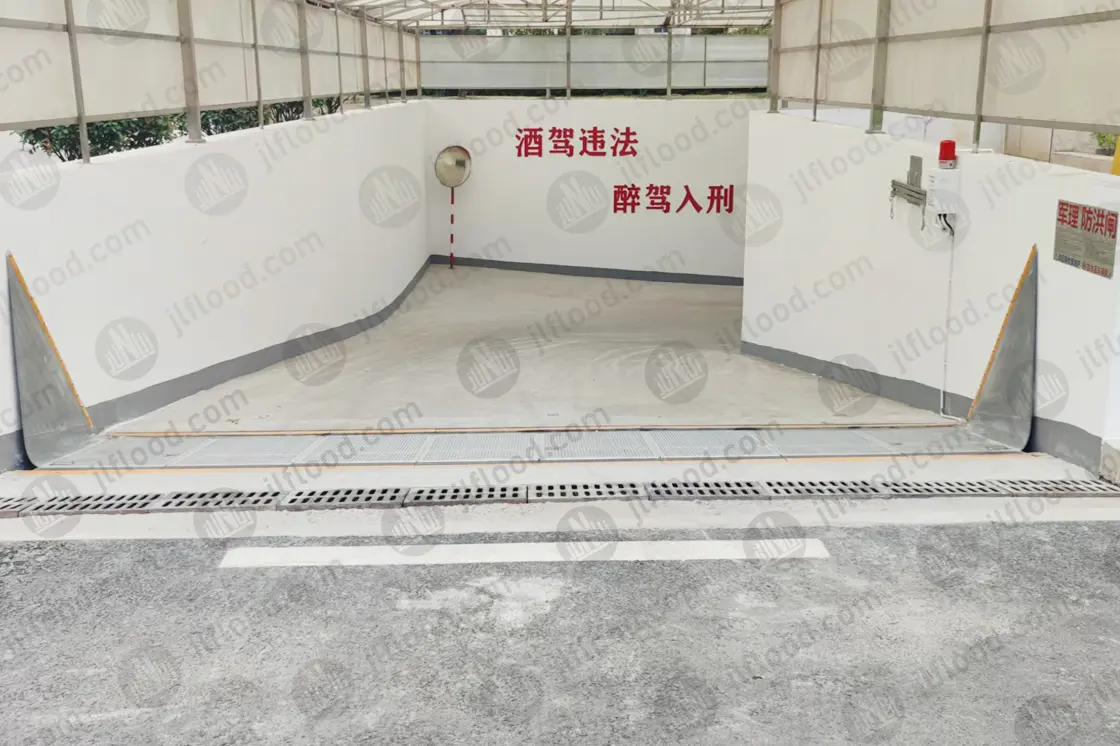
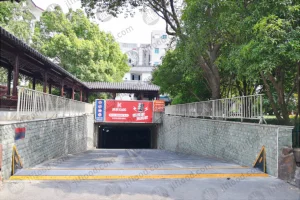
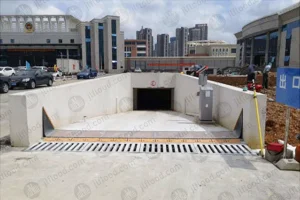
High-rise commercial plazas, hospital basements, and shopping center garages demand heavy-duty stainless steel top plates capable of supporting 20 to 40-ton vehicle axle loads without frame deformation.
Explore specifications and pricelists on our dedicated Garage Ramp Flood Barrier Range.
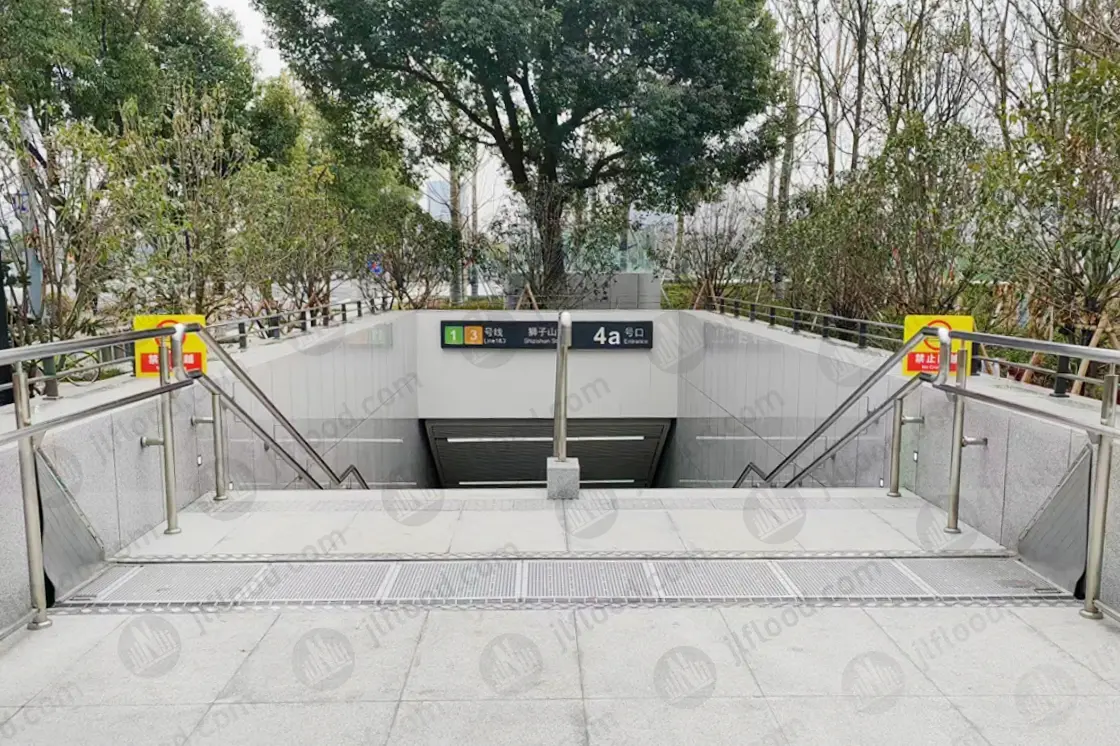
Chemical processing complexes, port facilities, and civil defense underground passages require heavy-duty seal retention systems that resist oil, moderate acids, and hydraulic pressure heads up to 2.0 meters.
Browse full product options in our comprehensive catalog at All Hydrodynamic Products & Accessories.
Nanjing Junli Technology is advancing flood defense from purely mechanical isolation to integrated smart urban infrastructure defense ecosystems.
While mechanical deployment operates without electrical power, optional optical sensors and micro-switches transmit real-time deployment status, water level data, and alarm signals to Building Management Systems (BMS) and smart city central control centers.
R&D is focused on co-extruded dual-durometer EPDM gaskets featuring hydrophobic nanocoatings that resist UV aging, thermal degradation (-40°C to +120°C), and chemical exposure in industrial municipal runoff.
For wide entrances exceeding 12 meters, Junli's modular stainless steel interlock mechanics allow multi-leaf barriers to raise synchronously, supported by removable intermediate vertical mullions.
Demonstrating Authoritativeness and Trustworthiness (E-E-A-T) through rigorous international standard engineering, factory inspections, and civil structural integration support.
Junli stainless steel flood barrier systems are engineered and tested in accordance with international hydraulic and structural standards:
We provide global engineering design institutes and contractors with complete civil interface documentation:
Review our complete selection of self-closing flood gates, surface installation metro barriers, non-electric auto barriers, and heavy-duty structural units available for worldwide export.
Common inquiries from international consulting engineers, project developers, and procurement officers regarding stainless steel flood barrier specifications.


