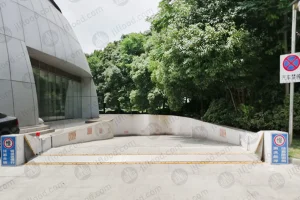
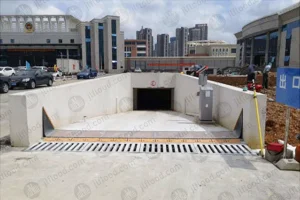
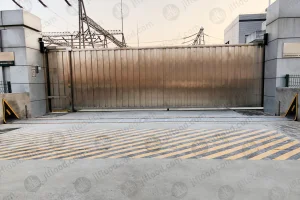
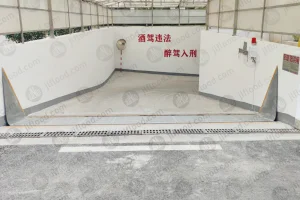
Explore our factory-direct hydrodynamic automatic flood gates engineered for subway stations, electrical substations, commercial garages, and urban underground passages.
Rapid urbanization combined with escalating global climate volatility has made surface water inundation one of the most destructive operational hazards for modern civil infrastructure. When torrential cloudbursts, severe typhoons, or flash floods strike urban centers, municipal power grids frequently experience catastrophic blackouts. Traditional electric flood gates, motorized barriers, or manual sandbag deployments fail precisely when they are needed most—due to lost electrical power, sensor failure, or delayed human intervention.
As leading China Surface Type Automatic Flood Barrier Manufacturers & Suppliers, Nanjing Junli Technology Co., Ltd. has engineered a paradigm shift in flood mitigation engineering. Built upon hydrodynamic buoyancy principles, our surface-mounted and embedded self-closing flood barriers operate with 100% mechanical passivity. They require zero human activation, zero external electricity, and zero active electronic sensors.
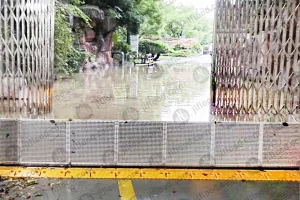
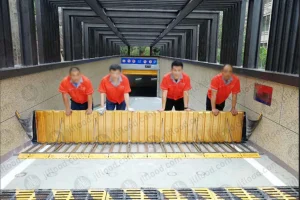
The core operational mechanism relies on fundamental fluid mechanics: as incoming floodwater reaches the drive-over threshold, water naturally flows into the barrier’s recessed bottom chamber through precision-engineered intake grates. The accumulating water generates immediate hydrostatic upward pressure, buoyant displacement, and hydrodynamic buoyancy. The structural panel—constructed from ultra-high-strength marine-grade aluminum alloy—automatically rises from its flush ground position, pivoting upward to seal the aperture before floodwaters can penetrate the facility perimeter.
Providing technical decision clarity for architectural consultants, municipal engineers, and global EPC contractors.
Designed specifically for retrofitting existing facilities where deep foundation excavation is prohibited due to underlying utility lines, post-tensioned slabs, or structural constraints. Mounts directly onto existing concrete aprons with minimal civil works.
Integrates seamlessly into new civil construction projects. The casing box sits 100% level with the surrounding pavement, allowing smooth daily heavy vehicle crossing without vibration, noise, or aesthetic disruption.
Employs vulcanized continuous EPDM rubber seals resistant to ozone, UV exposure, chemical runoff, and extreme thermal fluctuations (-40°C to +120°C), guaranteeing zero-leakage hydrostatic retaining capacity.
Features patent-pending hydraulic desilting flumes. As floodwaters recede, gravitational backwash flushing clears debris, sand, and leaves from the baseline basin, preserving operational readiness for subsequent storm events.
| Technical Parameter | Surface Type Automatic Barrier | Embedded Automatic Barrier | Heavy-Duty Industrial Barrier |
|---|---|---|---|
| Retaining Height Range | 500 mm – 1500 mm (Customizable) | 600 mm – 2000 mm (Modular) | 1000 mm – 3000 mm (High Head) |
| Primary Material | 6063-T6 High-Strength Aluminum Alloy | Stainless Steel SS304 / SS316 Panel Frame | Reinforced Structural Steel + Marine Coating |
| Vehicle Load Rating | AASHTO HS20 / 20-Ton Single Axle | 40-Ton Heavy Duty Truck / Bus Standard | 60-Ton Airport & Port Logistics Grade |
| Activation Power Source | 100% Hydrodynamic Water Buoyancy | 100% Hydrodynamic Water Buoyancy | Passive Buoyancy + Manual Override Lock |
| Sealing Leakage Rate | < 0.05 L/hr per meter of seal (Exceeds Standard) | Zero Droplet Seepage (Compression Seal) | Hermetic Zero-Leakage Rubber Profile |
| Deployment Speed | Fully Deployed in < 45 seconds | Fully Deployed in < 30 seconds | Automatic Hydraulic Self-Lifting |
Customized flood defense integration frameworks designed specifically for complex engineering environments.
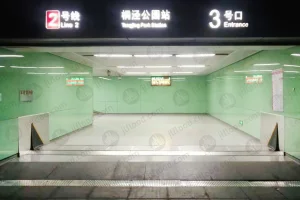
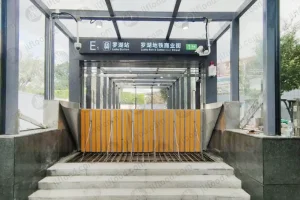
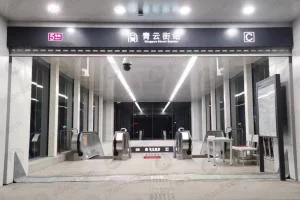
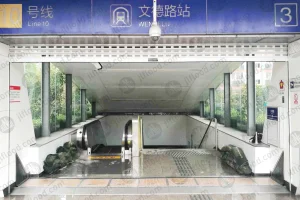
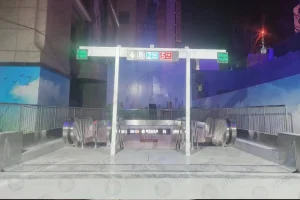
Subway station entrances, pedestrian connection channels, and underground ventilation shafts are vulnerable to sudden rainwater ingress. Junli flood barriers provide passive, fail-safe seals that prevent catastrophic subway flooding, protecting high-voltage traction systems and millions of daily commuters across major rail networks like Guangzhou, Beijing, Dalian, and Suzhou Metro.
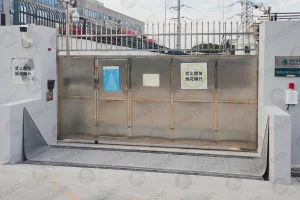
Transformer basements, cable trenches, and electrical control rooms require total water isolation. Even minor water accumulation can trigger grid short-circuits, transformer explosions, and regional blackouts. Our non-conductive, corrosion-resistant surface-mounted barriers automatically isolate substation perimeters during extreme weather events.
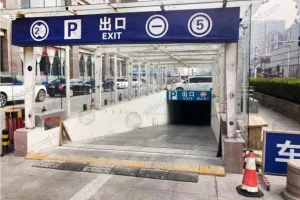
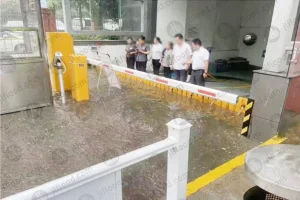
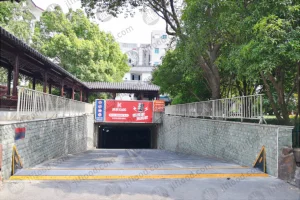
Underground parking ramps at shopping malls, hospitals, and luxury residential complexes represent high financial liability. Junli surface-type automatic barriers install at ramp thresholds, permitting seamless vehicle ingress/egress while standing ready to pop up instantly during severe flash flooding.
High-speed railway concourses, hospital basement facilities, airport landside logistics passages, and municipal civil air defense tunnels require reliable structural water retention. Our modular barriers scale up to 20-meter clear spans using interlinked panel arrays.
Headquartered in the historic industrial hub of Qinhuai District, Nanjing, Jiangsu Province, Nanjing Junli Technology Co., Ltd. operates state-of-the-art manufacturing facilities certified to ISO9001 Quality Management, ISO14001 Environmental Management, and ISO45001 Occupational Health & Safety standards.
Our manufacturing advantages provide international procurement partners, EPC firms, and distributors with unmatched competitive edge:
Utilizing automated fiber laser cutting machines, multi-axis CNC machining centers, and robotic seam welders to guarantee frame dimensional tolerances within ±0.5 mm, ensuring perfect structural alignment during field installation.
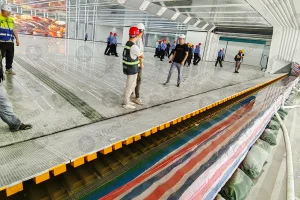
Every barrier model undergoes rigorous full-scale hydrostatic testing prior to shipment. Our facility features dynamic deep-water testing tanks where lifting speed, structural deflection, seal compression, and hydrodynamic response times are verified under real-world water head pressure.
Direct procurement partnerships with premier Chinese raw material producers (specialized extruded aluminum alloys, high-purity SS304/316 stainless steel, custom synthetic EPDM compounds) ensure full material traceability, mill test certificates (MTC), and immunity to global supply bottlenecks.
Equipped to handle contract manufacturing for major international flood control brands, offering custom dimensioning, branded silk-screening, modular packaging, and site-specific civil engineering CAD/BIM drawing customization.
International buyers, civil engineering consultants, and municipal government procurement officers face rigorous compliance audits when specifying flood risk management assets. Junli Technology provides complete engineering documentation packages to streamline project tender submission and approval:
Our flood barriers are engineered to satisfy global benchmark standards including FM 2510 (Flood Mitigation Equipment Approval Standard), BS EN 13564 (Anti-flooding devices for buildings), and relevant international hydraulic containment guidelines. Third-party inspection reports from SGS, TÜV, or Intertek can be issued upon order placement.
Every shipment includes detailed English installation manuals, anchor bolt layout templates, foundation rebar reinforcement schematics, water-retaining test videos matching your specific serial numbers, and 20-year structural finite element analysis (FEA) deflection calculations.
Products are packaged in heavy-duty fumigated wooden crates with moisture-proof vacuum wrapping and shock-absorbing edge protectors to withstand long-distance maritime container freight, air cargo, or multimodal overland transport.
As smart cities evolve, passive physical infrastructure must seamlessly integrate with digital municipal command centers. Junli’s R&D department is pioneering next-generation flood resilience innovations across three strategic vectors:
While our barriers operate 100% mechanically without needing electrical power to deploy, optional low-power IoT telemetry modules (NB-IoT / LoRaWAN) are now available. These sensors provide real-time panel elevation status, water depth telemetry, and automated alerts to remote facility management dashboards during severe weather events.
Next-generation barrier panels incorporate hybrid carbon-fiber reinforced polymer (CFRP) cores. This reduces structural weight by 35% while increasing tensile yield strength, enabling even faster hydrodynamic lifting response times for extreme flash-flood zones.
Advanced surface treatment technologies utilize fluorocarbon and ceramic nano-coatings that repel silt, algae, and salt spray corrosion. This innovation dramatically extends maintenance intervals and preserves high aesthetic appeal in architectural applications.
Answers to common technical inquiries raised by structural engineers, EPC procurement heads, and facility directors.
The barrier relies entirely on physical hydrodynamics. Rising surface water fills the underlying retaining basin, creating natural buoyant uplift and hydrostatic leverage pressure that mechanically raises and locks the door panel. No electrical power, batteries, actuators, or human operators are required.
Yes. Junli embedded and surface-type barriers are engineered with structural grade 6063-T6 aluminum alloy or SS304 internal load ribs designed to withstand single axle loads up to 40 Tons (AASHTO HS20 standard). Daily vehicle crossing produces zero permanent deflection.
Our bottom casing incorporates sloped sediment collection troughs and automatic hydrodynamic flushing channels. As floodwaters recede, the drainage slope channels residual silt outward. Routine quarterly maintenance simply involves clearing surface debris with a standard water hose.
For surface-mounted types, a flat, level concrete apron (minimum C30 grade concrete) is required. For embedded models, a recessed trench must be cast according to our shop drawings with basic drainage pipe connection points.
Our industrial EPDM vulcanized seals have an operational lifespan of 10 to 15 years under normal ambient exposure. Seals are modularly designed and can be easily replaced on-site within hours without removing the primary structural barrier frames.
Yes. Single clear spans can be engineered up to 6.0 meters per panel leaf. For wider openings (such as multi-lane parking ramps over 20 meters), we link multiple barrier units together using removable intermediate mullions or synchronized modular continuous hinge systems.
Select your required model configuration below or contact our engineering team in Nanjing for custom factory direct pricing and technical submittals.