
Explore our engineered passive flood protection barriers designed for subways, underground parking facilities, commercial estates, and utility substations.
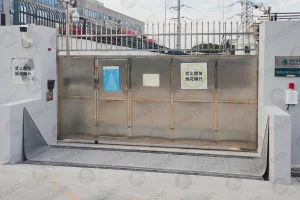
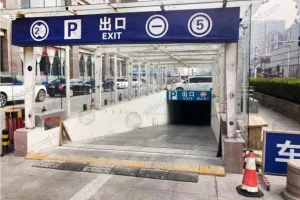
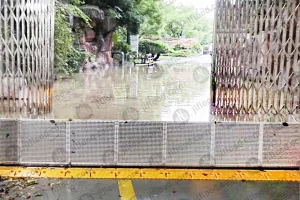
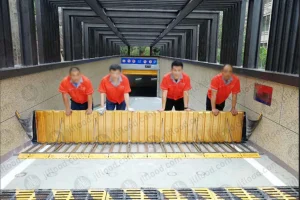
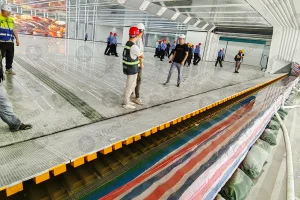
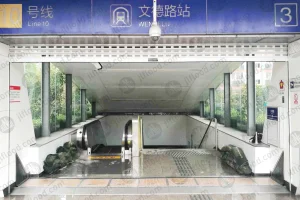
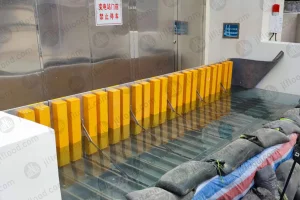
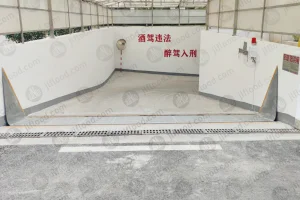
As extreme hydrometeorological events increase in frequency globally, municipal planners, civil engineers, and industrial asset owners are facing an unprecedented challenge: protecting subsurface critical infrastructure against flash flooding, cloudbursts, and storm surges. Traditional active systems—such as electric floodgates, motor-driven barriers, and manual sandbags—exhibit high failure rates during catastrophic events due to power grid collapse, mechanical sensor failure, or lack of emergency response personnel.
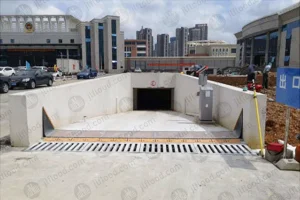
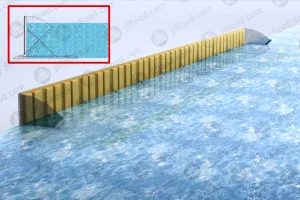
Hydrodynamic automatic self-closing flood barriers represent the apex of passive flood mitigation technology. Utilizing the fundamental principles of Archimedes' buoyancy fluid mechanics and hydrostatic pressure, these barriers remain completely flush with driveway or entrance surfaces during normal operation, allowing uninterrupted vehicular and pedestrian traffic. When floodwaters arrive, the incoming hydrodynamic water mass automatically forces the internal floating panel to rise, creating an impenetrable water-retaining wall without human intervention or external power.
The system comprises a ground-recessed basin frame and a dynamic hollow door panel engineered from structural marine-grade aluminum alloy (6063-T6) or 304/316 stainless steel. As surface runoff flows into the bottom drainage collector channel, fluid pressure ($P = \rho g h$) enters the base chamber. The net upward buoyant force ($F_b = \rho_{water} \cdot V_{displaced} \cdot g$) exceeds the structural mass of the panel, causing the barrier to swing upward around a high-tensile stainless steel pivot axis automatically.
Hydrostatic sealing integrity is maintained through a custom multi-lip EPDM (Ethylene Propylene Diene Monomer) gasket system. The primary horizontal base seal resists debris entrapment, while side-channel compression seals utilize dynamic water pressure to expand against the stainless steel wall frames. This mechanism achieves zero-leakage conditions compliant with strict international standard leakage metrics (under 0.05 L/hr per meter of seal perimeter).
When collapsed flat in standby mode, the top cover plate withstands heavy vehicle axle loads up to EN124 D400 / F900 specifications (suitable for heavy fire engines, municipal buses, and industrial container transport). Finite Element Analysis (FEA) ensures minimal elastic deflection under static hydrostatic head pressure up to 2.0 meters, maintaining structural safety against hydrodynamic impact waves.
| Technical Parameter | Surface Mounted Type (HM4D Series) | Embedded Foundation Type (HM4E Series) | Custom Industrial Heavy Duty |
|---|---|---|---|
| Primary Material | Aviation Aluminum Alloy 6063-T6 / SUS304 | High-Strength Anodized Aluminum / SUS316 | Stainless Steel 316L / Reinforced Alloy |
| Standard Retaining Heights | 400mm, 600mm, 900mm | 600mm, 1000mm, 1200mm, 1500mm | Up to 2000mm (2.0 meters) |
| Driving Load Class | Light / Medium Duty (3.5 - 15 Tons) | Heavy Duty EN124 D400 (40 Tons) | Extra Heavy Duty F900 (90 Tons) |
| Power Dependency | 0% Passive Hydrodynamic | 0% Passive Hydrodynamic | 0% Passive (Optional Smart Telemetry) |
| Leakage Rate | < 0.01 L / (m·min) | < 0.005 L / (m·min) | Zero-Permeability Certified |
| Application Scope | Garages, Retail Shops, Driveways | Subways, Railway Depots, Power Grids | Chemical Facilities, Airports, Seaports |
Engineering Recommendation: For high-density urban transit nodes and electrical power substations, embedded models with integrated sub-surface drainage lines are recommended to handle both flash flood retention and high-frequency vehicle crossing without micro-vibrational noise.
Different infrastructure types present distinct vulnerability profiles. Our automatic self-closing flood barriers are engineered to fulfill the operational demands of diverse industrial assets globally.
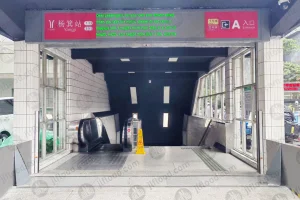
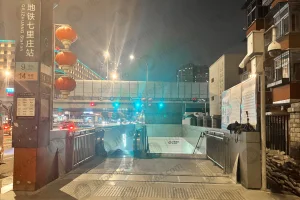
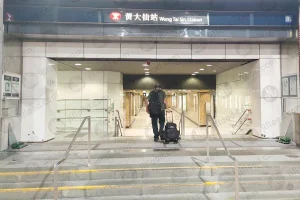
Subsurface passenger concourses represent critical flood pathways during catastrophic rainstorms. Automatic flip-up and hydrodynamic recessed barriers deployed at station ingress points (e.g., Guangzhou Metro, Beijing Metro, Hong Kong MTR) prevent water ingress into tunnel networks, protecting multi-billion-dollar transit signals, traction power, and passenger lives.
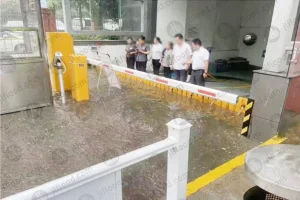
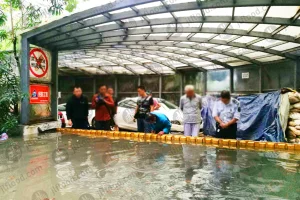
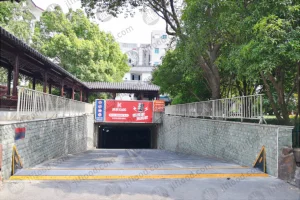
Commercial shopping centers, residential high-rises, and private parking structures are highly susceptible to rapid surface runoff inundation. Flush-mounted automatic barriers enable zero-friction vehicle ingress during clear weather while forming a rigid flood wall instantly as water levels reach the critical threshold, mitigating catastrophic vehicular loss.
Power substations, transformer rooms, and cable trench gates demand 100% operational uptime. Water infiltration triggers short circuits, grid blackouts, and equipment destruction. Self-closing automatic flood barriers installed at perimeter gates isolate critical energy assets from floodwaters automatically during unattended night hours.
The global flood protection barrier market is undergoing a structural transition from reactive emergency response (e.g., sandbagging, temporary aluminum stop logs) to permanent, autonomous passive defense systems integrated directly into civil architecture.
Driven by rapid urban development, monsoon seasons, and coastal typhoon impacts across Southeast Asia, China, Japan, and Korea. The Chinese Sponge City Initiative and municipal urban drainage mandates require all new underground transit nodes and residential basements to incorporate passive water-retaining barriers to pass municipal building code acceptance.
In the United States and Canada, adherence to FEMA (Federal Emergency Management Agency) Guidelines (P-936: Floodproofing Non-Residential Structures) and ASCE 24 standards is elevating demand for factory-certified passive flood protection systems. Property insurance underwriters increasingly grant substantial premium reductions for commercial facilities equipped with zero-power automatic flood barriers.
European markets prioritize environmental compliance, material sustainability, and civil infrastructure longevity. Under the EU Floods Directive (2007/60/EC) and SuDS (Sustainable Urban Drainage Systems) frameworks, industrial parks and public transport hubs are upgrading existing gates with corrosion-resistant stainless steel hydrodynamic self-closing barriers.
The next decade of flood resilience technology will combine passive hydro-mechanical reliability with digital telemetry, smart sensors, and AI-assisted predictive urban modeling.
Focus on advanced alloy metallurgy, self-lubricating ceramic pivot bearings, ultra-durable fluoropolymer-coated dynamic EPDM seals, and modular prefabricated frame designs that reduce installation civil works by 40%.
Incorporation of zero-power kinetic IoT signal transmitters. When the passive barrier engages due to water rise, it autonomously transmits encrypted LoRaWAN/NB-IoT alerts to smart city control rooms, building management systems (BMS), and emergency services without external grid power.
Integration of real-time hydro-meteorological satellite data, AI predictive runoff analytics, and automated multi-gate perimeter defense grids. Cities will monitor thousands of self-actuating barrier nodes simultaneously on digital twin dashboards.
When requesting wholesale quotations or specifying custom projects for municipal and industrial tenders, procurement managers must evaluate several structural and logistical parameters:
Our manufacturing facility enforces rigorous Quality Assurance protocols under ISO 9001, ISO 14001, and CE compliance standards:
Find technical answers regarding installation, structural load capacity, maintenance cycles, and operation mechanics.
Review our additional specialized models tailored for metro stations, cable trenches, garage ramps, and high-water risk industrial sites.
Contact our Senior Civil Engineering Team today to submit your opening dimensions, traffic load parameters, and project CAD drawings for a comprehensive engineering proposal and competitive wholesale quote.


