Direct factory wholesale catalog for civil contractors, municipal agencies, and commercial developers worldwide.
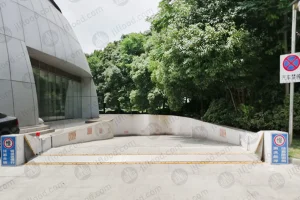
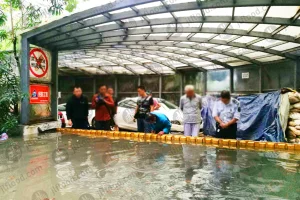
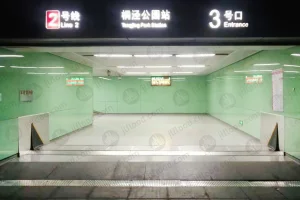
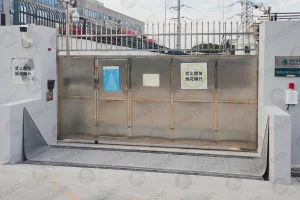
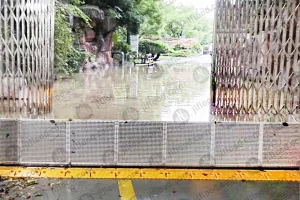
Urban waterlogging, accelerated by climate disruption and expanding concrete surface coverage, presents an existential threat to underground infrastructure worldwide. High-density commercial assets, sub-surface transit hubs, and electrical utility substations require robust, unyielding physical barriers to prevent catastrophic inundation. As municipal governments enforce stringent climate resilience mandates, traditional manual flood gates—reliant on human intervention, power supply availability, and weather warning lead times—are rapidly being phased out in favor of automated passive defense systems.
This industrial whitepaper examines the global commercial landscape for wholesale flood barrier suppliers and manufacturing factories. With specialized insights from Nanjing Junli Technology Co., Ltd. (a national high-tech flood defense engineering manufacturer), this paper evaluates technical hydrodynamic buoyancy mechanics, manufacturing efficiencies in Chinese export clusters, total cost of ownership (TCO) matrices, and procurement frameworks for international civil engineering contractors and architectural specifiers.
Deep-dive into the zero-power hydrodynamic physics that eliminate human error during severe weather blackouts.
As surface runoff flows into the ground-recessed basin, water naturally enters the internal chamber beneath the panel. Built-in hydrostatic pressure forces the buoyant gate panel upward instantly without electrical sensors.
Blackouts typically accompany extreme typhoons and torrential rainstorms. Hydrodynamic barriers operate on pure fluid physics, guaranteeing 100% deployment even during grid power collapse.
Precision-engineered EPDM marine-grade elastomeric gaskets create a hermetic seal against frame side walls under water weight pressure, keeping water leakage levels near zero under high static head pressures.
The core structural engineering of a hydrodynamic automatic flood barrier relies on Archimedes' principle combined with hydrostatic moment force equilibrium. The buoyant lifting moment ($M_b$) generated inside the base chamber must strictly exceed the friction coefficient ($F_f$) and panel deadweight ($W_p$):
M_b = \int_{0}^{H} \rho \cdot g \cdot A_{chamber} \cdot z \, dz > (W_p \cdot \cos\theta) + F_f
Where $\rho$ represents water density, $g$ gravitational acceleration, $A_{chamber}$ the surface area of the buoyant chamber, and $\theta$ the rotation angle. This mathematical ratio guarantees that the gate fully deploys automatically when ambient surface water depth reaches 50–100mm.
Furthermore, structural panels produced for heavy vehicle driveways (e.g., underground parking garage ramps) are manufactured using aviation-grade 6063-T6 aluminum alloy profiles or structural Q355B steel reinforcement channels. Standard designs must pass Finite Element Analysis (FEA) to confirm that max structural deflection remains under L/500 under full design flood water head pressure.
Scale economy, precision aluminum extrusion clusters, and complete end-to-end quality validation.
When purchasing managers, civil contractors, and overseas distributors evaluate wholesale flood barrier manufacturers, China stands out as the global epicenter for industrial-grade flood defense manufacturing. Specialized high-tech clusters—such as Nanjing Junli Technology Co., Ltd. in Jiangsu Province—combine heavy metallurgical processing capabilities with advanced automated electronic control and hydraulic sealing research.
| Evaluation Parameter | China Direct Factory (e.g., Junli Tech) | Western European / US OEMs | Small Regional Workshop |
|---|---|---|---|
| Raw Material Cost (6063-T6 Al) | Direct integration with major extrusion mills | High material markup & logistics premiums | Variable quality scrap sourcing |
| Factory Water-Pool Testing | 100% Full-scale hydraulic test pool verified | Sampling or digital simulation only | No physical water testing pool |
| Custom Fabrication Lead Time | 2 to 3 weeks for custom spans | 8 to 14 weeks typical | Unpredictable delivery slots |
| Wholesale B2B Unit Margin | Optimal (Direct Factory Pricing) | High overhead / Multi-tier distributor markup | Low initial price, high failure risk |
| Certifications & FEA | ISO9001, CE, Full Structural Reports | ISO9001, CE certified | Lacks documented engineering proofs |
In Nanjing, China, specialized flood control manufacturers leverage localized supply networks for marine-grade rubber vulcanization, high-strength aluminum profile anodization, and laser-guided CNC stainless steel sheet processing. This cluster effect dramatically reduces component turnaround times, allowing factories to deliver multi-kilometer metro line barrier systems within strict tender deadlines.
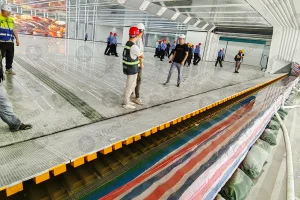
A critical weakness in standard flood barrier procurement is reliance on 3D computer renderings without field testing. Leading Chinese manufacturers operate dedicated full-scale hydrostatic test basins where every custom-manufactured barrier leaf undergoes simulated flooding before containerization. Seal leakage, opening speeds, and static pressure deflection are measured and recorded into official inspection reports issued alongside export bill of lading documents.
Different asset openings present unique hydraulic, structural, and operational challenges.
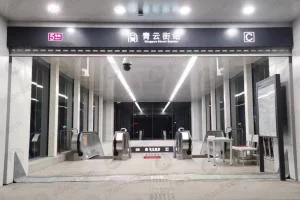
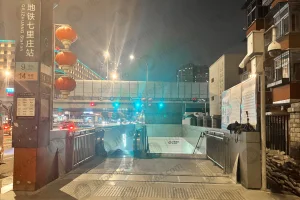
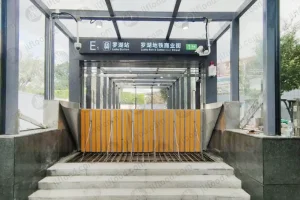
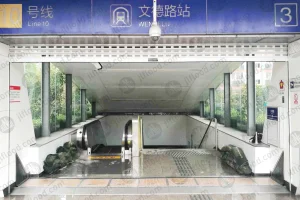
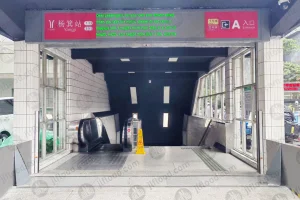
Challenge: Metro entrances feature high pedestrian traffic during normal hours and extreme flood volume risks during cloudbursts. Sudden ingress can flood station platforms, electrical signal rooms, and active train tunnels.
Engineered Solution: Flush embedded automatic flood barriers integrated smoothly with finished granite flooring. During dry periods, the stainless top plate carries full foot traffic seamlessly. When rainwater overflows municipal drainage gutters, the gate deploys without manual staff presence, blocking water at connection channels (proven at Guangzhou Metro, Beijing Metro, and Hong Kong transit lines).
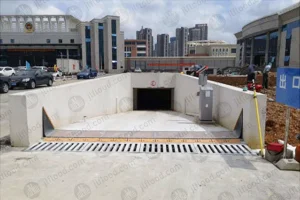
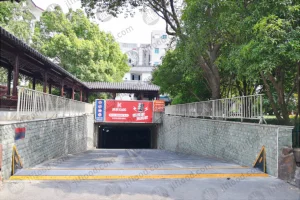
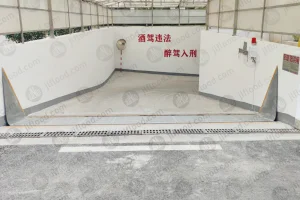
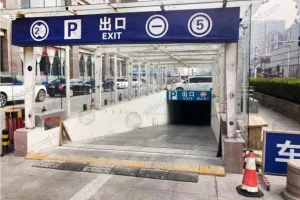
Challenge: Steep entrance ramps accelerate surface runoff velocity into basement parking structures, risking millions of dollars in vehicle damage and building electrical vault destruction.
Engineered Solution: Heavy-duty vehicle-rated surface-mounted or ground-embedded flip-up barriers capable of withstanding 40-ton axle loads (AXLE LOAD-40T). Reinforced internal ribbing ensures smooth vehicle ingress while providing rapid upward deployment when surface water flows exceed curb thresholds.
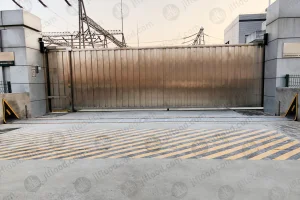
Challenge: Power substations contain energized transformers and switchgear. Water ingress triggers short circuits, grid blackouts, and catastrophic explosions.
Engineered Solution: High-integrity perimeter gate flood barriers paired with specialized non-conductive, fire-retardant sealing membranes. Compact frame profiles enable rapid retrofit installation without requiring structural demolition of operational power station perimeter walls.
Challenge: Containment of hazardous runoff during intense rainfall while keeping emergency egress routes clear.
Engineered Solution: Modular hydrodynamic gates with chemical-resistant EPDM/FKM compound seals that retain toxic liquids internally or prevent external flood surge contamination of stored raw materials.
Key technical criteria that engineering specifiers must include in B2B Request for Quotes (RFQs).
When drafting tender specifications for municipal infrastructure or commercial developments, procurement officers should avoid generic terminology. Below is the industry-standard RFP specification checklist developed by senior flood defense engineers:
Direct technical answers to common queries raised by international contractors, architects, and wholesalers.
Explore complete equipment specifications from China’s leading flood defense production line.