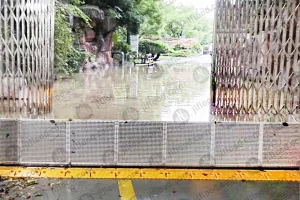
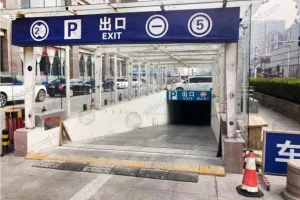
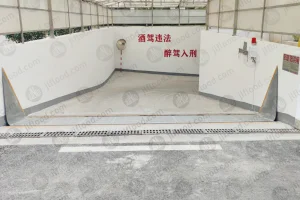
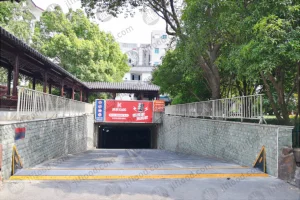
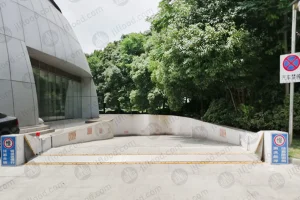
Explore field-tested automated flood barriers engineered for subway stations, electrical substations, and underground commercial garages.
Rapid climate variability, escalating urban density, and unprecedented precipitation events have reshaped civil defense imperatives worldwide. Modern municipal infrastructure—ranging from underground transit grids and subterranean logistics centers to critical power distribution substations—faces systemic vulnerability to flash flooding. According to global insurance benchmark assessments, over 70% of structural urban flood damages stem from breached entrance thresholds at ground level, leading to catastrophic asset immersion, extended operational downtime, and severe business interruption losses.
Historically, commercial facilities relied upon manual mitigation measures, such as temporary aluminum modular slats or manual sandbags. However, field data demonstrates a high failure rate for manual deployment due to rapid water influx, labor shortages during storm warnings, human oversight, and power grid failures. The international engineering community has consequently shifted procurement mandates toward passive, hydrodynamic automatic door flood barriers—mechanical barrier systems that function autonomously without electricity, sensors, or manual intervention.
As a premier direct manufacturer and specialized export factory based in Nanjing, China, Nanjing Junli Technology Co., Ltd. stands at the forefront of this industrial transition. By integrating advanced hydro-mechanical engineering, high-strength extrusion metal alloys, and dual-lip elastomeric sealing technology, Junli delivers OEM and wholesale door flood protection systems tailored to stringent global building standards (EN 13564, FM 2510, CE).
Enterprise procurement managers, EPC contractors, and municipal infrastructure consultants evaluate door flood barrier manufacturers through rigid risk-mitigation criteria. When sourcing wholesale flood gates from Chinese factories, international buyers seek verifiable evidence across four primary engineering domains:
Extreme rainfall and typhoons regularly cause localized electrical blackouts. Mechanical systems requiring hydraulic pumps, backup generators, or electronic water sensors present single-point failure risks. Enterprise specs demand purely mechanical, water-buoyancy-driven self-rising systems that trigger automatically regardless of facility power status.
Flood barriers installed across active vehicle ramps (e.g., parking garages, logistics bays, metro depots) must support continuous daily traffic loads up to 40–60 tons (AASHTO HS20 / Eurocode load standards) without frame deformation or seal degradation.
Hydrostatic head pressure creates lateral deflection across long barrier spans. Suppliers must prove structural rigidity using T6 tempered aluminum extrusions or stainless steel frames, combined with aging-resistant EPDM rubber gaskets that yield zero-leakage performance under full water head.
Global procurement teams require detailed CAD civil embedment drawings, FEA stress analysis reports, concrete pouring templates, and English maintenance protocols to streamline architectural integration and municipal regulatory compliance.
Nanjing Junli Technology eliminates international trading markup by offering direct factory-to-project wholesale pricing, custom dimensional fabrication, and complete project-level engineering support for tender submissions worldwide.
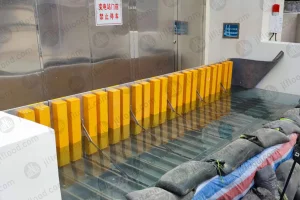
The core technology behind Junli’s market leadership lies in our proprietary Hydrodynamic Buoyancy Lever System. Unlike electro-hydraulic or manual barrier solutions, hydrodynamic barriers utilize the kinetic and hydrostatic energy of incoming floodwaters to actuate water protection automatically.
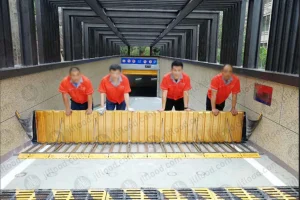
The system is installed flush with the ground level inside a pre-recessed stainless steel or hot-dip galvanized steel foundation trench. Under dry, routine conditions, vehicles and pedestrians pass over the reinforced top plate without obstruction. The operational cycle unfolds in three passive stages:
| Technical Parameter | Embedded Hydrodynamic System | Surface Flip-Up System | Heavy-Duty Substation Gate |
|---|---|---|---|
| Operating Energy | Zero Power (Hydrodynamic Buoyancy) | Zero Power / Self-Weight Release | Unpowered Hydrodynamic / Manual Override |
| Standard Retaining Height | 500 mm – 2000 mm (Customizable) | 300 mm – 1200 mm | 600 mm – 1800 mm |
| Structural Material | 6063-T6 Extruded Aluminum Alloy | SUS304 / SUS316 Stainless Steel | Heavy Steel / Aluminum Alloy Hybrid |
| Axle Load Capacity | Up to 60 Tons (Heavy Vehicle) | Up to 15 Tons (Medium Vehicle) | Up to 30 Tons (Utility Vehicle) |
| Sealing Gasket Grade | Continuous EPDM Dual-Lip Seal | High-Density Neoprene Rubber | EPDM / Silicone Composite Seal |
| Trigger Speed | < 0.5 Seconds upon water entry | Instantaneous manual/water release | < 1.0 Second automatic uplift |
Corrosion resistance is crucial for systems installed in coastal regions or harsh urban environments exposed to de-icing salts and urban runoff. Junli flood barriers utilize aviation-grade 6063-T6 aluminum alloy extrusions treated with fluorocarbon architectural coating or 15–20 µm hard anodization. Internal hinge mechanisms utilize self-lubricating graphite-bronze bushings and SUS316 stainless steel pivot pins, eliminating mechanical binding over decades of standby readiness.
Different asset classes encounter distinct hydro-mechanical stresses during flood events. Junli offers tailored structural barrier configurations designed around operational risk profiles:
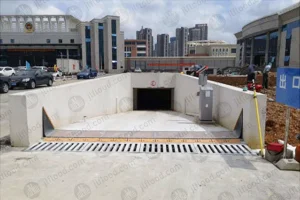
Basement ramps act as natural funnels for urban surface runoff. Junli’s embedded hydrodynamic flood barriers sit flush with slope transitions, ensuring smooth vehicle entry while standing ready to deploy full water-retaining height automatically during extreme cloudbursts.
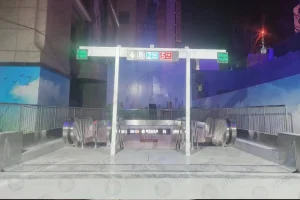
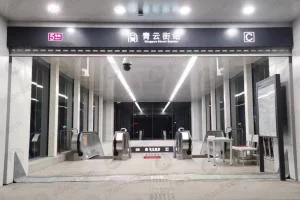
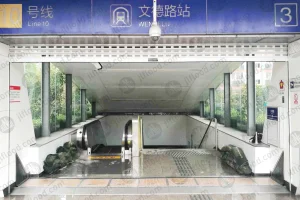
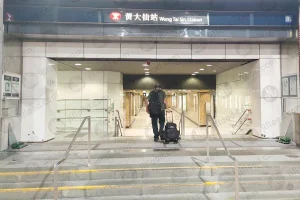
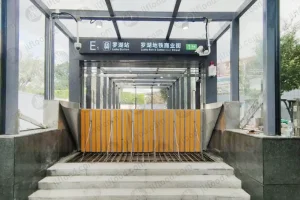
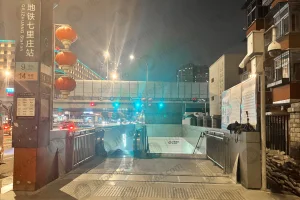
Metropolitan rail transit portals demand zero failure rates. Junli metro flood barriers are engineered to withstand extreme hydrostatic heads and dynamic wave forces. Deployed across Dalian, Guangzhou, Beijing, Suzhou, and Hong Kong transit lines, our barriers feature modular connection frames designed for wide station concourses.
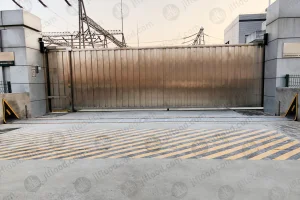
Water intrusion into power transformer bays triggers regional power outages. Our substation gate barriers provide continuous perimeter protection, integrating seamlessly with perimeter security gates while complying with high-voltage utility safety spacing regulations.
As a direct manufacturer operating out of Qinhuai District, Nanjing, Junli Technology maintains an end-to-end industrial production loop. We manage every phase of production—from raw aluminum ingot extrusion and CNC precision machining to automated robotic welding and full-scale hydraulic testing.
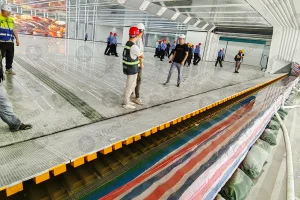
Unlike trading suppliers that rely on theoretical software simulation, Junli subjects every project design batch to full-scale water immersion verification. Our specialized factory test pool simulates actual hydrostatic head pressures, allowing engineers to measure structural deflection, seal compression rates, and automatic buoyant lift velocity before global dispatch.
Orders ship with factory certification including third-party material chemical composition reports, anodization thickness checks, and recorded video proof of successful water-retaining pool tests.
We provide full support for OEM specs across global commercial projects:
Successful flood barrier installation depends heavily on civil works interfaces. Junli works directly with engineering consultants to provide site-specific foundation design recommendations that integrate seamlessly into civil infrastructure plans.
For embedded hydrodynamic barriers, concrete trenches require C30/C35 structural concrete mix with reinforced rebar cages. Embedded foundation channels feature pre-welded anchor studs that lock directly into poured concrete trenches. Dedicated drainage outlets connected to site storm mains or sump pumps ensure residual water evacuates cleanly after floodwaters recede.
Junli door flood barrier systems align with international structural and civil engineering standards:
Browse our extended line of embedded, self-closing, and heavy-duty automatic flood gates for global enterprise procurement.