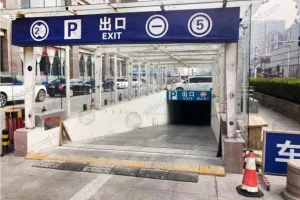
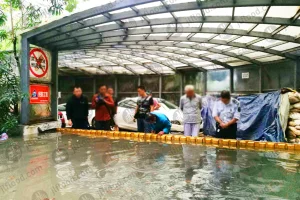
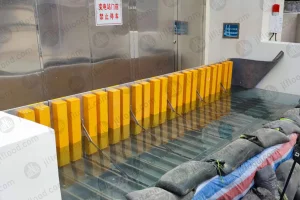
Engineered for zero-fail hydro-buoyant activation, extreme load endurance, and long-term asset security.
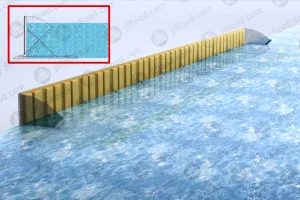
Analyzing climate resilience, hydrodynamic physical mechanics, and structural flood defenses for subterranean assets.
In the contemporary urban landscape, rapid urbanization combined with intensifying micro-climate volatility has dramatically increased the risk of severe flash flooding, storm surges, and pluvial surface water runoff. Underground parking garages, subterranean transit connections, and lower-level utility chambers represent the most vulnerable architectural weak points during cloudburst events. When surface water overpowers municipal storm drainage networks, it naturally follows the path of least resistance down entrance ramps, turning garage basements into subterranean retention reservoirs within minutes. The catastrophic loss of property, automotive assets, critical electrical switchgear, and human life underscores the urgent necessity for high-grade, resilient flood mitigation systems.
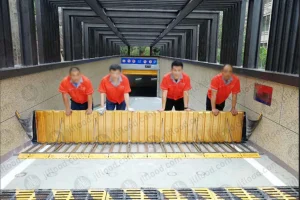
Hydrodynamic flood protection plates utilize incoming floodwater hydrostatic pressure and buoyancy forces to lift and deploy the barrier plate automatically. By eliminating dependence on external electrical grids, sensors, hydraulic pumps, or human operators, the system guarantees 100% uptime precisely when municipal power networks collapse.
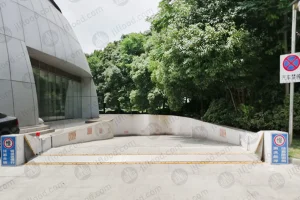
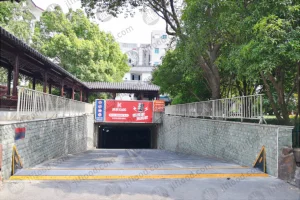
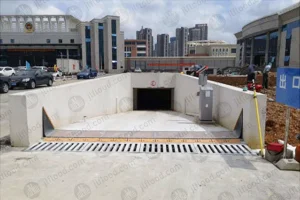
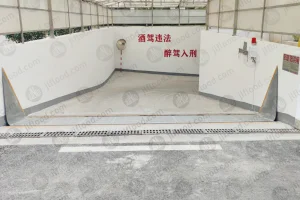
During dry weather, the flood plate remains completely flush with the garage ramp or driveway floor inside an embedded stainless-steel foundation frame. Commercial vehicles, fire trucks, and passenger cars pass over the barrier seamlessly without causing structural wear or vibration disruption to the floor slab.
Installing field-proven hydrodynamic flood barriers directly reduces property risk profiles, enabling commercial real estate developers, building management firms, and industrial facility owners to negotiate substantial reductions in commercial property insurance premiums and satisfy municipal flood compliance codes.
Precision manufacturing specifications designed to withstand hydraulic dynamic heads and heavy vehicular traffic.
Nanjing Junli Technology engineers flood barrier systems engineered according to stringent structural hydrodynamics. The barrier panel comprises high-strength 6063-T6 aircraft-grade extruded aluminum alloy profiles or reinforced SUS304/SUS316 stainless steel assemblies. Internal honeycomb ribbing guarantees minimal structural deflection even under full static water head heights up to 2.0 meters.
| Performance Parameter | Standard Garage Specification | Heavy-Duty Industrial / Substation | Metro / Infrastructure Grade |
|---|---|---|---|
| Structural Material | Extruded Aluminum 6063-T6 / SUS304 | Heavy Stainless Steel SUS304 / SUS316 | Reinforced Structural Stainless Steel |
| Standard Retaining Height | 500 mm – 1000 mm | 600 mm – 1500 mm | 600 mm – 2000 mm (Customizable) |
| Axle Load Capacity | 15 – 30 Tons (Standard Vehicles) | 40 – 60 Tons (Heavy Freight/Trucks) | 60+ Tons (Specialized Machinery) |
| Hydrodynamic Seal Rate | < 0.05 L/min per meter of seal | < 0.01 L/min per meter of seal | Zero-leakage redundant EPDM seal |
| Activation Mechanism | Hydrodynamic Buoyancy / Self-Rising | Hydrodynamic / Flip-up Mechanical | Dual Hydro-Mechanical Lock Array |
| Service Life Expectancy | > 25 Years | > 30 Years | > 30 Years |
Equipped with specialized continuous vulcanized EPDM rubber seals featuring multi-lip elastic memory. As the floodwater level increases, hydrostatic pressure acts directly against the seal profiles, tightening the seal against side jambs and bottom frames to achieve exceptional water tightness.
Each plate is hydro-dynamically modeled to withstand combined static fluid pressure ($P_{static} = \rho g h$) and dynamic wave impact loads. Structural Finite Element Analysis (FEA) ensures safety factors exceed 2.5 under maximum storm surge impact.
For wide garage entrances exceeding standard single-leaf spans (over 6 meters), modular interlocking barrier units with removable intermediate posts allow infinite continuous installation spans across multi-lane underground ramps.
Navigating global building codes, municipal compliance, and commercial procurement paradigms.
Across North America, Europe, the Middle East, and Asia-Pacific, urban planners and structural engineering consultants are updating building performance regulations to mandate physical flood barriers for subterranean openings. Procurement directors, civil engineering contractors, and B2B wholesale buyers require verified manufacturing standards and transparent factory pricing structures to support major tender submissions.
Alignment with FEMA P-348 guidelines and ASCE 24 structural flood proofing standards. Commercial real estate developers prioritize passive self-closing barriers to earn LEED resilience points and secure municipal building permits.
Compliance with EN 1991-1-6 structural hydro-actions. Emphasis is placed on aesthetic integration, corrosion resistance in coastal zones (using marine-grade anodizing or 316 stainless steel), and low maintenance overheads.
Extreme weather events and typhoons drive large-scale retrofitting of urban subway channels, high-density residential underground garages, and mega-shopping complex basements across cities like Hong Kong, Singapore, Tokyo, and Dubai.
Direct-from-manufacturer wholesale supply lines provide custom length pre-engineering, competitive tiered volume pricing, OEM brand labeling, and complete engineering CAD/BIM drawing support for general contractors.
End-to-end support from preliminary civil engineering drawings to factory water testing and overseas installation.
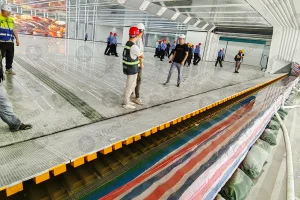
Every production batch undergoes full-scale hydro-testing in our specialized factory testing basin. Deflection profiles, seal tightness under full hydrostatic head, and response trigger speeds are measured and certified prior to international export packing.
We furnish comprehensive structural civil drawings, rebar layout specifications, and embedded concrete ditch installation templates. Whether executing new construction or retrofitting existing asphalt ramps, our civil guide minimizes site downtime.
Shipped in heavy-duty export-ready wooden cases with labeled component lists, detailed step-by-step English installation manuals, remote video commissioning guidance, and complete spare EPDM seal maintenance packages.
Tailored barrier configurations engineered for diverse underground and perimeter entry points.
Underground parking facilities for shopping malls, office towers, and luxury residential complexes. Drive-over flush plates ensure zero inconvenience during routine vehicle access while deploying instantly during cloudbursts.
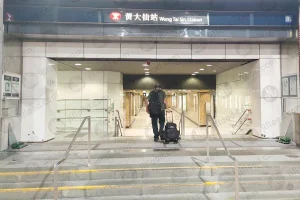
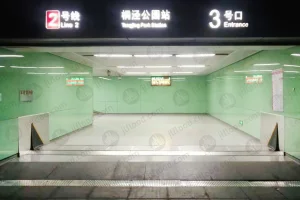
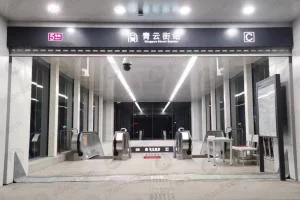
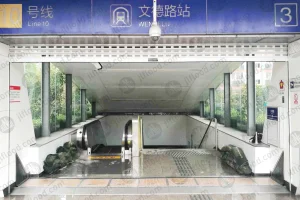
Subway station pedestrian entrances, connection corridors, emergency exits, and ventilation shafts. Engineered to meet public transport safety codes and heavy pedestrian foot traffic durability requirements.
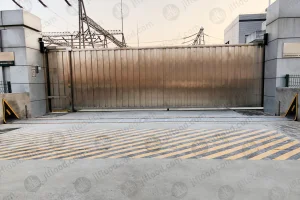
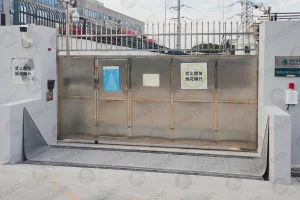
Critical electrical substations, data centers, and industrial plant perimeter gates. Isolates high-voltage transformers and control units from water ingress, avoiding multi-million dollar equipment loss and power grid downtime.
Combining mechanical resilience with IoT telemetry, intelligent monitoring, and nanotech surface coatings.
Next-generation flood control plates feature integrated NB-IoT / LoRaWAN sensors that transmit real-time barrier deployment status, water level data, and maintenance alerts directly to smart city management dashboards and building management systems (BMS).
Advanced ceramic-nano self-cleaning surface coatings prevent sediment build-up, salt corrosion, and mineral scaling inside the embedded foundation trough, reducing annual maintenance cycles while extending structural operational life.
Dual-mode operation systems pairing pure hydrodynamic unpowered safety with smart manual override options, allowing facility managers to pre-deploy barriers via remote software commands before forecasted storm fronts arrive.
Clear answers to common questions regarding structural installation, maintenance, ordering, and field operation.
The flood barrier plate rests flush inside a recessed foundation chamber installed across the garage entrance. When storm runoff flows toward the garage ramp, water enters the bottom chamber through intake grates. As the water level inside the chamber rises, natural buoyancy and hydrostatic lift push the flood plate upward, pivoting it into its upright, locked retaining position. The pressure of the retained water further compresses the EPDM rubber seals, securing the barrier without needing power, pumps, or manual effort.
Our standard commercial garage flood barrier plates are engineered to support axle loads of 15 to 30 tons, fully accommodating passenger cars, delivery vans, and SUVs. Heavy-duty industrial and substation models are reinforced with internal structural steel ribbing to support up to 60 tons, allowing heavy fire trucks, logistics trucks, and industrial equipment to cross without damage.
Yes. While ideal for new building construction, our flood barriers can be retrofitted onto existing asphalt or concrete ramps. Retrofit installation involves excavating a shallow channel across the driveway to embed the foundation frame flush with the surface. We provide comprehensive civil dimensional templates, concrete rebar specifications, and technical support to simplify installation for local civil contractors.
Because the hydrodynamic barrier relies on passive mechanical physics, maintenance requirements are minimal. We recommend semi-annual visual inspections: opening the top access covers to clear debris, leaves, or sediment from the bottom drainage pit, inspecting the EPDM seals for wear, and performing a manual water-fill test before typhoon season to verify smooth movement and tight sealing.
Wholesale pricing depends on total clear span width, required flood retaining height, structural material choice (6063-T6 aluminum vs. SUS304/SUS316 stainless steel), axle load specification, and order volume. General contractors and distributors can send opening dimensions and project CAD drawings directly to our engineering team to receive an itemized wholesale quotation within 24 hours.
Yes. Every engineered order undergoes strict quality inspection and full-scale hydrostatic testing in our dedicated factory testing pool. We verify zero-leakage seal performance, deployment speed, and structural integrity under maximum static head pressure. Detailed water test reports, video proof, and material certificates (MTC) are included with each export shipment.
Substation barriers, embedded metro units, self-closing flood gates, and custom industrial designs.