
Direct factory wholesale engineered flood control barriers, hydro-dynamically activated, designed specifically for rail transit, substations, and critical subterranean infrastructure.
Metropolitan cities worldwide are facing unprecedented urban inundation risks due to changing weather patterns, extreme precipitation events, and rapid urban density growth.
Modern transit systems (Subways, MRT, LRT) route millions of daily passengers through subterranean tunnels. Entrance portals, ventilation shafts, and connection concourses represent structural low points that act as natural funnels during torrential storm events. A single breached entrance can flood miles of underground tunnels, causing billions of dollars in equipment destruction and structural failure.
Municipal transit authorities across Europe, North America, Asia-Pacific, and the Middle East have upgraded building codes and safety regulations. Compliance mandates now strictly dictate passive, unpowered, and automatic water-retaining flood gates at all vulnerable underground pedestrian access points, transformer room portals, and emergency exits to guarantee absolute operational resilience.
Traditional manual stoplog barriers or electromechanical gates often fail during major inundation disasters due to grid collapse, sensor submergence, or lack of site staff during flash floods. Global specifiers now mandate hydrodynamic automatic self-rising flood gates that rely purely on water buoyancy and hydrostatic head pressure without requiring electrical power or human operation.
According to international transit engineering resilience benchmarks, over 85% of catastrophic flooding incidents in metro systems occur when city electrical grids experience catastrophic failure during severe storms. Installing passive, power-free automatic flood gates eliminates the single point of failure inherent in electrical motor-driven barriers.
A deep dive into the hydro-mechanical physics, material science, and structural load calculations behind our factory-manufactured metro station flood gates.
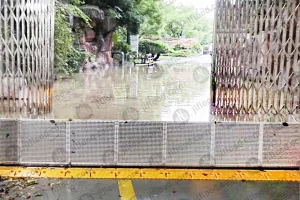
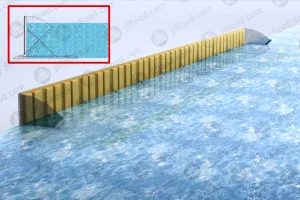
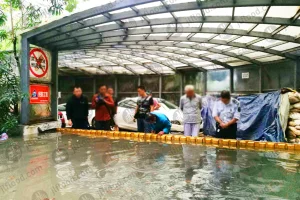
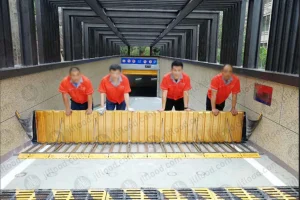
Our hydrodynamic automatic flood barriers are housed flush inside a recessed foundation frame beneath the entry threshold. As surface runoff flows into the bottom collection chamber, water fills the internal float cavity. The precise buoyancy force lifts the door leaf automatically. As the water level rises, increasing hydrostatic force presses the barrier panel firmly against the frame seals, locking it tightly into position to block water up to 2.0 meters deep.
Fabricated using high-strength 6063-T6 extruded aluminum alloy profiles or structural 304/316 stainless steel, our gates resist extreme physical impact and corrosion. The bottom and lateral sealing edges feature multi-layer EPDM synthetic rubber co-extruded gaskets resistant to UV degradation, chemical pollution, and extended submersion. This achieves an airtight, watertight zero-leakage threshold compliant with international hydrostatic pressure standard testing.
| Technical Parameter | Surface Mounted Type (e.g., HM4D-0006E) | Embedded Foundation Type (e.g., HM4D-0006C) | Custom Heavy-Duty Industrial Gate |
|---|---|---|---|
| Operating Principle | Hydrodynamic Passive / Zero Electric Power | Hydrodynamic Passive / Zero Electric Power | Self-Closing & Opening / Hydrodynamic Hybrid |
| Standard Retaining Height | 500 mm – 1200 mm | 600 mm – 2000 mm | Up to 3000 mm (Modular Array) |
| Primary Material | 6063-T6 High Strength Aluminum Alloy | SUS304 / SUS316 Stainless Steel & Aluminum | Heavy Reinforced Stainless Steel Structural Plate |
| Structural Load Rating | Pedestrian Heavy Traffic (30 kN/m²) | Vehicle Drive-Over (AASHTO HS-20 / 40-60 Ton) | Extreme Vehicle & Debris Impact Rated |
| Seal Integrity | Dual-Lip EPDM Weather/Chemical Resistant Gaskets | Multi-Chamber EPDM Compression Sealing | Pressurized Inflatable / Double Mechanical EPDM |
| Response Time | < 0.5 Seconds Passive Fluid Activation | < 0.1 Seconds Passive Fluid Activation | Instantaneous Buoyancy Triggering |
Combining world-class industrial automation, full-chain supply ecosystem, and rigorous full-scale hydrostatic testing for global export projects.
Our Nanjing production facility utilizes ultra-large high-precision fiber laser cutters, multi-axis robotic welding cells, and automated aluminum anodizing/powder-coating lines. Precision manufacturing tolerances ensures seamless modular interlocking and perfect sealing alignment during high-head water retention events.
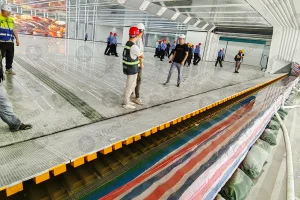
Unlike trading intermediaries, our factory features a full-scale hydraulic testing reservoir. Every modular gate design undergoes real water-retaining pressure validation, measuring deflection parameters, seal compression rates, and automatic buoyancy rising speed prior to global export shipping.
Integrated material supply chains and scaled production capacity allow us to offer OEM/ODM wholesale quotes at 30% to 45% lower prices than European or North American competitors, while meeting or exceeding identical international safety, loading, and durability standardizations.
Engineering customized perimeter flood protection solutions across critical sub-assemblies of modern rail transit networks.
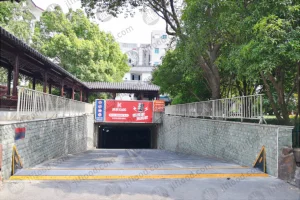
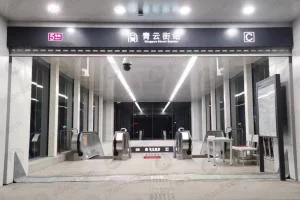
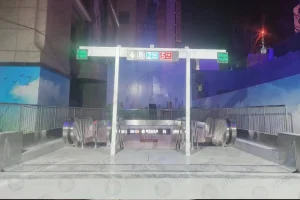
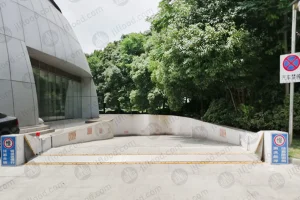
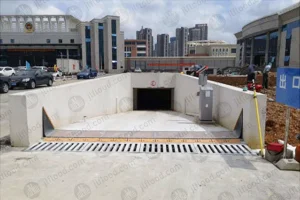
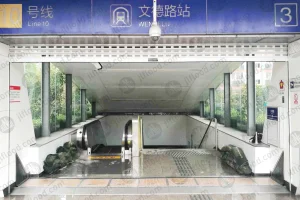
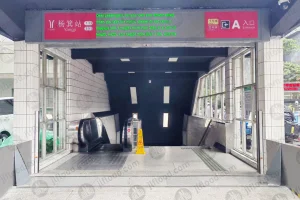
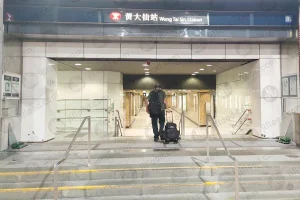
Installed flush at the top step of subway entrance plazas or staircases. Under dry conditions, pedestrians walk smoothly over the embedded top cover plate. During cloudburst events, incoming water flows into the chamber, automatically raising the barrier to seal off the entrance mouth before water cascades down passenger escalators.
Ground-level sidewalk air vents and exhaust shafts represent direct vertical openings into underground subway tunnels. Custom vertical-rising automatic flood gates or flap-barrier modules prevent rising surface floodwaters from overwhelming ventilation shafts during flash urban inundations.
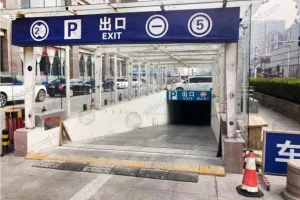
Subway stations frequently connect directly to subterranean commercial centers, underground parking garages, or adjacent building basements. Modular wide-span hydrodynamic flood gates are deployed across wide transit corridors to prevent cross-facility water contamination during emergency flooding.
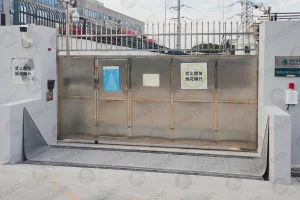
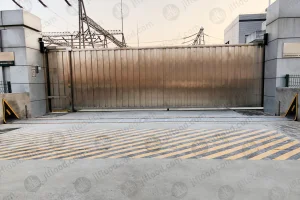
Metro electrical substations are high-value critical assets. Water ingress into high-voltage switchgear rooms leads to catastrophic grid collapse. Our specialized substation flood barriers provide 24/7 unpowered, continuous passive protection, ensuring rail power safety during severe storms.
Transit maintenance depots feature ground-level track portals where subway trains transition between underground tunnels and surface yards. Heavy-duty vehicle-rated automatic flood gates are installed flush into the rail trackbed structure, providing zero obstruction to trains while sealing off track portals during flood surges.
Emergency egress corridors and civil defense underground bunkers require robust, dual-sealing automatic flood barriers that operate independently of human presence, securing structural integrity against extreme water head pressures.
Essential criteria engineering procurement specialists must include when drafting OEM tenders for subway flood barrier projects.
Specification docs must mandate Finite Element Analysis (FEA) verification proving the barrier panel can sustain maximum hydrostatic head pressure (up to 2.0m water depth) combined with lateral dynamic hydrodynamic wave impact and debris striking forces without structural deformation beyond L/250 span ratios.
Tender documents should explicitly disallow dependence on external sensors, manual levers, uninterruptible power supplies (UPS), or electrical motors for core flood barrier activation. True passive hydrodynamic operation guarantees continuous function during complete municipal power outages.
Surface cover plates must feature anodized anti-slip rib patterns or anti-skid diamond plate textures (minimum R11 friction rating) to prevent pedestrian slipping during normal dry operations. All embedded frames must utilize marine-grade SUS304/316 or heavy hot-dip galvanized steel coated with fluorocarbon paint.
Global procurement teams should verify that barrier modules are manufactured in standard shipping dimensions for sea freight (20GP/40HQ containers) and supplied with detailed CAD/BIM embedment drawings, anchor templates, and step-by-step concrete pouring instructions for local contractors.
How intelligence, IoT monitoring, and advanced hydro-dynamics are shaping the next generation of metro flood control gates.
While activation remains 100% mechanical and power-free, modern hydrodynamic flood gates are increasingly fitted with low-power LoRaWAN/NB-IoT micro-sensors. These sensors send real-time telemetry to metro SCADA control rooms, notifying station managers the exact second a barrier panel deploys during a storm.
Older metro systems built decades ago lack deep excavation depth at entrance thresholds. Modern industrial trend favors ultra-slim surface-mounted flood barriers (such as HM4D-0006E) requiring only 60mm to 100mm shallow embedment depth, allowing rapid overnight retrofitting without disturbing underlying utility conduits.
As cities push for Net-Zero infrastructure, zero-energy flood barriers deliver significant carbon footprint reduction over their 20-year lifecycle compared to motor-driven barriers requiring continuous standby electricity, routine lubricant changes, and frequent electronic controller replacements.
Explore our complete OEM product catalog engineered for high-traffic public subway entrances, municipal substations, and industrial driveways.
Detailed engineering and commercial answers to assist project directors, EPC contractors, and transit authority procurement teams.
The hydrodynamic flood barrier sits completely flush inside a stainless steel or heavy aluminum foundation frame embedded beneath the entrance surface level. When urban rainwater accumulates and enters the bottom drainage intake channel, fluid flows directly into the internal float chamber. Buoyancy forces actuate the door panel leaf, automatically floating it upwards. As the external flood level increases, hydrostatic pressure pushes the panel tightly against vertical side frames and rubber sealing lips, creating a continuous watertight barrier. The process requires zero electricity, zero motor drives, zero sensors, and no staff presence on site.
We manufacture both standard modular stock sizes and custom-engineered dimensions. Single leaf units cover clear openings up to 6.0 meters wide with retaining heights ranging from 500 mm to 2000 mm. For wider subway concourses, main station entrance plazas, or multi-lane vehicle ramps exceeding 20 meters, we supply modular interlocked multi-leaf gate arrays equipped with removable center mullion posts and continuous inter-barrier EPDM joint seals.
Our embedded metro flood barrier top cover plates are engineered from high-tensile 6063-T6 aluminum alloy or structural steel plate reinforced with internal structural ribbing. Surface units are rated for heavy pedestrian foot traffic (up to 30 kN/m²), while heavy-duty models (such as HM4D-0006C) feature structural load ratings capable of carrying AASHTO HS-20 truck axle loads (40 to 60 tons), ensuring total structural safety when heavy emergency vehicles or service trucks drive over the recessed frame.
The foundation chamber is designed with an integrated debris settling sump and self-flushing inclination angles. Standard installation includes connecting a bottom drain pipe directly to the station’s storm drainage network or sump pump pit. Routine maintenance simply involves lifting the top access cover plate once or twice a year to clear silt or leaves with a high-pressure water hose, taking less than 30 minutes per unit.
Every production batch manufactured at our factory is verified in accordance with ISO9001 quality management systems. We provide material mill test certificates (MTC), structural FEA engineering reports, dual-lip EPDM seal durability test data, and full-scale factory water basin pressure testing video records with every shipment. Third-party inspection by international verification agencies (SGS, TUV, BV) can be arranged prior to container loading.
Standard modular flood gate models ship within 10 to 15 business days. Custom-engineered metro project orders (including specialized curb geometry, non-standard embedded depths, and custom color anodizing) typically ship within 20 to 30 days. We provide full OEM support including customized CAD/BIM drawing files, site survey template matching, and custom brand labeling for international distributors.


