
Engineered for commercial ramps, underground metro networks, power utility vaults, and municipal infrastructure protection.
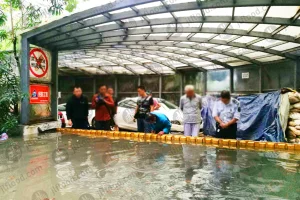
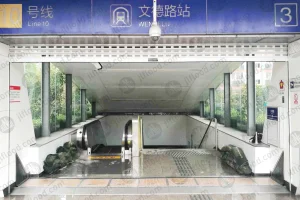
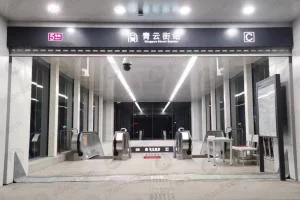
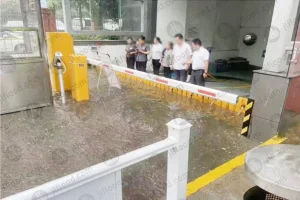
Rapid urbanization, compounding extreme weather phenomena, and severe coastal micro-burst rainstorms have escalated urban waterlogging into a premier threat for underground commercial assets, rail transit nodes, and high-voltage distribution centers.
The global market for municipal and industrial flood mitigation systems has undergone a fundamental structural shift. Municipal authorities, commercial real estate developers, insurance underwriters, and civil defence agencies no longer view flood gates as secondary accessories. Instead, they are classified as critical life-safety and asset-preservation infrastructure.
According to global infrastructure vulnerability assessments, underground spaces—such as subterranean commercial parkings, subway concourses, utility cable trenches, and hospital basement server rooms—suffer exponential economic damage during short-duration, high-intensity rain events (flash floods). When water enters a subterranean facility, the repair costs far exceed the structural damage: loss of high-voltage transformers, paralyzed transit operations, business interruption liabilities, and compromised structural integrity.
As a direct result, Tier-1 civil engineering specifications across North America, Europe, Asia-Pacific, and the Middle East are shifting toward mandates requiring zero-human-intervention barriers. B2B procurement officers and engineering EPC contractors now seek direct partnership with established wholesale flood prevention systems manufacturers & factories capable of delivering custom-engineered, hydrodynamically activated barrier assemblies with certified sealing performance.
The engineering paradigm of high-capacity flood barriers has evolved from manual barrier assembly to intelligent passive hydro-mechanics. Below is a comparative technical analysis of traditional methods versus Nanjing Junli Technology’s advanced Hydrodynamic Self-Closing Flood Gates.
| Vector Metric | Manual Stop Log Barriers | Electric / Hydraulic Barrier Gates | Junli Hydrodynamic Automatic Barrier |
|---|---|---|---|
| Activation Trigger | Human labor (sandbags/planks) | Water sensor & electric motor | Pure Hydrodynamic Buoyancy (Passive) |
| Power Dependence | None (Requires manual labor) | High (Fails during blackouts) | 0% Grid Dependence (100% Fail-Safe) |
| Response Velocity | 30 to 120 minutes | 30 to 60 seconds | 0.1s Trigger / 15s Full Rise |
| Human Reliability Risk | Extreme (Traffic block/absence) | Moderate (Sensor/circuit failure) | Zero Risk (Autonomous Physics) |
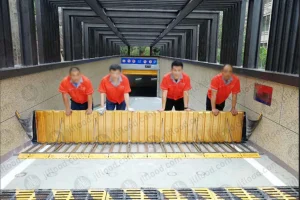
| Structural Flush Embedment | No (Storage space needed) | Partial (Exposed hydraulics) | 100% Flush with Ground (Driveover load) |
| Maintenance Overhead | Low (High labor during flood) | High (Sensors, oil replacement) | Ultra-Low (Quarterly debris check) |
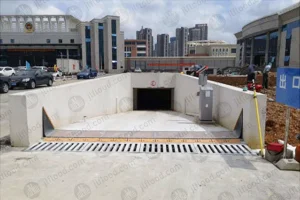
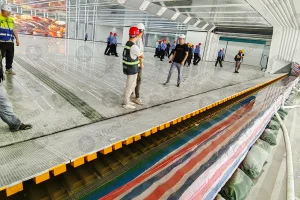
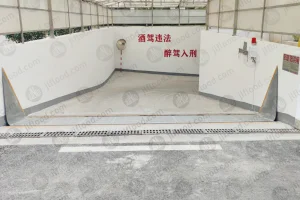
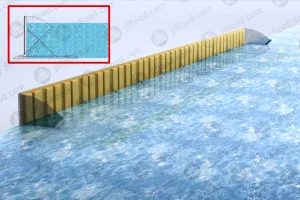
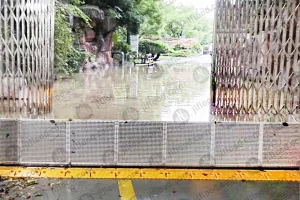
The structural mechanism of the hydrodynamic barrier is housed inside a recessed foundation trench flush with the driveover road surface. When initial flood surface run-off reaches the entrance threshold, water flows through intake grates into the subterranean retention basin. As the fluid level rises inside the chamber, high-buoyancy composite panel structures experience natural hydrodynamic lift.
As the water level continues to rise, hydrostatic head pressure compresses specialized EPDM multi-lip marine rubber gaskets against the structural side frame columns, forming an airtight, watertight seal. The higher the external flood level rises, the greater the hydrostatic force clamping the seal against the retaining surface, guaranteeing structural water retention up to heights of 2.0 meters per single leaf array.
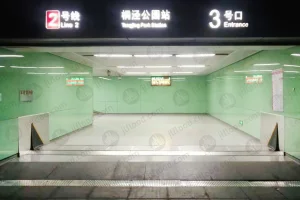
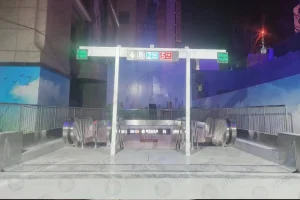
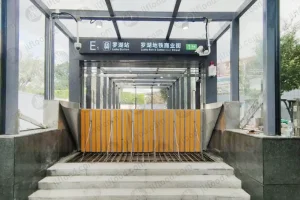
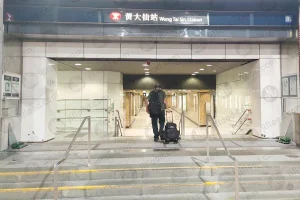
Station portals, pedestrian concourse shafts, and inter-station connection channels. Engineered to withstand intense structural dynamic loads while offering zero impediment to daily passenger pedestrian foot traffic.
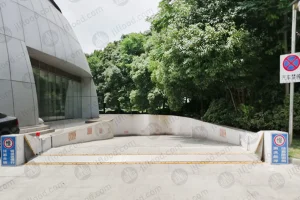
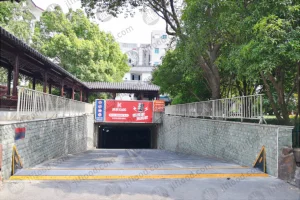
Commercial shopping malls, high-rise residential basements, and logistics park ramps. Designed for heavy vehicular driveover capacity (up to 60-ton truck load standards) without triggering false activations.
High-voltage electrical distribution centers, transformer rooms, and cable trenches. Prevents catastrophic regional electrical grid shutdowns by securing perimeter doorways against flash urban flooding.
Critical public infrastructure, civil defense underground street crossings, and airport landside utility tunnels where absolute zero-leakage security is mandated by federal safety regulations.
As a premier high-tech enterprise based in Qinhuai District, Nanjing, Jiangsu Province, Nanjing Junli Technology Co., Ltd. represents the apex of Chinese specialized manufacturing resilience. China's integrated industrial ecosystem provides an unprecedented competitive advantage in high-spec civil engineering manufacturing:
To ensure seamless integration into international civil engineering projects, Junli Technology provides full-spectrum engineering design packages tailored to local building codes:
Engineering CAD & BIM Integration: Our technical team provides complete civil interface structural drawings, rebar clearance schematics, embedded frame anchorage calculations, and drainage trench connection details. These allow local EPC contractors to execute foundation concrete pouring with exact precision.
Global Compliance & Documentation: Products are manufactured in strict accordance with ISO9001 Quality Management Systems, ISO14001 Environmental Standards, and European CE Safety Directives. Factory Acceptance Test (FAT) records, seal material vulcanization certificates, and English operational maintenance manuals accompany all international shipments.
Explore customized modular barrier solutions for high-load ramps, heavy-duty industrial portals, and non-powered automatic gates.
Detailed answers to structural, operational, and procurement queries regarding Junli automatic flood barriers.


